27-04-2026 20:52
 Lothar Krieglsteiner
Found on hanging tiwg of Olea europaea in dried-ou
27-04-2026 18:48
Tony MoverleyCollected 23rd April 2026, Norfolk, EnglandSwarms
27-04-2026 17:41
Lothar Krieglsteiner
.. Algarve, same leaf than the last post. The con
27-04-2026 18:05
Lothar Krieglsteiner
... still attached at standing tree. The green con
27-04-2026 17:16
Lothar Krieglsteiner
.. Algarve, moist lying.The conidiomata look like
27-04-2026 12:54
Steve ClementsBonjour. Ce petit champignon blanc résupiné et
27-04-2026 09:59
Pauline. PennaBonjour Can anyone advise me on these pycnidia fo

22-04-2026 20:54
 Enrique Rubio
Hi to everybody.This Pyrenopeziza grew in moist le
Roses carry beauty
Marja Pennanen,
04-07-2014 11:33
Hi there,
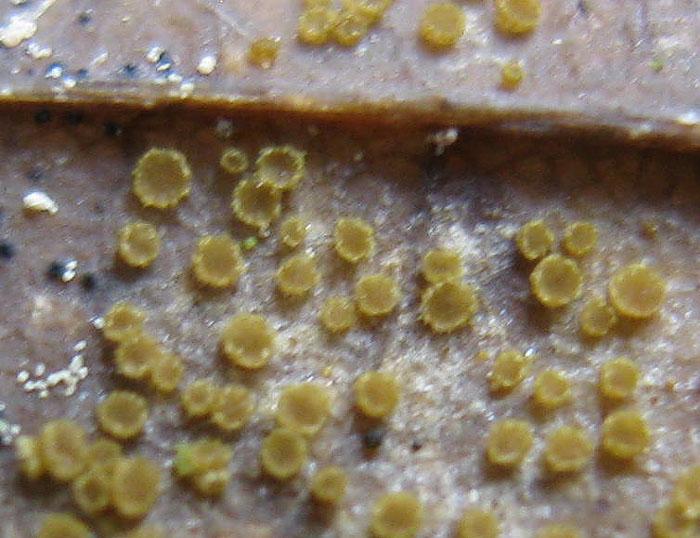
these beauties are about 0,2-0,3 mm wide.
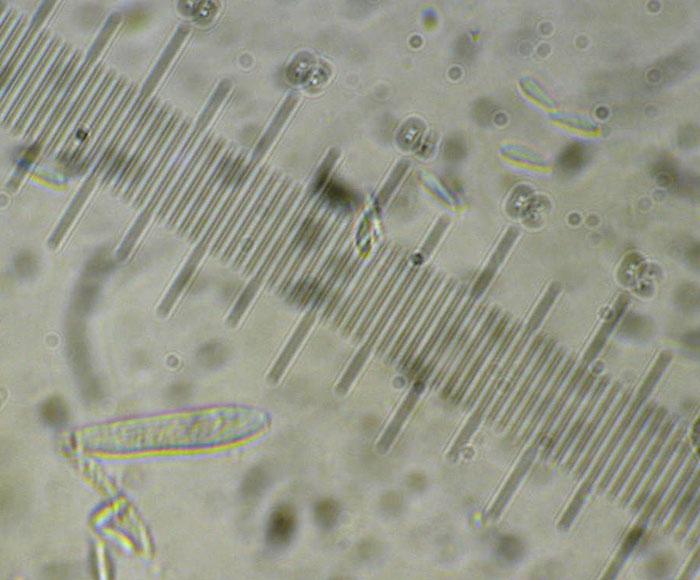
The spores are about 6-8x2, asci 27-34x5-6, possibly IKI+.
Paraphyses are narrow (1.5) and do not exceed asci.
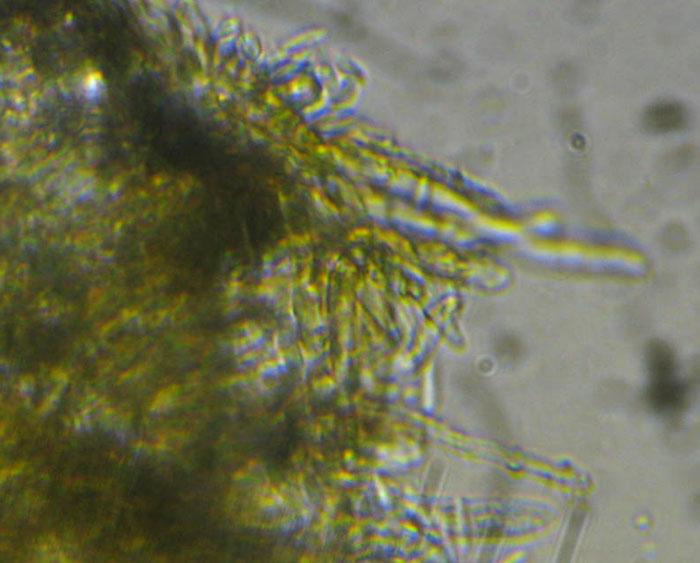
The hairs are yellow, cylindric, 30-40x3-4 and seems to carry some resins.
They tend to be sticked together.
With no knowledge of what this is: Marja
Marja Pennanen,
05-07-2014 17:03
Re : Roses carry beauty
Hi,
this seems common at least on my own yard on old rose leaves.
They turn brownish when dry.
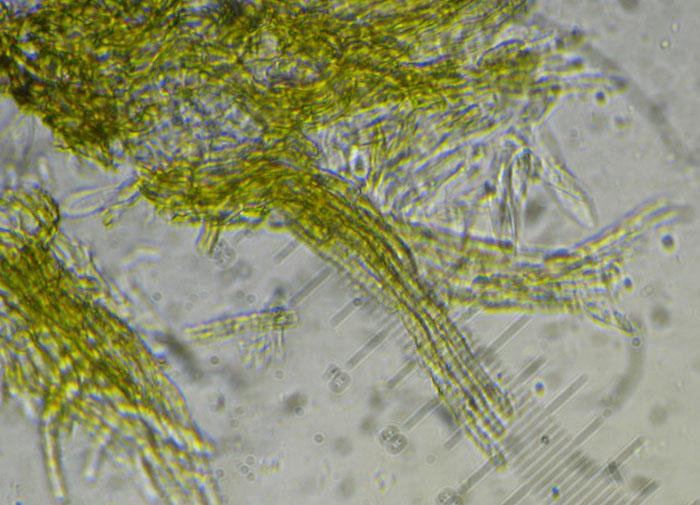
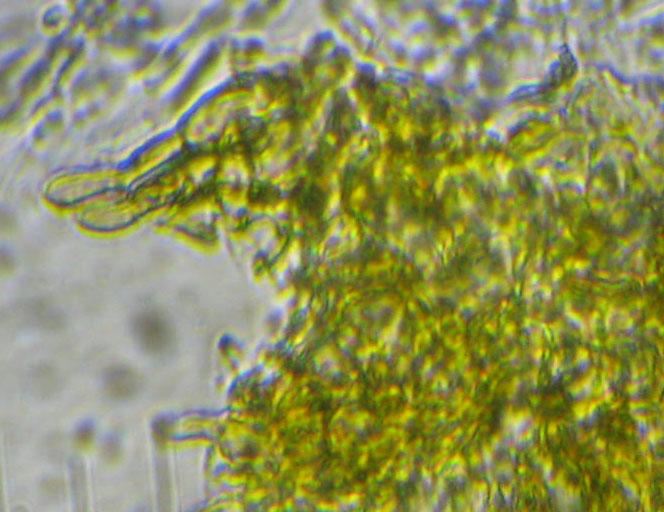
I studied another and the hairs can be up to 80 micrometers long.
I do not find even a proper genus for this.
Marja
this seems common at least on my own yard on old rose leaves.
They turn brownish when dry.
I studied another and the hairs can be up to 80 micrometers long.
I do not find even a proper genus for this.
Marja
Marja Pennanen,
10-07-2014 10:49
Re : Roses carry beauty
Hi,
after getting no answers here, I sent a fresh specimen to Seppo.
He is now cultivating this and told me, that this is something near Microscypha / Pyrenopeziza / Psilocistella.
Seems very interesting or what?
Marja
after getting no answers here, I sent a fresh specimen to Seppo.
He is now cultivating this and told me, that this is something near Microscypha / Pyrenopeziza / Psilocistella.
Seems very interesting or what?
Marja
Brian Douglas,
10-07-2014 12:55

Re : Roses carry beauty
Hi Marja,
I wouldn't be surprised if this was somewhere related to Pyrenopeziza or allied genera - the small very asci do suggest a possible link, but the same could be said for other genera as well. I'm not familiar with any Pyrenopeziza species with resinous hairs. Your images did look vaguely reminiscent of something like Pyrenopeziza betulicola.
Yes, I think they're lovely! It would be very interesting if they're something new or very obscure, especially since you say they are common in your locality.
Cheers,
Brian
I wouldn't be surprised if this was somewhere related to Pyrenopeziza or allied genera - the small very asci do suggest a possible link, but the same could be said for other genera as well. I'm not familiar with any Pyrenopeziza species with resinous hairs. Your images did look vaguely reminiscent of something like Pyrenopeziza betulicola.
Yes, I think they're lovely! It would be very interesting if they're something new or very obscure, especially since you say they are common in your locality.
Cheers,
Brian
Marja Pennanen,
10-07-2014 13:43
Re : Roses carry beauty
Hi Brian,
I studied another place 15 km away looking for these.
None was found, because there were practicly no last year leaves left.
In my own yard the leaves are mixed with Betula leaves and they may have retained Rose leaves. Maybe it is not common after all, because people have a tendency to clean dead material from their garden. I leave a lot in situ for substrates to fungi.
Marja
I studied another place 15 km away looking for these.
None was found, because there were practicly no last year leaves left.
In my own yard the leaves are mixed with Betula leaves and they may have retained Rose leaves. Maybe it is not common after all, because people have a tendency to clean dead material from their garden. I leave a lot in situ for substrates to fungi.
Marja
Marja Pennanen,
19-07-2017 13:09
Re : Roses carry beauty
Hello again,
now I have collected this beautyful species many times from two different places and done some microscoping work, too. Finding old leaves of one specific Rose species is more difficult than finding these on them at the beginning of the summer.
In spite of Seppos opinion, I've come to the conclusion, that this must be an Echinula species and so belong to Hyaloscyphaceae. I still am ready to change my opinion, if better ideas appear ;)
The hairs are resinous an are glued together in the margins, 30-110x3-5. and the asci are IKI blue.
Marja
now I have collected this beautyful species many times from two different places and done some microscoping work, too. Finding old leaves of one specific Rose species is more difficult than finding these on them at the beginning of the summer.
In spite of Seppos opinion, I've come to the conclusion, that this must be an Echinula species and so belong to Hyaloscyphaceae. I still am ready to change my opinion, if better ideas appear ;)
The hairs are resinous an are glued together in the margins, 30-110x3-5. and the asci are IKI blue.
Marja