
27-04-2026 20:52
 Lothar Krieglsteiner
Found on hanging tiwg of Olea europaea in dried-ou
27-04-2026 18:48
Tony MoverleyCollected 23rd April 2026, Norfolk, EnglandSwarms
27-04-2026 17:41
Lothar Krieglsteiner
.. Algarve, same leaf than the last post. The con
27-04-2026 18:05
Lothar Krieglsteiner
... still attached at standing tree. The green con
27-04-2026 17:16
Lothar Krieglsteiner
.. Algarve, moist lying.The conidiomata look like
27-04-2026 12:54
Steve ClementsBonjour. Ce petit champignon blanc résupiné et
27-04-2026 09:59
Pauline. PennaBonjour Can anyone advise me on these pycnidia fo

22-04-2026 20:54
 Enrique Rubio
Hi to everybody.This Pyrenopeziza grew in moist le
 Bonjour,
C'est mon premier message sur le forum. J'ai fait cette observation le 11 avril dernier. En utilisant la clé de Korf (1951), j'arrive à Arachnopeziza trabinelloides. Je n'ai jamais observé de spores à 2 ou 3 septa comme chez A. cornuta. Qu'en pensez-vous? Merci beaucoup pour votre aide!
Cordialement
Arold
Description :
Subiculum présent; blanc
Apothécie : largeur 0,1 – 0,4 mm; orange vif; présence de poils
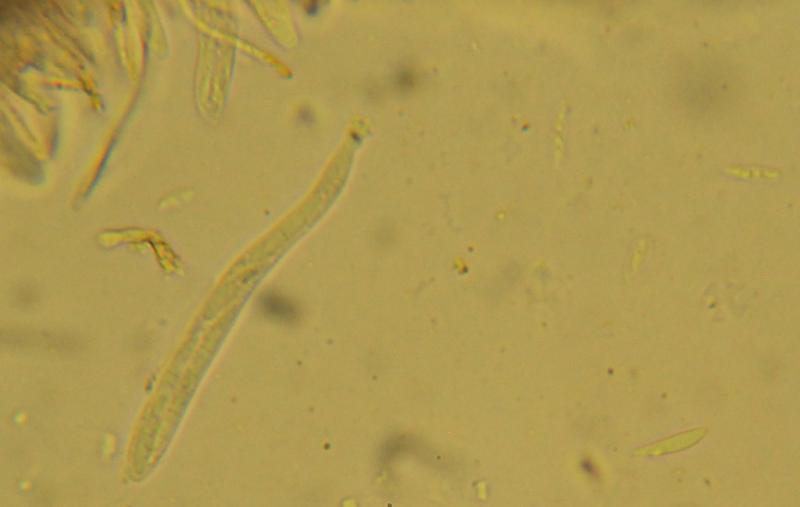
Asque : largeur 5,2 – 7,8 um; longueur 52,5 – 65,6 um; octosporé; pore apical devenant bleu en ajoutant de l'iode
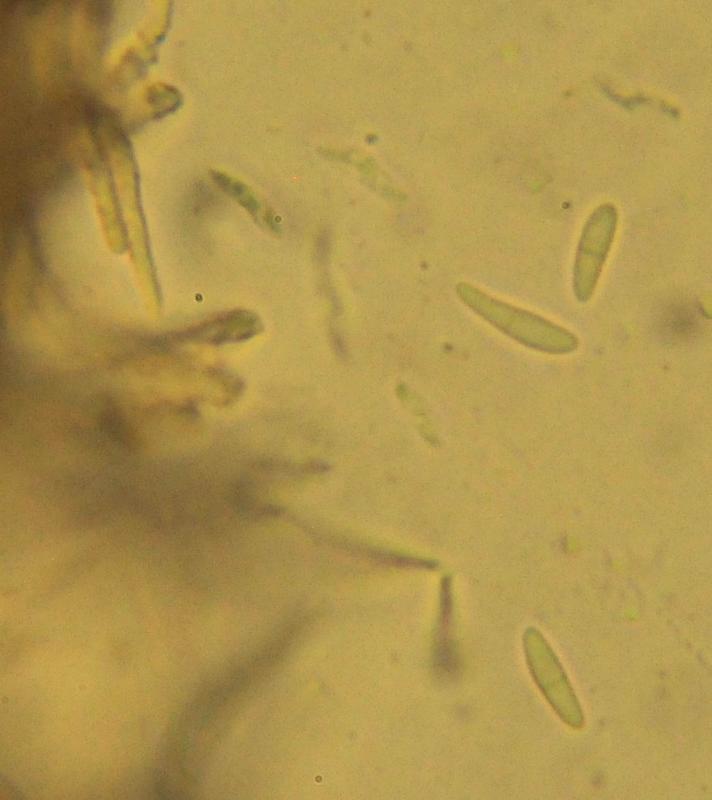
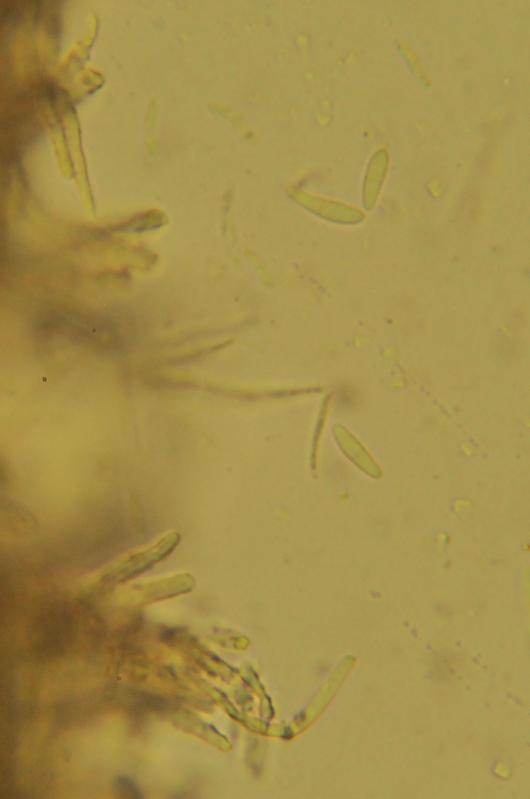
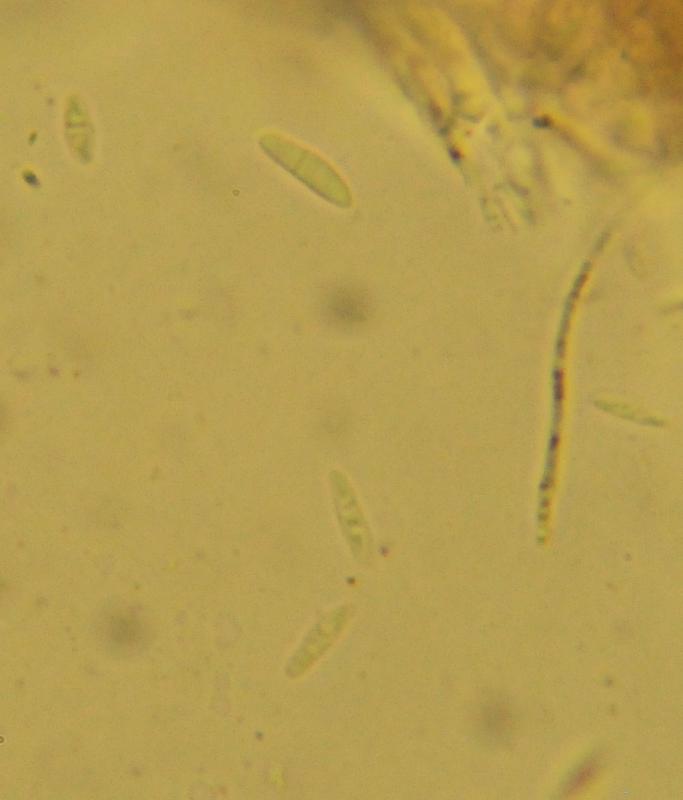
Spore : longueur 13,1 – 15,7 um; largeur 2,9 – 5,2 um; 1 septa (parfois 0); amincie à une extrémité; hyalin
Paraphyse septées, simple ou branchue
Substrat : Bois en décompostion d'une souche de hêtre (Fagus grandifolia)
Habitat : Érablière à hêtre mature
Lieu : Grande région de Montréal, Québec, Canada.
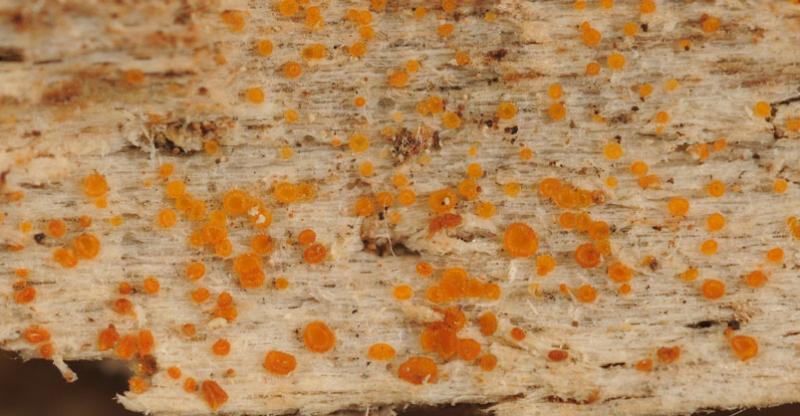
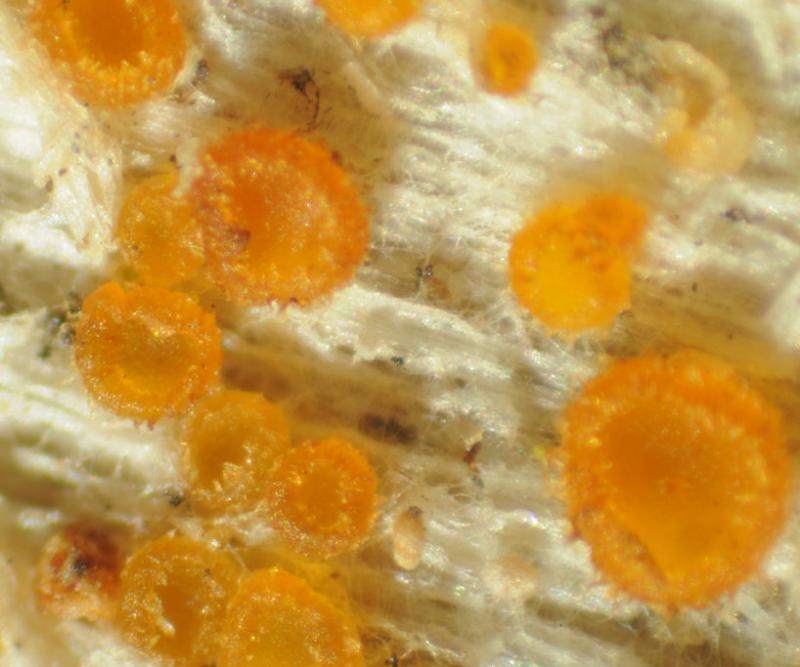
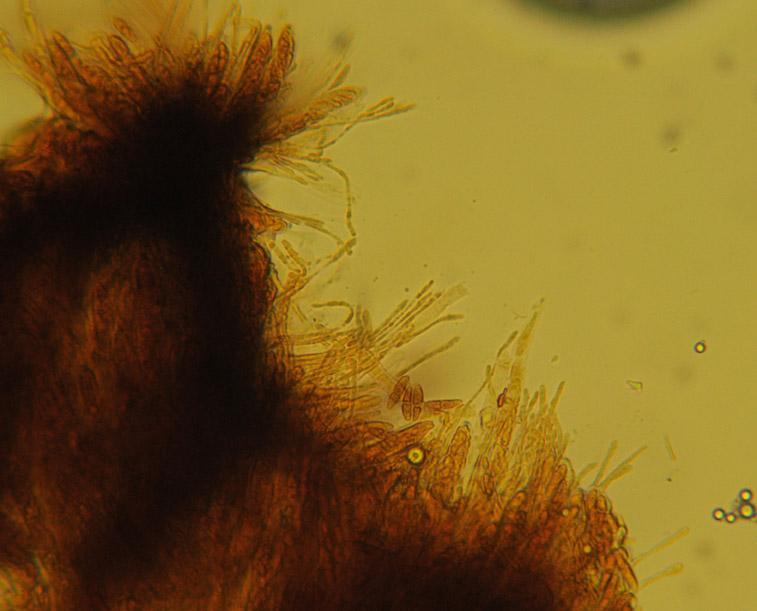
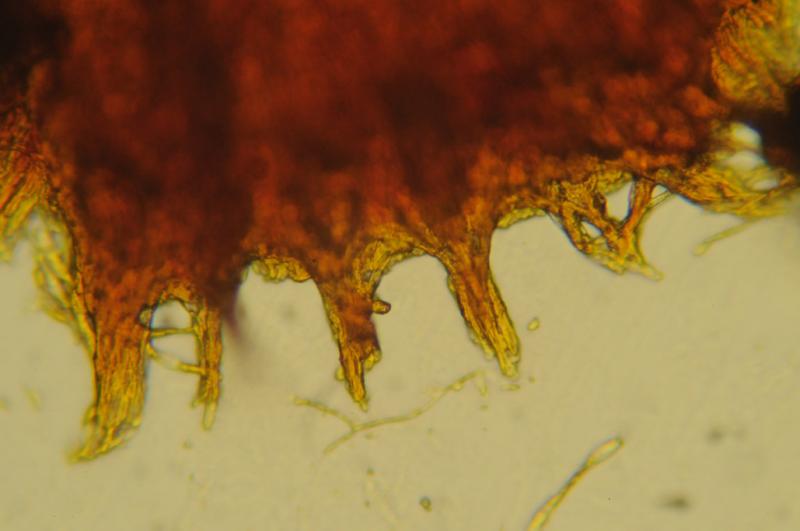
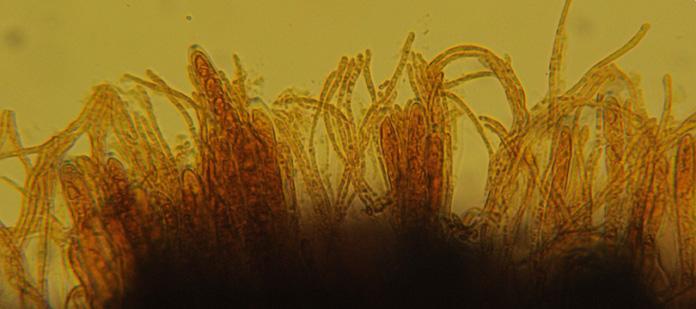
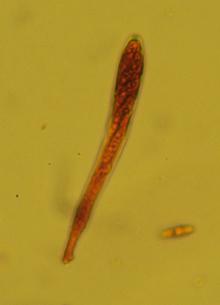
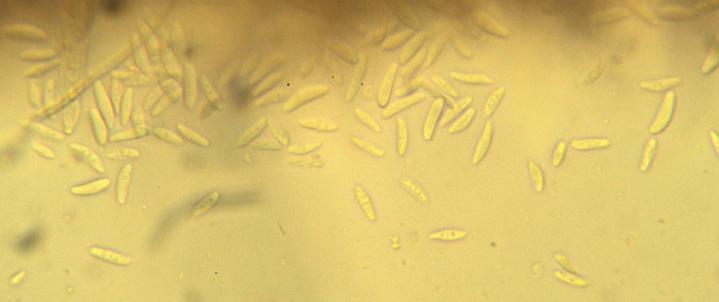
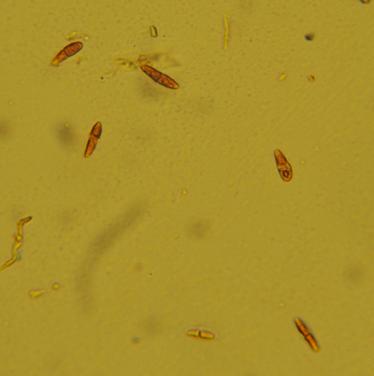

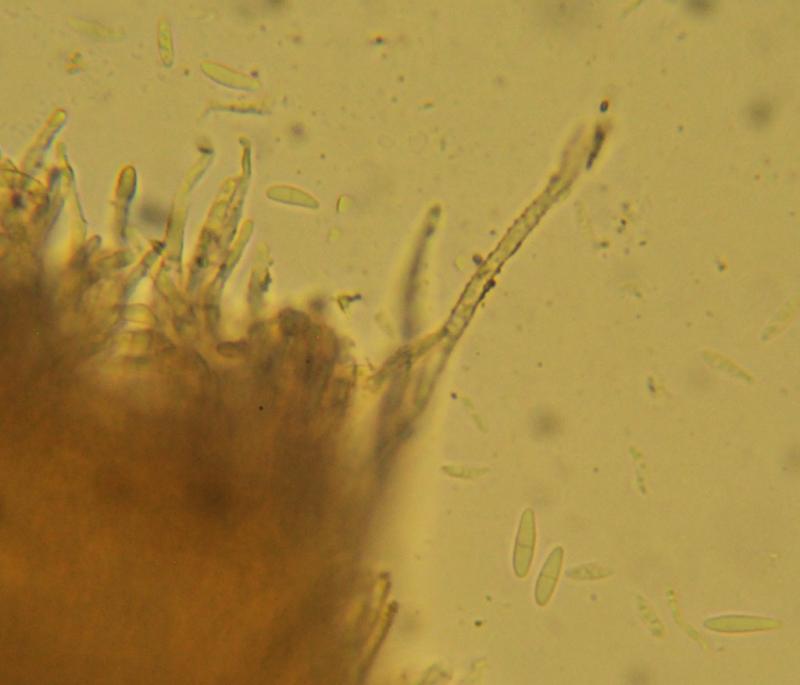
I think you are right with your idea. Only your photos are very small (did you use oil immersion?), so difficult to interpret. I assume you reduced them?
Zotto
Which part of the specimen do you need to see? I can take some bigger pictures (but maximum on this forum is 150 ko, so yes, I reduced them...).
I have a second question. Do you know if A. trabinelloides have ever been observed in Quebec or Canada? I know it was reported in USA (West Virginia, New York, Massachussettes and Vermont).
And if you want a specimen, it will be a pleasure to send it to you.
Thanks!
Yes, Jules Cimon collected it in 2009, probably around Quebec, maybe it was in this forum (my search option does not work).
Important would be especially the spores mounted in water. The septum is usually well visible in living spores, and also the oil content is important.
I do not believe the restriction, I have no problems to upload larger images. At least when you compress them. or you could cut out elements and present in larger resolution.
Zotto
Jules Cimon collected Arachnopeziza cornuta, which have 1-3 septa.
https://www.flickr.com/photos/19369983@N06/4553287082/in/photolist-7WmMBG-6p3864-bzPevL-9G3hRE-9FZWxe-9G3hRN-ebJ7om-82E7P6-ebCXux
I look a dozen of apothecia on my specimen and it's always 1 (sometimes 0) septa.
Thanks!
Zotto