
05-05-2026 22:40
Gernot FriebesHi,I believe this is a Plagiostoma growing on a Sa
04-05-2026 18:13
 Stephen Martin Mifsud
ID request for what seems to be a true aquatic fun
04-05-2026 16:39
Stephen Martin Mifsud
ID request: This specimen was collected in Malta o
28-07-2011 18:31
 Alex Akulov
Dear FriendsToday I made the pdf file of Velenovsk
28-04-2026 20:07
 Lothar Krieglsteiner
... on twig in the air at standing Ceratonia siliq
04-05-2026 09:50
 Castillo Joseba
Me mandan el material seco de Galicia,(España) re
02-05-2026 12:42
Alain BRISSARDBonjour à tousJeuidi 30 avril dernier on m'a remi
02-05-2026 13:06
Pauline. PennaBonjour Please can someone help me with this id
01-05-2026 22:45
 Thierry Blondelle
Bonjour à tous, Une récolte sur bouse séchée d
 Hi all,
 Could anyone give me an idea what this could be?
Thanks, Gerrit
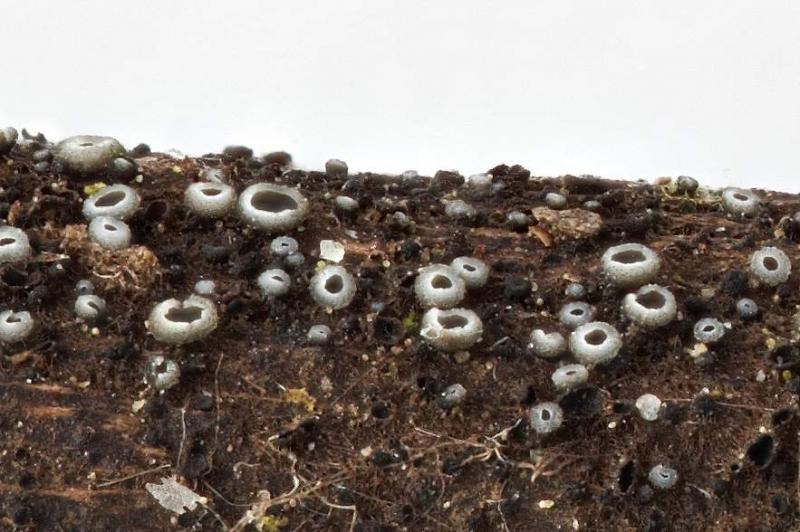
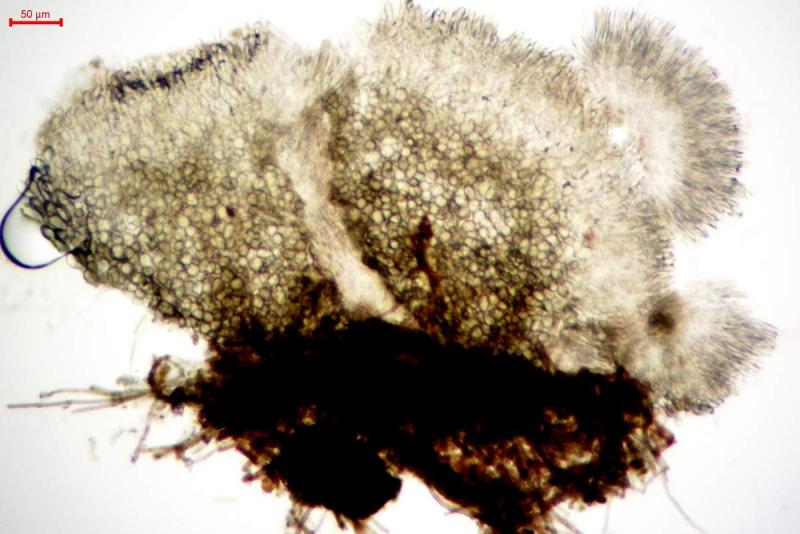
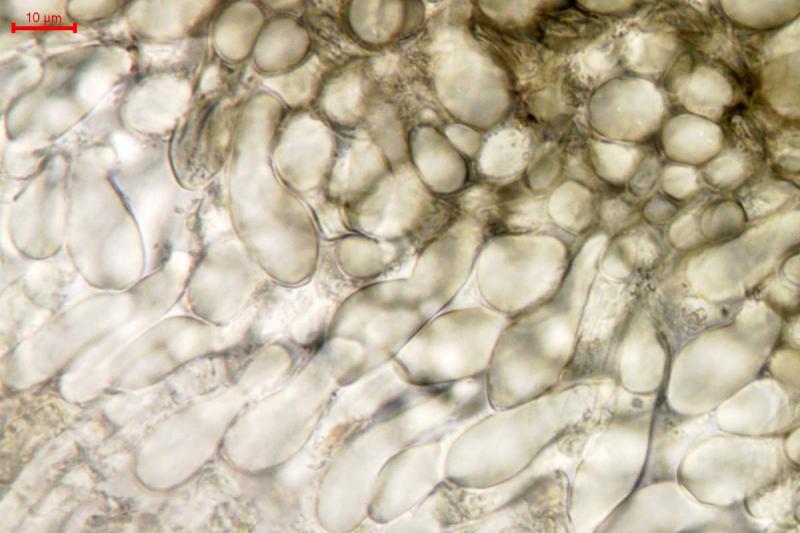
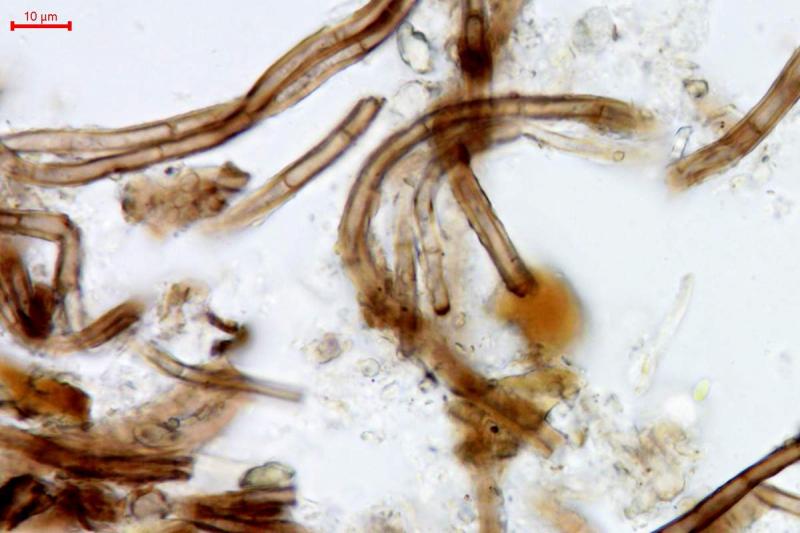
On fallen branch of Salix. Apothecia diam 0.3-0.4 (0.5) mm, sessile.
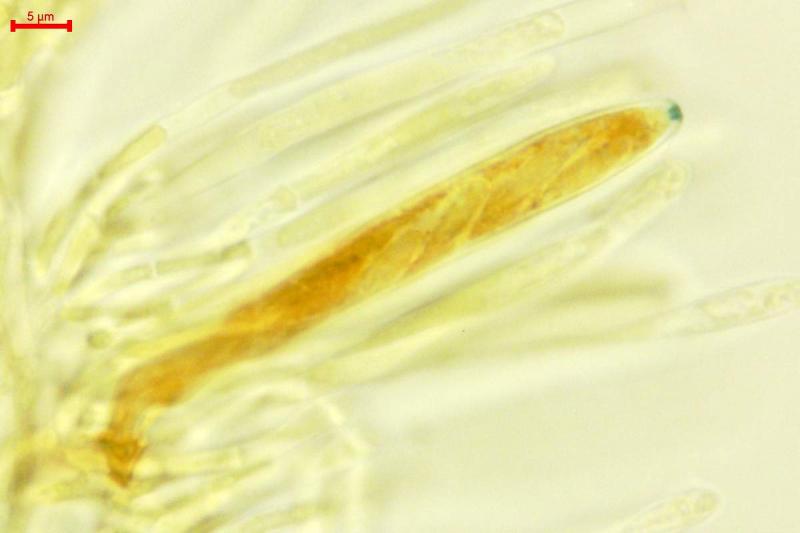
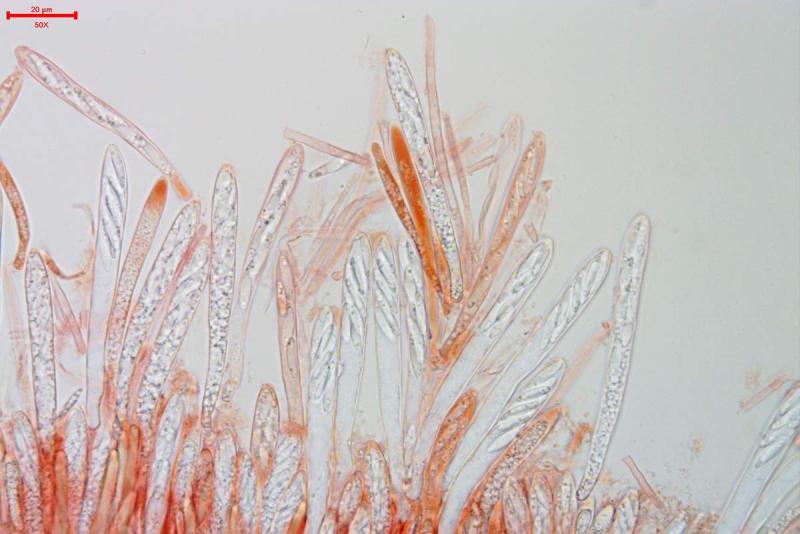
Ascus contains 8 spores, iodine positive, 69-66 x 9-10 ?m, croziers present.
Paraphyses cylindrical width 2-3.5 ?m.
Spores non septate, 7-16.5 x 2-3.5 ?m; Qav.=4.4; n=15; spores taken from apothecium in Congo red in 5% ammonia.

have you checked to see if there is a KOH reaction?
regards
Chris
The apothecium turns yellowish greenish in 5% KOH.
Gerrit

Also: could you take the size of spores just in water? In Congo read, that will disturb the measures. Check also if the spores aren't septate now and then.
Looking at the spores in water is absolutely necessary, because NH4OH and KOH can influence the number and look of the guttules.
Then, take Andreas Gminder's key: http://www.mollisia.de/Word_Dokumente/key.doc
Cheers - LUC.
I measured the spores in water 12.7 x 2.9 um.
Thanks for the link to Andreas Gminders Mollisia key. With your help and the key I quickly arrived at Mollisia fusca.
Problem solved, thanks again.
Regards, Gerrit
 fusca-6D-214800-Mollisia-fusca-0001.pdf