
21-04-2026 13:36
Gernot FriebesHi,I am out of ideas for this one. I collected Sal
21-04-2026 13:19
Gernot FriebesHi,this Lophodermium on Typha has ascospores measu
21-04-2026 13:05
Gernot FriebesHi,this hyphomycete feels familiar but I was not a
20-04-2026 22:00
 Malcolm Greaves
These pale yellow, hairy ascos were growing on cul
19-04-2026 21:23
Steve ClementsBonjour, I found this anamorphic fungus on old pl
19-04-2026 20:46
Steve Clements1 mm diameter approx spherical conidiophores on pl
12-04-2026 17:56
 Hardware Tony
Found on dead stems in February earlier this year
17-04-2026 19:16
 Enrique Rubio
Hi to everybodyI would appreciate any assistance r
14-04-2026 05:32
Ethan CrensonHi all, A few weeks back a friend pointed out som
17-04-2026 15:14
 Bruno Coué
Bonjour.Récoltes du 16/04/2026, sur feuilles mort
 Hello,
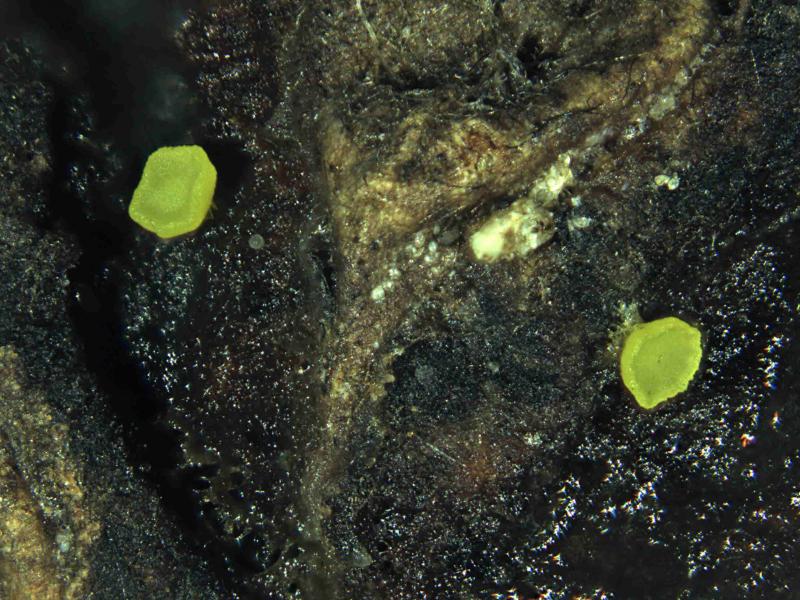
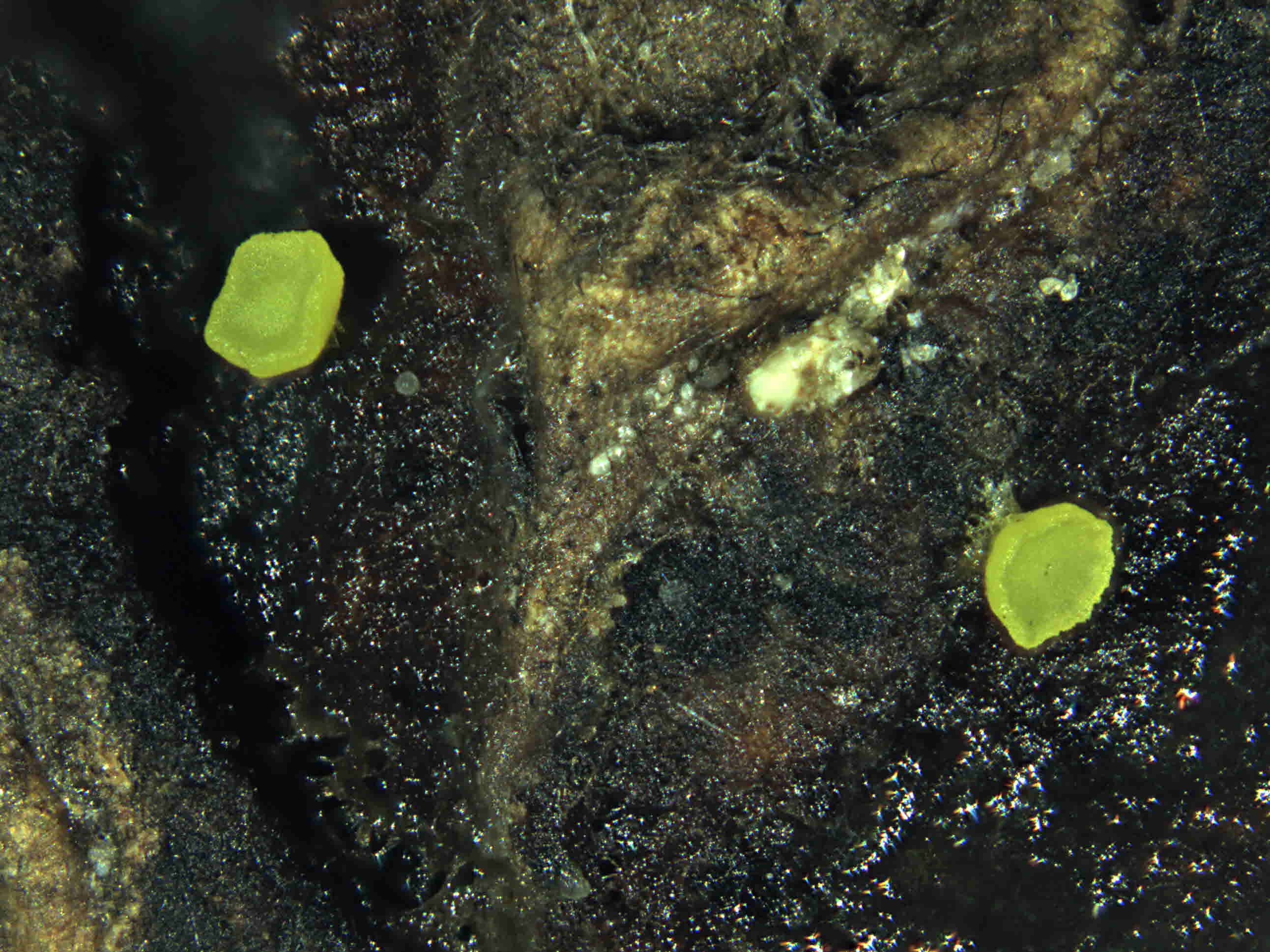
I found this species a few months ago but had another look at some cones that I kept in a humid box. Frb up to 0,25mm and bright yellow. On cones of pinus sylvestris. Spores 2,5/3x1µm. The link herenunder is a previous post (3 jan 14) about the same imperfect fungi.
http://www.ascofrance.fr/forum/26540/imperfect-fungus-on-cones
Anybody an idea?
Regards,
Ralph

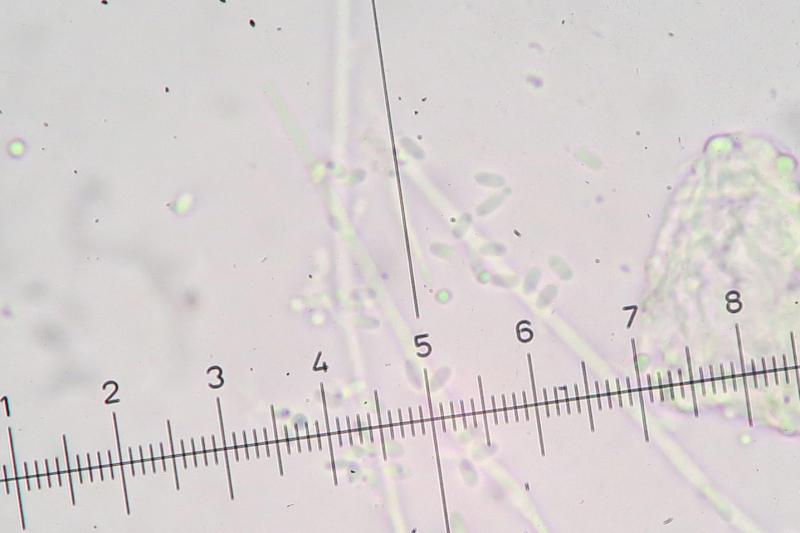

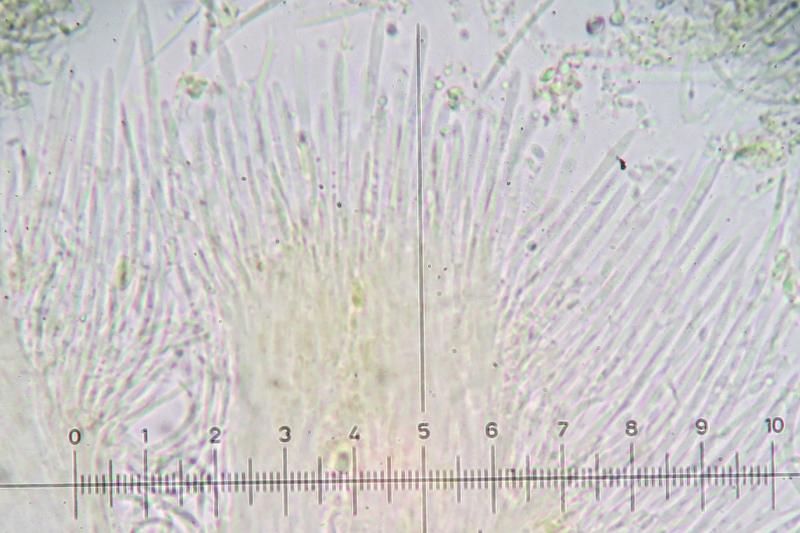
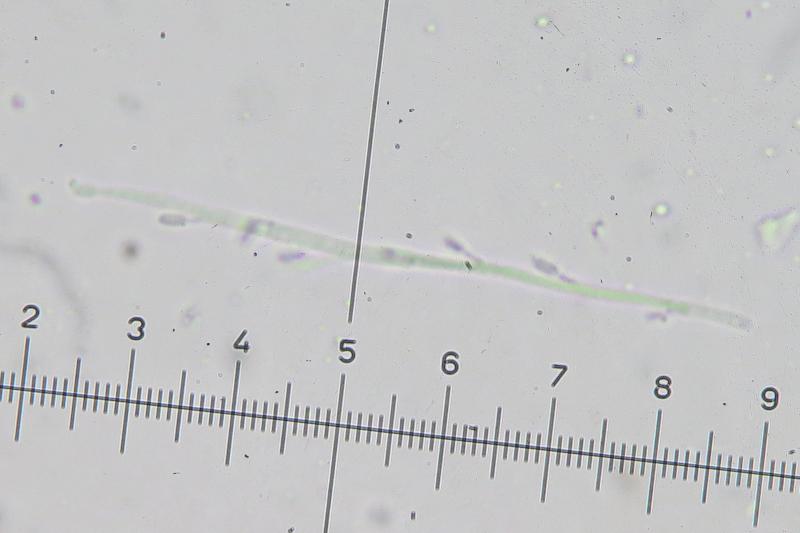
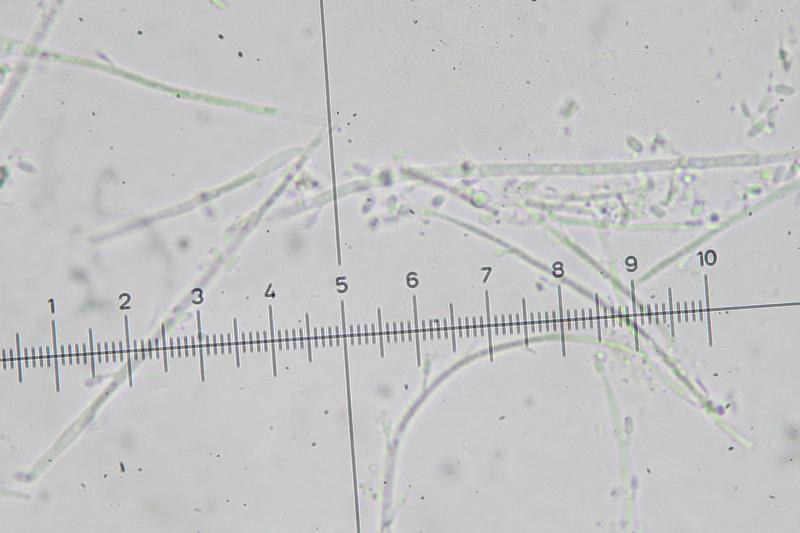
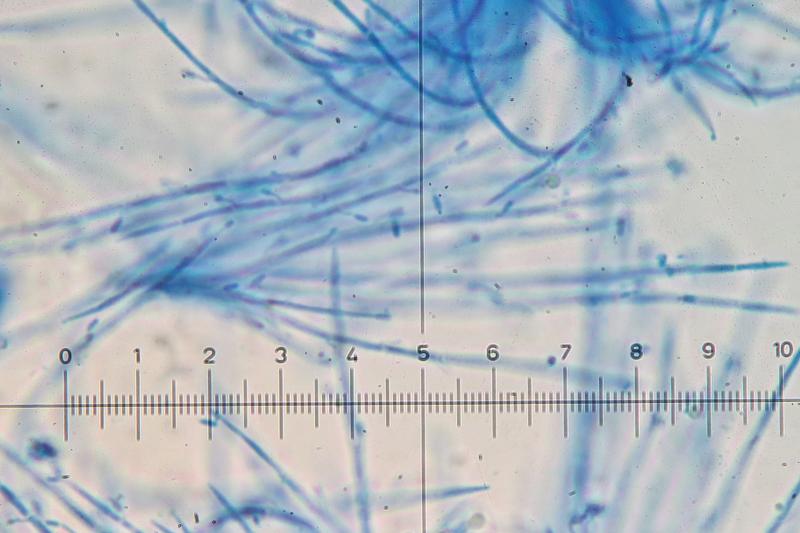

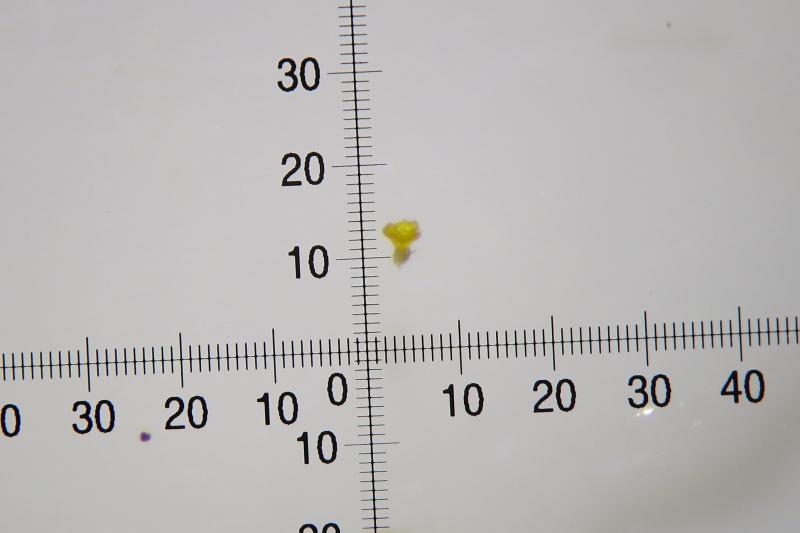

compare with Dendrodochium citrinum.
regards,
björn
Could be.... the only info I have about this species is in Ellis&Ellis. There I see more round spores. Do you have a key of this genus?
regards,
Ralph

Ralph's collection possess pleurogenous conidia (as Tubercularia), thus it is not the genus Dendrodochium which has acrogenous conidia.
Regards,
Christian
Thanks for your answers. In a mail I got from Thomas, he refers to W.B. Grove in British Stem- and leaf-fungi. Coelomycetes vol. 2 (1937). Here you find the following:
Lemalis aurea Sacc. (= Catinula aurea Lev.), Dendrodochium citrinum Grove).
Excipulum lemon-yellow, urn-shaped with a spreading rim, very fragile, shining outside,
about 1 mm high and broad; margin coarsely dentate with groups of hairs. Spores
very numerous, globose, hyaline, yellow, 1,5-2 µm diam., concatenate, involved
in mucus; sporophores long, cylindrical, branched, about 0.75 µm wide, each
producing a whorl of four branches at the apex. On cones of Pinus silvestris.
& on the wood of the same. (when dry resembles Calloria chrysocoma).
regards,
Ralph
Looks like I have found the same species as you on Pinus cones yesterday.
Sp. oblong 2.9-3.7 x 1.3-1.7 µm; with 2 bodies positioned at opposite ends of the conidia.
Did you come to any conclusion on species back in 2014?
Regards
Åeg
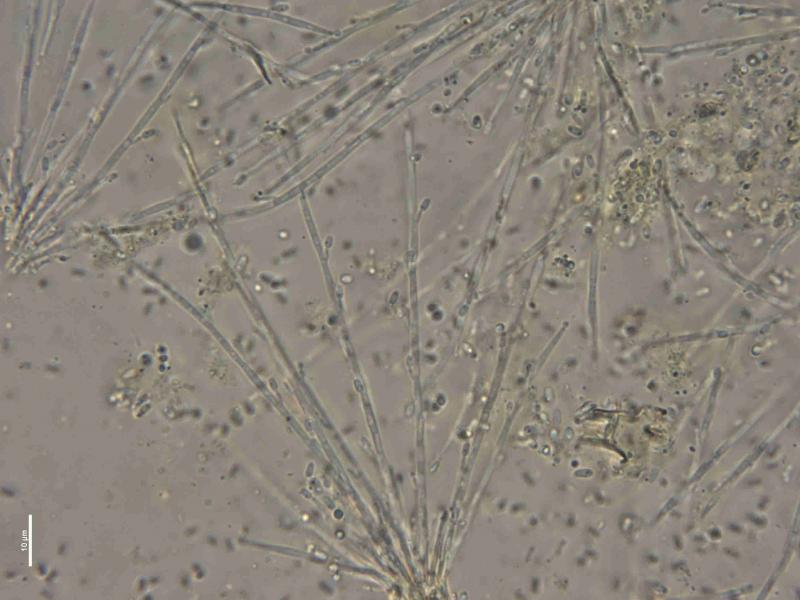
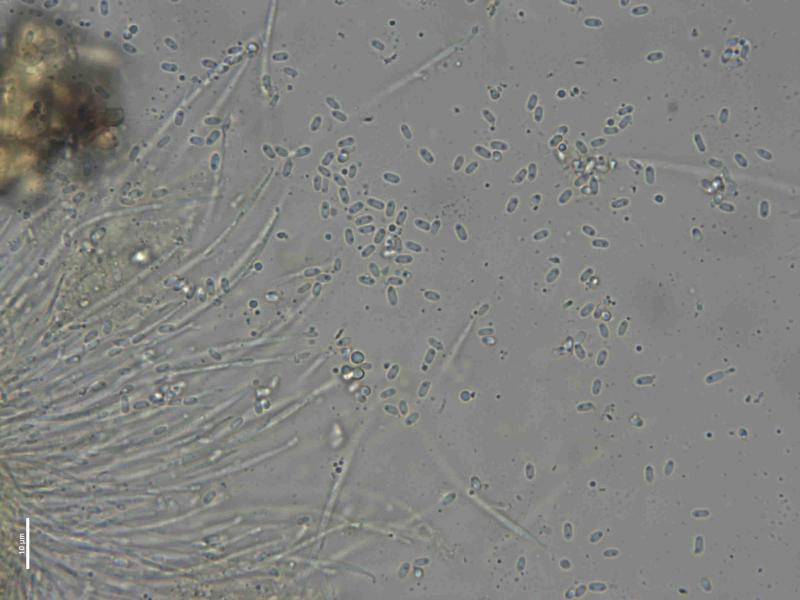
 2025-12-07-B-R3-S6-5x-SShB-0001.jpg