
05-05-2026 22:40
Gernot FriebesHi,I believe this is a Plagiostoma growing on a Sa
04-05-2026 18:13
 Stephen Martin Mifsud
ID request for what seems to be a true aquatic fun
04-05-2026 16:39
Stephen Martin Mifsud
ID request: This specimen was collected in Malta o
28-07-2011 18:31
 Alex Akulov
Dear FriendsToday I made the pdf file of Velenovsk
28-04-2026 20:07
 Lothar Krieglsteiner
... on twig in the air at standing Ceratonia siliq
04-05-2026 09:50
 Castillo Joseba
Me mandan el material seco de Galicia,(España) re
02-05-2026 12:42
Alain BRISSARDBonjour à tousJeuidi 30 avril dernier on m'a remi
02-05-2026 13:06
Pauline. PennaBonjour Please can someone help me with this id
01-05-2026 22:45
 Thierry Blondelle
Bonjour à tous, Une récolte sur bouse séchée d
Vibrissea filispora f. boudier 020613 36?
Miguel Ángel Ribes,
05-03-2014 23:20
 Hello, good night
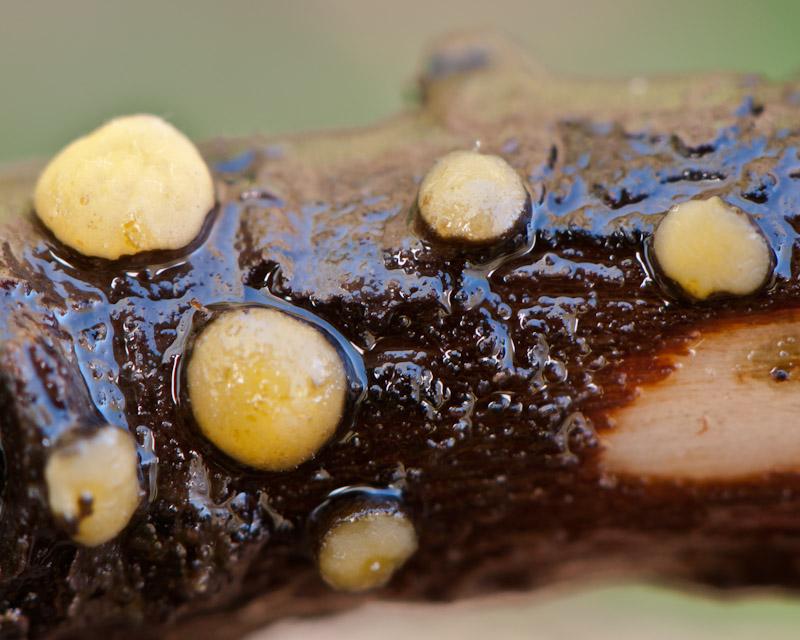
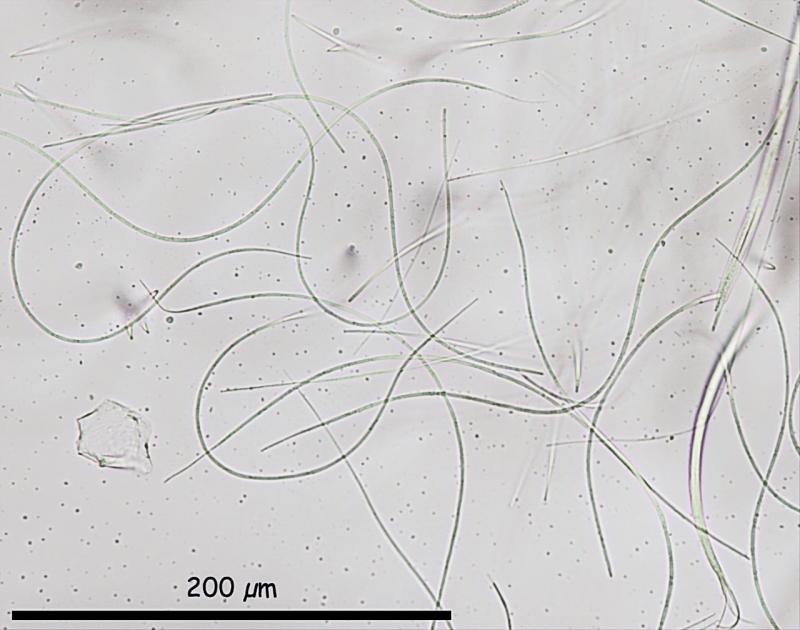
I had this Vibrissea from Somiedo meeting like V. flavovirens, but studying today the data I obtain in the live study in june I notice a too big spores for flavovirens (248,0-)283,8-331,8(-336,7) x (1,7-)1,9-2,3(-2,7) µm; Q = (104,4-)120,4-161,1(-174,6) ; N = 26; Me = 308,0 x 2,1 µm ; Qe = 145,3 in water, but too width for filispora f. boudier.
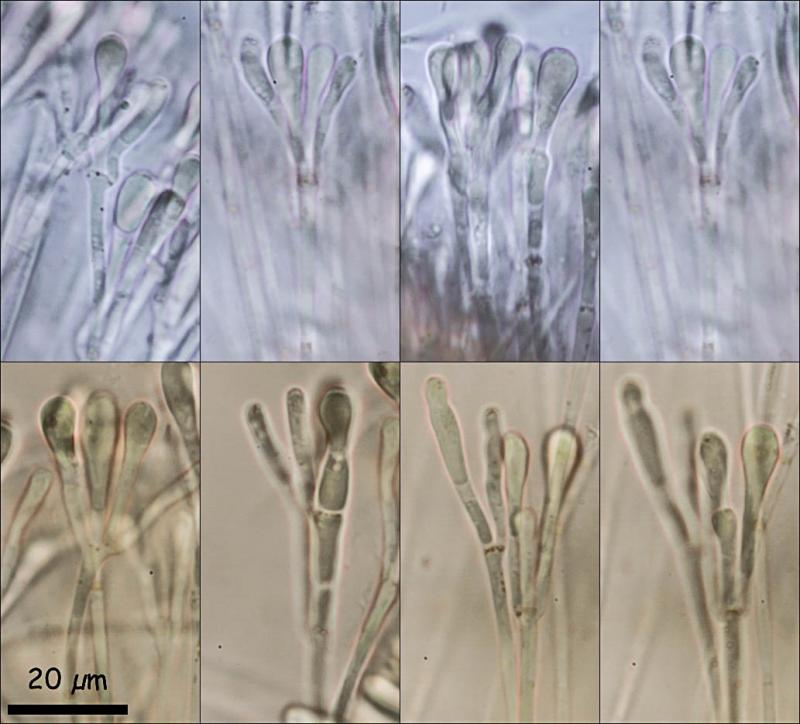
Asci little bigger than spores, IKI-.
With Zotto's key I arrive V. filispora f. boudier. I have see a sheet of this species in the database made by Christian.
Could you help me?
Thank you
Miguel Á. Ribes
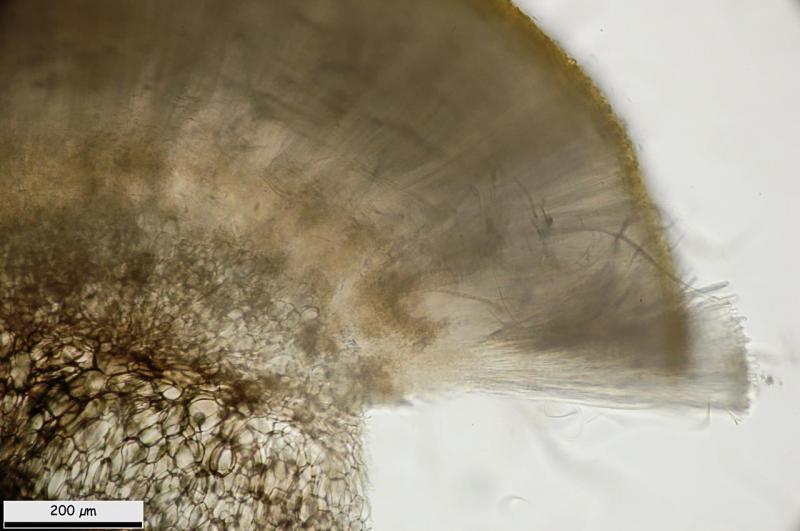
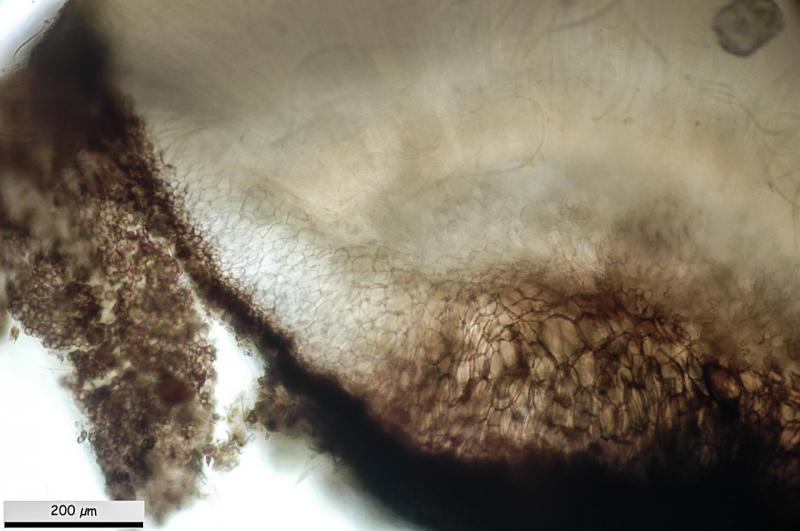
Hans-Otto Baral,
05-03-2014 23:41

Re : Vibrissea filispora f. boudier?
Hi Miguel
great, these very long spores. I never saw such.
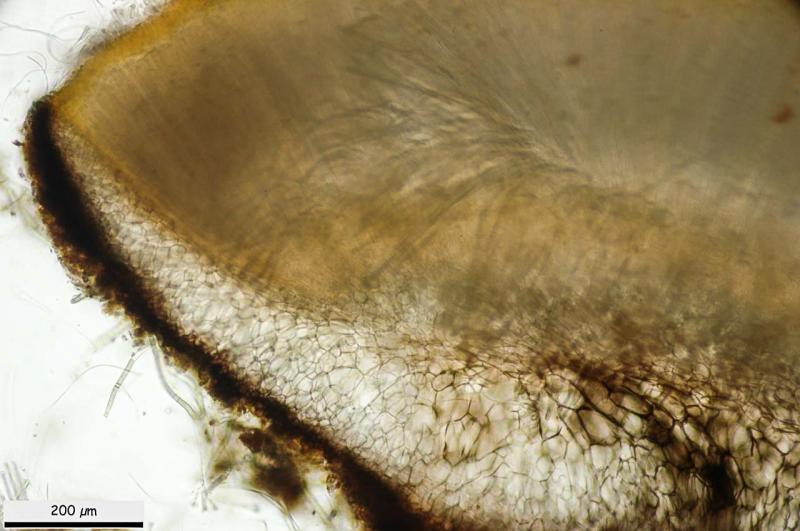
Did you photograph also the living ascus apex for the nasse apicale? And marginal section in IKI with perihymenial bluing?
Zotto
great, these very long spores. I never saw such.
Did you photograph also the living ascus apex for the nasse apicale? And marginal section in IKI with perihymenial bluing?
Zotto
Miguel Ángel Ribes,
06-03-2014 00:23
Re : Vibrissea filispora f. boudier?
I am sorry, Zotto, these are the best pictures I can obtain of the ascus apex. None of marginal section with IKI, sorry.
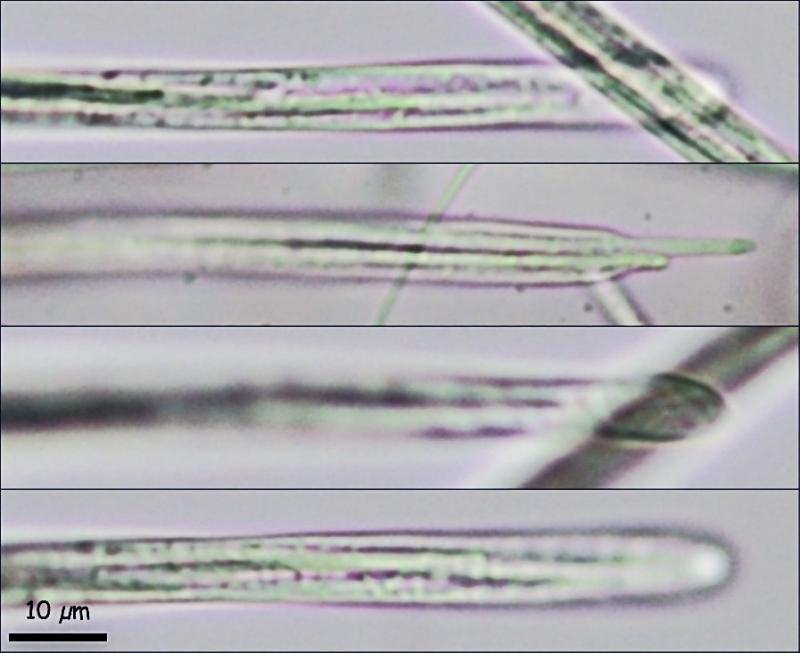
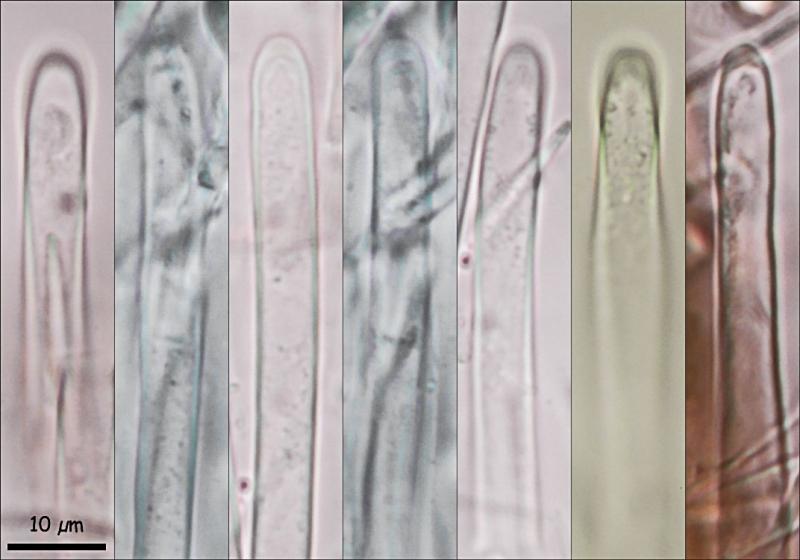
Hans-Otto Baral,
06-03-2014 00:30
Re : Vibrissea filispora f. boudier?
Ah yes, these are in the dead state, so uncertain whether there was this "nasse" structure.
IKI could be tested also with herbarium material , but most species have this amyloid reaction in the excipulum I remember.
Zotto
IKI could be tested also with herbarium material , but most species have this amyloid reaction in the excipulum I remember.
Zotto
Miguel Ángel Ribes,
06-03-2014 00:40
Re : Vibrissea filispora f. boudier?
Is it possible to see the nasse apical in herbarium material?
Thanks Zotto.
Thanks Zotto.
Hans-Otto Baral,
06-03-2014 09:54
Re : Vibrissea filispora f. boudier 020613 36?
No, I would not try this. The result will be ambiguous. It is actually not comparable to living asci, and I remember that species of Vibrissea exist where the nasse is only rather thin. Especially those with amyloid ring have a reduced nasse. It is a gradual feature, not + and -.
Miguel Ángel Ribes,
06-03-2014 10:18
Re : Vibrissea filispora f. boudier 020613 36?
Uppppsss
So I have a mixed Vibrissea between V. flavovirens and V. filispora f. boudier.
Great, What luck!!!!
Thanks a lot, Zotto.
So I have a mixed Vibrissea between V. flavovirens and V. filispora f. boudier.
Great, What luck!!!!
Thanks a lot, Zotto.
Hans-Otto Baral,
06-03-2014 10:21
Re : Vibrissea filispora f. boudier 020613 36?
V. flavovirens is easily recognized by its +/- straight, constantly 16-celles spores that regularly break into four 4-celled part spores. Your collection has presumably spores with 20 or more cells. But also the septa of the spores of Vibrissea are difficult to see in herbarium material but rather easy when alive :-(
Miguel Ángel Ribes,
06-03-2014 10:34
Re : Vibrissea filispora f. boudier 020613 36?
Ok, I am goingo to try to count septa in my original pictures, but I did not see any 4-celled part spores.
Miguel Ángel Ribes,
07-03-2014 00:03
Re : Vibrissea filispora f. boudier 020613 36?
Hi again
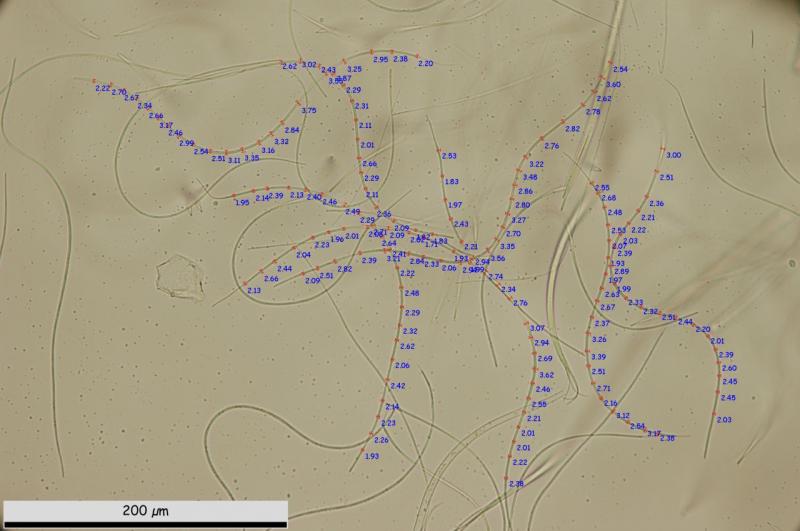
It is difficult to see a complete spore focused, and in the first moment to identify the septa, but at the end it is easy to find the narrowed area in the septum. Attached the same spores picture with the septa marked in red. In all spores I count more than 16 septa, sometime more than 20.
Then, I guess it is V. filispora f. boudier.
Thank you.
It is difficult to see a complete spore focused, and in the first moment to identify the septa, but at the end it is easy to find the narrowed area in the septum. Attached the same spores picture with the septa marked in red. In all spores I count more than 16 septa, sometime more than 20.
Then, I guess it is V. filispora f. boudier.
Thank you.
Hans-Otto Baral,
07-03-2014 09:52
Re : Vibrissea filispora f. boudier 020613 36?
yes, when the spores are alive they show a slight constriction at each septum. 20-24 septa is typical of V. decolorans and similar species.
Zotto
Zotto
Miguel Ángel Ribes,
07-03-2014 18:40
Re : Vibrissea filispora f. boudier 020613 36?
Thanks Zotto
I am in the train with few biblio, but V. decolorans hasn't IKI - asci and narrower spores?
I am in the train with few biblio, but V. decolorans hasn't IKI - asci and narrower spores?
Hans-Otto Baral,
07-03-2014 18:50
Re : Vibrissea filispora f. boudier 020613 36?
Yes, it is IKI blue. I only mentioned it because it likewise distinctly exceeds 15 septa. Such irregular cell numbers are not frequent.
Miguel Ángel Ribes,
08-03-2014 10:55
Re : Vibrissea filispora f. boudier 020613 36?
Ok. I understand.
Thanks.
Thanks.