
03-06-2026 14:39
Thomas FlammerApothecia yellow, glassy-transparent, 80 - 120 ymS
16-03-2014 13:39
 Enrique Rubio
HI to all I'm looking for B. Hein's article on Wi

02-06-2026 14:33
 Nicolas VAN VOOREN
Hello.I'm searching for a PDF copy of the followin
18-10-2022 00:12
Valencia Lopez Francisco JavierHola amigos/asRecientemente encontré esta colecci
02-06-2026 17:58
Louis DENYBonjour forum, Sur feuille de Populus tremula, en

28-07-2011 18:31
 Alex Akulov
Dear FriendsToday I made the pdf file of Velenovsk
Calycina phyllophila?
Rubén Martínez-Gil,
20-01-2014 00:20
 Hola a todos.
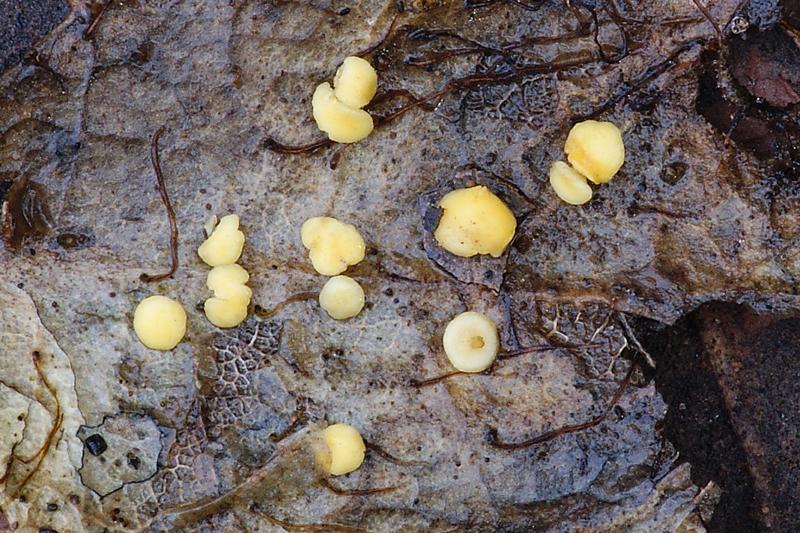
Ayer encontré este asco sobre hojas de Q. ilex en zona húmeda de bosque de ambiente mediterráneo.
Miden hasta 1,5 mm de diámetro, amarillos, con el exterior más blanquecino.
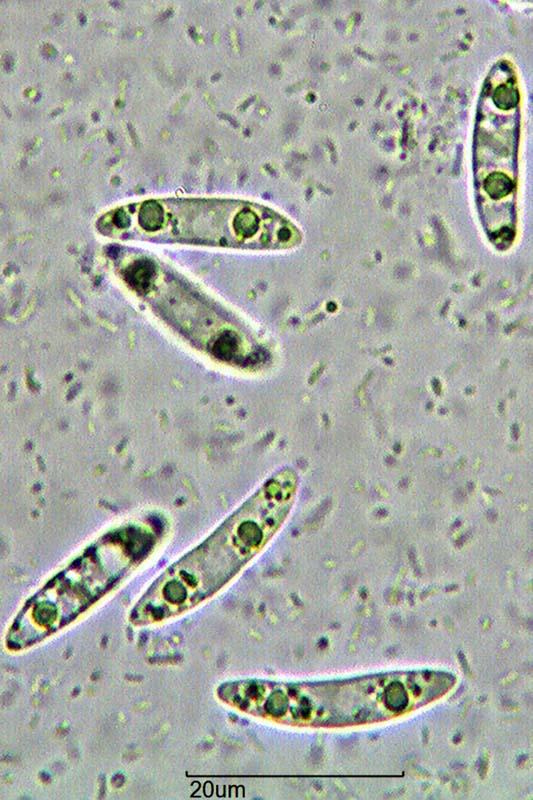
Esporas elipsoidales, lisas, algunas con 1 septo trasversal central, de 17-21,5 x 4-4,7 micras.
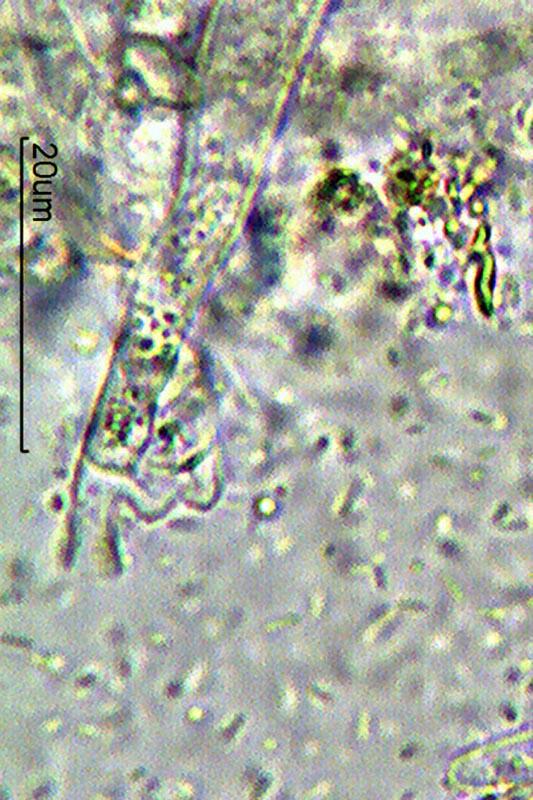
Ascas amiloides y croziers +.
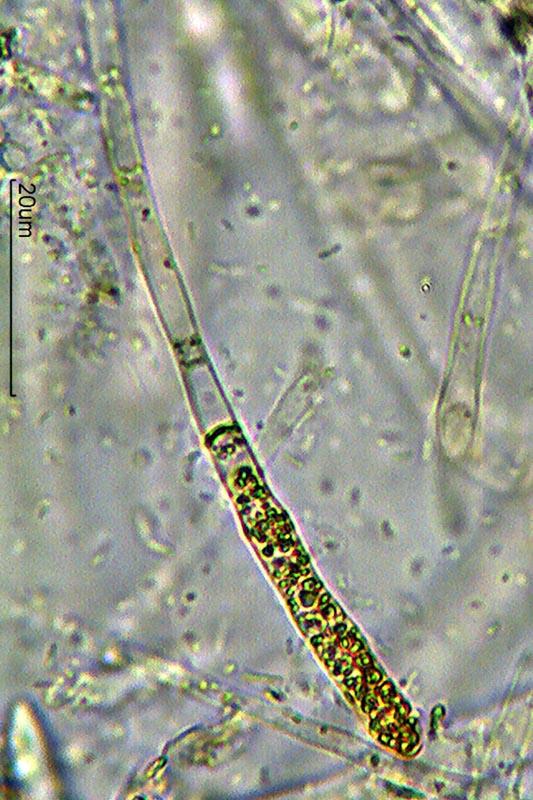
Paráfisis filiformes, septadas, con el último tramo lleno de una sustancia amarillenta que reacciona inmediatamente en presencia de IKI, formando un montón de gútulas de color amarillo vivo.
Excípulo de textura prismática.
¿Puede ser Calycina phyllophila?
Gracias por su ayuda.
Un saludo
Rubén

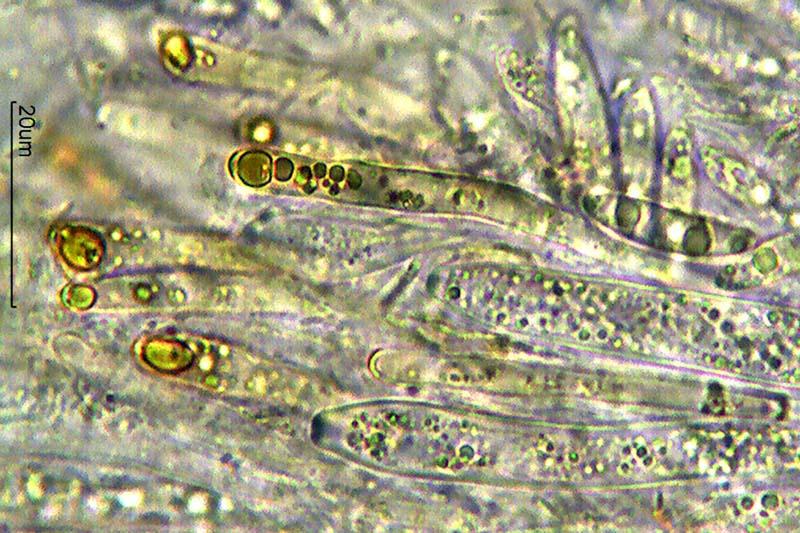
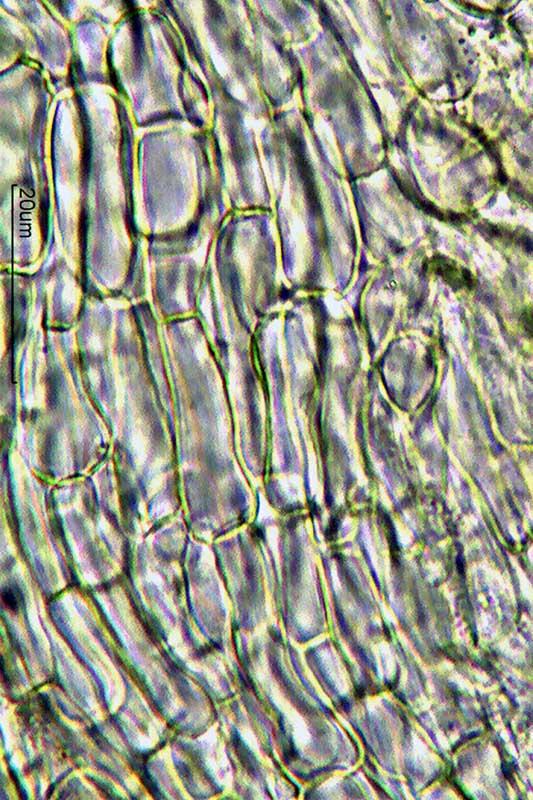
Hans-Otto Baral,
20-01-2014 13:41

Re : Calycina phyllophila?
Dear Ruben
a big problem which you presented here. The spores of C. phyllophila are much smaller and 1-septate. The features recall something like Phaeohelotium epiphyllum, but the apical ring clearly excludes a member of Helotiaceae.
Perhaps you could take some more pictures of the apical ring to be sure? Calycellina or Allophylaria in a very wide sense could coem into consideration, but I have no species in mind that matches this.
Zotto
a big problem which you presented here. The spores of C. phyllophila are much smaller and 1-septate. The features recall something like Phaeohelotium epiphyllum, but the apical ring clearly excludes a member of Helotiaceae.
Perhaps you could take some more pictures of the apical ring to be sure? Calycellina or Allophylaria in a very wide sense could coem into consideration, but I have no species in mind that matches this.
Zotto
Raúl Tena Lahoz,
20-01-2014 22:22

Re : Calycina phyllophila?
Yes, this one matches ok to Allophylaria, the one of Zotto´s folder "Quercus ilex leaves" With Rubén´s collection this is the fourth site I know: Ricardo at Guadalajara, Javier at Valencia, me at Teruel and now Rubén, at La Rioja?
I will send my pics & data to Rubén.
Raúl
Hans-Otto Baral,
20-01-2014 22:47
Re : Calycina phyllophila?
Oh yes, Raul, great!! I forgot this species.
Ruben, could you try Lugol in higher concentration? Perhaps directly without water, if your Lugol is more yellow than brown?
It should give a red reaction to the ascus ring.
Zotto
Ruben, could you try Lugol in higher concentration? Perhaps directly without water, if your Lugol is more yellow than brown?
It should give a red reaction to the ascus ring.
Zotto
Rubén Martínez-Gil,
21-01-2014 01:18
Re : Calycina phyllophila?
Hola a todos.
Gracias por sus respuestas, Raúl, Zotto.
Os pongo unas fotos de ascas con IKI que tenía retirado, más viejo, pero es posible que en mejor estado que el anterior.
También pongo fotos de esporas obtenidas de esporada libre, donde se ve 1 septo central trasversal.
Entonces, ¿os parece que sea una especie de Allophylaria?
Gracias.
Un saludo
Rubén
Gracias por sus respuestas, Raúl, Zotto.
Os pongo unas fotos de ascas con IKI que tenía retirado, más viejo, pero es posible que en mejor estado que el anterior.
También pongo fotos de esporas obtenidas de esporada libre, donde se ve 1 septo central trasversal.
Entonces, ¿os parece que sea una especie de Allophylaria?
Gracias.
Un saludo
Rubén
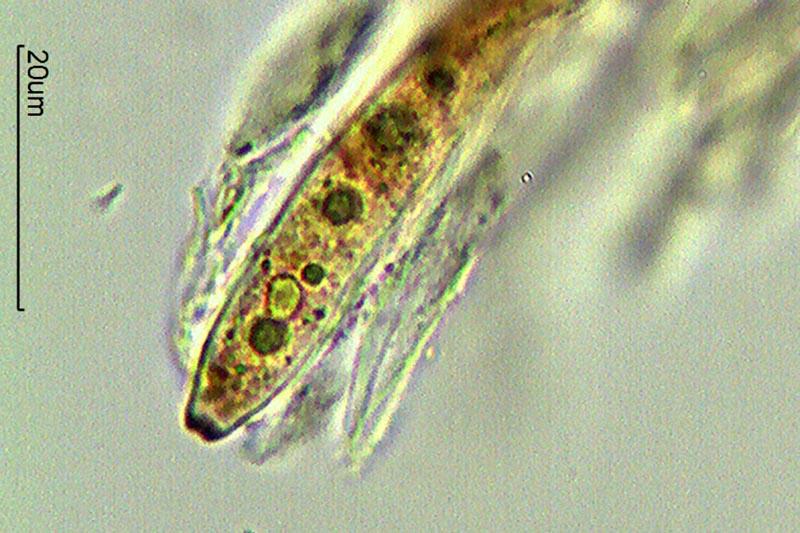
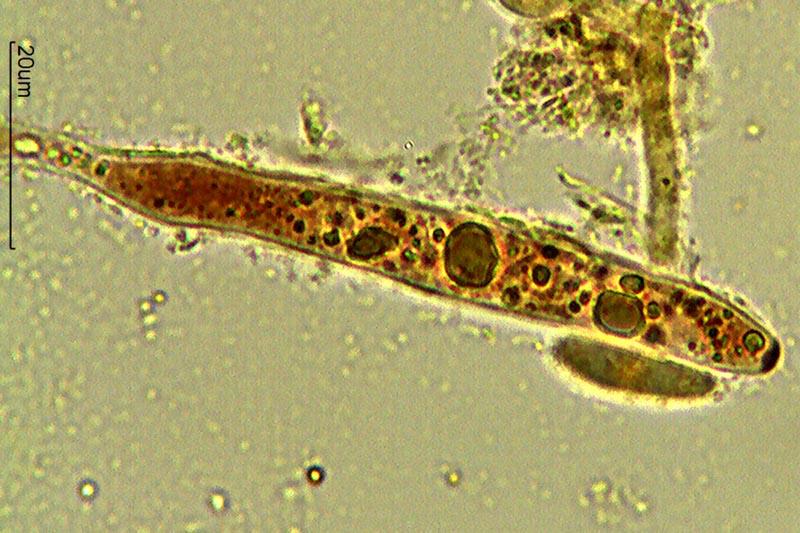


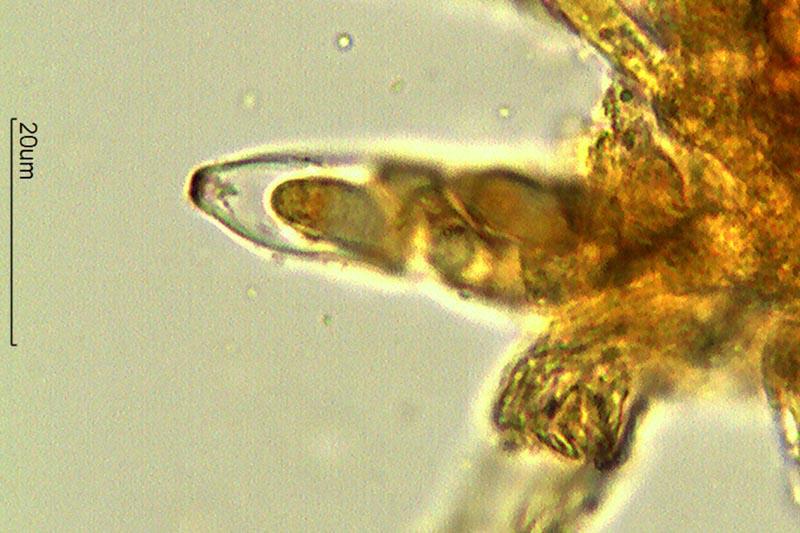
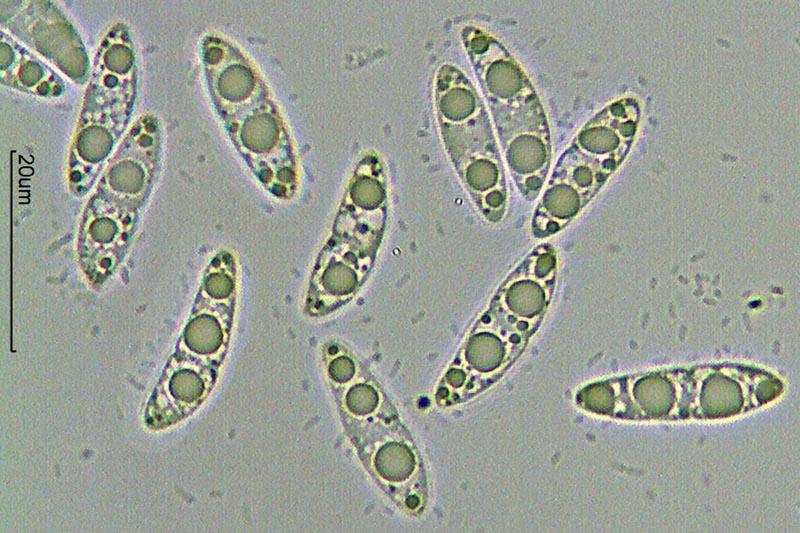
Hans-Otto Baral,
21-01-2014 10:22
Re : Calycina phyllophila?
Thanks, Ruben. Interesting that the spores get 1-septate, though maybe not inside the living asci.
The red IKI reaction is now evident, though I feel the strong contrast of your pics masks it a bit.
I think this is at least a marginal Allophylaria. But possibly the species could exist in the genus Hymenoscyphus or Helotium, I did not revise the literature.
Zotto
The red IKI reaction is now evident, though I feel the strong contrast of your pics masks it a bit.
I think this is at least a marginal Allophylaria. But possibly the species could exist in the genus Hymenoscyphus or Helotium, I did not revise the literature.
Zotto
Rubén Martínez-Gil,
21-01-2014 13:20
Re : Calycina phyllophila?
Gracias por la información, Zotto, Raúl.
Un saludo.
Rubén
Un saludo.
Rubén