27-04-2026 20:52
 Lothar Krieglsteiner
Found on hanging tiwg of Olea europaea in dried-ou
28-04-2026 22:51
 Bernard CLESSE
Bonsoir à toutes et tous,Pourriez-vous m'aider à
29-04-2026 08:01
Lothar Krieglsteiner
... on twig attached to small tree of Citrus auran
29-04-2026 10:44
Lothar Krieglsteiner
growing at moist, drying-out soil at the side of a
28-04-2026 20:33
Vitus SchäfftleinHello, I found Trochila ilicina on Ilex aquifoliu

28-04-2026 21:50
 Pablo Sandoval
Hola a todos,Espero se encuentren bien. Hace mucho
27-04-2026 18:05
Lothar Krieglsteiner
... still attached at standing tree. The green con
28-04-2026 20:07
Lothar Krieglsteiner
... on twig in the air at standing Ceratonia siliq
27-04-2026 18:48
Tony MoverleyCollected 23rd April 2026, Norfolk, EnglandSwarms
White "Scutellinia"
Malcolm Greaves,
09-10-2013 20:16
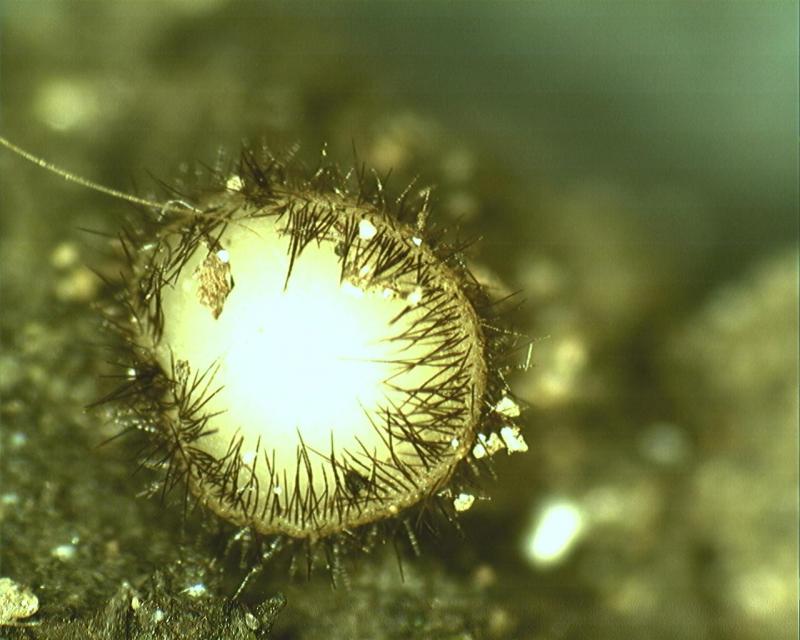
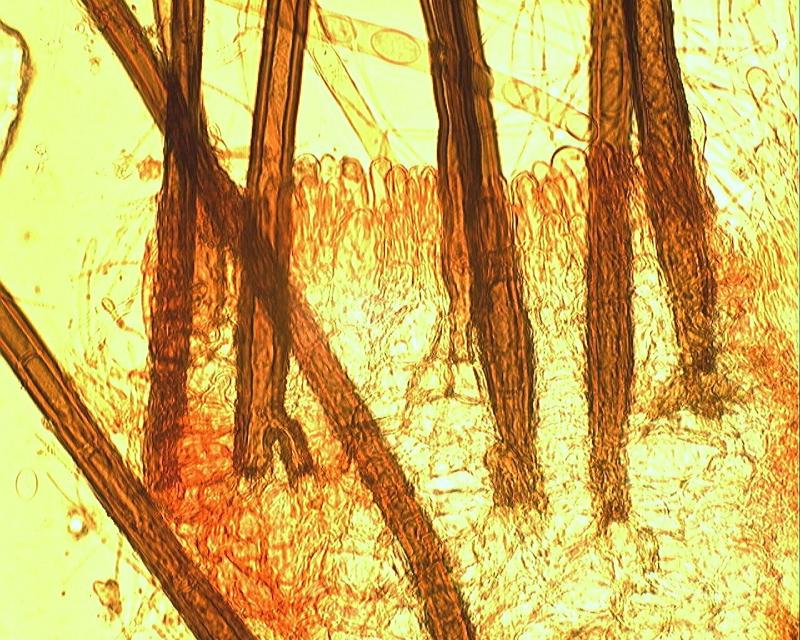
 This White "Scutellinia" was in the same damp rut as the Melastiza.
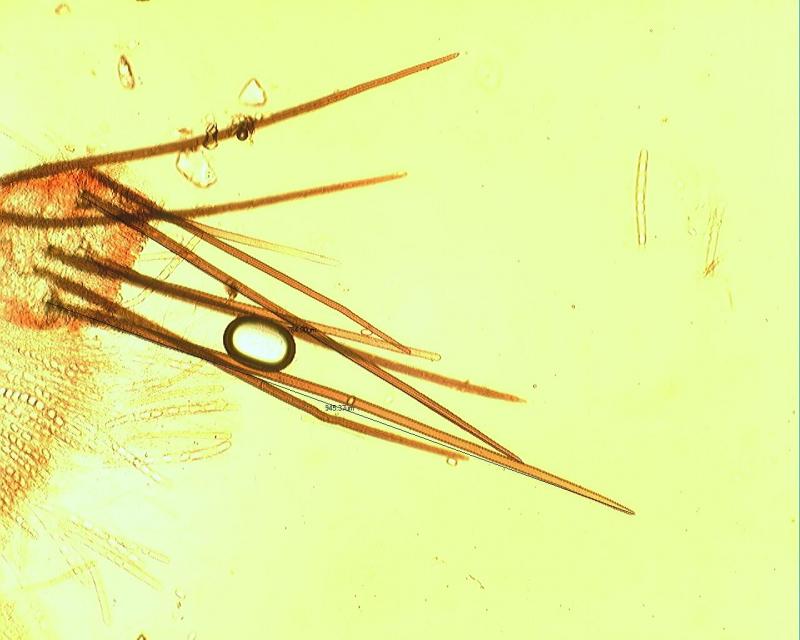
Two types of hair maximum length 950 some septate (occasionally contracted at the septa) Simple or bi-furcate.
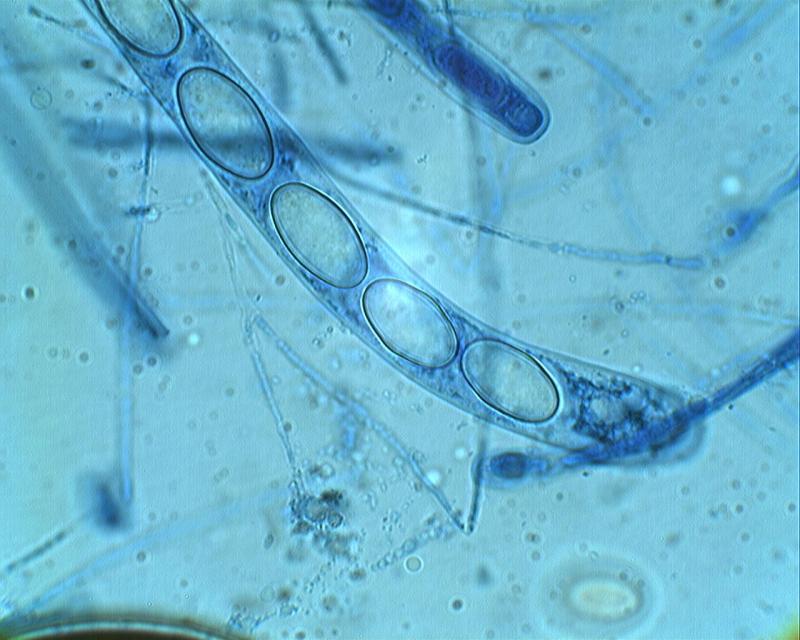
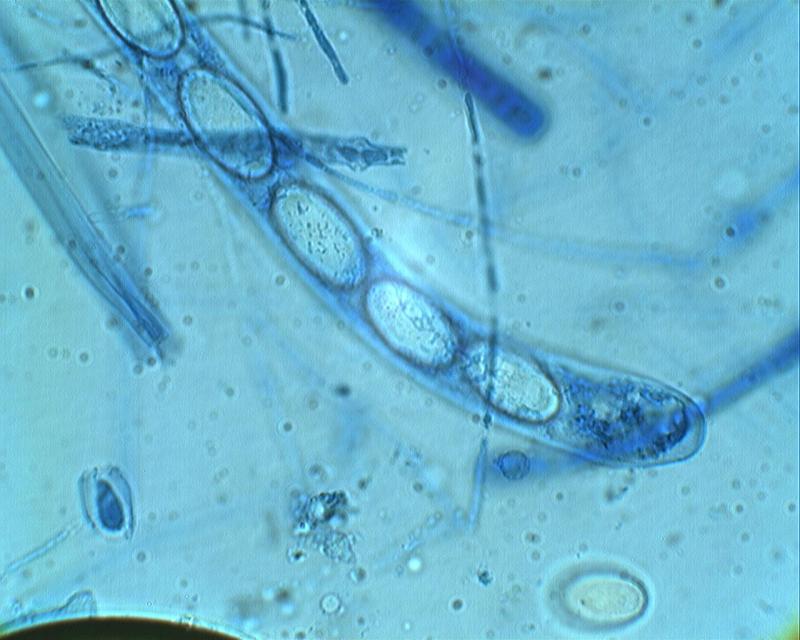
I have no spore drop yet but in the ascii they are 18-20 x 9-11.5 and show little signs of ornamentation.
Could this be a Scutellinia or am I in totally the wrong genus.
Thanks
Mal
Ron Bronckers,
09-10-2013 20:31
Re : White "Scutellinia"
Hi Malcolm,
Didn't you find this beautiful species once before?
It's Paratrichophaea boudieri (Grélet) Bronckers.
All the best!
Ron
Didn't you find this beautiful species once before?
It's Paratrichophaea boudieri (Grélet) Bronckers.
All the best!
Ron
Beñat Jeannerot,
09-10-2013 20:33

Re : White "Scutellinia"
Adio Mal,
Paratrichophaea boudieri ? We don't see bulbous base hairs. Have you seen them, Mal ?
If it's not P. boudieri that you known, perhaps Scutellinia crinita with whitish hymenium, like here :
http://www.flickr.com/photos/jacquesl/2858994478/in/photostream/
I have several collections from Quebec and Spain.
If you can conserve it for me, I'll be very glad.
But not if you find bulbous hairs;
Beñat
Paratrichophaea boudieri ? We don't see bulbous base hairs. Have you seen them, Mal ?
If it's not P. boudieri that you known, perhaps Scutellinia crinita with whitish hymenium, like here :
http://www.flickr.com/photos/jacquesl/2858994478/in/photostream/
I have several collections from Quebec and Spain.
If you can conserve it for me, I'll be very glad.
But not if you find bulbous hairs;
Beñat
Beñat Jeannerot,
09-10-2013 22:29
Re : White "Scutellinia"
Oh, I don't have seen your remark : "Two types of hairs".
So, Ron is probably right !
Beñat
So, Ron is probably right !
Beñat
Malcolm Greaves,
09-10-2013 23:07
Re : White "Scutellinia"
Thanks Ron and Beñat.
The Paratrichophaea boudieri I previously found had two types of hair (long and short) and all the short hairs had bulbose roots. This specimen has two types but both are the same length and niether has swollen roots that I can find. I will search to make sure.
Mal
The Paratrichophaea boudieri I previously found had two types of hair (long and short) and all the short hairs had bulbose roots. This specimen has two types but both are the same length and niether has swollen roots that I can find. I will search to make sure.
Mal
Peter Welt,
10-10-2013 09:26

Re : White "Scutellinia"
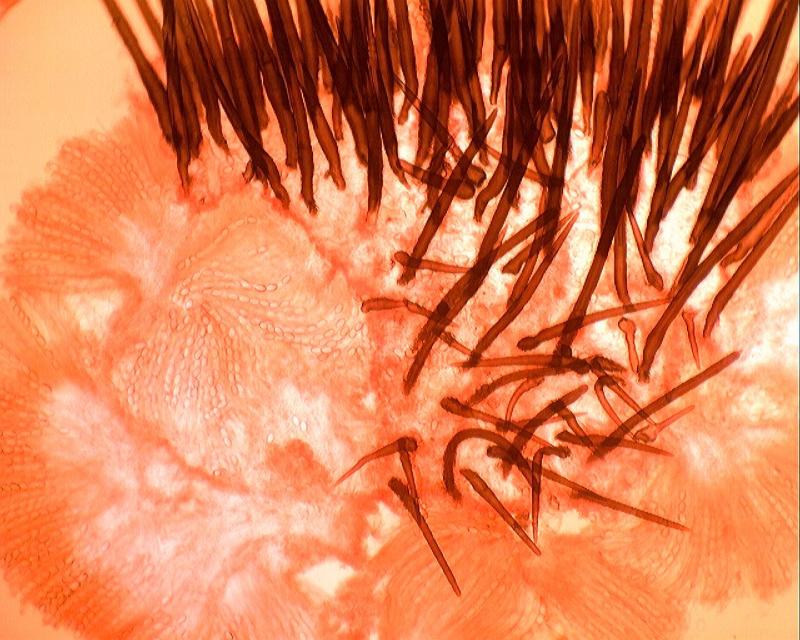
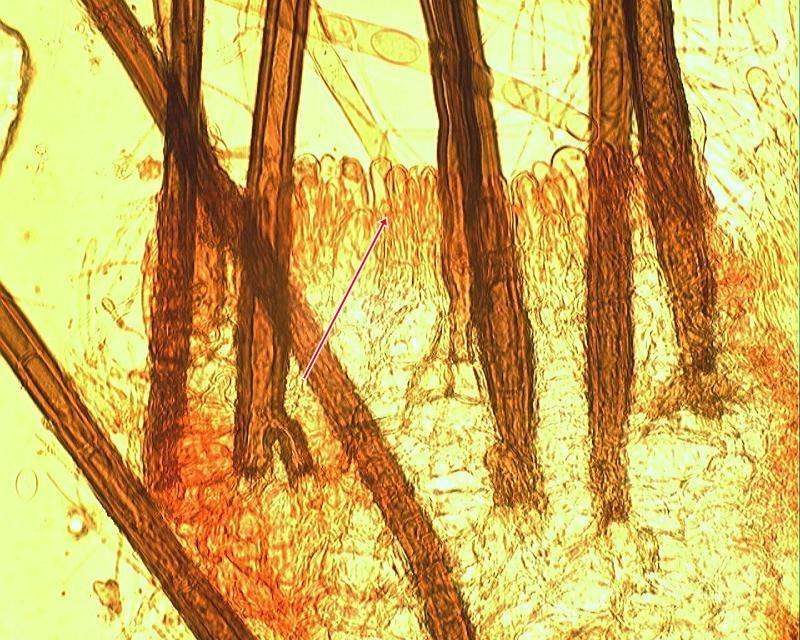
This is clearly Paratrichophaea boudieri. The pseudo hair is
this. (red arrow) This does not exist in the genus Trichophaea. Here are my key in english.
Peter
this. (red arrow) This does not exist in the genus Trichophaea. Here are my key in english.
Peter
 Revised-key-to-species-Trichophaeopsis-0001.doc
Ron Bronckers,
10-10-2013 09:56
Re : White "Scutellinia"
Hello Malcolm,
While looking for two types of hairs please also check if you can find mature ascospores outside the asci with ornamentation.
In one image we can see smooth spores inside an ascus.
The other image shows cyanophilic structures (on the ascuswall??), but I am not sure if these are present on the ascospores.
Kind regards,
Ron
While looking for two types of hairs please also check if you can find mature ascospores outside the asci with ornamentation.
In one image we can see smooth spores inside an ascus.
The other image shows cyanophilic structures (on the ascuswall??), but I am not sure if these are present on the ascospores.
Kind regards,
Ron
Malcolm Greaves,
10-10-2013 14:24
Re : White "Scutellinia"
With another look I think I can safely say Paratrichophaea boudieri the swollen hair roots are clearly visable and the mature spores show no ornamentation in LCB.
Thanks for all the help.
Mal
Thanks for all the help.
Mal