
02-05-2026 13:06
Pauline. PennaBonjour Please can someone help me with this id
02-05-2026 12:42
Alain BRISSARDBonjour à tousJeuidi 30 avril dernier on m'a remi
01-05-2026 22:45
 Thierry Blondelle
Bonjour à tous, Une récolte sur bouse séchée d
28-04-2026 20:07
 Lothar Krieglsteiner
... on twig in the air at standing Ceratonia siliq
14-04-2026 05:32
Ethan CrensonHi all, A few weeks back a friend pointed out som
28-04-2026 20:33
Vitus SchäfftleinHello, I found Trochila ilicina on Ilex aquifoliu

30-04-2026 10:28
Rot BojanHello, by appearance I would say that I am dealing
27-04-2026 18:48
Tony MoverleyCollected 23rd April 2026, Norfolk, EnglandSwarms
27-04-2026 20:52
Lothar Krieglsteiner
Found on hanging tiwg of Olea europaea in dried-ou
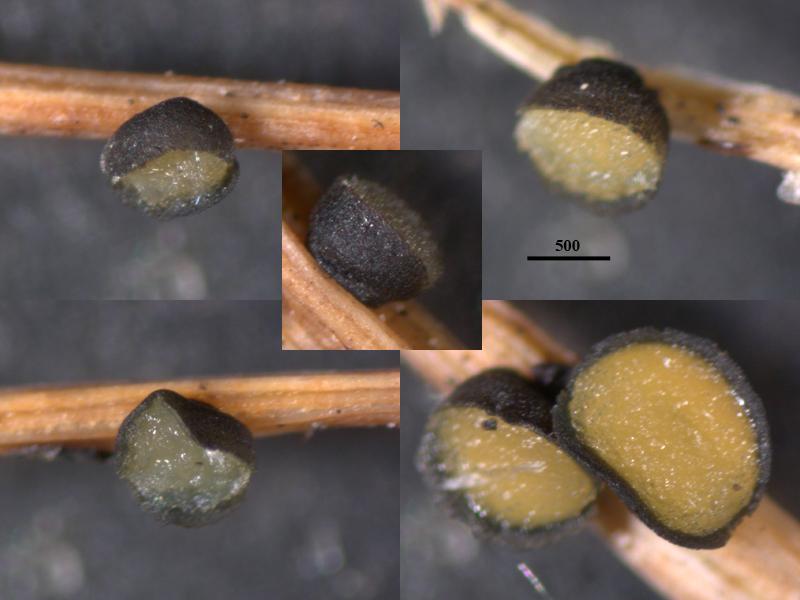
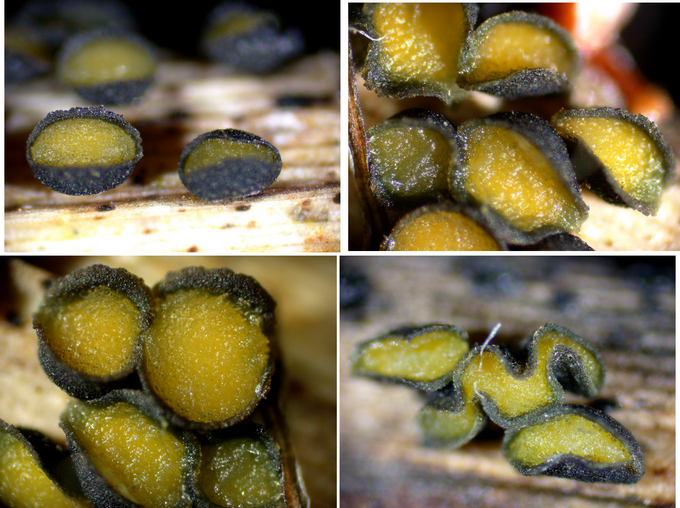
This interesting species has showed up at Eriophorum vaginatum leaves in autumn, though i was collecting immature structures in summer, but they were not ready then. Finally after the first frosts it was found with fully developed structures. Hysterothecia densely cover very soft dead leaves laying at sphagnum surface.
The structures fit well with description in Johnston and Scheuer ("Lophodermium eriophori comb. nov." Mycotaxon 87 (2003): 489-492.).
Hysterothecia first pustulate, then outer layer bursting longitudinally or radially, enlarge to become turbinate, ellipsoid or more often circular in outline, hymenium yellow to orangish, outer surface black, to 1.5 mm by long axis, 0.5 mm high.
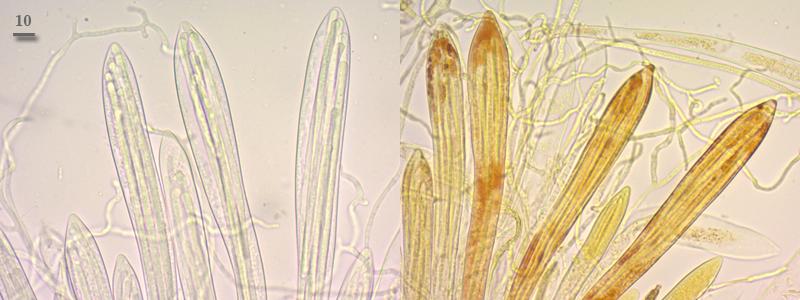
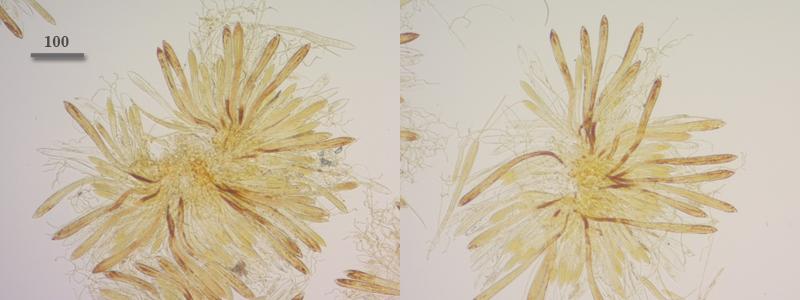
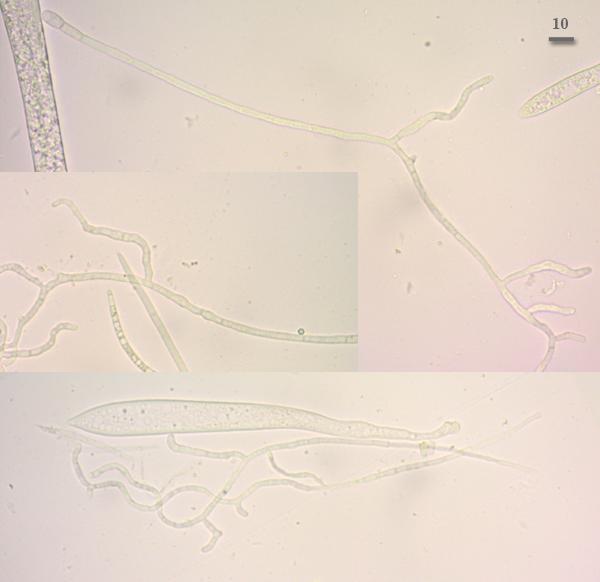
Asci clavate, with crozier, conical tip, inamyloid, 250 x 20 mk; paraphyses branched in upper part (tree-like), end branches circinate, 2.5–3 mk broad at upper part; spores needle-shaped, with loose sheath, with appendix at obtuse end, 150 (132–173) x 3.3 (2.9–3.9) (n=10).?
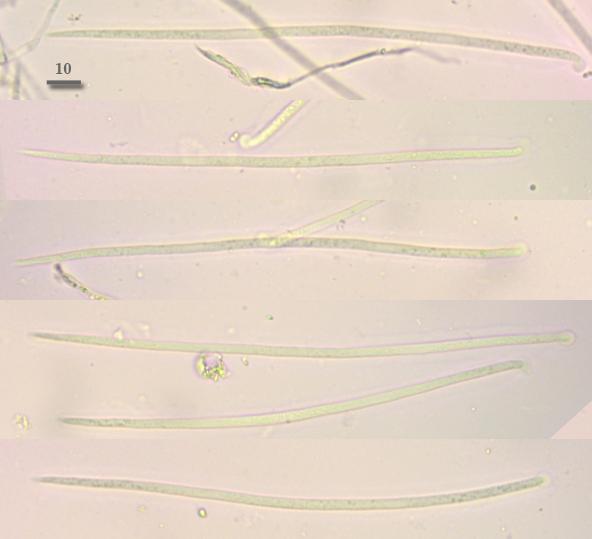

As you probably noticed in myco litterature, this species has very rarely been collected.
Brigitte Capoen and I luckily found it last year on October 4 in the main peat bog of SAnta Maria in the Somiedo paradise, (Spain, Asturias,)
Here it was Eriophorum angustifolium
I hereby join images I showed in my presenttaion at the Somiedo Ascomycota 2013 congress in last June.
The main features of your collection do suit ours.
Amitiés
Michel
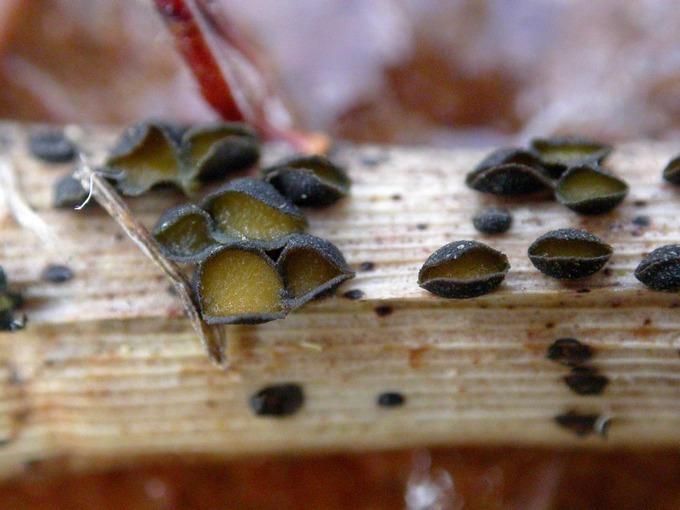
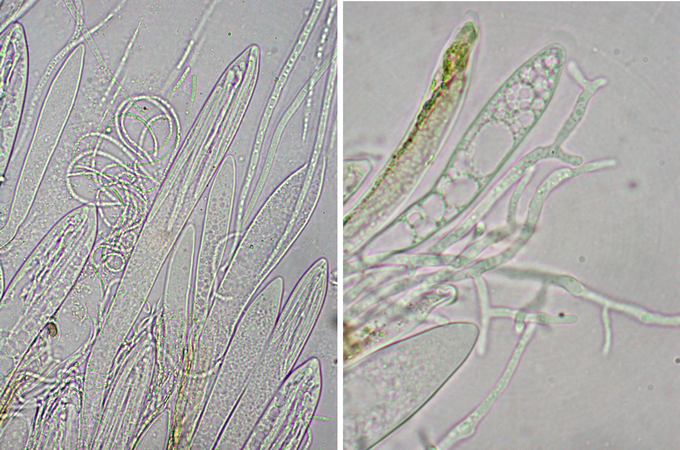
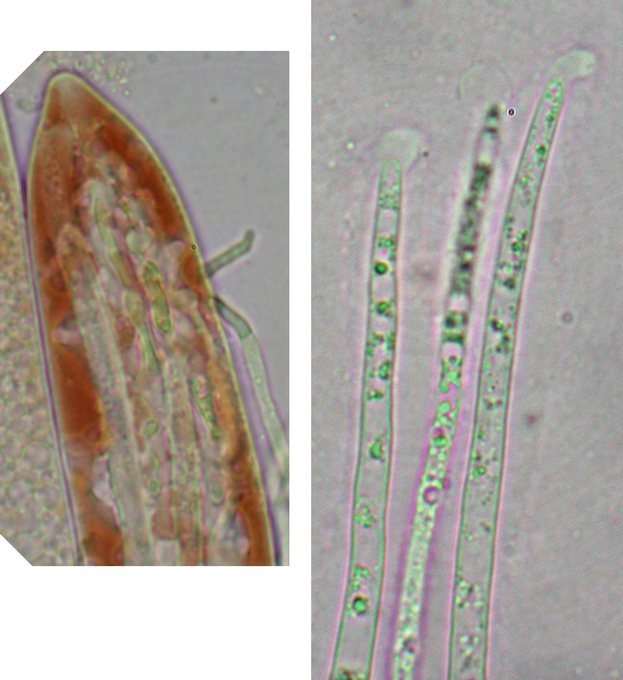
that is interesting. I will look at other substrates, Er. russeolum as well, but untill now it was only at Er. vaginatum here. Could be abundant occasionally.
Nina.