
27-04-2026 20:52
 Lothar Krieglsteiner
Found on hanging tiwg of Olea europaea in dried-ou
27-04-2026 18:48
Tony MoverleyCollected 23rd April 2026, Norfolk, EnglandSwarms
27-04-2026 17:41
Lothar Krieglsteiner
.. Algarve, same leaf than the last post. The con
27-04-2026 18:05
Lothar Krieglsteiner
... still attached at standing tree. The green con
27-04-2026 17:16
Lothar Krieglsteiner
.. Algarve, moist lying.The conidiomata look like
27-04-2026 12:54
Steve ClementsBonjour. Ce petit champignon blanc résupiné et
27-04-2026 09:59
Pauline. PennaBonjour Can anyone advise me on these pycnidia fo

22-04-2026 20:54
 Enrique Rubio
Hi to everybody.This Pyrenopeziza grew in moist le
Two new on Andromeda
Nina Filippova,
07-07-2013 06:48
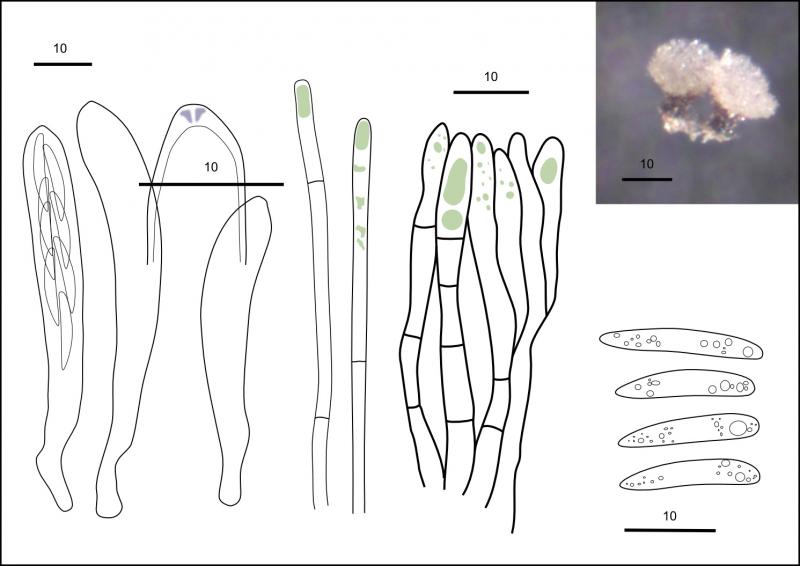
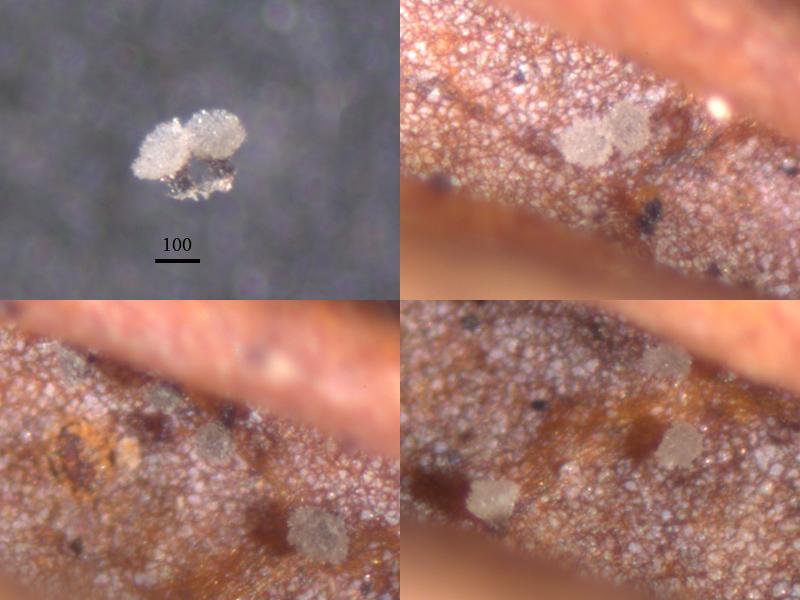
First one has very tiny, stipitate apothecia:
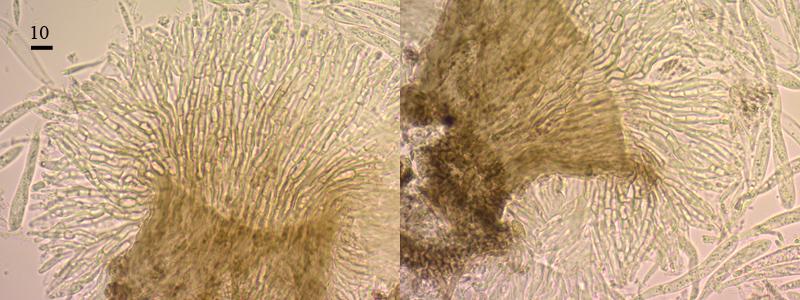
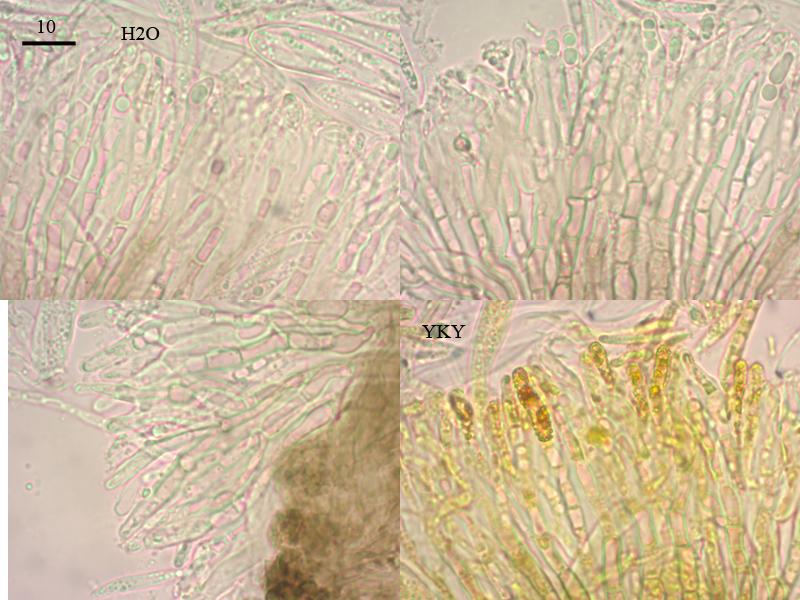
Apothecia cupulate, stipitate, tiny, single on lower leaf side, receptacle white, powdery, stipe brownish, about 130 mk high, the same broad.
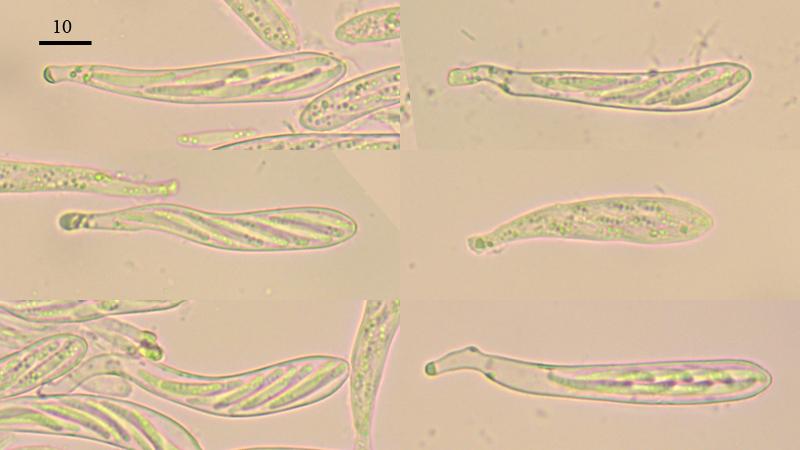
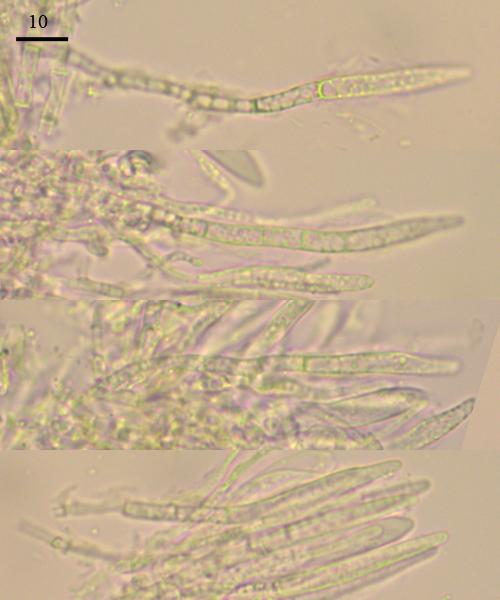
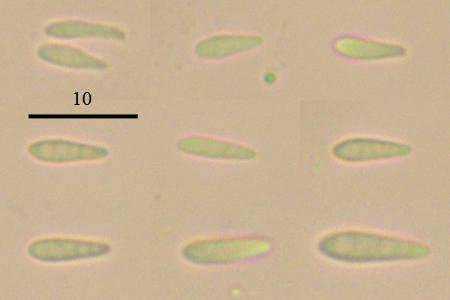
Excipulum from textura porrecta, hyphae walls are thick, at stem are brown, 2.5 broad, end cells fusoid, obtuse, near 15 x 4.5, with vacuoles; asci clavate, with not clear clamp, 60–71.5 x 8–9.8; paraphyses cylindrical, septated in lower part, rarely branched, in upper part with small ellipsoid or round vacuoles, and some enlarged, 62 x 2.8; spores fusoid, heteropolar, with upper end obtuse and lower narrowed, with many small oils, 16.7 (14.6–19.6) x 2.8 (2.4–3.1) (n=13).


Nina Filippova,
07-07-2013 07:03
Re : Two new on Andromeda
And the second forms sessile broad hairy cups:
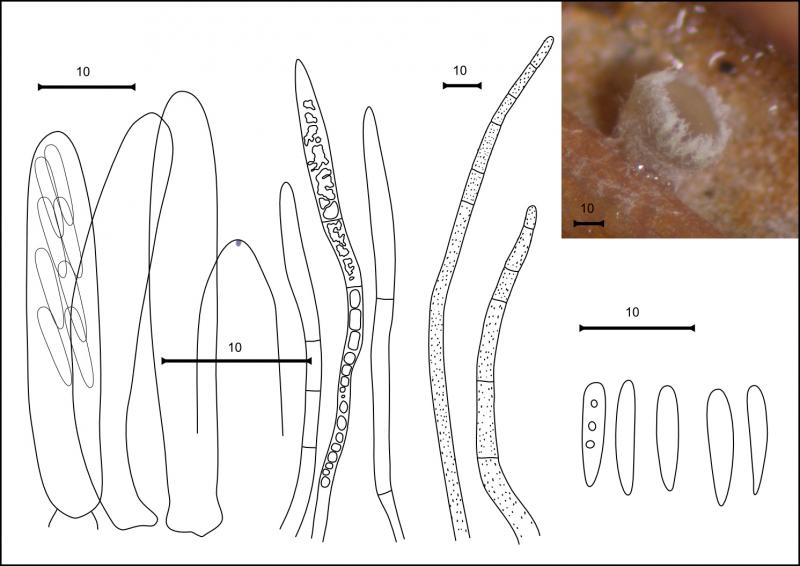
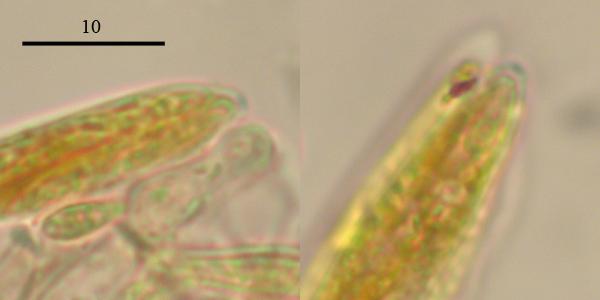
Apothecia cupulate, sessile, 250–550 mk in diameter, disc surface watery-translucent or grayish, outer surface with the same underlaying layer and outer layer of dense white hairs, hairs raised under hymenium forming dense pubescent ciliate edge.
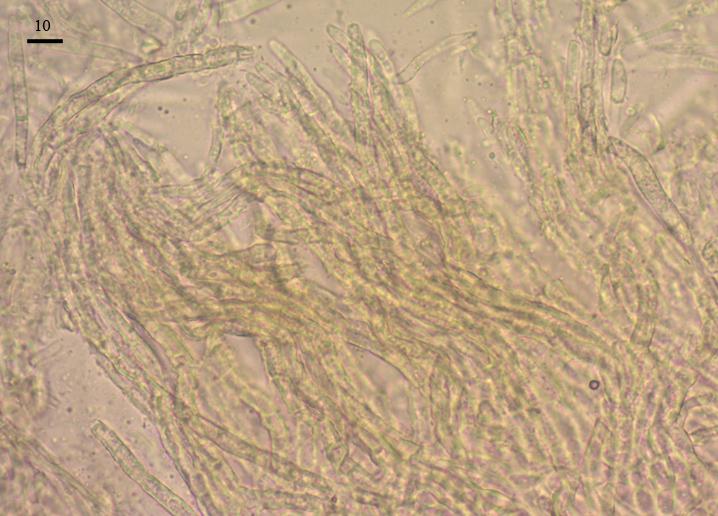
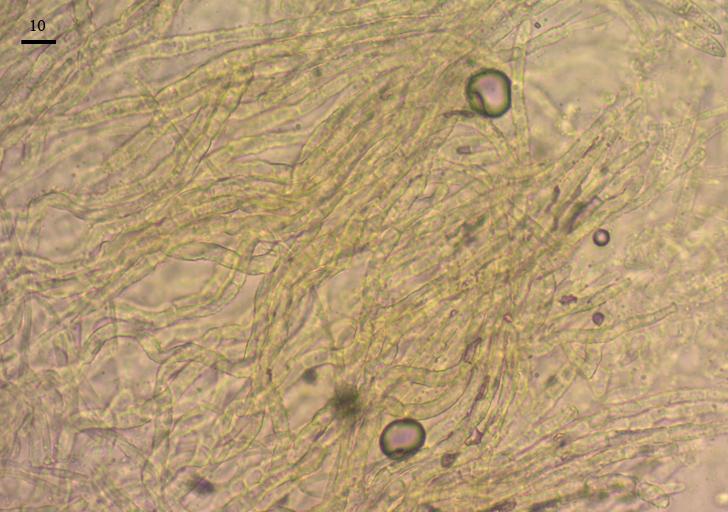
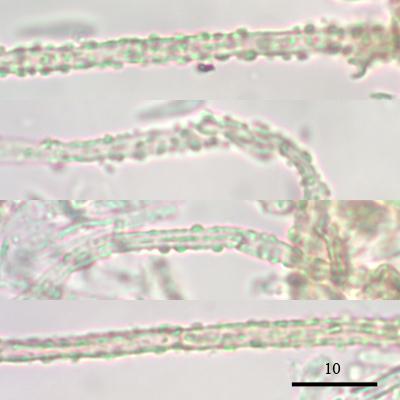
Excipulum from thick-walled textura prismatica, upper part with hairs; hairs cylindrical, thick-walled, segmented, rough, 4 broad, obtuse; asci cylindrical, clamped, with small euamyloid ring, 35–49.4 x 6–8.3; paraphyses lanceolate, segmented in lower part, many-vacuolate, 44.7–85.2 x 3.9–4.9; spores pip-shaped, 9.3 (8–11.8) x 2.1 (1.5–2.6) (n=14).?
Apothecia cupulate, sessile, 250–550 mk in diameter, disc surface watery-translucent or grayish, outer surface with the same underlaying layer and outer layer of dense white hairs, hairs raised under hymenium forming dense pubescent ciliate edge.
Excipulum from thick-walled textura prismatica, upper part with hairs; hairs cylindrical, thick-walled, segmented, rough, 4 broad, obtuse; asci cylindrical, clamped, with small euamyloid ring, 35–49.4 x 6–8.3; paraphyses lanceolate, segmented in lower part, many-vacuolate, 44.7–85.2 x 3.9–4.9; spores pip-shaped, 9.3 (8–11.8) x 2.1 (1.5–2.6) (n=14).?



Hans-Otto Baral,
07-07-2013 09:34

Re : Two new on Andromeda
The first looks lke a Calycellina from the asci, probably C. leucella, though the olivaceous base looks strange.
Just I see that I placed the description of Allophylaria basalifusca in my leucella folder. So this should be what you have collected. But anyhow I am not sure that it is different from leucella which also shows some gel in the excipulum.
For the second a closeup of the hairs might be helpful.
Zotto
Just I see that I placed the description of Allophylaria basalifusca in my leucella folder. So this should be what you have collected. But anyhow I am not sure that it is different from leucella which also shows some gel in the excipulum.
For the second a closeup of the hairs might be helpful.
Zotto

Nina Filippova,
08-07-2013 06:35
Re : Two new on Andromeda
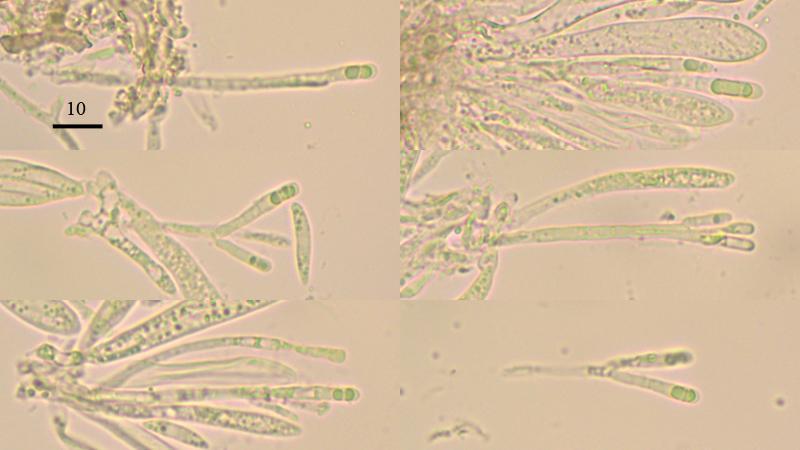
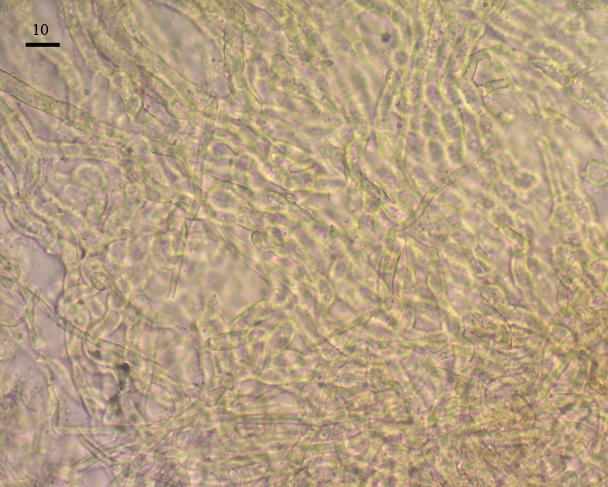
The hairs with coarse warty incrustation, the warts sometimes arranged in ridges (making tetrahedral in section); probably incrustation dissolves in KOH (but not sure, will check once more when a fresh specimen will be found), and here are the pictures:
Hans-Otto Baral,
08-07-2013 08:12
Re : Two new on Andromeda
There is only 1 species on Andromeda leaves in my database with a similar spore size: Lachnum fuscidulum (Dennis 1973: 346), but that is clearly a Brunnipila, with stalked apothecia and thick-walled hairs with capitate apex.
So no idea about this fungus. The hairs are coarsly warted similar as in Proliferodiscus, but lanceolate paraphyses are unknown there, and sessile apothecia also.
Zotto
So no idea about this fungus. The hairs are coarsly warted similar as in Proliferodiscus, but lanceolate paraphyses are unknown there, and sessile apothecia also.
Zotto