
11-05-2026 12:32
 Bernard CLESSE
Pourriez-vous m'aider à identifier cette héloti
13-05-2026 15:26
 François Freléchoux
Bonjour,Voici une récolte faite il y a quelques j
12-05-2026 15:41
 Nicolas VAN VOOREN
Dear Ascolovers, especially interested in Pezizale
13-05-2026 12:05
 Thierry Blondelle
Bonjour à tous,J'aimerais avoir confirmation de c
10-05-2026 23:17
 Andreas Gminder
Hello,today we found in a moist steep decidous for
28-04-2026 20:07
 Lothar Krieglsteiner
... on twig in the air at standing Ceratonia siliq
27-04-2026 20:52
Lothar Krieglsteiner
Found on hanging tiwg of Olea europaea in dried-ou
11-05-2026 20:22
Lothar Krieglsteiner
on attached twig of standing Ficus caricaquite uns
29-04-2026 10:44
Lothar Krieglsteiner
growing at moist, drying-out soil at the side of a
genre Rhizodiscina
Gilles Corriol,
05-04-2013 09:37
 Bonjour à tous,
Je souhaiterais avoir quelques renseignements sur le genre Rhizodiscina. Apparemment, il s'agirait d'un genre dont une partie des représentant sont lichénisés (et alors traités par les lichénologues dans le genre Rinodina), et d'autres non (traités par les mycologues dans le genre Rhizodiscina ou Karschia). Est-ce exact ? Existe t-il une publication de synthèse sur ce dernier genre ?
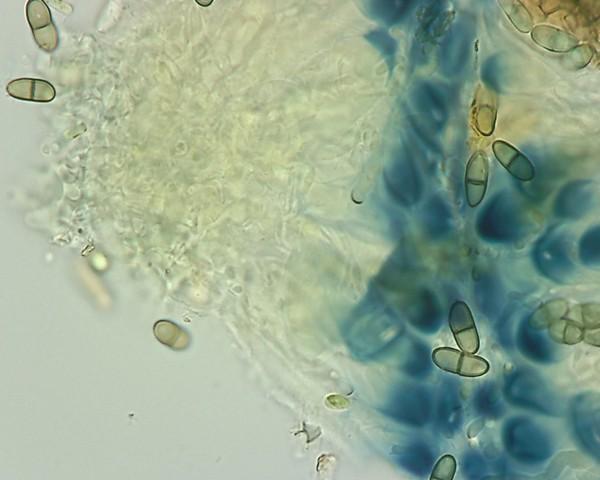
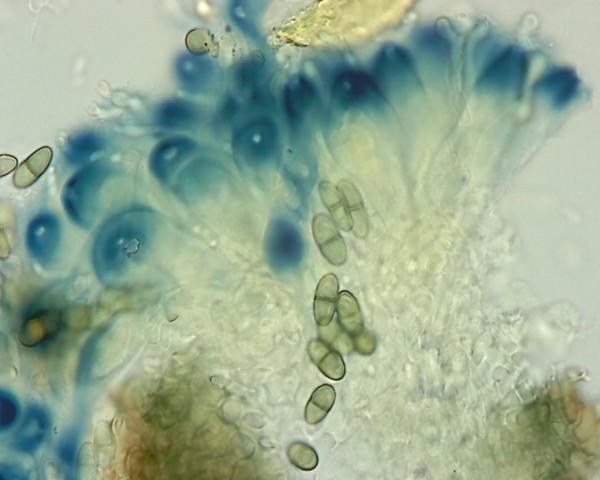
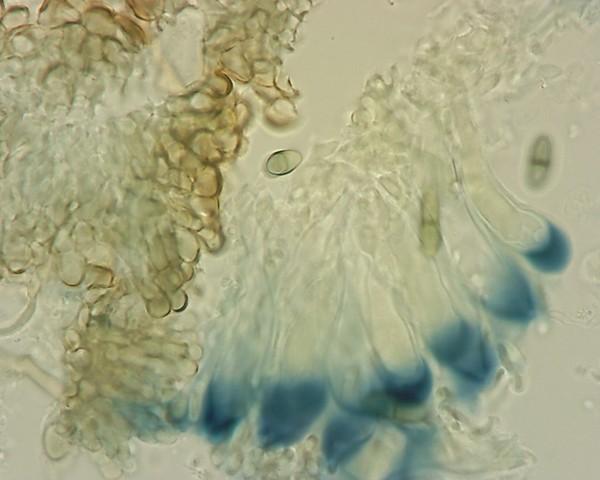
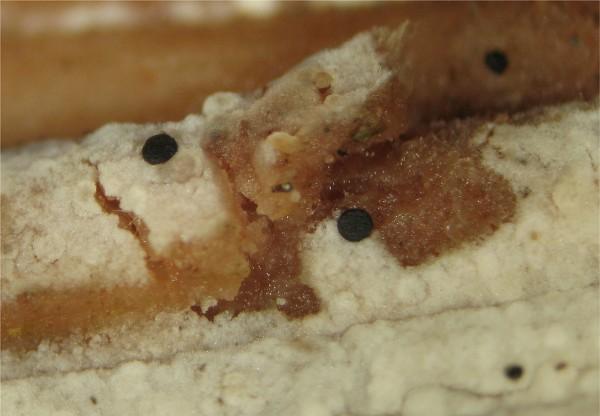
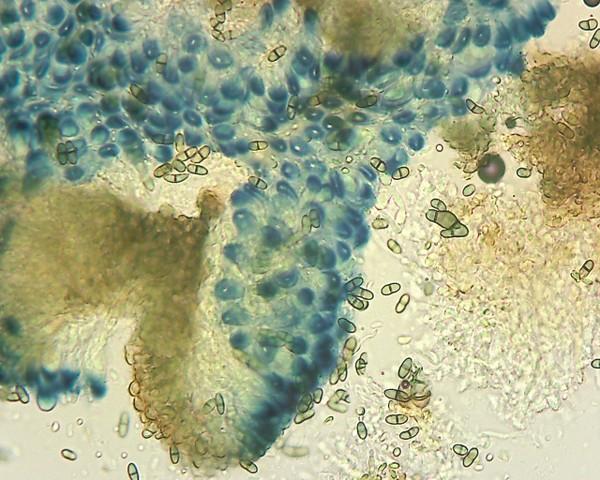
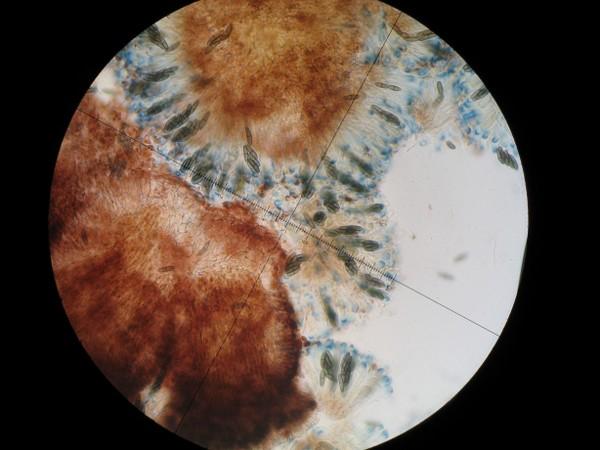
La seule espèce couramment citée dans les ouvrages de mycologie sur les ascomycètes est R. lignyota dont je pense disposer d'une récolte (GC12120104, voir 5 premières photos) à spores 9,3-11,6 x 4-5 µm. J'ai aussi une récolte d'une espèce différente pour laquelle je n'ai pas trouvé de documentation adéquate (GC11110602, voir deux dernières photos), à spores beaucoup plus longues, mesurant 15,6-20,8 x 4,1-5,0 µm.
Merci à vous

Hans-Otto Baral,
05-04-2013 10:30

Re : genre Rhizodiscina
C´est une Dactylospora :-)
The strong apical reaction is typical, an amyloid thick cap exists over the top of the ascus. In Lugol you would also get a red reaction at the lateral wall.
Zotto
The strong apical reaction is typical, an amyloid thick cap exists over the top of the ascus. In Lugol you would also get a red reaction at the lateral wall.
Zotto
Gilles Corriol,
23-04-2013 11:09
Re : genre Rhizodiscina
Merci Zotto.
Seeking in the forum archives I found several informations, but no key of the non lichenized species fo Dactylospora. Does any exists ? Could somebody send one to me ?
La deuxième espèce que j'ai envoyée, à spores 15,6-20,8 x 4,1-5,0 µm?, présente des spores finement striées. Elle ressemble en cela beaucoup à une récolte de Gilbert Moyne discutée sur ce forum et pour laquelle le nom de D. stygia a été proposé.
For the other on, may be it can be compared to the Dactylospora sp. from H.O. Baral CD number HB7359c on Quercus ilex ?
Seeking in the forum archives I found several informations, but no key of the non lichenized species fo Dactylospora. Does any exists ? Could somebody send one to me ?
La deuxième espèce que j'ai envoyée, à spores 15,6-20,8 x 4,1-5,0 µm?, présente des spores finement striées. Elle ressemble en cela beaucoup à une récolte de Gilbert Moyne discutée sur ce forum et pour laquelle le nom de D. stygia a été proposé.
For the other on, may be it can be compared to the Dactylospora sp. from H.O. Baral CD number HB7359c on Quercus ilex ?
Hans-Otto Baral,
23-04-2013 11:48
Re : genre Rhizodiscina
I am unaware of a key to the lignicolous species. That by Ihlen et al. 2004 deals only with lichenicolous.
Those lignicolous species are in bad need of a thorough study. Guy Marson has experience in this group, but regrettably does not intend a publication as far as I know.
Zotto
Those lignicolous species are in bad need of a thorough study. Guy Marson has experience in this group, but regrettably does not intend a publication as far as I know.
Zotto