02-05-2026 13:06
Pauline. PennaBonjour Please can someone help me with this id
02-05-2026 12:42
Alain BRISSARDBonjour à tousJeuidi 30 avril dernier on m'a remi
01-05-2026 22:45
 Thierry Blondelle
Bonjour à tous, Une récolte sur bouse séchée d
28-04-2026 20:07
 Lothar Krieglsteiner
... on twig in the air at standing Ceratonia siliq
14-04-2026 05:32
Ethan CrensonHi all, A few weeks back a friend pointed out som
28-04-2026 20:33
Vitus SchäfftleinHello, I found Trochila ilicina on Ilex aquifoliu

30-04-2026 10:28
Rot BojanHello, by appearance I would say that I am dealing
27-04-2026 18:48
Tony MoverleyCollected 23rd April 2026, Norfolk, EnglandSwarms
27-04-2026 20:52
Lothar Krieglsteiner
Found on hanging tiwg of Olea europaea in dried-ou
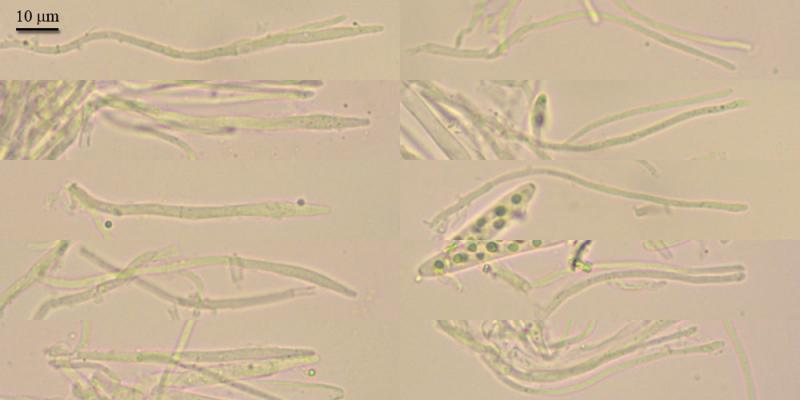
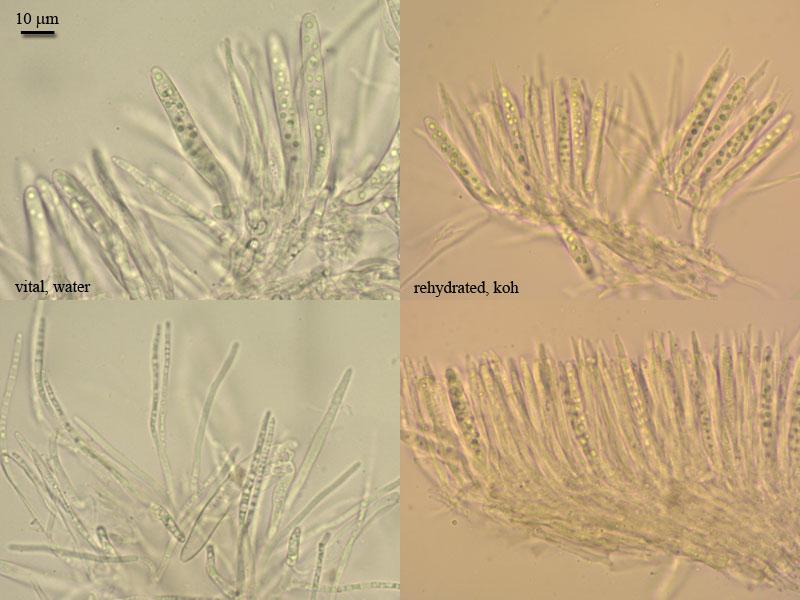
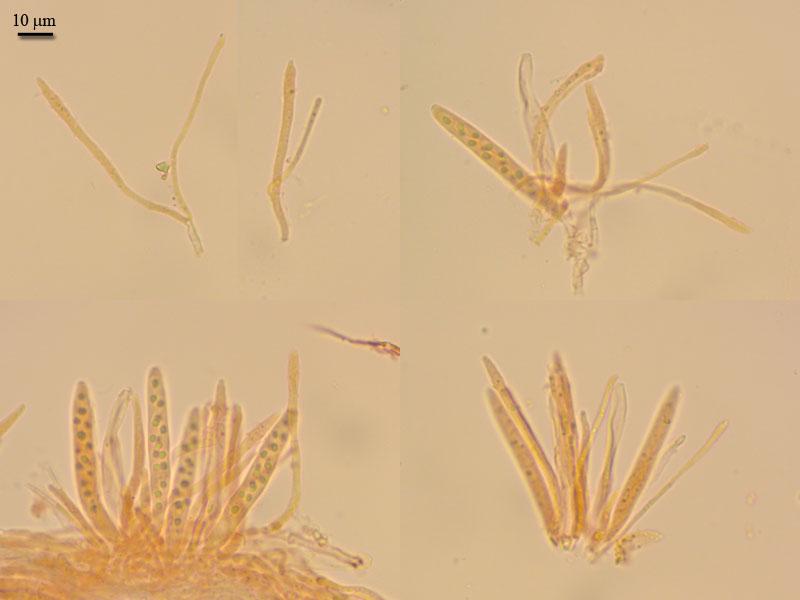
The main difference: there are two types of paraphyses: filiform and lanceolate (I don't think that it is underdeveloped, rather two different).
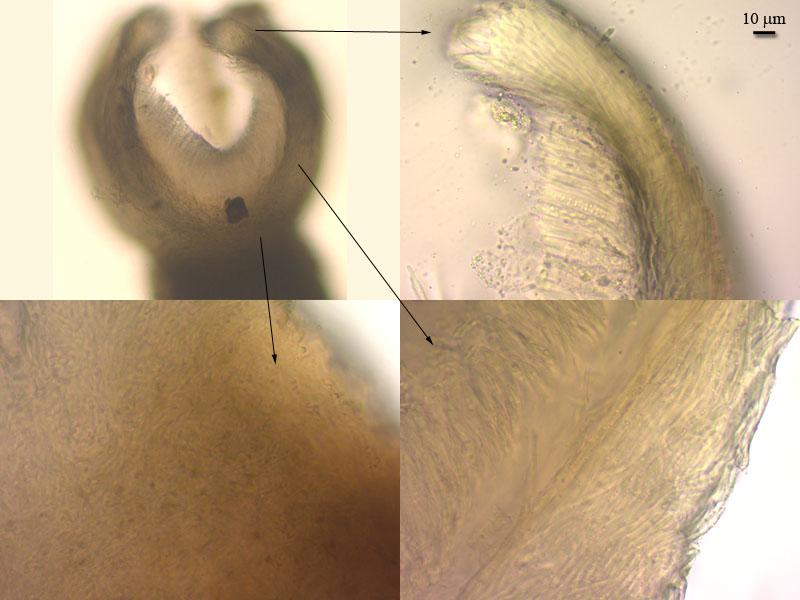
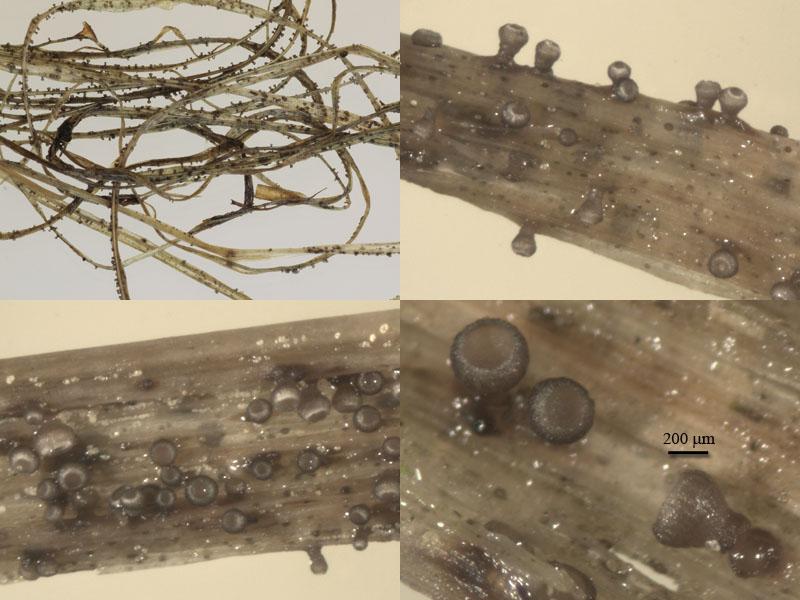
Apothecia turbinate, short-stipitate, up to 0,5 mm in diametre, 0,5 mm high, outer surface smooth, brown, edge (collar) lighter, narrow, hymenium grayish, concave; growing in dense groups.
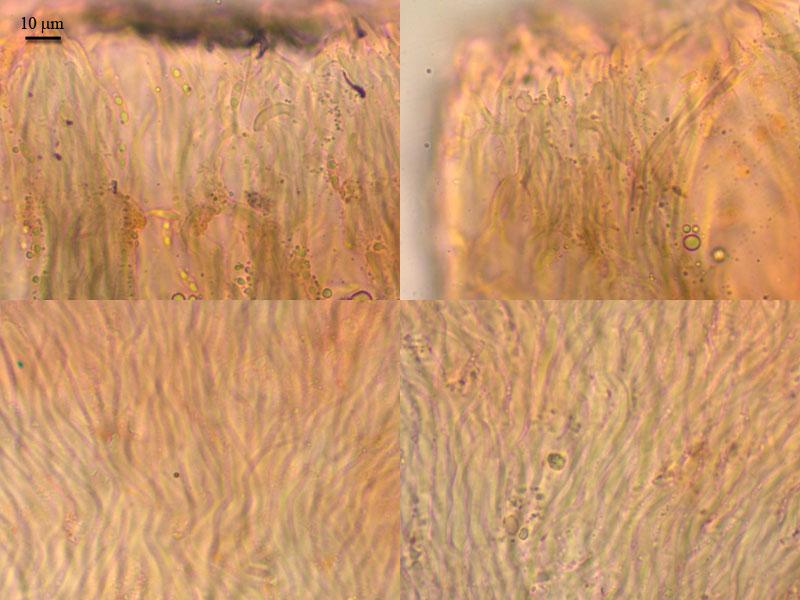
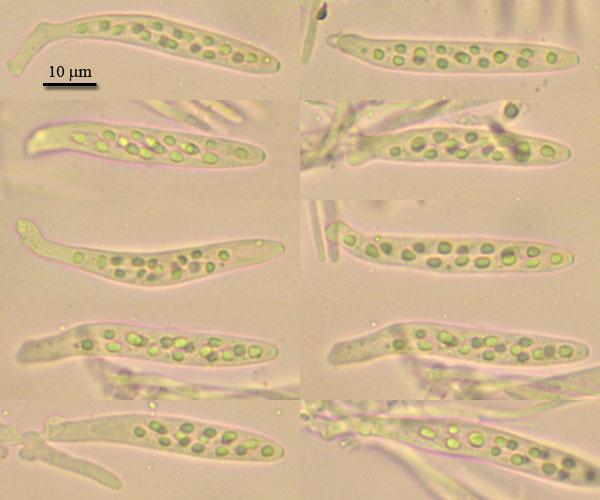
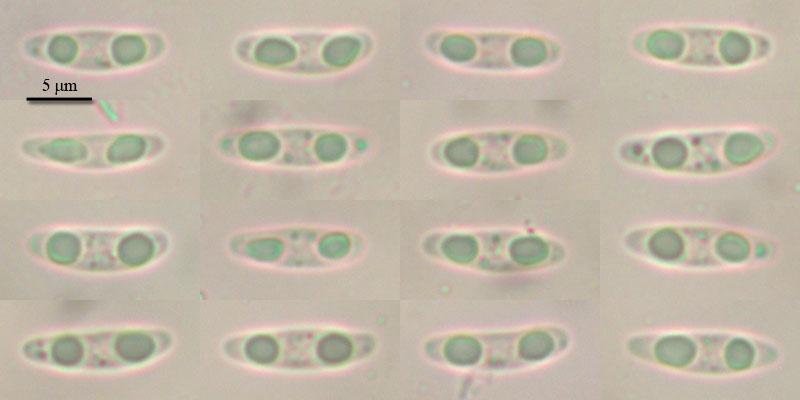
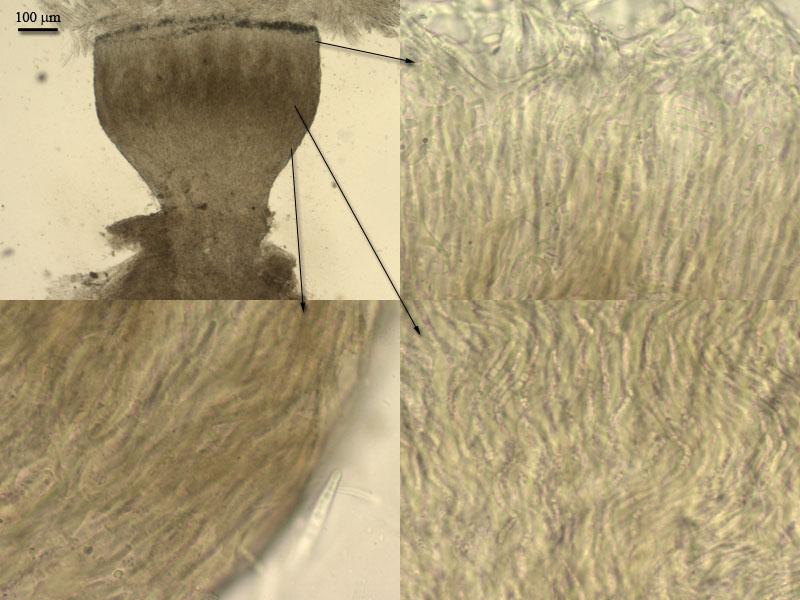
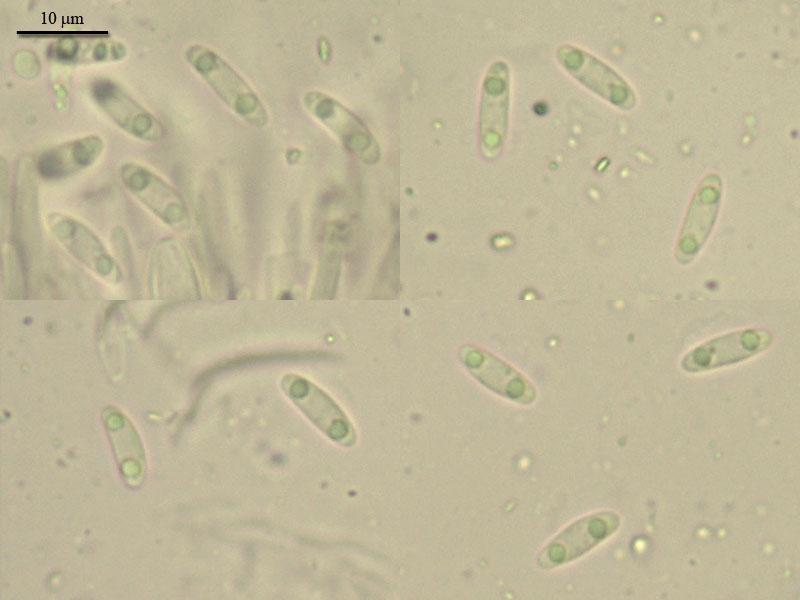
Excipulum from textura oblita; asci cylindrical, with croziers, with euamyloid pore, about 50 x 6,5; paraphyses of two types: filiform and lanceolate in one apothecium, filiform scarsely branched, 1,5 mk broad, some enlarged at tips, lanceolate exceeding the asci by 10 mk, up to 3,5 mk in largest part, with 2-3 septa in lower part, may be with thin outbranches; spores ellipsoid, slightly curved, with two big guttules (vital, i suppose it was in water), 10,7 (10-11,8) x 3,3 (3,1-3,5) (N=12).
On dead leaves of Milium effususm, coniferous mixed forest, N61,086961 E69,466226, 12.06.2012.

Incredible! So you did these vital photos in June on the fresh specimen. The spores are alive, yes, and also the paraphyses look so. Only the asci are all dead.
Could you please send me these images in higher resolution? (zotto@arcor.de) The paraphyses are the important thing I wished to see. In Cyathicula they are always prominently multiguttulate, but here they look eguttulate. That would be a further reason not to accept the synonymy of the two genera as proposed by Dennis.
There is another species or variety, C. gramineum var. incertellum with slightly smaller spores. In both I saw long and wider, and narrow and short paraphyses.
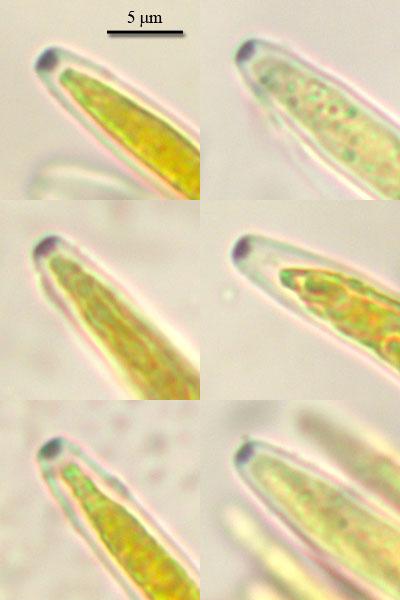
Did you also check with IKI? The shape of apical ring is different from Cyathicula.
Zotto
For the identity I feel this group needs restudy. In Dennis 1956 Phialea incertella has spores 6-8 x 1.5-2, too small, P. stipae (= gramineum) 7-10 x 2.5-3 (with two big oil drops after carpenter), so quite good. There are more names which are possibly synonyms of the other two.
So I would identify your fungus as Crocicreas gramineum. But the three samples I have studied all have these big oil drops.
Zotto
i noticed that pore RB (lugol + water as well as lugol + KOH); it is with very slight violet tinge, but not clear blue in some asci.