
27-04-2026 20:52
 Lothar Krieglsteiner
Found on hanging tiwg of Olea europaea in dried-ou
27-04-2026 18:48
Tony MoverleyCollected 23rd April 2026, Norfolk, EnglandSwarms
27-04-2026 17:41
Lothar Krieglsteiner
.. Algarve, same leaf than the last post. The con
27-04-2026 18:05
Lothar Krieglsteiner
... still attached at standing tree. The green con
27-04-2026 17:16
Lothar Krieglsteiner
.. Algarve, moist lying.The conidiomata look like
27-04-2026 12:54
Steve ClementsBonjour. Ce petit champignon blanc résupiné et
27-04-2026 09:59
Pauline. PennaBonjour Can anyone advise me on these pycnidia fo

22-04-2026 20:54
 Enrique Rubio
Hi to everybody.This Pyrenopeziza grew in moist le
This species quite often met at dead twigs of dwarfshrubs (Chamaedaphne calyculata, but probably others as well), in bogs. I have only one collection, though. It was without clamps; this feature reported by Raitviir (2002, A revision of the genus Dasyscyphella?) "for all Eurasian collections", but "in American collections they originate from croziers" (var. uncinata Raitv.).
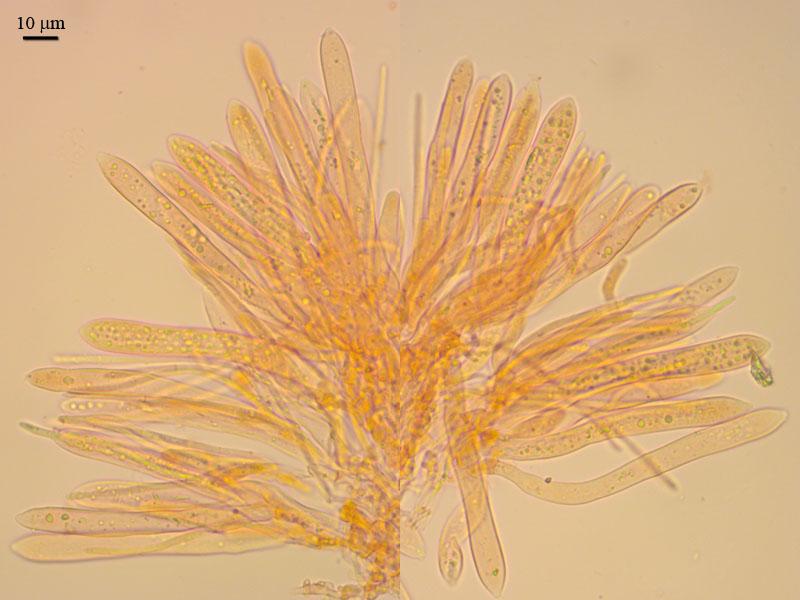
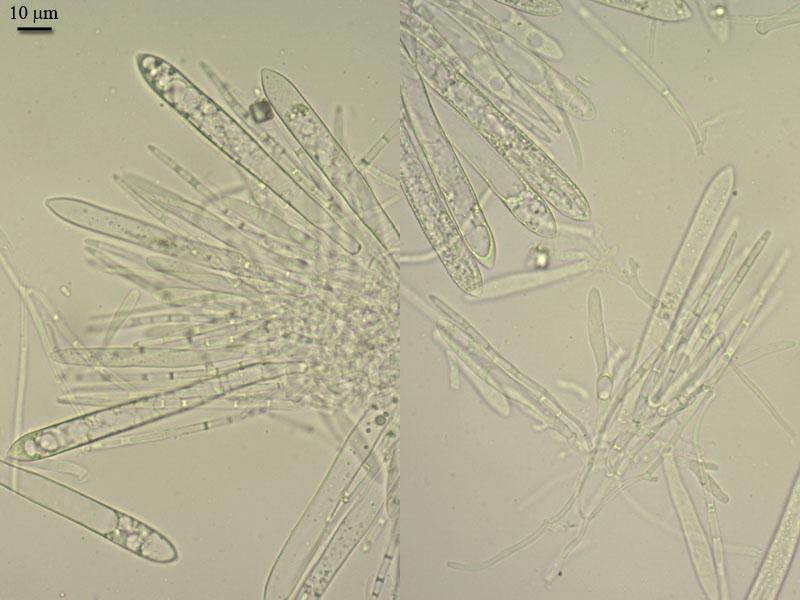
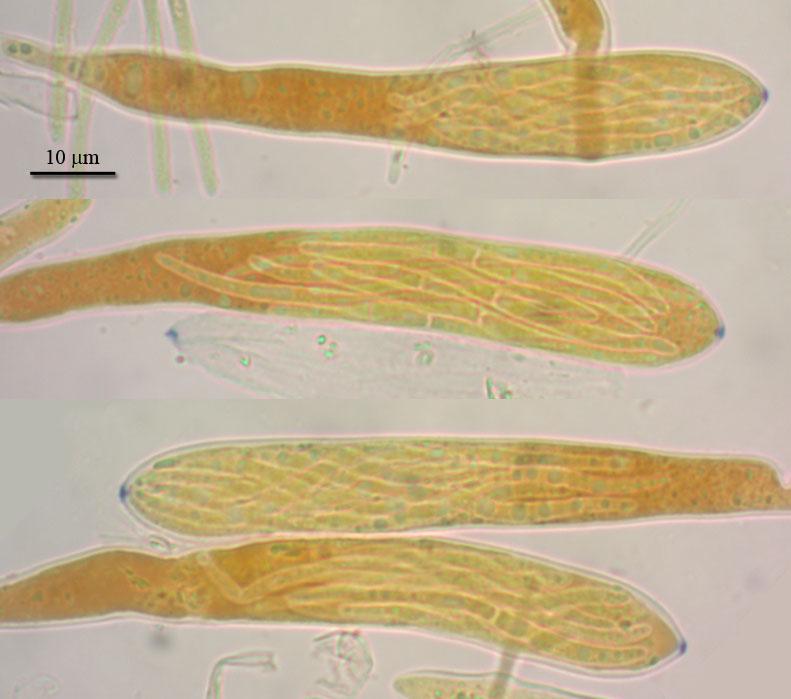
All characters fit well with description of D. cassandrae var. cassandrae, except spore septation. I see clear septa already inside the asci; but Raitviir described them aseptate.
I think, what i 've seen it is real septation? -and if so, it must be underdescribed character of this species?
Apothecia cupulate, stipitate, receptacle to 1 mm in diam, stipe to 1 mm high, all frb up to 1,5 mm; hymenium yellowish, outer sirface pure white; outer surface and stipe densely covered by hairs; edge with long hairs; growing scattered or by several nearby.
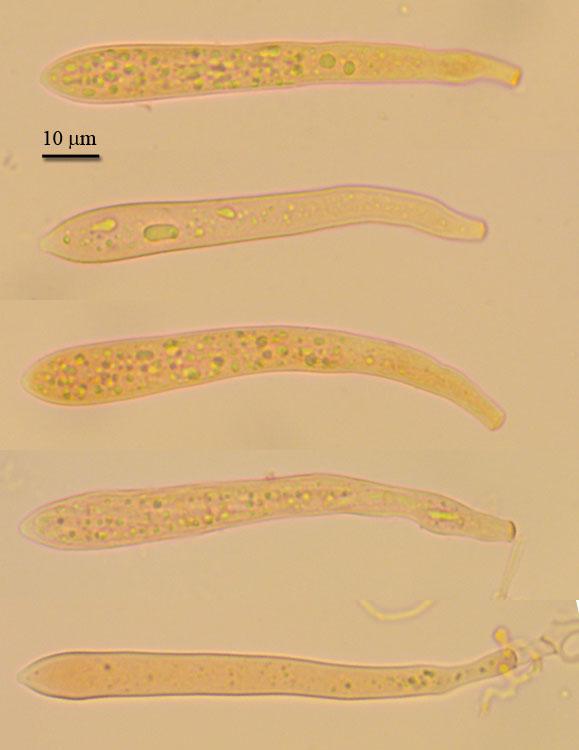
Excipulum from textura porrecta in stipe (hyphae near 4 mk broad), textura prismatica at flanks (cells ellipsoid, with thickened walls, 20-30 x 6-8; hairs cylindrical, up to 150 mk long, rough at base, smooth in upper part, 4-6 segmented, the base slightly broader (3) and tip slightly enlarged, the narrowest part under tip beeing near 2; asci clavate, tip obtuse-conical, sometimes with protruding pore site, without clamp, pore euamyloid, with 8 interwoven spores collected in upper part, 92,5 (80-116) x 10 (8-11); paraphyses cylindrical, scarsely branched, segmented, with vacuolar content (vital, water); 2 mk broad, not exceeding the asci; spores vermiform, curled in asci, without or with 3-5 septa (already inside asci), 52 (44-67) x 2,4 (2-2,6) (N=14) (real length some longer since measurements done in curved state).
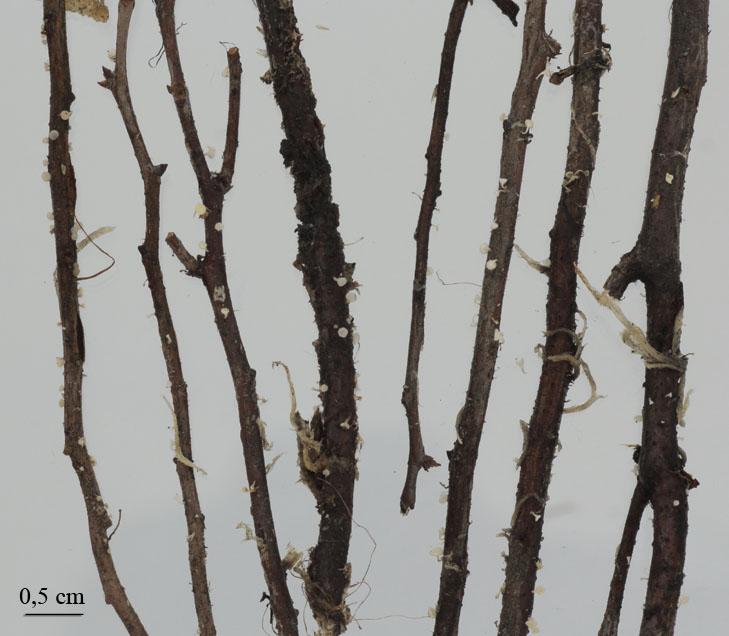
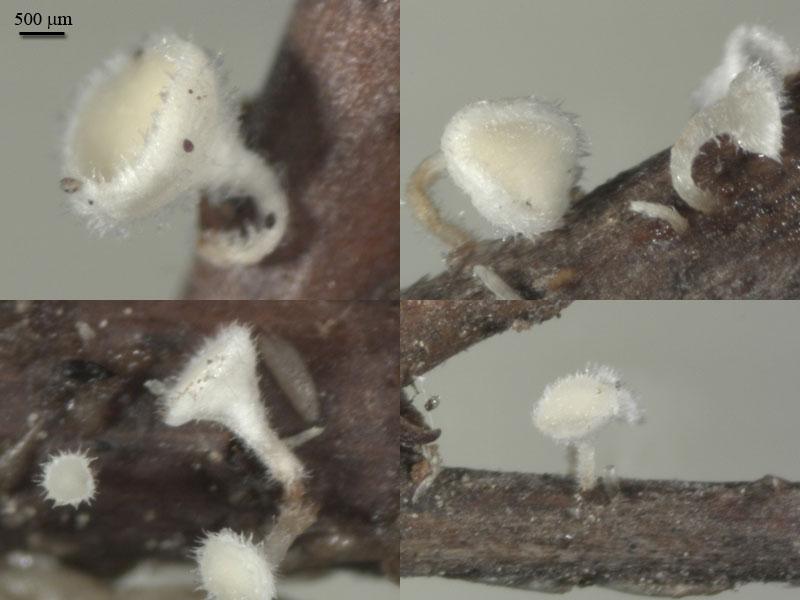
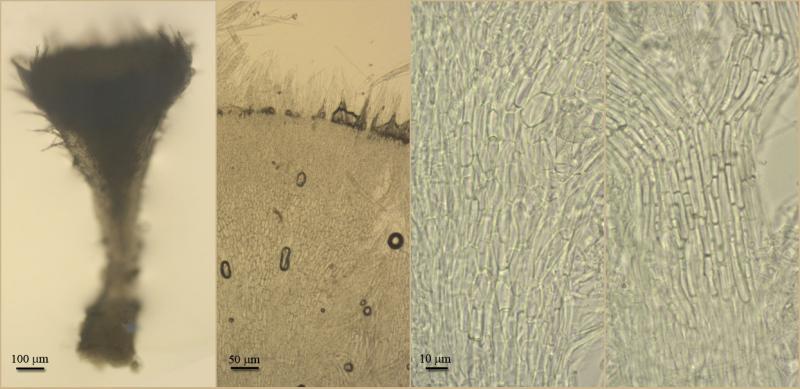
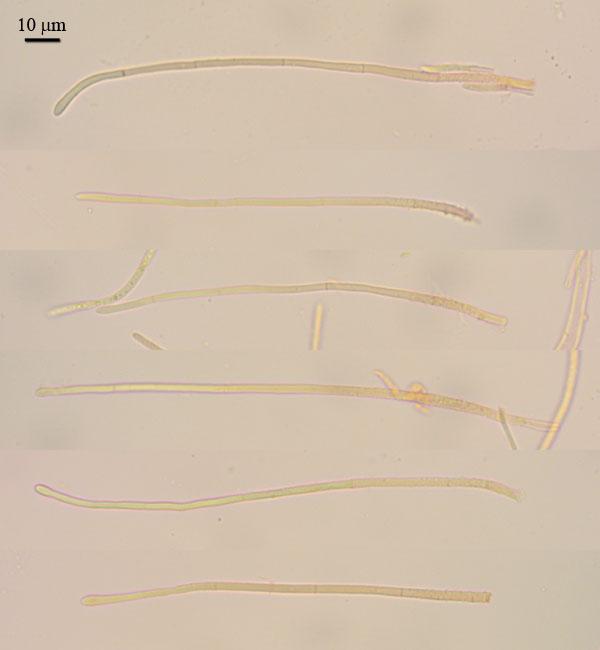
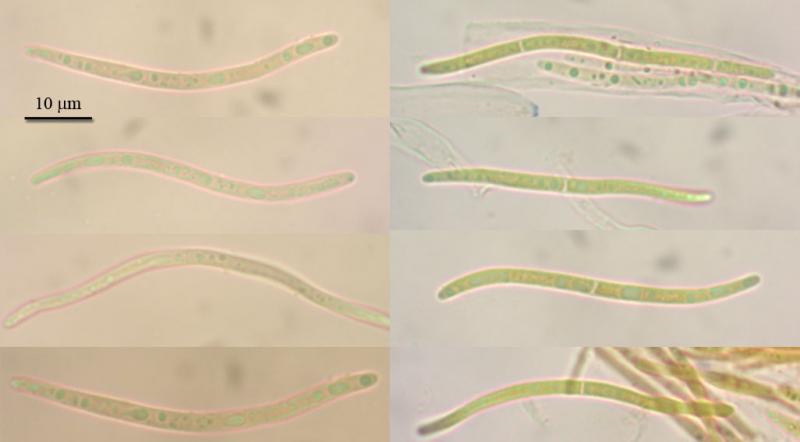
Au sujet du cloisonnement des spores, lire la diagnose originale reproduite dans la revue Hedwigia 1899 (38) : 10
http://www.biodiversitylibrary.org/page/507326
"... deutlicht septirt, zuweilen auch dreizellig, ..."
Amitiés, Guy
DENNIS R.W.G. 1972 The type species of Dasyscyphella Tranzschel. [cassandrae, corticola]. Kew Bull. 27 2 273-274.
Si vous n'avez pas cet article, je peux faire une copie ce soir.
So, in the original description by Tranzscel spores "filiform, usually curved, sickle-shaped, in the middle clearly septate, sometimes 3-celled, hyaline". This matches my observations well (mine up to 5-celled). For some reason Raitviir has omitted this character in two his works on the genus (1970, 2002).?