
25-03-2026 10:35
Hulda Caroline HolteHello,I collected this species growing on a dead b
30-03-2026 09:53
Yanick BOULANGERBonjourVoici des petites fructifications poilues s
27-03-2026 10:47
Åge OterhalsI have tentatively identified this Stictis to S. f
28-03-2026 07:55
 Marc Detollenaere
Hello everybody,Yesterday I found a number of whit
27-03-2026 15:23
Gernot FriebesHi,this Trichopezizella deviates from typical T. b
27-03-2026 15:08
Gernot FriebesHi,I'm looking for help with this coelomycete on C
24-03-2026 21:37
Elisabeth StöckliBonsoir,Sur bois (tronc) très pourri de conifère


Urceolella
Luc Bailly,
12-06-2012 23:08
 Bonjour à tous,
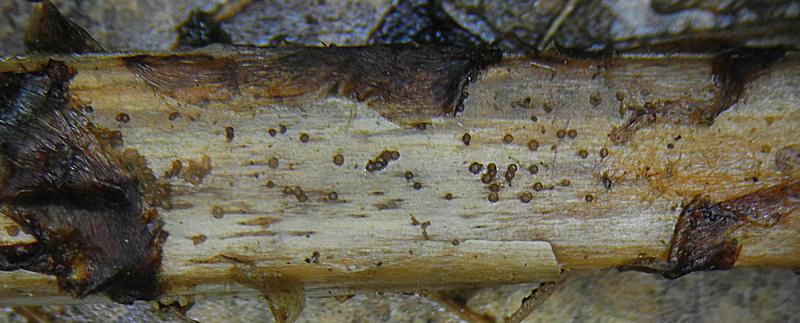
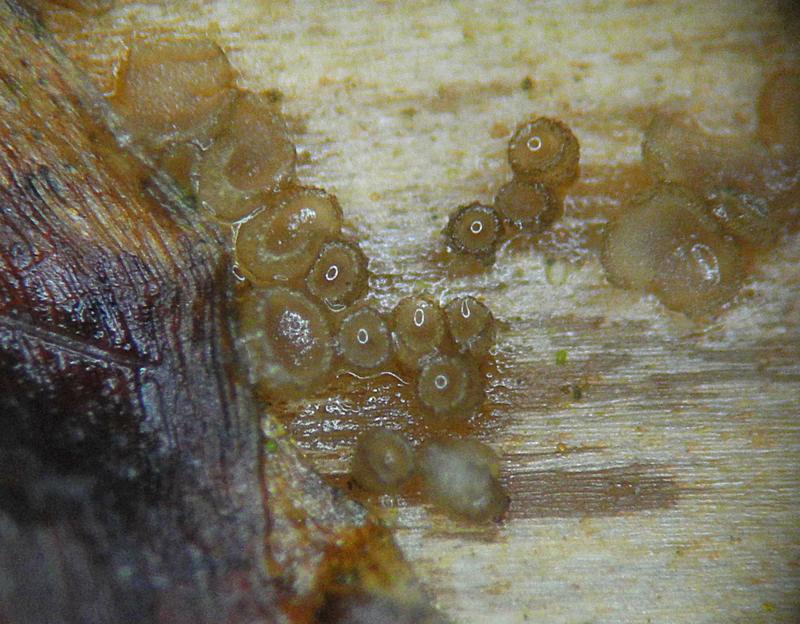
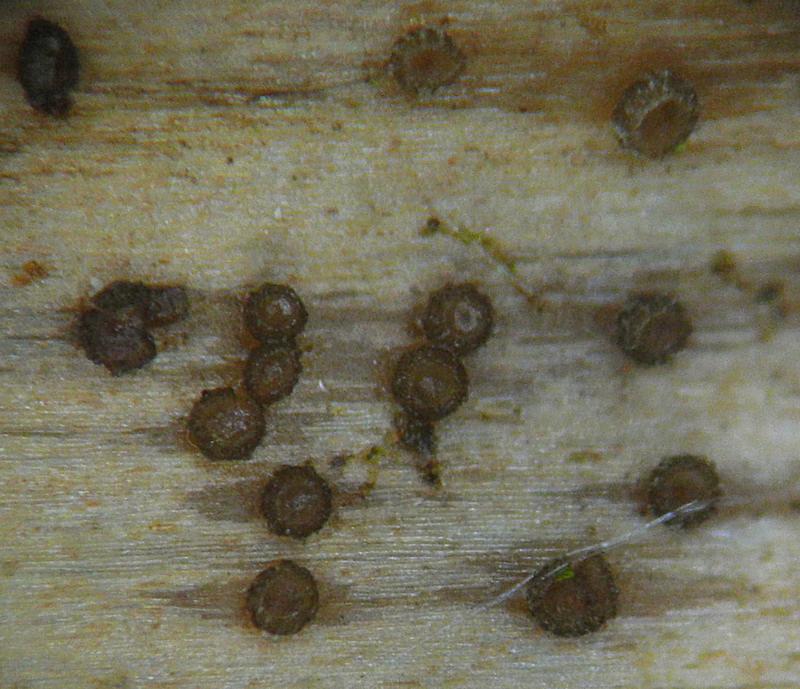
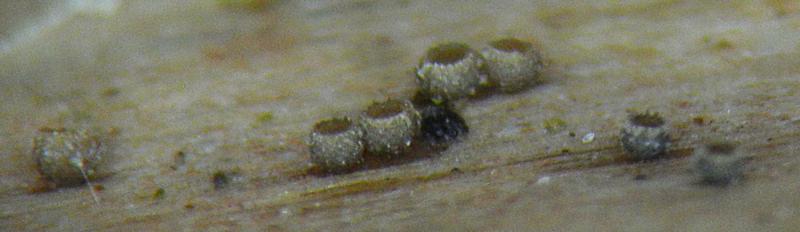
Une récolte d'un Urceolella faite en Forêt de Mormal (59) sur rachis morts de fougères (Athyrium ou Dryopteris).
Apoth. subsessile, en grelot puis étalée, brun olivâtre puis beige, excip. plus sombre. Taille -> 0.8 mm.
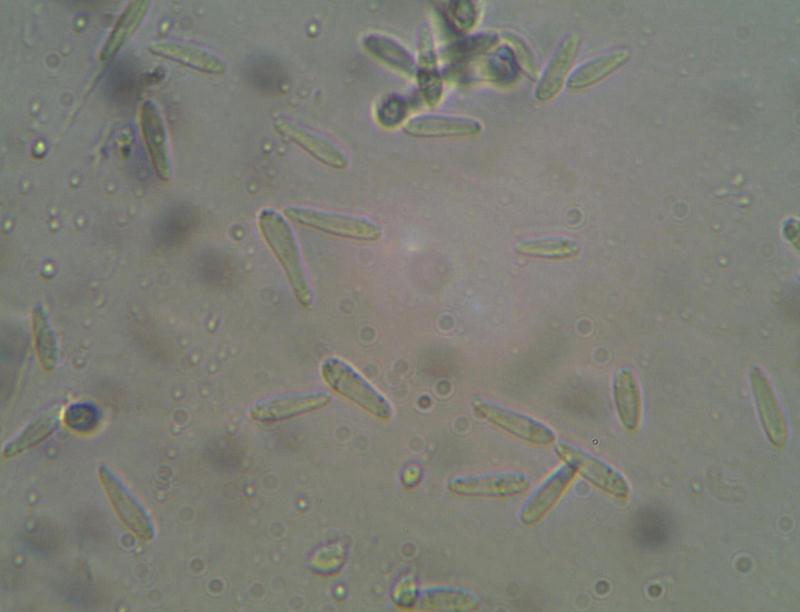
Spores en pilon ou allantoïdes, hyalines, huile = 2, (6)7.5-12.5 x 2-2.5(3) µ.
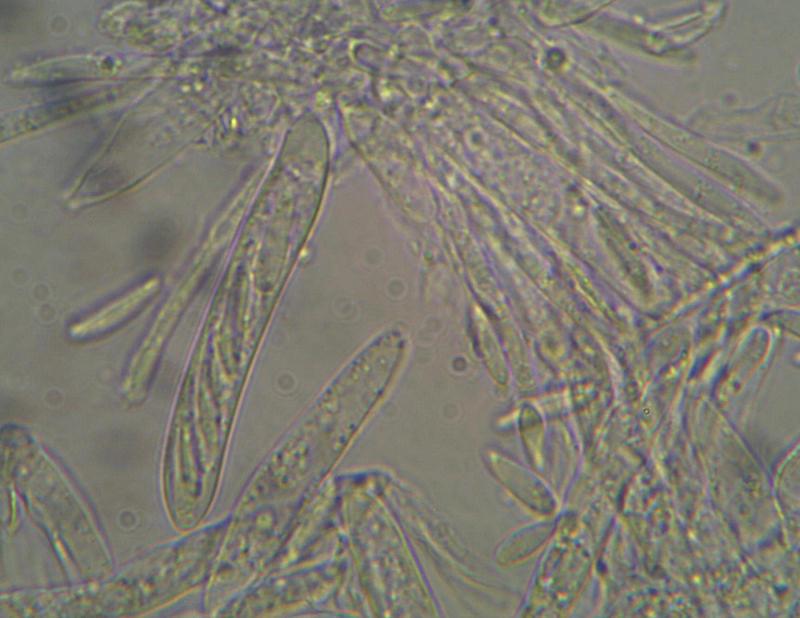
Asques courts, peu amincis à la base, 8-sp., bisériés, 34-53 x 5-6.2 µ, crochets douteux (j'ai observé une seule structure douteuse, peut-être tératologique), IKI BB.
Paraphyses un peu réfringentes, cylindriques ou un peu renflées au sommet, x 2-2.2 µ.
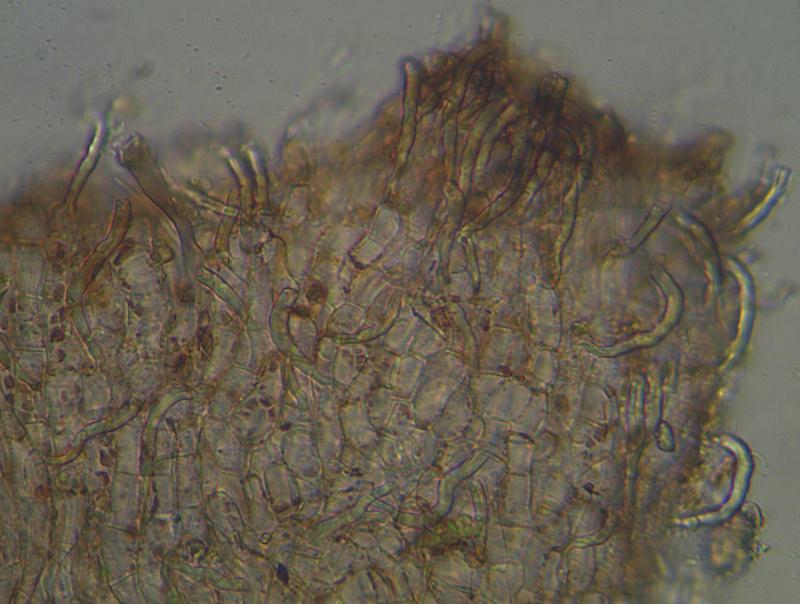
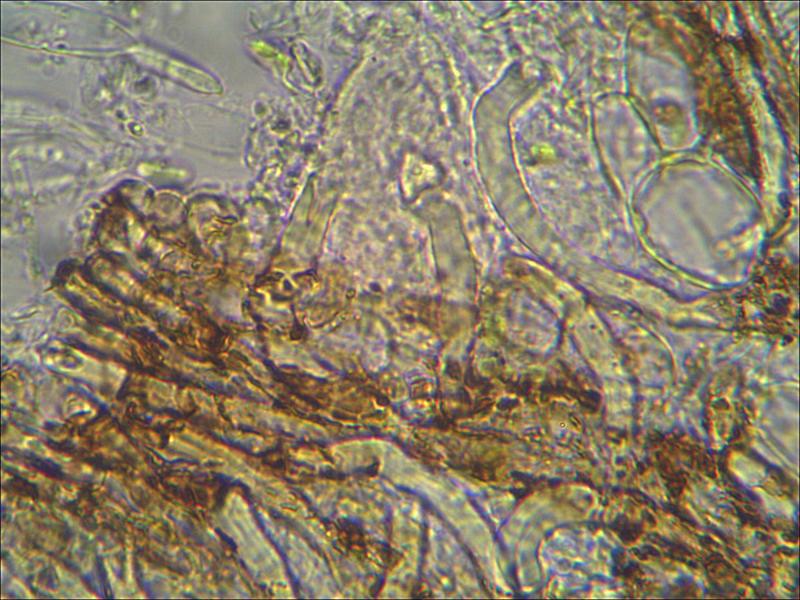
Excipulum ectal text. ang., brunâtre par un enduit çà et là. Poils réfringents, avec une lumière très mince sauf à la base et au sommet, (17)36-59 x (3.5)4-5.5 µ, plus ou moins recouverts d'un enduit brun par plaques.
J'en arrive à Urceolella carestiana (Rabh.)Dennis, et plus particulièrement à quelque chose proche de la récolte faite par Zotto portant le n° HB 2011 dans son DVD.
Un avis?
Merci d'avance, amitiés - Luc BAILLY.
Hans-Otto Baral,
12-06-2012 23:17

Re : Urceolella
Hi Luc
I confirm your idea. The strongly curved (slickle-like) hairs are typical, also the rather small spores. I think this is typical U. carestiana. Did you notice the wide lumen at the hair tip? This is a character which is absent from U. winteriana, also from the other two species which do not have a name (III and IV).
Ah, the upper hair on your oil immersion photo shows both hair ends with a wide lumen. One is the apex.
Zotto
I confirm your idea. The strongly curved (slickle-like) hairs are typical, also the rather small spores. I think this is typical U. carestiana. Did you notice the wide lumen at the hair tip? This is a character which is absent from U. winteriana, also from the other two species which do not have a name (III and IV).
Ah, the upper hair on your oil immersion photo shows both hair ends with a wide lumen. One is the apex.
Zotto
Luc Bailly,
13-06-2012 00:17
Re : Urceolella
Hi Zotto,
Absolutely, I noticed the larger lumen at the apex.
Thanks for your comments, and cheers - LUC.
Absolutely, I noticed the larger lumen at the apex.
Thanks for your comments, and cheers - LUC.