
11-05-2026 12:32
 Bernard CLESSE
Pourriez-vous m'aider à identifier cette héloti
13-05-2026 15:26
 François Freléchoux
Bonjour,Voici une récolte faite il y a quelques j
12-05-2026 15:41
 Nicolas VAN VOOREN
Dear Ascolovers, especially interested in Pezizale
13-05-2026 12:05
 Thierry Blondelle
Bonjour à tous,J'aimerais avoir confirmation de c
10-05-2026 23:17
 Andreas Gminder
Hello,today we found in a moist steep decidous for
28-04-2026 20:07
 Lothar Krieglsteiner
... on twig in the air at standing Ceratonia siliq
27-04-2026 20:52
Lothar Krieglsteiner
Found on hanging tiwg of Olea europaea in dried-ou
11-05-2026 20:22
Lothar Krieglsteiner
on attached twig of standing Ficus caricaquite uns
29-04-2026 10:44
Lothar Krieglsteiner
growing at moist, drying-out soil at the side of a
 Hi Friends,
I'm searching for documentations (and/or opinions) about collections of Cheilymenia theleboloides which had no visible connection to debris or dung. Do you know literature about such collections on soil or do you have own collections? I'm interested in the differences between Cheilymenia theleboloides on soil, on debris or on dung. In Moravec' monographie I found no answer about this question.
And is it possible that in exsiccata the spores of Cheilymenia theleboloides "lost" the striation of the perispore? Thanx in advance for your help!
Best, Uwe

did you see the remark in B&K that the striation becomes visible when the sample is warmed in KOH? I think they dealt mostly with herbarium specimens. I have no experience with that, but maybe its worth a try.
Cheers
Martin
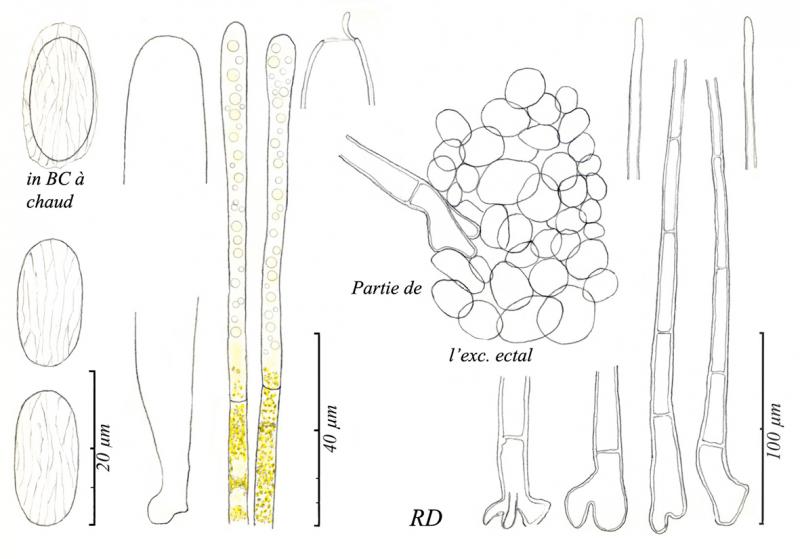
Non il n'est pas possible que les ascospores perdent les stries avec l'âge. Ce qui est important, c'est d'observer des ascospores dans le BC lactique, surtout si l'on veut contrôler la séparation de la paroi, qui bien sûr se fait à chaud
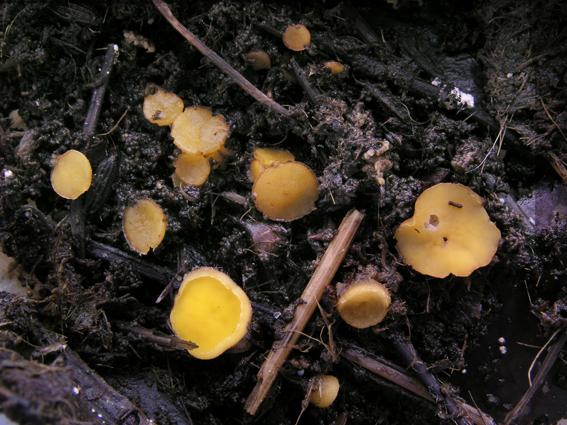
Je vous présente une photo et mes dessins de C. theleboloides, à partir d'une récolte de 2010, faite en forêt, sur des plantes de jardin en voie de décomposition, plantes qui y avaient été déposées
?René
René
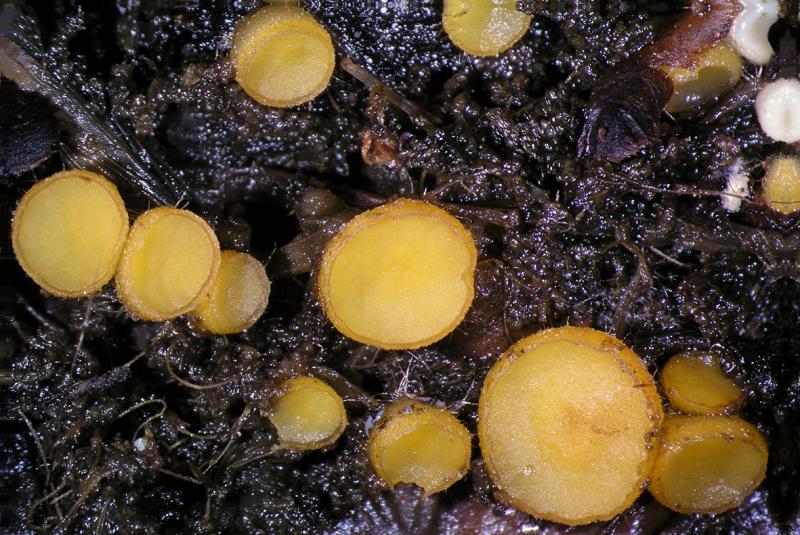
thanx for your fast replies, your interesting remarks and for your documentation, René!
That helps me a lot!
Best, Uwe