12-06-2026 14:50
 François Freléchoux
Bonjour, Voici la brève description d'une Mollis
10-06-2026 21:16
François Freléchoux
Bonsoir,Le dernier du jour, en attendant votre avi
11-06-2026 19:01
 William Slosse
Hello all,In an attempt to make a culture of a sus
11-06-2026 19:03
 Nicolas VAN VOOREN
Chers membres d'Ascofrance,Le site sera placé en

09-06-2026 18:32
Camille MertensSur morceau de roseau immergé 0,5 - 0,7 mm de dia
10-06-2026 12:54
Steve ClementsBonjour encore, Pouvez-vous m'aider, s'il vous pl
10-06-2026 21:07
François Freléchoux
Toutes les tiges de gentianes jaunes de l'an passÃ
10-06-2026 13:41
François Freléchoux
Bonjour à nouveau, Voici une trouvaille d'hier.
On Potentilla
Marja Pennanen,
08-08-2010 15:34
once again I'm lost in the jungle of new species.
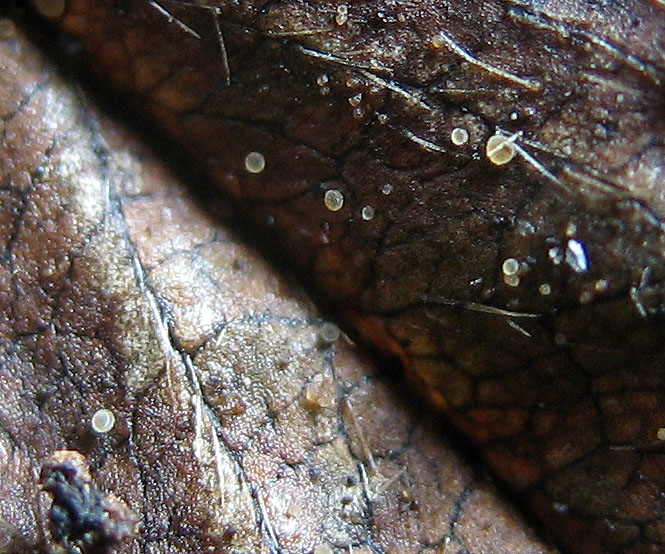
Along with that new to me Graddonia I found something tiny on Potentilla palustris leaves.
This seems not to be Mollisina alni, because this is IKI+.
These are something like 0,1+ mm wide:
Marja Pennanen,
08-08-2010 15:37
Re:On Potentilla
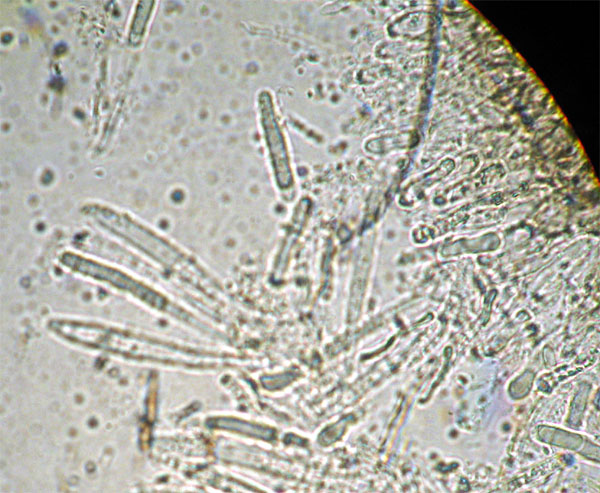
The spores are 5-9x1,5-2 and asci 30-47x5-6, IKI+.
I can't say, that I saw paraphyses.
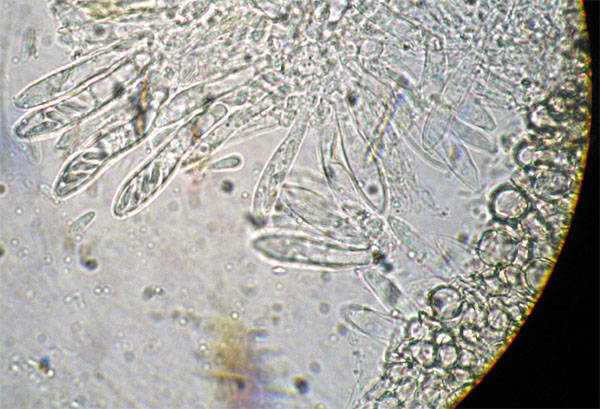
This photo hopefully tells the rest of the story:
Abosutely no idea of where to start to look for the species: Marja
I can't say, that I saw paraphyses.
This photo hopefully tells the rest of the story:
Abosutely no idea of where to start to look for the species: Marja
Marja Pennanen,
09-08-2010 12:08
Re:On Potentilla
Hello,
I've spent hours studying those Potentillas. Thought there was something else too, but always this same.
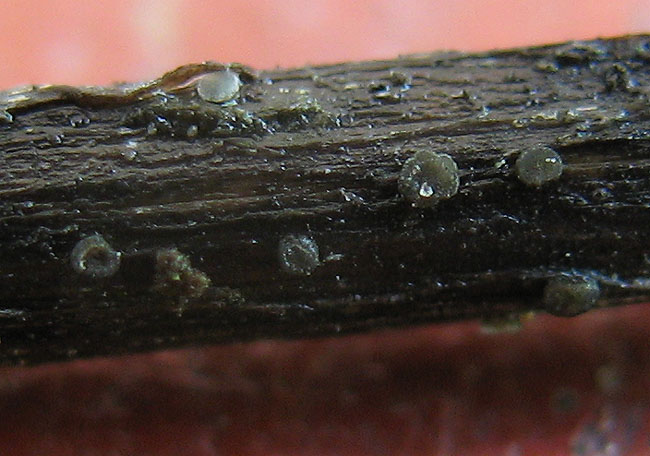
It can look like this too, these are about 0,3 mm wide and grow on the leafribs::
I've spent hours studying those Potentillas. Thought there was something else too, but always this same.
It can look like this too, these are about 0,3 mm wide and grow on the leafribs::
Marja Pennanen,
09-08-2010 12:09
Re:On Potentilla
The first ones were propably very young and had no paraphyses yet.
I suppose that they have paraphyses, too.
The marginal cells are hyaline (once again sorry for the poor quality):
I suppose that they have paraphyses, too.
The marginal cells are hyaline (once again sorry for the poor quality):