
11-05-2026 12:32
 Bernard CLESSE
Pourriez-vous m'aider à identifier cette héloti
13-05-2026 15:26
 François Freléchoux
Bonjour,Voici une récolte faite il y a quelques j
12-05-2026 15:41
 Nicolas VAN VOOREN
Dear Ascolovers, especially interested in Pezizale
13-05-2026 12:05
 Thierry Blondelle
Bonjour à tous,J'aimerais avoir confirmation de c
10-05-2026 23:17
 Andreas Gminder
Hello,today we found in a moist steep decidous for
28-04-2026 20:07
 Lothar Krieglsteiner
... on twig in the air at standing Ceratonia siliq
27-04-2026 20:52
Lothar Krieglsteiner
Found on hanging tiwg of Olea europaea in dried-ou
11-05-2026 20:22
Lothar Krieglsteiner
on attached twig of standing Ficus caricaquite uns
29-04-2026 10:44
Lothar Krieglsteiner
growing at moist, drying-out soil at the side of a
Hyalopeziza?
Gernot Friebes,
07-12-2009 23:43
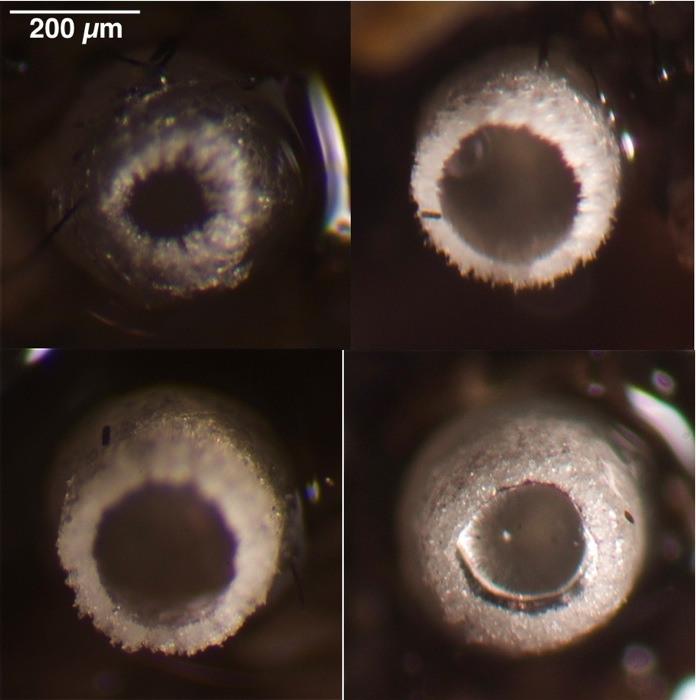
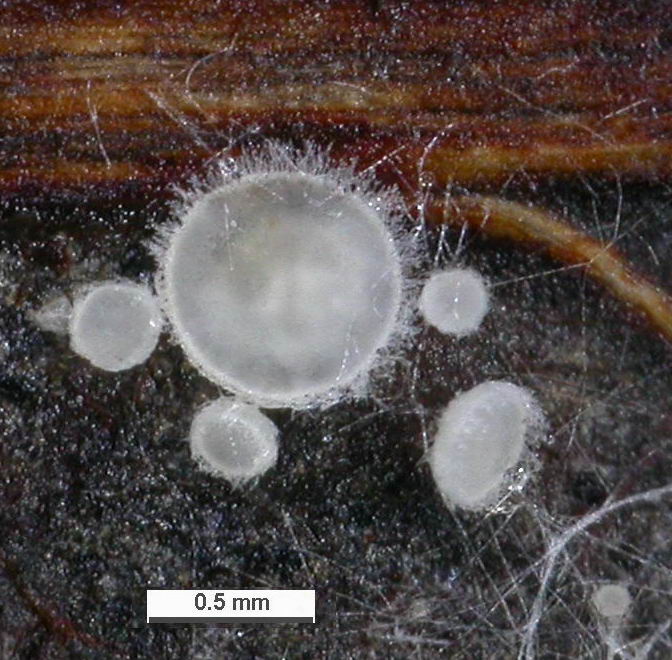
I am not sure whether this really is a Hyalopeziza or another genus with glassy hairs but to me Hyalopeziza fits best.
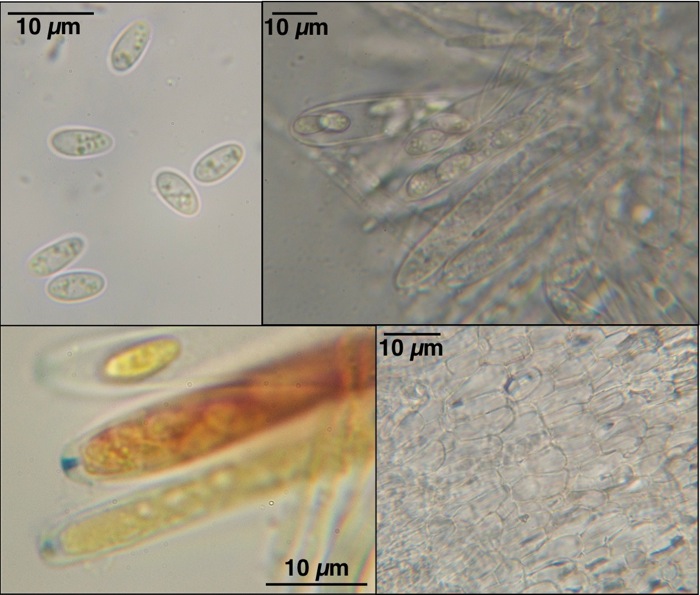
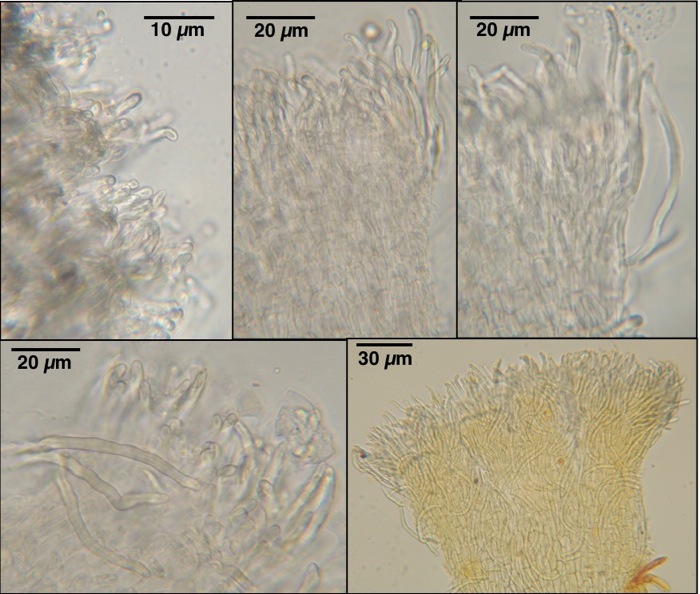
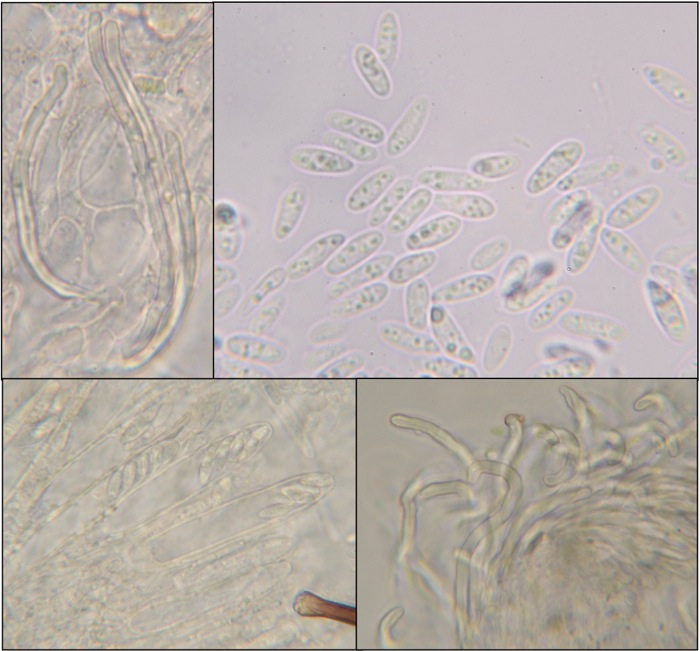
It grew on very rotten, wet wood, soc. Lasiosphaeria hirsuta, Bulbillomyces farinosus and Trichophaeopsis latispora. The spores are 7-8 x 2,5-3 µm, the asci IKI bb, croziers +, the hairs throughout thickwalled and up to 75 µm long, not dissolving in 5% KOH.
Best wishes,
Gernot
Gernot Friebes,
07-12-2009 23:44
Re:Hyalopeziza?
micros
Gernot Friebes,
07-12-2009 23:44
Re:Hyalopeziza?
hairs
Stip Helleman,
08-12-2009 00:05

Re:Hyalopeziza?
Hi Gernot,
I would say Hyalopeziza too, but the species is unknown to me.
Stip
I would say Hyalopeziza too, but the species is unknown to me.
Stip
Gernot Friebes,
08-12-2009 00:19
Re:Hyalopeziza?
Thank you Stip! I'm happy you agree with the genus!
Best wishes,
Gernot
Best wishes,
Gernot
Hans-Otto Baral,
08-12-2009 13:40

Re:Hyalopeziza?
Hi Gernot
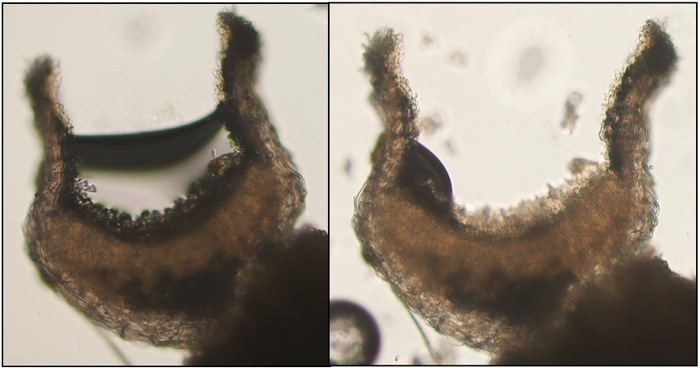
this find would be worth to be described more detailed. Ascus size, hair size (incl. width). Have you the hairs in higher resolution? They look as getting more thin-walled near the apex. Also a section of the urceolate apo would be good.
Above all: the species looks like an Urcolella. I somewhat doubt the value of the KOH-solubility as a generic character. Anyhow, sometimes the hair glassiness in Urceolella dissolves only when shortly heating the KOH slide (until it boils). If then still KOH-inert, I suspect that most species described in Urceolella cannot be consiered.
With Raitviir 2005 I did not arrive at a result.
Zotto
this find would be worth to be described more detailed. Ascus size, hair size (incl. width). Have you the hairs in higher resolution? They look as getting more thin-walled near the apex. Also a section of the urceolate apo would be good.
Above all: the species looks like an Urcolella. I somewhat doubt the value of the KOH-solubility as a generic character. Anyhow, sometimes the hair glassiness in Urceolella dissolves only when shortly heating the KOH slide (until it boils). If then still KOH-inert, I suspect that most species described in Urceolella cannot be consiered.
With Raitviir 2005 I did not arrive at a result.
Zotto
Gernot Friebes,
08-12-2009 17:01
Re:Hyalopeziza?
Hi Zotto,
you know, as a student I have saturday for collecting fungi and sunday for determining them and that's not enough time for all special measurements, sections, etc. But of course I'll try to look for these characters when they are needed!
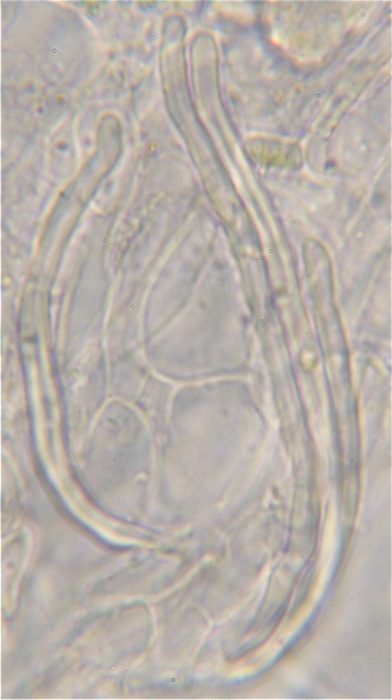
Here I have now new data: the hairs are 52-75(98) x 3,5 µm, curved (c-shaped), throughout thickwalled except for the apex, where the wall is a bit thinner. The asci are 51-60,5 x 8-8,5 µm.
Best wishes,
Gernot
you know, as a student I have saturday for collecting fungi and sunday for determining them and that's not enough time for all special measurements, sections, etc. But of course I'll try to look for these characters when they are needed!
Here I have now new data: the hairs are 52-75(98) x 3,5 µm, curved (c-shaped), throughout thickwalled except for the apex, where the wall is a bit thinner. The asci are 51-60,5 x 8-8,5 µm.
Best wishes,
Gernot
Gernot Friebes,
08-12-2009 17:01
Re:Hyalopeziza?
micros
Gernot Friebes,
08-12-2009 17:02
Re:Hyalopeziza?
section
Gernot Friebes,
08-12-2009 17:02
Re:Hyalopeziza?
hairs
Hans-Otto Baral,
08-12-2009 22:16
Re:Hyalopeziza?
Wonderful your section! So deeply urceolate, like Olla scrupulosa, or Urceolella carestiana. The hairs look very similar to Urceolella salicicola/graddonii (now U. hirta). In this species glassiness becomes very indistinct in 5% KOH.
The spores are egttulate and slightly smaller
The spores are egttulate and slightly smaller
Hans-Otto Baral,
08-12-2009 22:17
Re:Hyalopeziza?
But this species grows on leaves and the apos are not at all urceolate.
Gernot Friebes,
09-12-2009 22:42
Re:Hyalopeziza?
Hi Zotto,
the hairs look similar but the spores and the apothecia are quite different, as you wrote. Well, I guess both this find and the mollisoid fungus will stay undetermined ascomycetes, I am used to it :-/
Best wishes,
Gernot
the hairs look similar but the spores and the apothecia are quite different, as you wrote. Well, I guess both this find and the mollisoid fungus will stay undetermined ascomycetes, I am used to it :-/
Best wishes,
Gernot
Hans-Otto Baral,
09-12-2009 22:46
Re:Hyalopeziza?
But please do the KOH test with heating, I am curious about the result.
Zotto
Zotto
Gernot Friebes,
09-12-2009 22:50
Re:Hyalopeziza?
ok, I will try it! Fortunately there are enough apothecia left.
Gernot Friebes,
11-12-2009 16:44
Re:Hyalopeziza?
Hi Zotto,
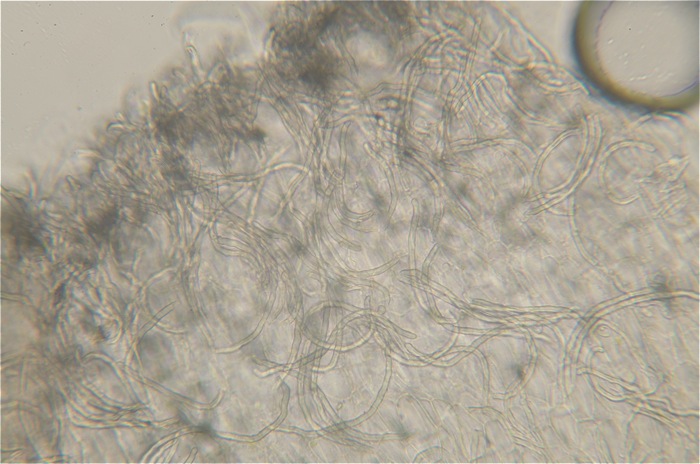
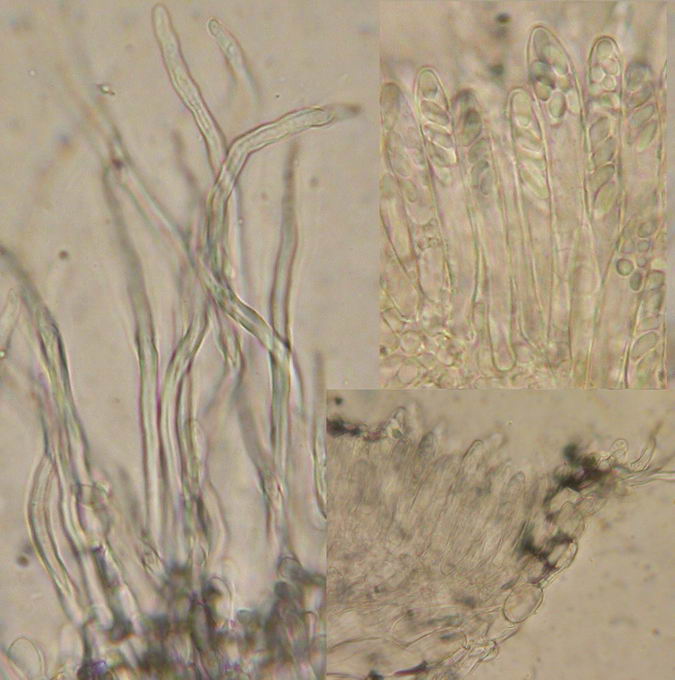
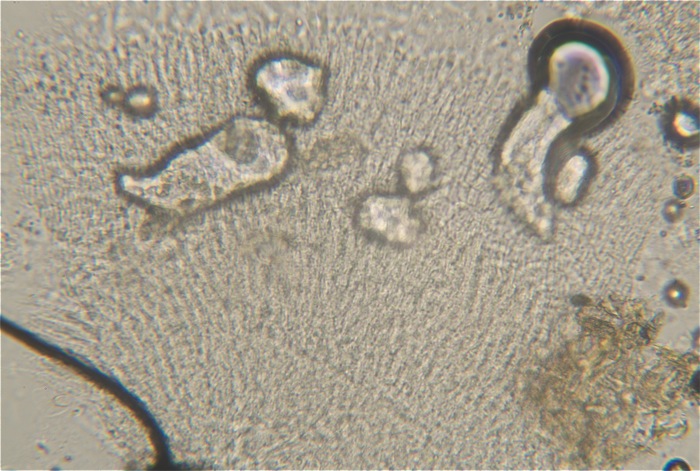
I put a piece of an apothecium in KOH 5%, heated it and the hairs were gone! Have a look at the picture, there is just the excipulum left.
Best wishes,
Gernot
I put a piece of an apothecium in KOH 5%, heated it and the hairs were gone! Have a look at the picture, there is just the excipulum left.
Best wishes,
Gernot
Hans-Otto Baral,
11-12-2009 18:14
Re:Hyalopeziza?
So we can safely say that it is an Urceolella.
Gernot Friebes,
11-12-2009 19:19
Re:Hyalopeziza?
thank you! You are a great help.