
05-05-2026 22:40
Gernot FriebesHi,I believe this is a Plagiostoma growing on a Sa
04-05-2026 18:13
 Stephen Martin Mifsud
ID request for what seems to be a true aquatic fun
04-05-2026 16:39
Stephen Martin Mifsud
ID request: This specimen was collected in Malta o
28-07-2011 18:31
 Alex Akulov
Dear FriendsToday I made the pdf file of Velenovsk
28-04-2026 20:07
 Lothar Krieglsteiner
... on twig in the air at standing Ceratonia siliq
04-05-2026 09:50
 Castillo Joseba
Me mandan el material seco de Galicia,(España) re
02-05-2026 12:42
Alain BRISSARDBonjour à tousJeuidi 30 avril dernier on m'a remi
02-05-2026 13:06
Pauline. PennaBonjour Please can someone help me with this id
01-05-2026 22:45
 Thierry Blondelle
Bonjour à tous, Une récolte sur bouse séchée d
Tricharina gilva?
Piet BORMANS,
28-11-2009 18:53
 Bonjour,
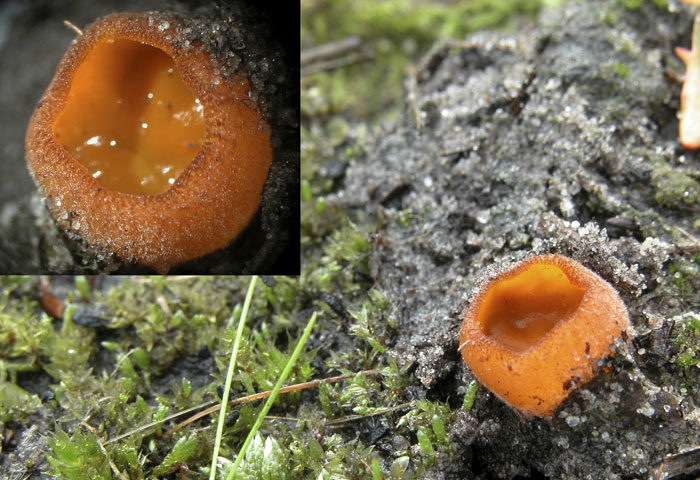
Pourrait-il s'agir de Tricharina gilva?
Trouvé le 24/11/09 sur un sol sablonneux pauvre en terre végétale, isolé.
Apothécies: 9mm, Ø x 5 mm, cupuliforme et de couleur orange.
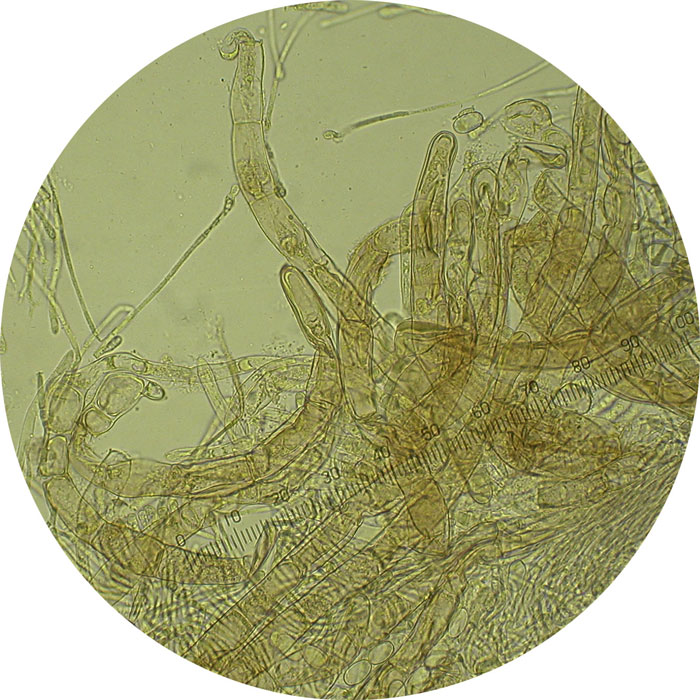
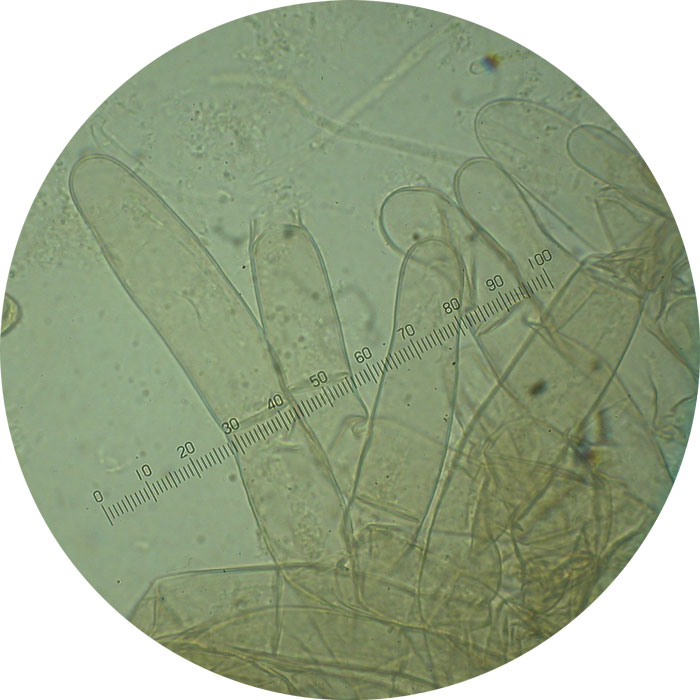
Duvet blanc à l'extérieur de l'excipulum, poils bruns en touffe sur le bord supérieur, dimensions 180x225 x 10-13(19) µm, poils avec une extrémité arrondie.
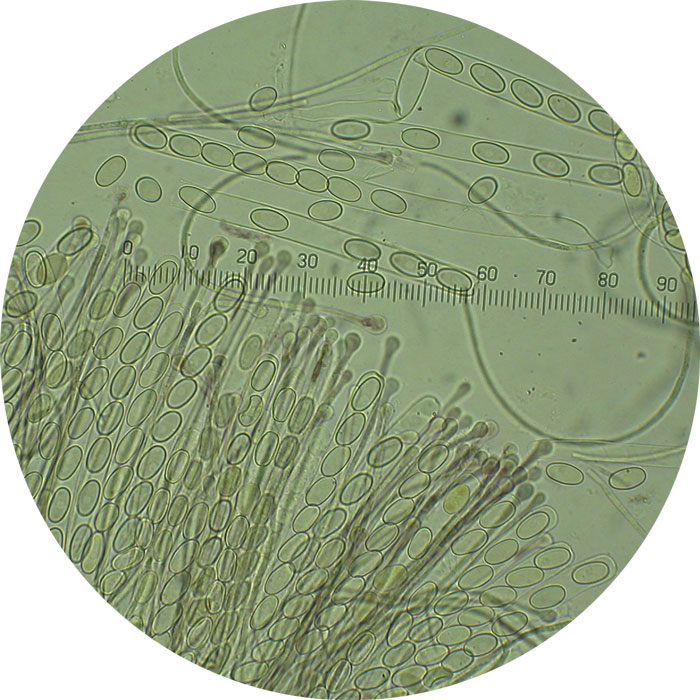
Asques: 200-240 x 8-10 µm. J-
Parapfyses d'une largeur de 4µm avec un sommet élargi jusqu'a 7µm; colorant rouge-brun dans Melzer
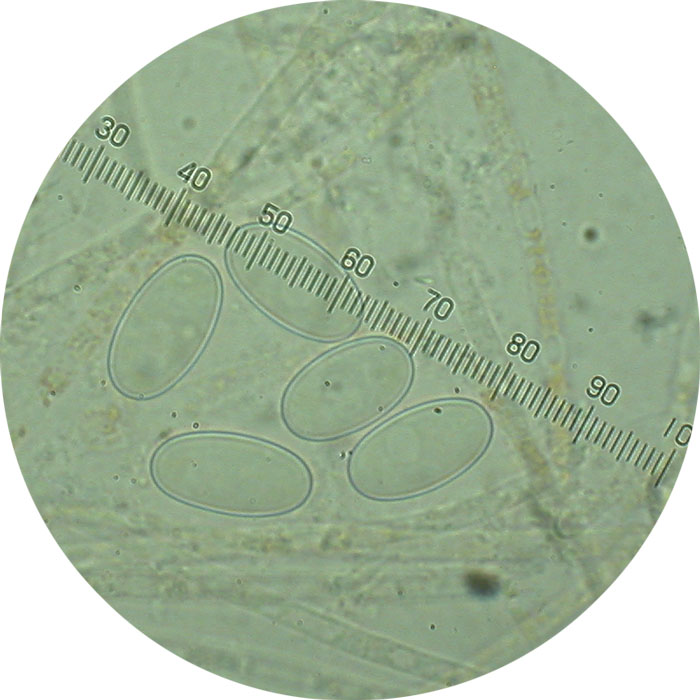
Spores lisses, 15-16 x 8-9 µm
Merci d'avance.
Piet Bormans
Piet BORMANS,
28-11-2009 18:54
Re:Tricharina gilva?
Asques et parafyses (Melzer)
Piet BORMANS,
28-11-2009 18:55
Re:Tricharina gilva?
Poils (1)
Piet BORMANS,
28-11-2009 18:57
Re:Tricharina gilva?
Poils (2)
Piet BORMANS,
28-11-2009 18:57
Re:Tricharina gilva?
Spores
Gilbert MOYNE,
28-11-2009 23:14
Re:Tricharina gilva?
Les poils sont assez surprenants pour un Tricharina.
Et la couleur aussi.
Peut-être T. fibrillosa mais je crois que l'espèce a émigré dans un autre genre.
Gilbert
Et la couleur aussi.
Peut-être T. fibrillosa mais je crois que l'espèce a émigré dans un autre genre.
Gilbert
Richard Korf,
29-11-2009 04:29
Re:Tricharina gilva?
Yes, Moravec transferred that species. to Pseudaleuria. I haven't seen any molecular evidence that the transfer was necessary, though the Index Fungorum accepts it. The spores and the imperfect state fit Tricharina. Yang and Korf credited the epithet to Currey, but Currey's name in Peziza is a later homonym, and the correct authorities change to Tricharina fibrillosa (Massee) Chin S. Yang & Korf (Art. 58, ICBN).
NO, I made an error. We never did get spores of T. fibrillosa to germinate, and had no recent collections, so there is no known Ascorhizoctonia state for this species. Would be nice to get this in culture and get it deposited in a reputable culture collection. We discovered that even old (±20 year) dried specimens have ascospores that can be germinated, so even if you've dried your collection you can probably get the spores to germinate! If it doesn't produce an Ascorhizoctonia state then maybe Moravec is correct!
Dick Korf
NO, I made an error. We never did get spores of T. fibrillosa to germinate, and had no recent collections, so there is no known Ascorhizoctonia state for this species. Would be nice to get this in culture and get it deposited in a reputable culture collection. We discovered that even old (±20 year) dried specimens have ascospores that can be germinated, so even if you've dried your collection you can probably get the spores to germinate! If it doesn't produce an Ascorhizoctonia state then maybe Moravec is correct!
Dick Korf
Piet BORMANS,
01-12-2009 21:50
Re:Tricharina gilva?
Merci beaucoup à Gilbert Moyne de votre réponse, and a lot of thanks to Richard Korf for the explanation.
Piet Bormans
Piet Bormans