

05-05-2026 22:40
Gernot FriebesHi,I believe this is a Plagiostoma growing on a Sa
06-05-2026 11:25
 Castillo Joseba
Me mandan el material seco de Galicia (España) re
06-05-2026 17:23
Thomas Læssøehttps://svampe.databasen.org/observations/10594257
28-04-2026 20:07
 Lothar Krieglsteiner
... on twig in the air at standing Ceratonia siliq
04-05-2026 18:13
 Stephen Martin Mifsud
ID request for what seems to be a true aquatic fun
04-05-2026 16:39
Stephen Martin Mifsud
ID request: This specimen was collected in Malta o
28-07-2011 18:31
 Alex Akulov
Dear FriendsToday I made the pdf file of Velenovsk
04-05-2026 09:50
Castillo Joseba
Me mandan el material seco de Galicia,(España) re
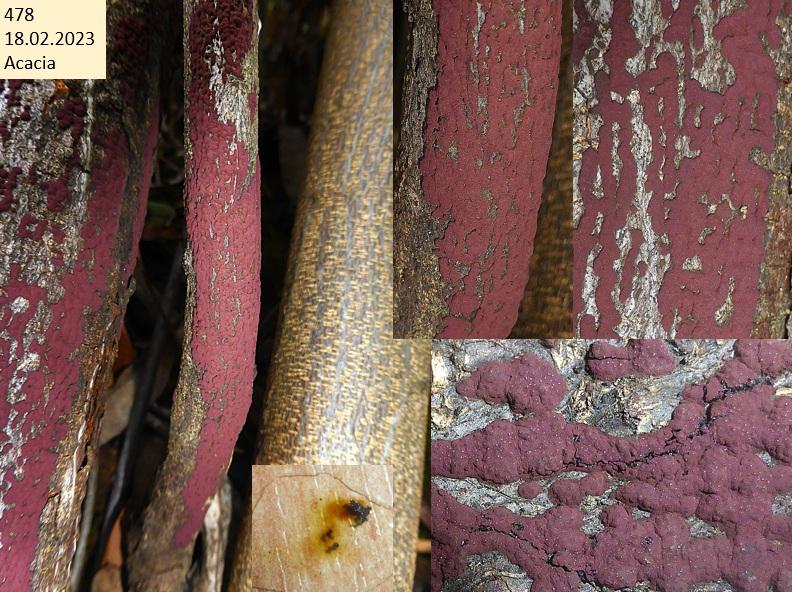
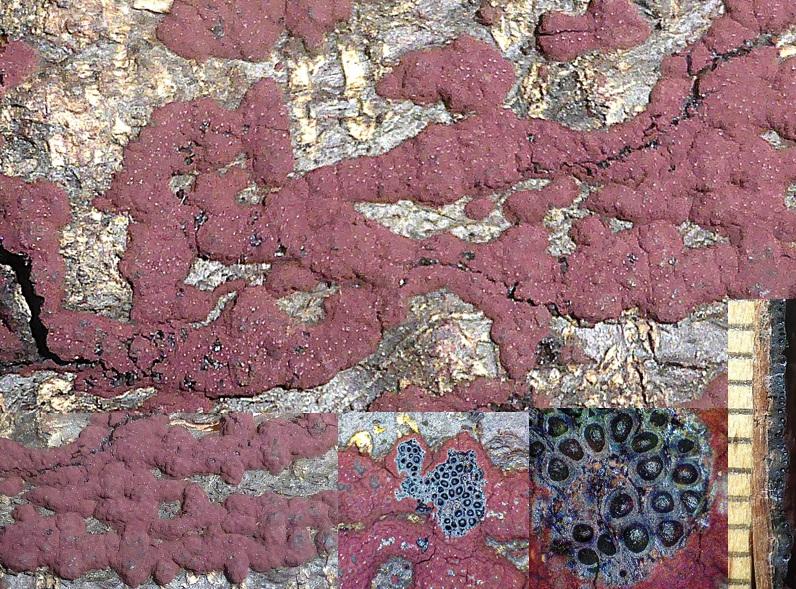
The first 6 tables show surely one species with 2 collections very near by each other, both growing on stems of Acacia spec.. The color is very strikingly and brightly violaceous-red, to some extent similar to H. fuscum but untypical in its brightness to any Hypxylon species I by now know.
The stromata are confluent, but begin with smaller cushion-like forms later building larger stromata. The stromata are thin, and the single perithecia are quite small. There are no obvious coloured granula to be found when cutting the stromata near the upper surface.
The pigment dissolved in 10% KOH is dirty yellowish in weaker concentration, dirty orange (brown) in higher.
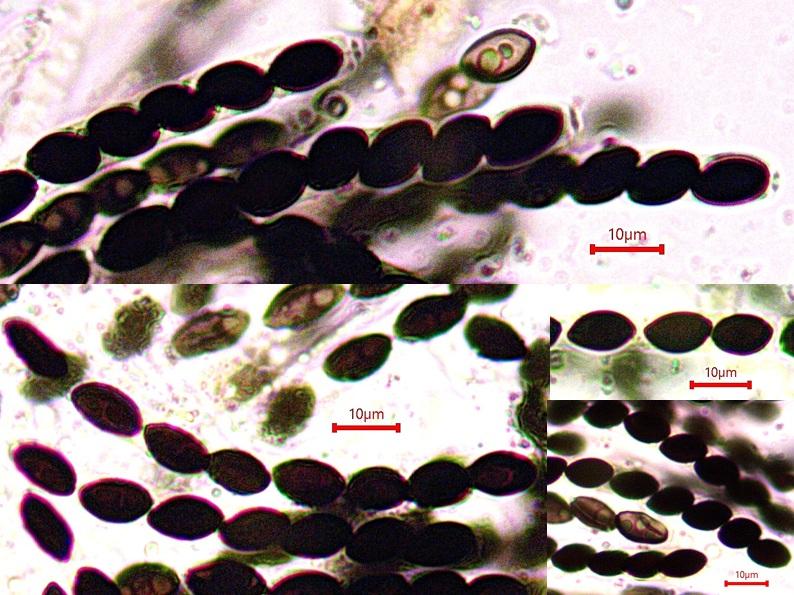
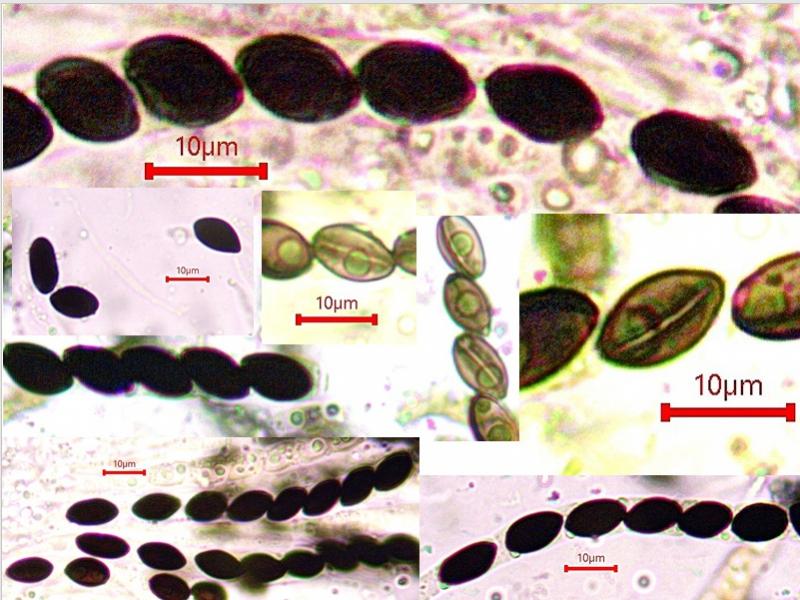
The spores are quite short and thick mostly, but there can be found also a bit more elongated ones, they are rather elliptical but also with more pointed ends. They measure about 10-12(13,5)/5,5-7(8) µm (first collection, second one 10-12,5/5-6,5 µm). In 10 % KOH there is no detaching spore wall. The germ slite I find tob e quite straight, but as I see one only in some spores I am a bit unsure.
The asci are quite long-stalked (table 6 of the second collection – all other tables are made of totos of collection 1) and react blue already in Barals solution (the same in Melzers reagent after KOH-pretreatment).
The last 4 tables (7-10) show a third collection, growing on stems of Arbutus unedo, and I am not sure if it's the same species or another one. It has a lot in common with the Acacia-finds, but deviates at least in its growth, not building small confluent cushions but larger flatter stromata.
It is similar in color and the stromata are thin also, and there is also a yellowish pigment soluble in KOH. There are no color granules also, the perithecia are also quite small. The spores are similar in form and without detaching perispore in KOH, and measure about (9)10-12(15)/5,5-7 µm. The asci are long-stalked, too, and bluing in Barals solution also.
Can somebody give me a hint to the species. I think it must belong tot he H. fuscum-complex and I had tried to identify it as H. fuscum (with quite small spores). H. fuscoides is fitting better in spore size but seems to be a medio-european mountain species. H. fuscopurpureum has larger spores, for instance. H. lusitanicum (what I think I also found) has whitish discs at the perithecia, for instance. It seems to me that all known species deviate a bit to my collections. Who can help me? Or is it a (or even two) new species?
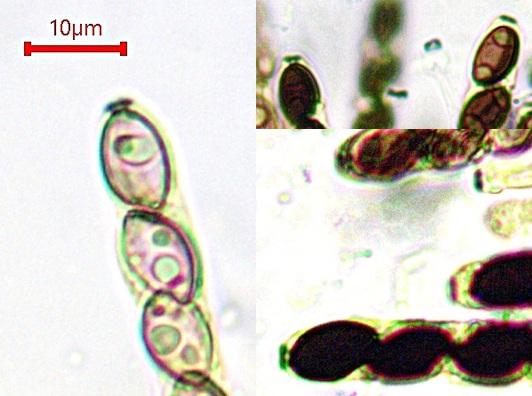
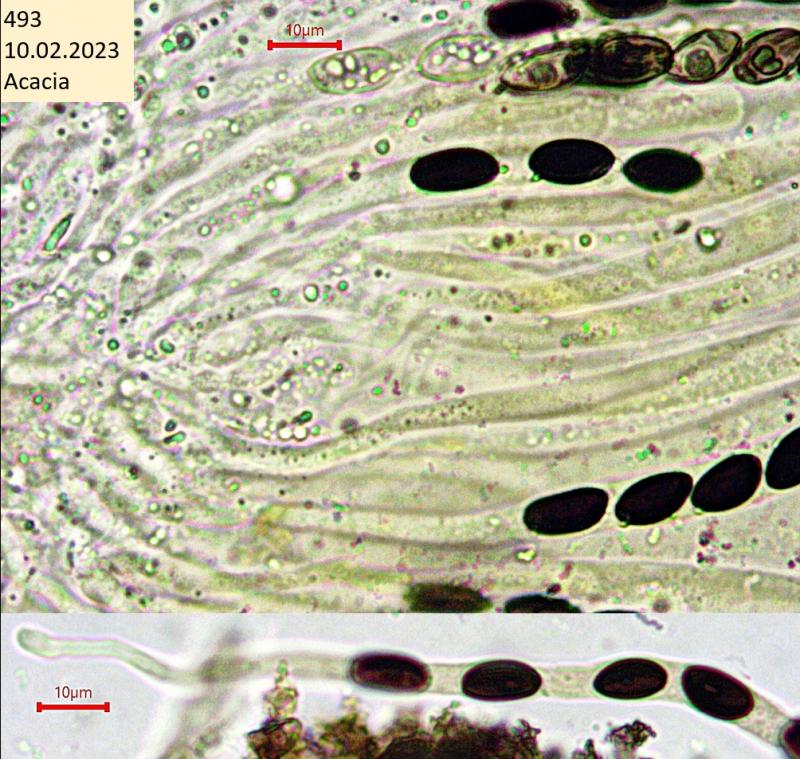
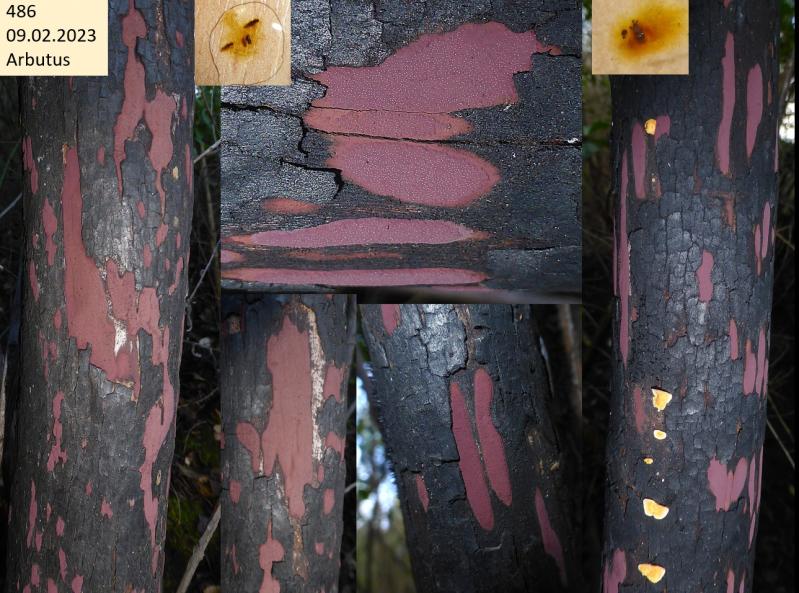
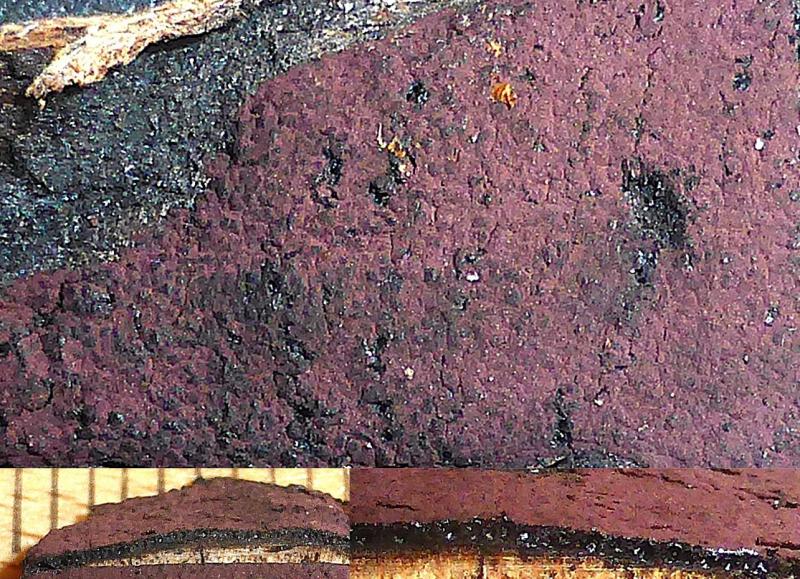
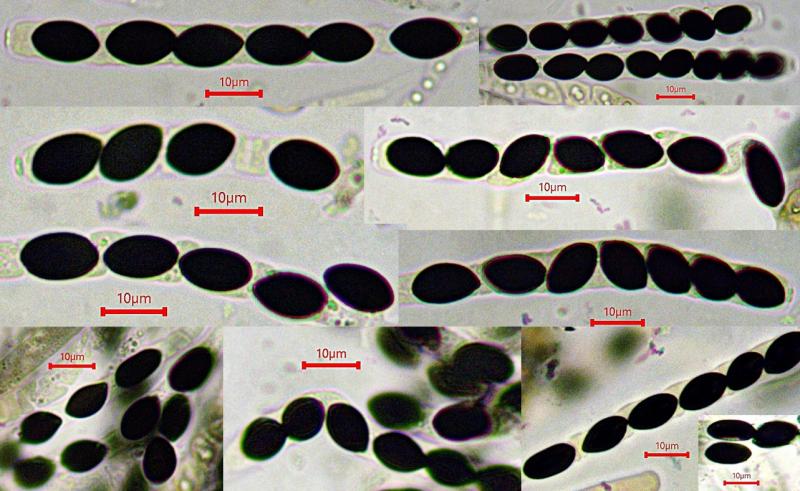
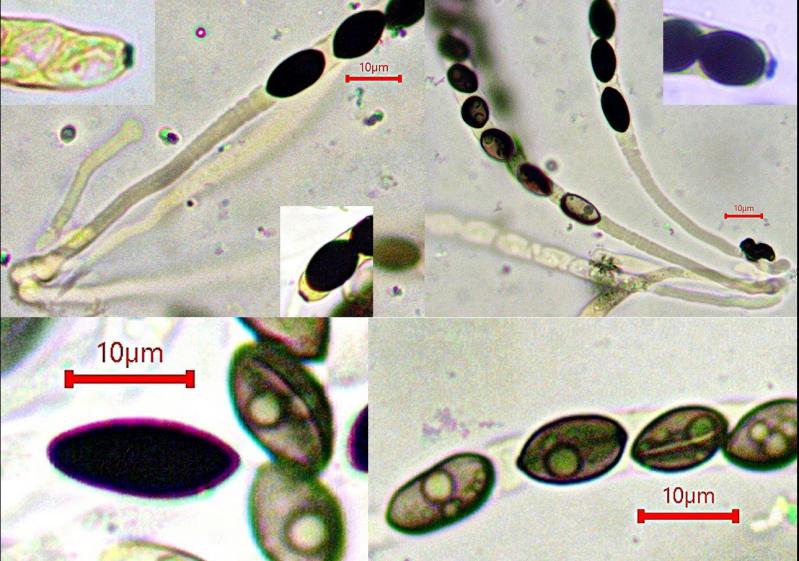

I do know this Hypoxylon, first collected by JP Priou in Tenerife, later on reported by Enrique from a collection in Galicia.
Your long description represents two collections of the same fungus.
It is morphologically very similar to H. brabeji Marincowitz et al, described from South Africa. Enrique obtained sequences but the South African taxon has apparently not been sequenced and I failed to communicate with his authors.
This story dates back to 2016, maybe Enrique has been more successful than me.
I wish you good luck!
Jacques
thank you very much for your very informative response. This species seems to be quite common in the Algarve. We plan to go there again in the end of March - perhaps we can find it again. If we have a lot of luck we can perhaps also find again the peculiar small Xylaria I once showed here.
Best regards, Lothar