03-05-2026 10:57
 Castillo Joseba
Me mandan el material seco de Galicia (España) re
02-05-2026 12:42
Alain BRISSARDBonjour à tousJeuidi 30 avril dernier on m'a remi
02-05-2026 13:06
Pauline. PennaBonjour Please can someone help me with this id
01-05-2026 22:45
 Thierry Blondelle
Bonjour à tous, Une récolte sur bouse séchée d
28-04-2026 20:07
 Lothar Krieglsteiner
... on twig in the air at standing Ceratonia siliq
14-04-2026 05:32
Ethan CrensonHi all, A few weeks back a friend pointed out som
28-04-2026 20:33
Vitus SchäfftleinHello, I found Trochila ilicina on Ilex aquifoliu
30-04-2026 10:28
Rot BojanHello, by appearance I would say that I am dealing
Spherical Pyrenomycete
Josep Torres,
21-12-2025 09:32
 Hello.
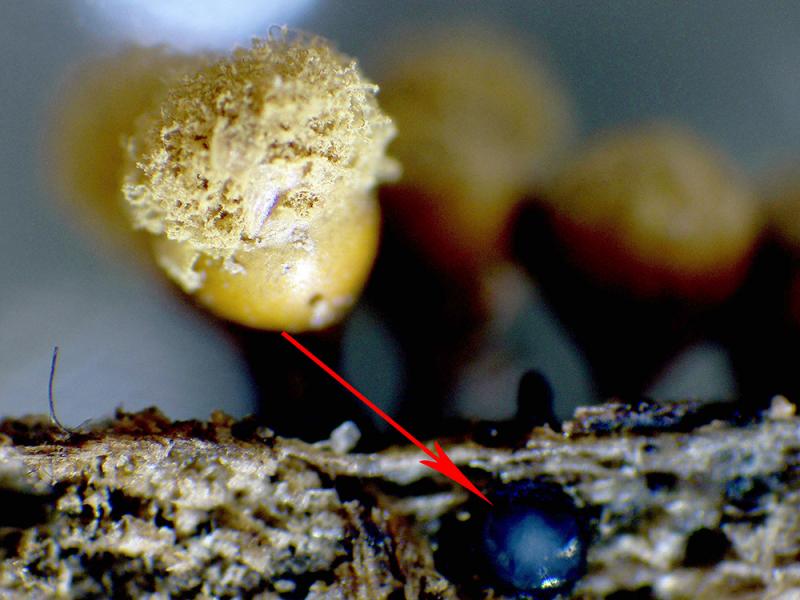
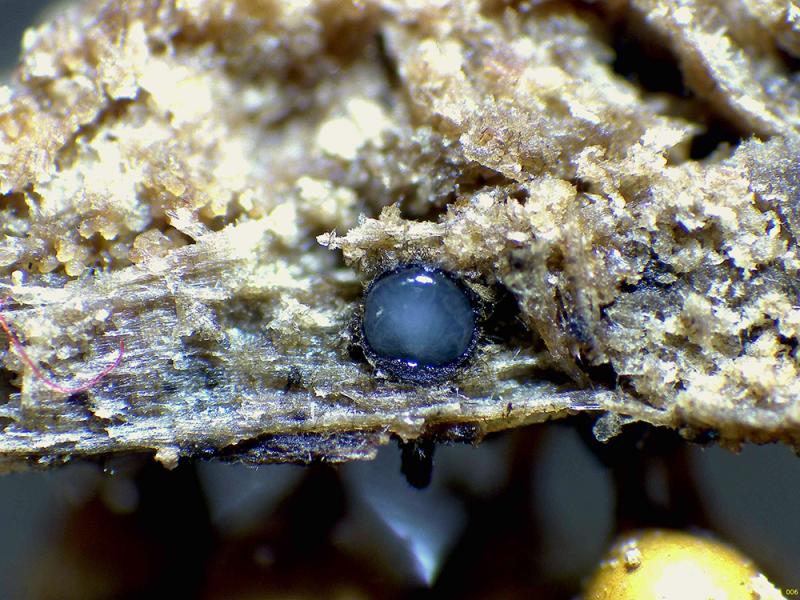
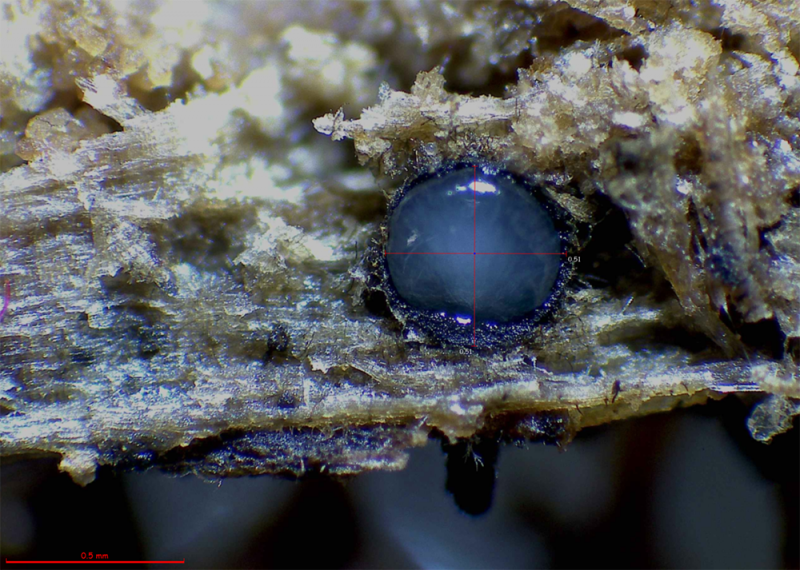
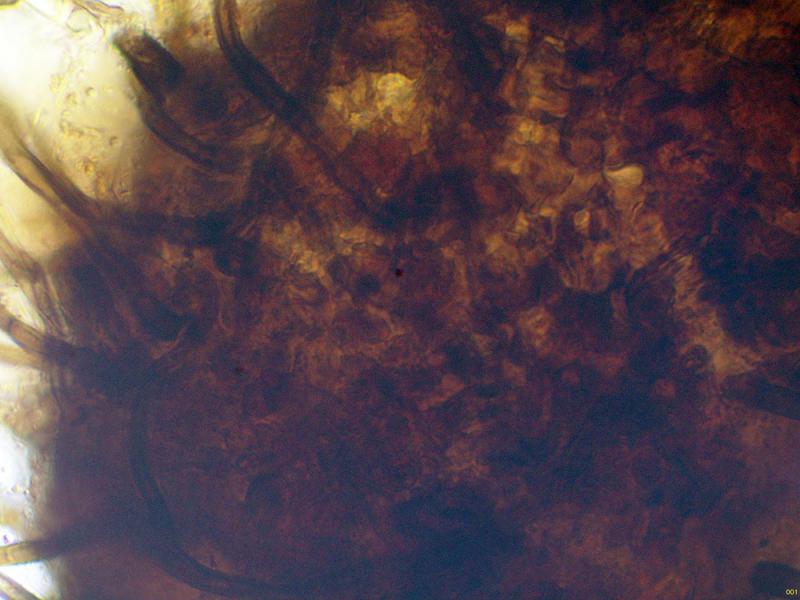
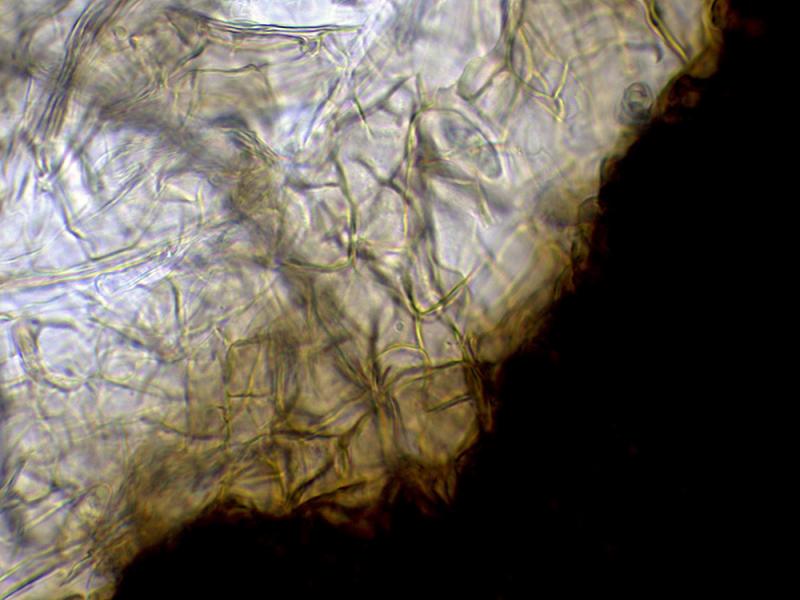
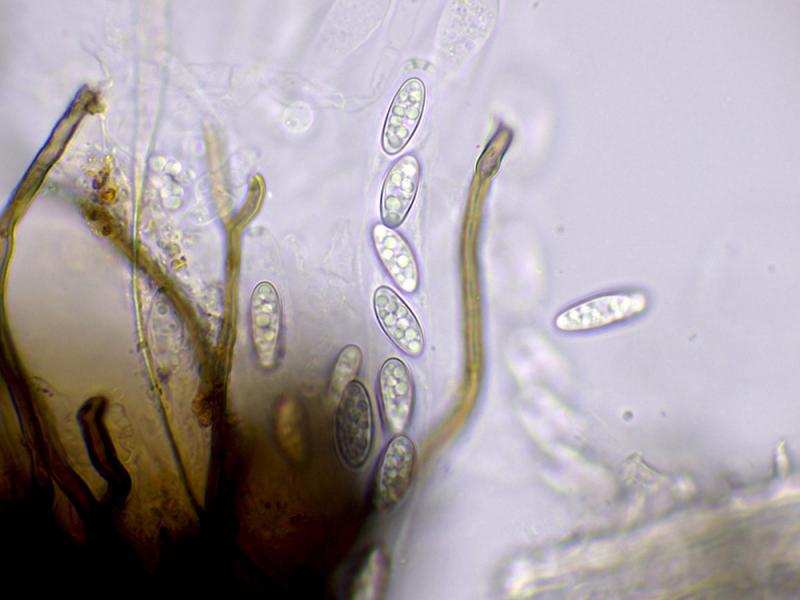
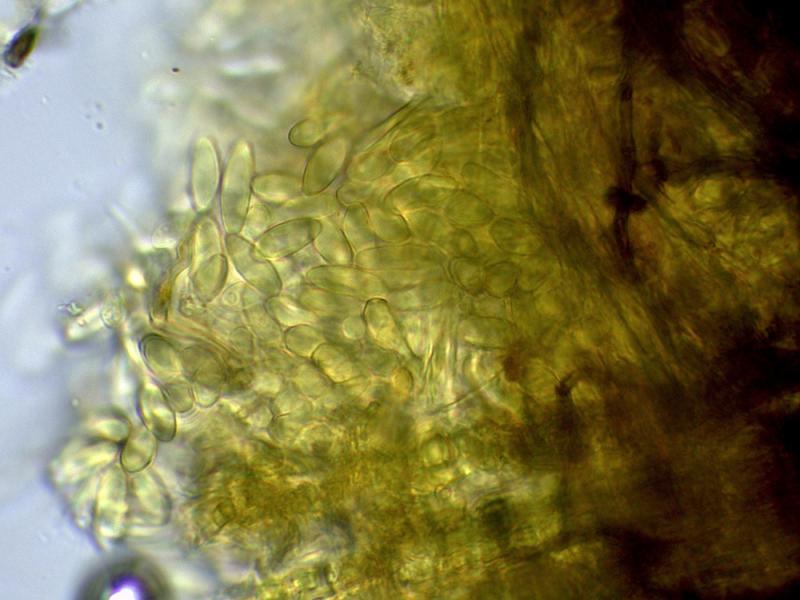
A tiny ascomycete found embedded in wood in a very advanced state of decomposition, appearing beneath some specimens of Hemitrichia clavata.
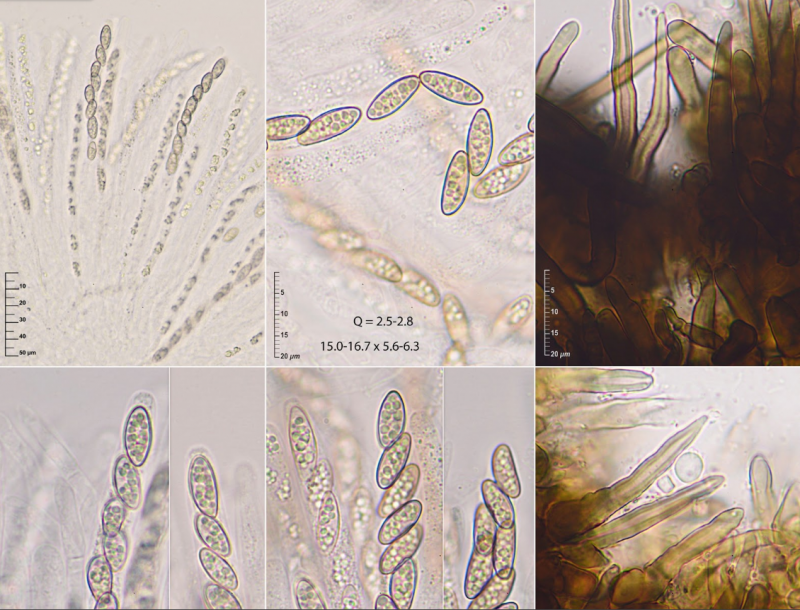
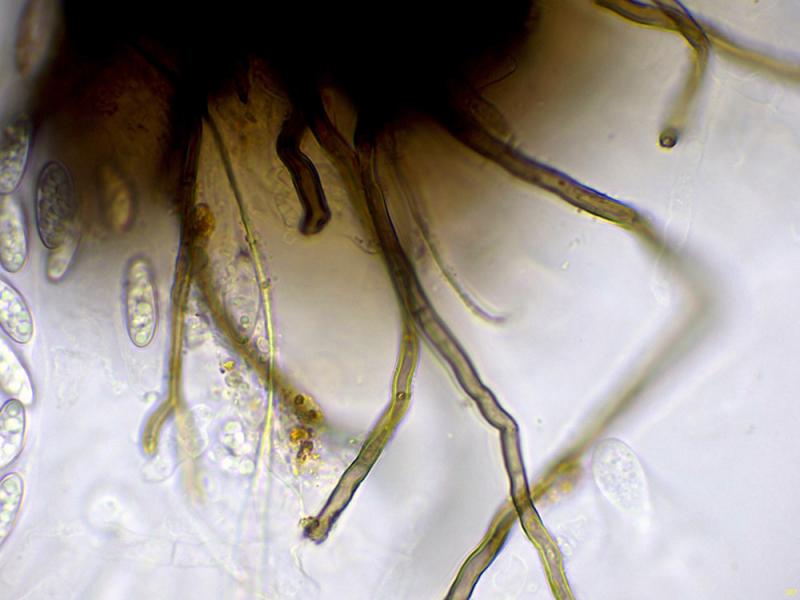
Spherical ascoma with a blackish, globose-angular wall, from which highly pigmented rhizomorphs with few septa sprout.
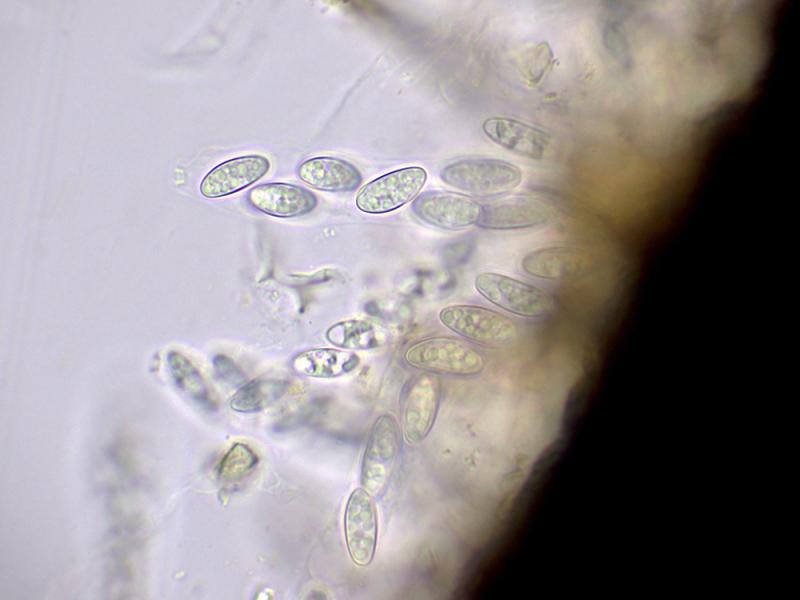
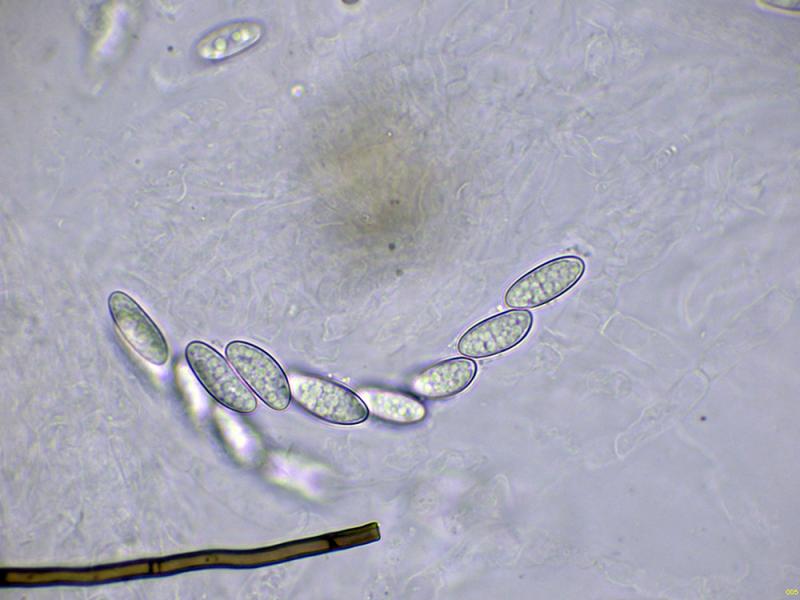
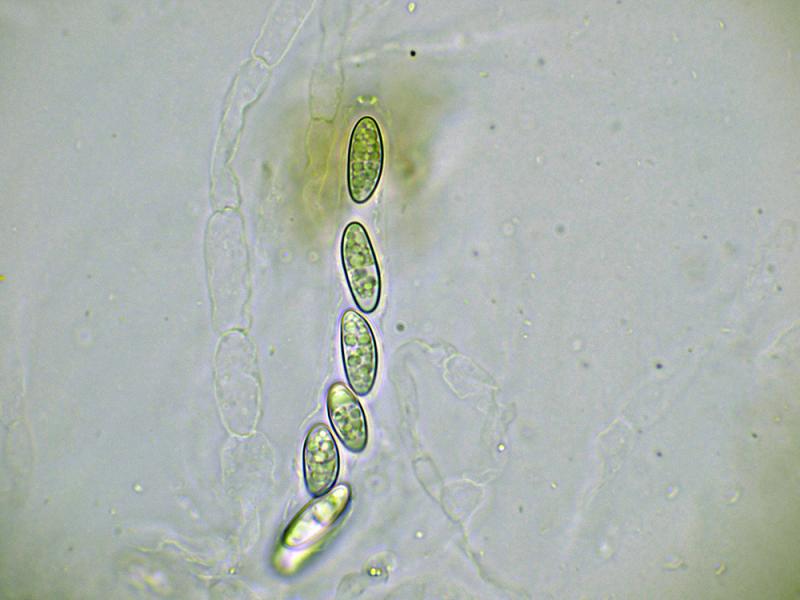
Octosporous asci with a small apical apparatus resembling two dots. Paraphyses very scarce to practically absent; the few observed are filiform and septate.
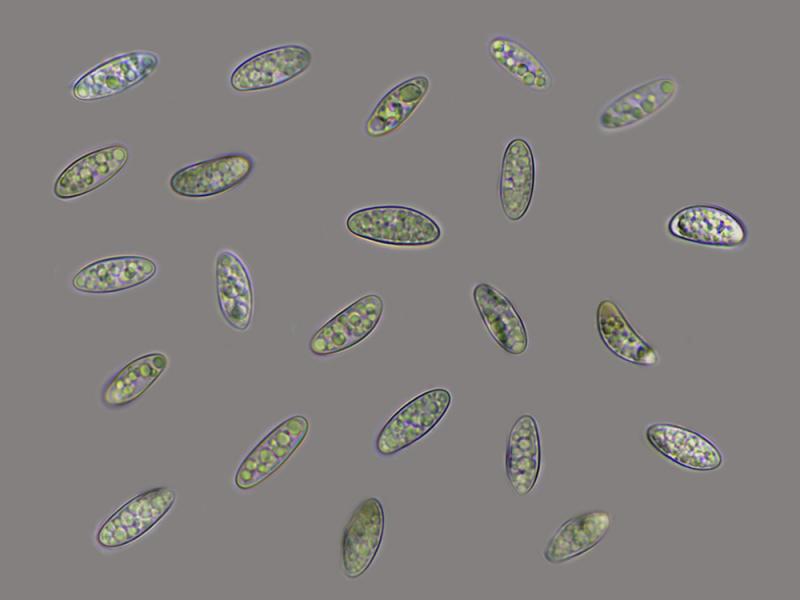
Cylindrical-ellipsoidal ascospores, completely filled with guttules, inamyloid, and with the following measurements in water:
(13.4) 13.7 - 16 (16.7) × (5.3) 5.5 - 6.4 (7) µm
Q = (1.9) 2.2 - 2.7 (3) ; N = 21
Me = 14.8 × 6.1 µm ; Qe = 2.4
I admit that I am completely lost this time.
Any opinions from you would be greatly appreciated.
Thank you very much in advance.
Best regards.
Alain GARDIENNET,
22-12-2025 09:53

Re : Spherical Pyrenomycete
Hi Josep,
It reminds me fungi such Torrentispora fibrosa. But it's different (see for example apical apparatus). It's only to star helping you.
Surely a fungus for Martina Reblova.
Alain
It reminds me fungi such Torrentispora fibrosa. But it's different (see for example apical apparatus). It's only to star helping you.
Surely a fungus for Martina Reblova.
Alain
Albert Ibars,
23-12-2025 03:22

Re : Spherical Pyrenomycete
Hello,
I think this is Helminthosphaeria sp., most likely H. corticiorum.
The structures described as rhizomorphs look to me more like melanized conidiophores.
In Helminthosphaeria, an association of the teleomorph with a Diplococcium-like anamorph has been documented, which would fit well here.
Regards,
Albert
I think this is Helminthosphaeria sp., most likely H. corticiorum.
The structures described as rhizomorphs look to me more like melanized conidiophores.
In Helminthosphaeria, an association of the teleomorph with a Diplococcium-like anamorph has been documented, which would fit well here.
Regards,
Albert
Josep Torres,
23-12-2025 08:06
Re : Spherical Pyrenomycete
Thank you both very much.
Regarding the spore morphology and measurements, both Torrentispora fibrosa and Helminthosphaeria corticiorum fit my proposal very well, although the apical apparatus is less consistent, as Alain mentioned.
Unfortunately, I don't have any material available for sequencing, so for now I'm leaving this study open as Helminthosphaeria cf. corticiorum.
Best regards.
Regarding the spore morphology and measurements, both Torrentispora fibrosa and Helminthosphaeria corticiorum fit my proposal very well, although the apical apparatus is less consistent, as Alain mentioned.
Unfortunately, I don't have any material available for sequencing, so for now I'm leaving this study open as Helminthosphaeria cf. corticiorum.
Best regards.
Alain GARDIENNET,
27-12-2025 08:25
Re : Spherical Pyrenomycete
Hi Josep,
You can.
To compare this fungus to H. corticiorium, you need a bit of imagination: its spores are a beautiful grey-brown (which is not the case here), the spores show apical Münch pores (which is not the case here), and I'm not even mentioning the ecology. There are too many differences to be certain.
Probably another fungus.
Best wishes,
Alain
You can.
To compare this fungus to H. corticiorium, you need a bit of imagination: its spores are a beautiful grey-brown (which is not the case here), the spores show apical Münch pores (which is not the case here), and I'm not even mentioning the ecology. There are too many differences to be certain.
Probably another fungus.
Best wishes,
Alain
Josep Torres,
27-12-2025 14:22
Re : Spherical Pyrenomycete
Thanks, Alain.
What you said about the spores is probably true. I've compared my spore images with the spore image from my good friend Enrique's work, and they appear identical. I've included a screenshot of his work.
There might be some variability in the spore morphology of this species.
In any case, as I've already mentioned, I prefer to leave the topic open, with many reasonable doubts, such as regarding Helminthosphaeria cf. corticiorum.
Best regards.
What you said about the spores is probably true. I've compared my spore images with the spore image from my good friend Enrique's work, and they appear identical. I've included a screenshot of his work.
There might be some variability in the spore morphology of this species.
In any case, as I've already mentioned, I prefer to leave the topic open, with many reasonable doubts, such as regarding Helminthosphaeria cf. corticiorum.
Best regards.