
03-05-2026 10:57
 Castillo Joseba
Me mandan el material seco de Galicia (España) re
02-05-2026 12:42
Alain BRISSARDBonjour à tousJeuidi 30 avril dernier on m'a remi
02-05-2026 13:06
Pauline. PennaBonjour Please can someone help me with this id
01-05-2026 22:45
 Thierry Blondelle
Bonjour à tous, Une récolte sur bouse séchée d
28-04-2026 20:07
 Lothar Krieglsteiner
... on twig in the air at standing Ceratonia siliq
14-04-2026 05:32
Ethan CrensonHi all, A few weeks back a friend pointed out som
28-04-2026 20:33
Vitus SchäfftleinHello, I found Trochila ilicina on Ilex aquifoliu
30-04-2026 10:28
Rot BojanHello, by appearance I would say that I am dealing
Orbilia...
Ethan Crenson,
22-10-2025 06:43
Hi all,
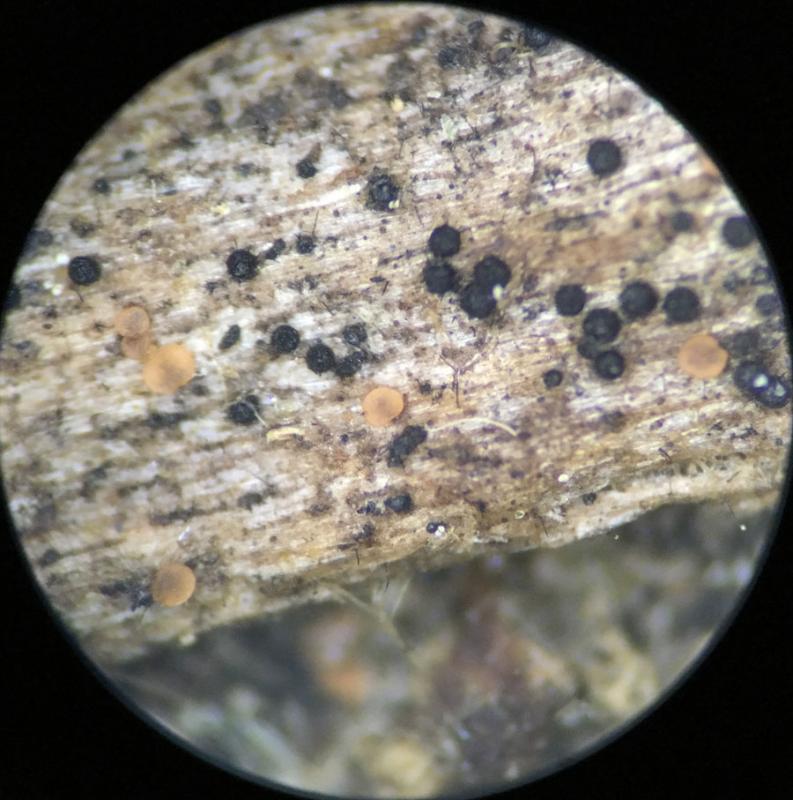
I'm having some difficulty with this Orbilia. The apothecia are orange and on hardwood which was on the ground. Margin is smooth.
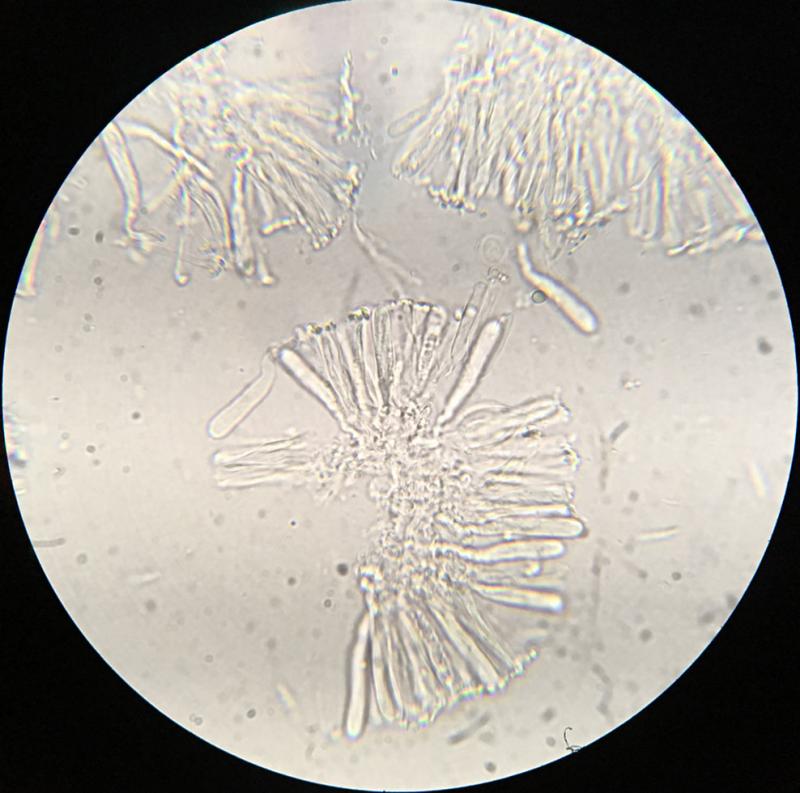
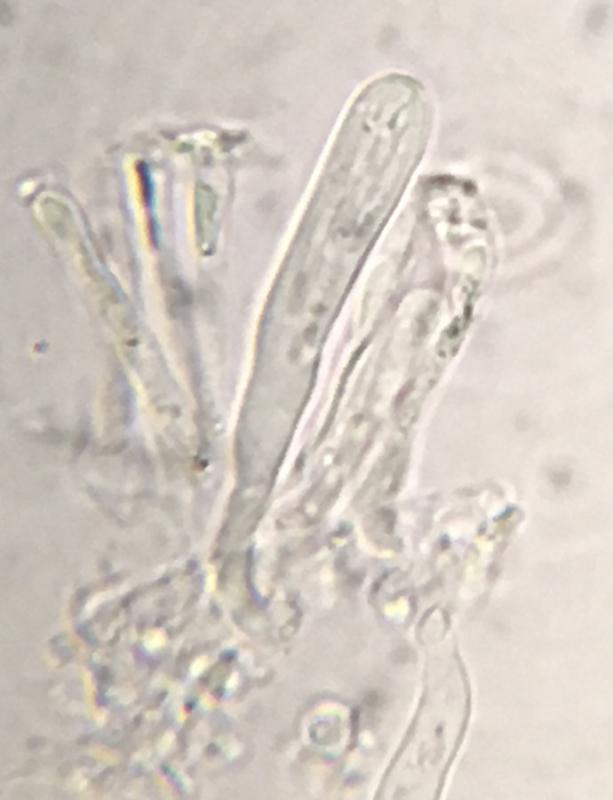
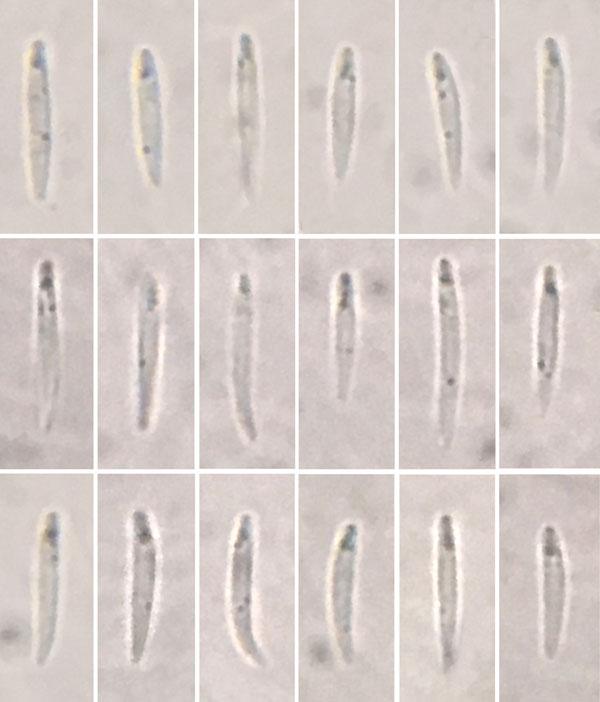
Asci 25-33 x 4-5µm
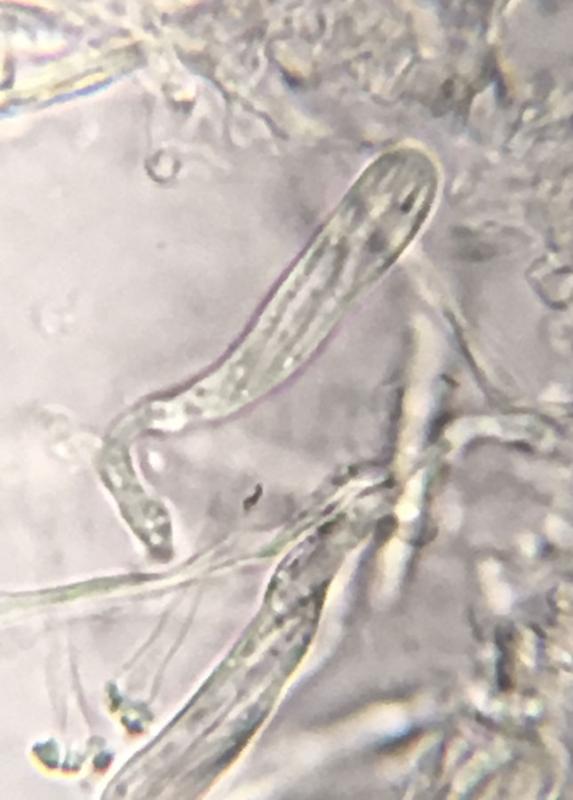
Spores are elongated, fusoid, mostly straight but infrequently curved.
8.0-13.2 x 1.2-1.6µm
Me: 10.4 x 1.4µm.
Me: 10.4 x 1.4µm.
Spore bodies sometimes a short line, sometimes longer, occasionally with an enlargement at the end. Spore body length 1.4-2.9µm
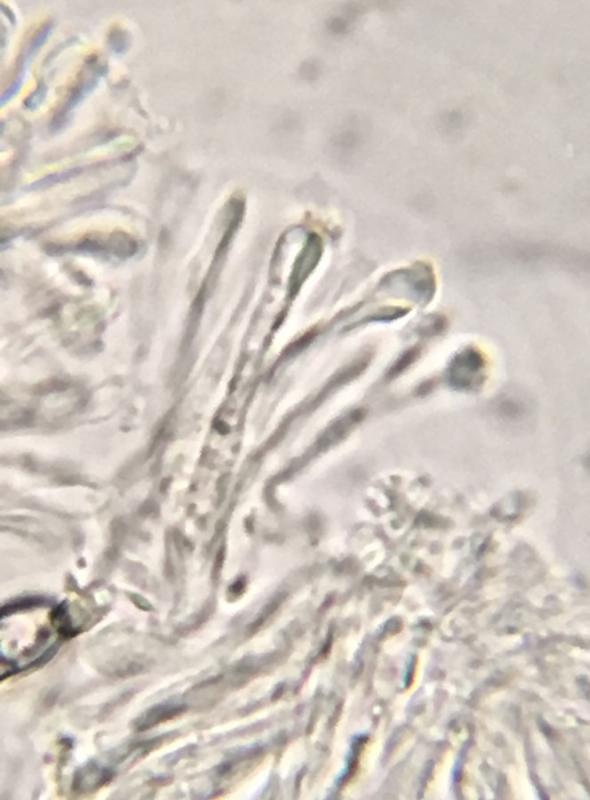
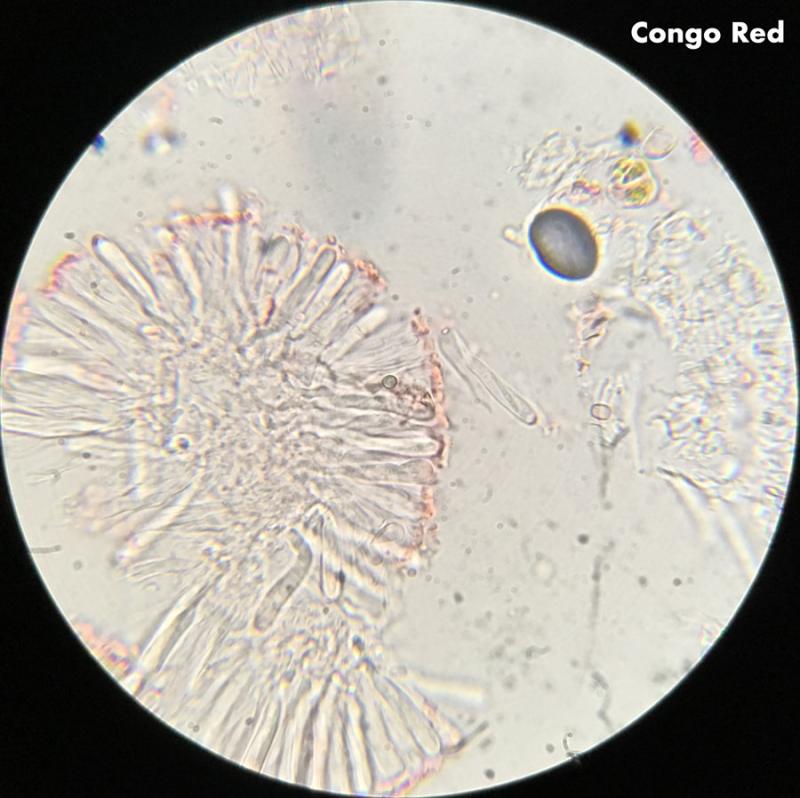
Paraphyses clavate, almost capitate at the ends and coated with exudate (which I found stains pink in Congo red.)
I would be very grateful for any assitance.
Ethan
Hans-Otto Baral,
22-10-2025 11:33

Re : Orbilia...
Hi Ethan
Although on the ground this is a member of subgenus Hemiorbilia, which are al drought-tolerant.
It must belong in the complex of O. vinosa. From typical O. vinosa it differs in too small, especially narrow spores. There is still much to explore, but these potentially different taxa can hardly be identified without DNA. Surely a sequence would be clarifying in this case, if you have enough apothecia.
Zotto
Ethan Crenson,
22-10-2025 17:26
Re : Orbilia...
Thank you! I had a moment when I thought it might be O. vinosa. I will attempt to sequence this and I will share it with you if I am successful.
E