

10-06-2026 12:54
Steve ClementsBonjour encore, Pouvez-vous m'aider, s'il vous pl
09-06-2026 18:32
Camille MertensSur morceau de roseau immergé 0,5 - 0,7 mm de dia
10-06-2026 21:16
 François Freléchoux
Bonsoir,Le dernier du jour, en attendant votre avi
10-06-2026 21:07
François Freléchoux
Toutes les tiges de gentianes jaunes de l'an passÃ
10-06-2026 13:41
François Freléchoux
Bonjour à nouveau, Voici une trouvaille d'hier.
10-06-2026 11:53
Steve ClementsBonjour, This disco is abundant on dead stems of
10-06-2026 10:45
François Freléchoux
Bonjour à nouveau, Encore une détermination qui
08-06-2026 10:16
 Spooren Marco
I don`t have a clou about this fungus,it is not in
10-06-2026 09:24
François Freléchoux
Bonjour, J'imagine que cette détermination ne do
 Good afternoon
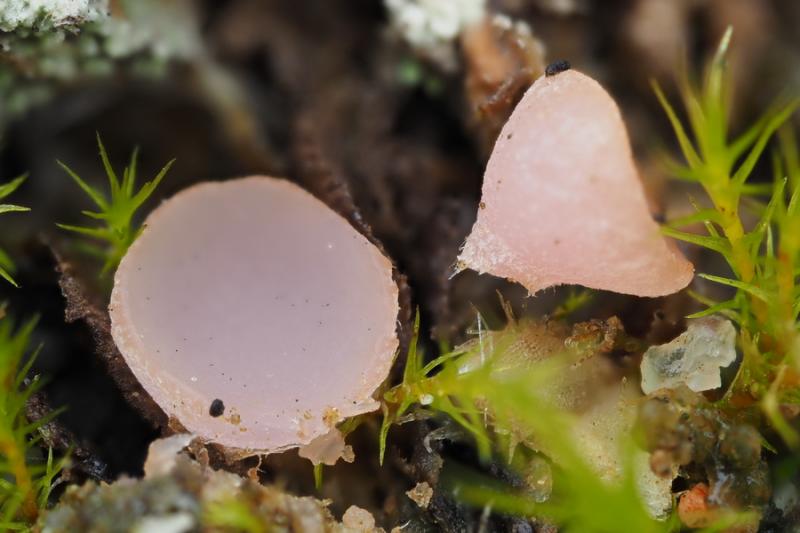
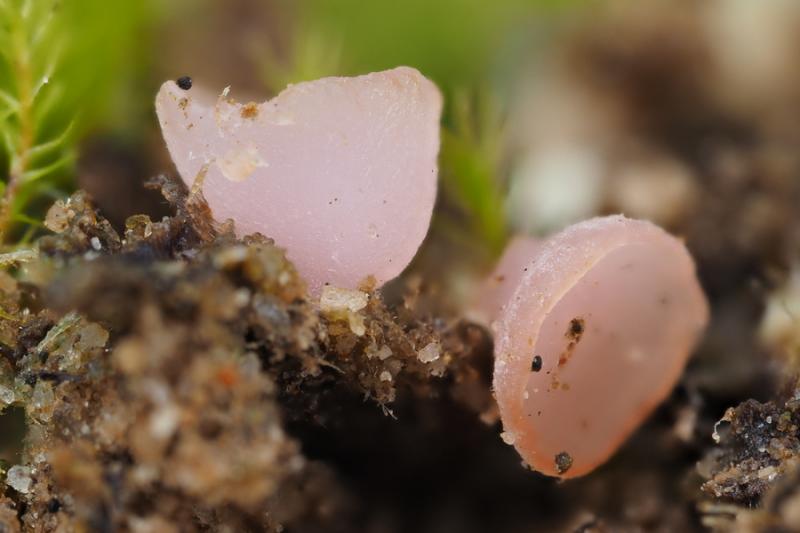
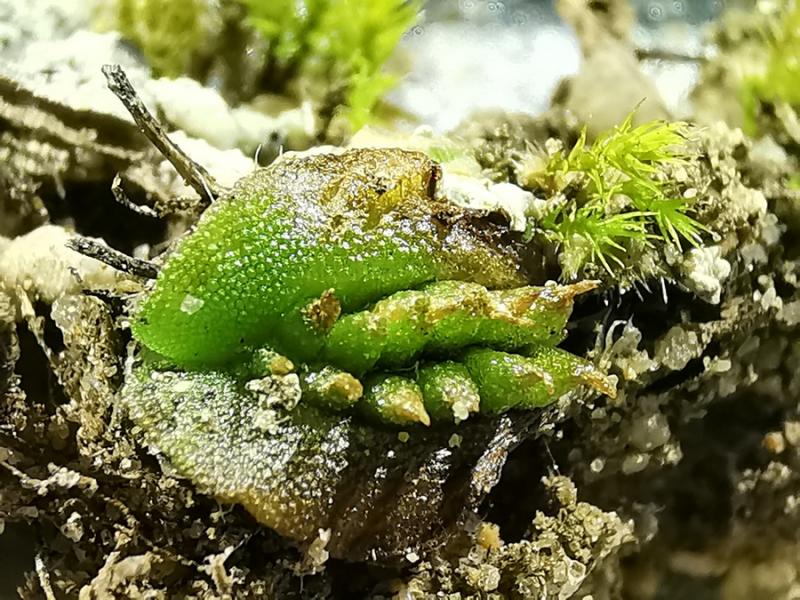
This small pink ascomycete, 2 mm in size, was growing on a liverwort that I cannot identify. The collection only consists of 2 apothecia.
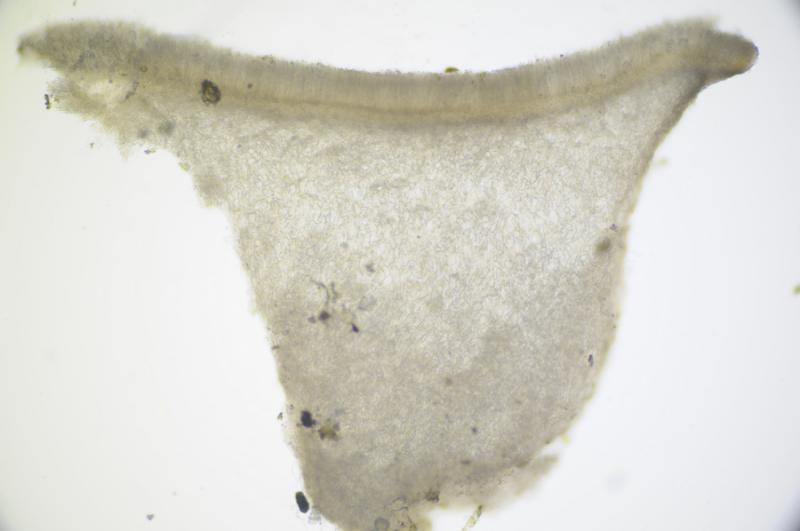
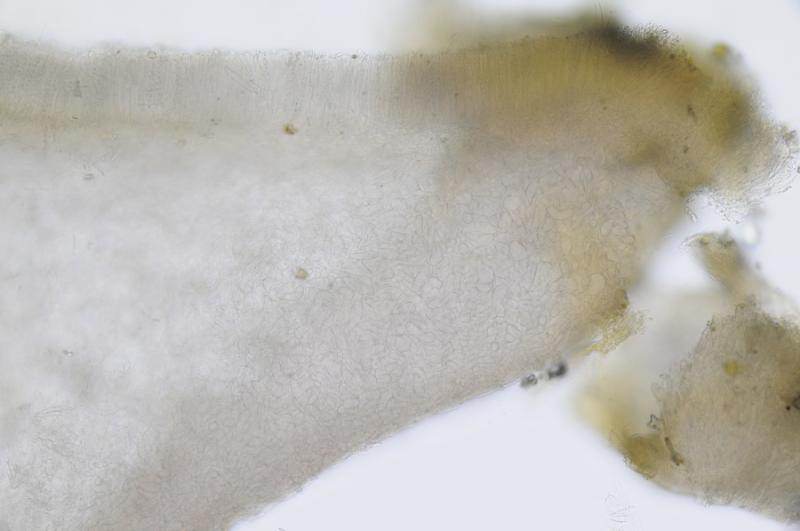
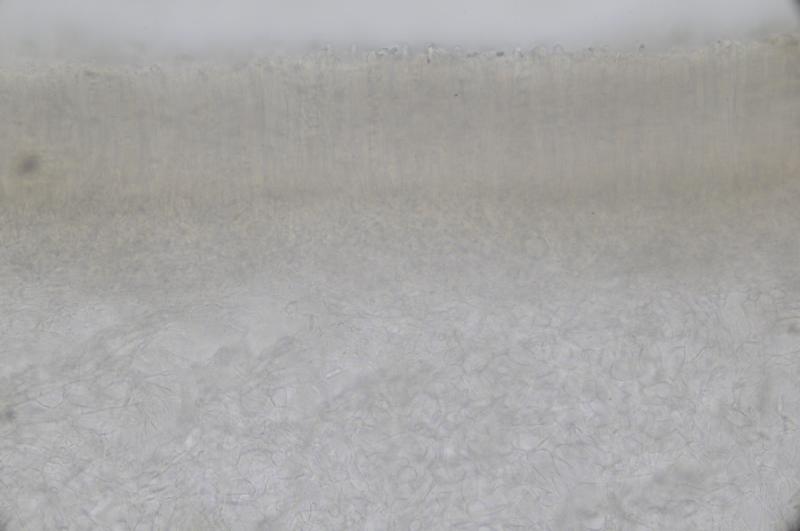
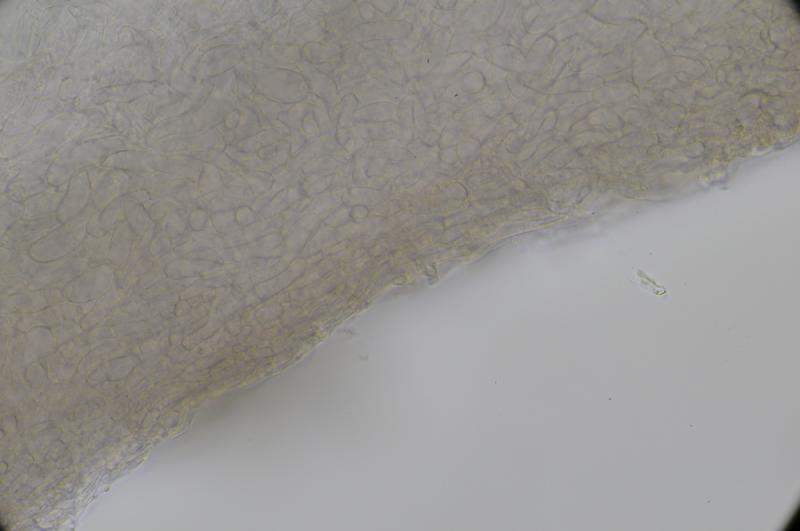
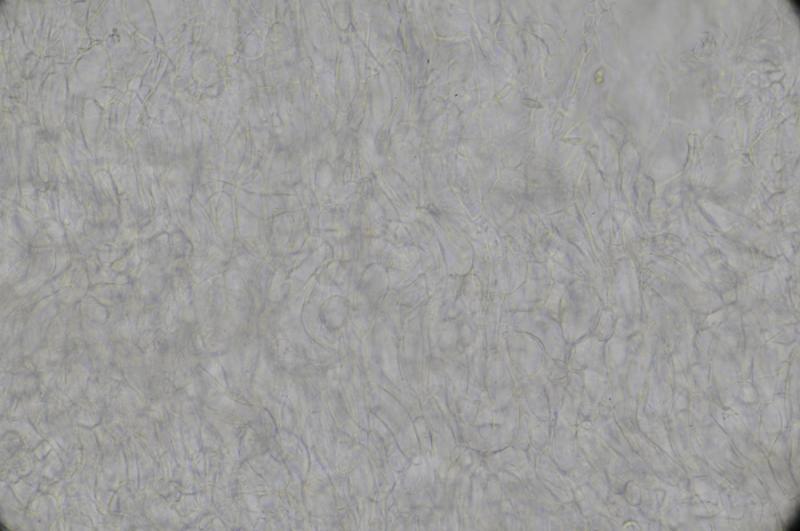
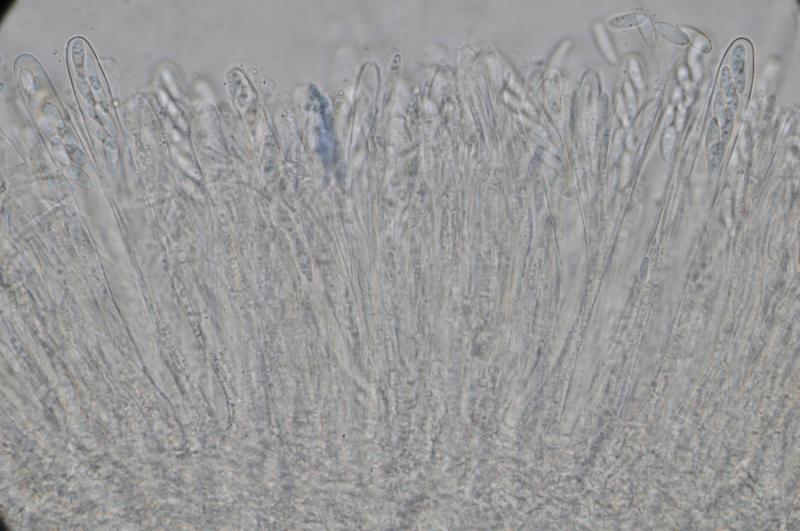
The ectal excipulum has textura prismatica, with thin cells in the outer layer and thicker internally; towards the margin they become more elongated and thinner. The medullar excipulum has an textura intricata, with thin walls.
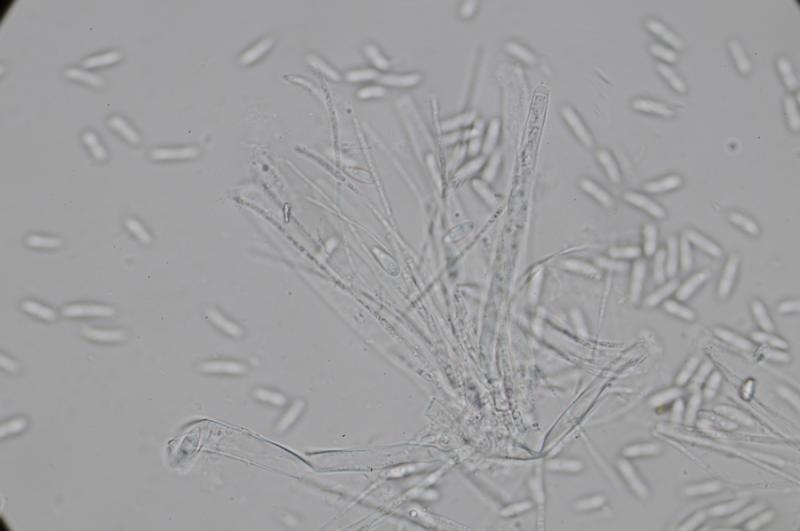
Paraphysis slender with only few and small VBs.
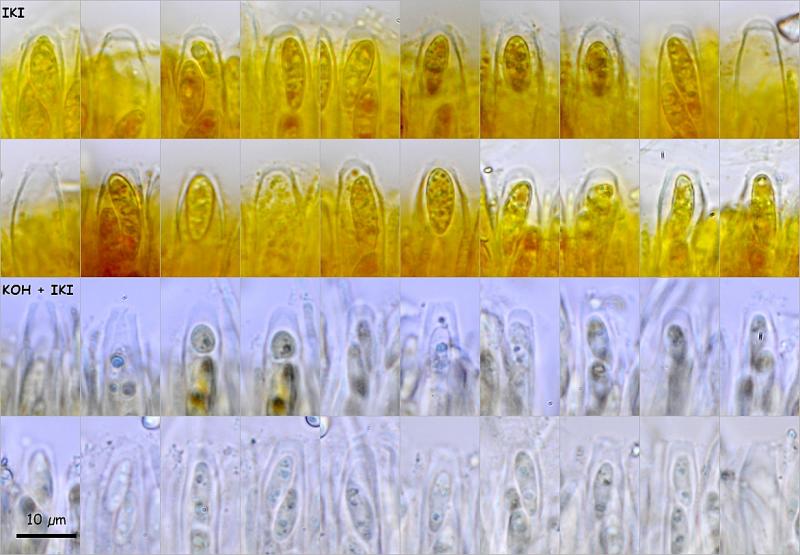
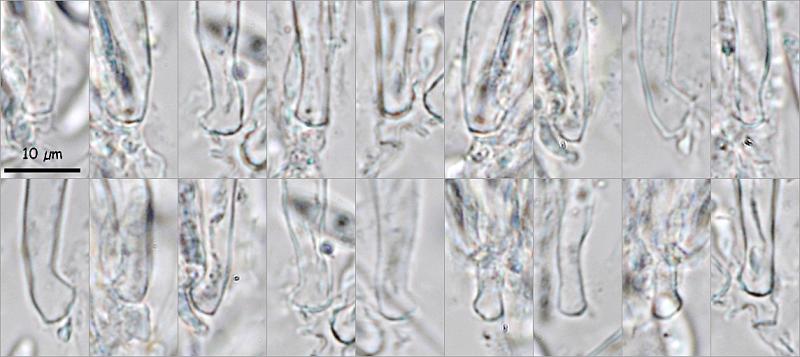
The asci have 8 biseriate spores, with croziers, IKI -, KOH + IKI -, of (117) 118.5 - 129.7 (136.4) × (8.8) 9.2 - 11.4 (12.3) µm; N = 43; Me = 124.4 × 10.6 µm in living state.
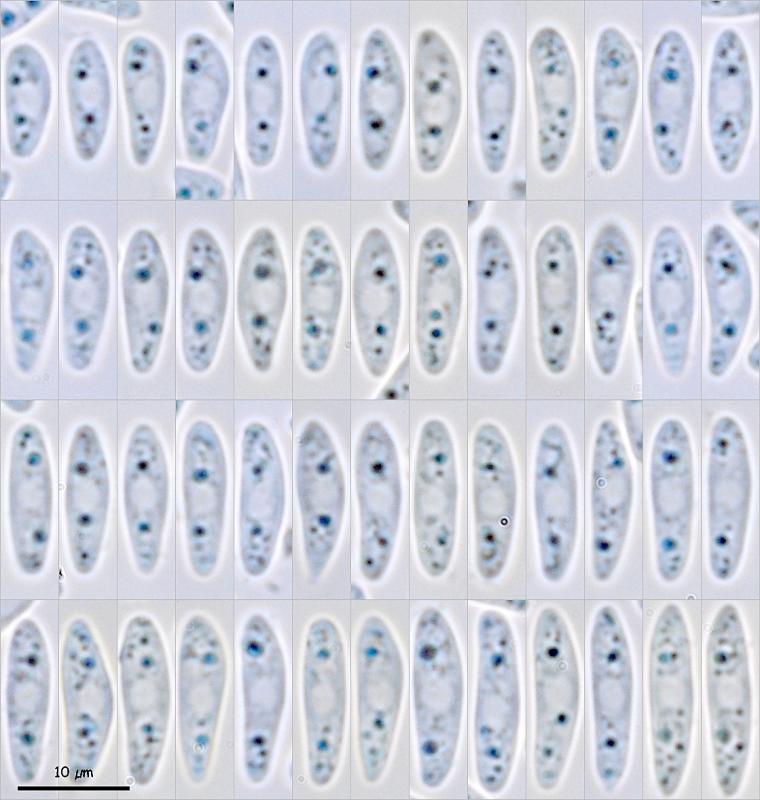
Spores are navicular with a large central nucleus, a pair of medium-sized LBs between the nucleus and the tip, and some more small ones, 1 septum in overmature state, (10,1) 12.3 - 15.7 (17.2) × (3,3) 3.7 - 4.4 (4.6) µm; Q = (2,4) 3.1 - 4 (4.6); N = 54; Me = 13.7 × 4 µm; Qe = 3.4 in living state.
With the keys I can't get to any species.
Thanks in advance for your help.
Miguel Ángel Ribes




Best regards.