
12-06-2026 14:50
 François Freléchoux
Bonjour, Voici la brève description d'une Mollis
10-06-2026 21:16
François Freléchoux
Bonsoir,Le dernier du jour, en attendant votre avi
11-06-2026 19:01
 William Slosse
Hello all,In an attempt to make a culture of a sus
11-06-2026 19:03
 Nicolas VAN VOOREN
Chers membres d'Ascofrance,Le site sera placé en

09-06-2026 18:32
Camille MertensSur morceau de roseau immergé 0,5 - 0,7 mm de dia
10-06-2026 12:54
Steve ClementsBonjour encore, Pouvez-vous m'aider, s'il vous pl
10-06-2026 21:07
François Freléchoux
Toutes les tiges de gentianes jaunes de l'an passÃ
10-06-2026 13:41
François Freléchoux
Bonjour à nouveau, Voici une trouvaille d'hier.
 Hello everyone!
Once again I came across an Orbilia and I would like to ask for help in identifying it
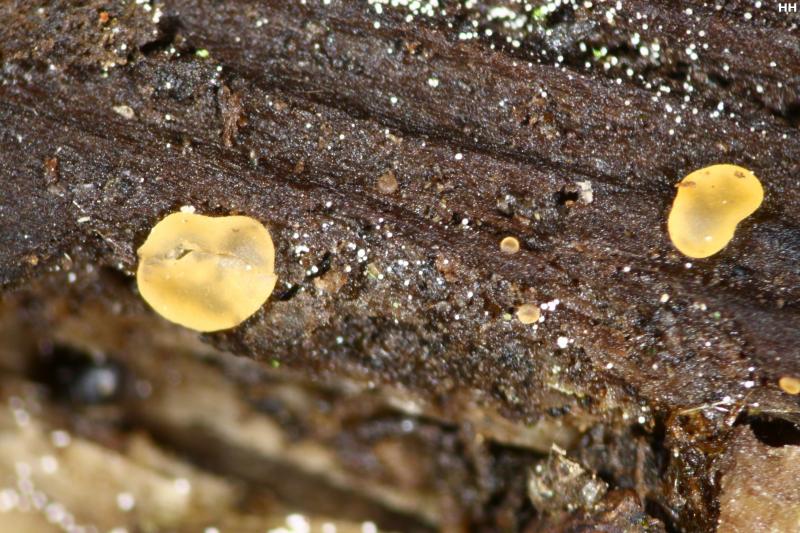
Place of discovery: Unbarked deciduous wood branch lying in the swamp in the dry inlet to the Loher Weiher pond on the Loher Tal loop (deciduous forest beech/oak plus floodplain woodland)
MTB: 5014,132 Date of discovery: 21/09/2024
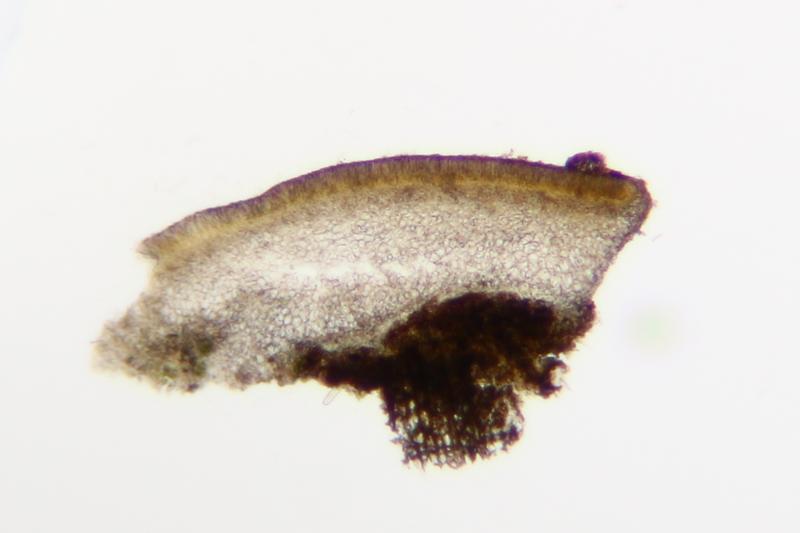
Almost hyaline, yellow-isabellar-coloured fruiting body of approx. 800µm Ø, hymenium covered with a thin film;
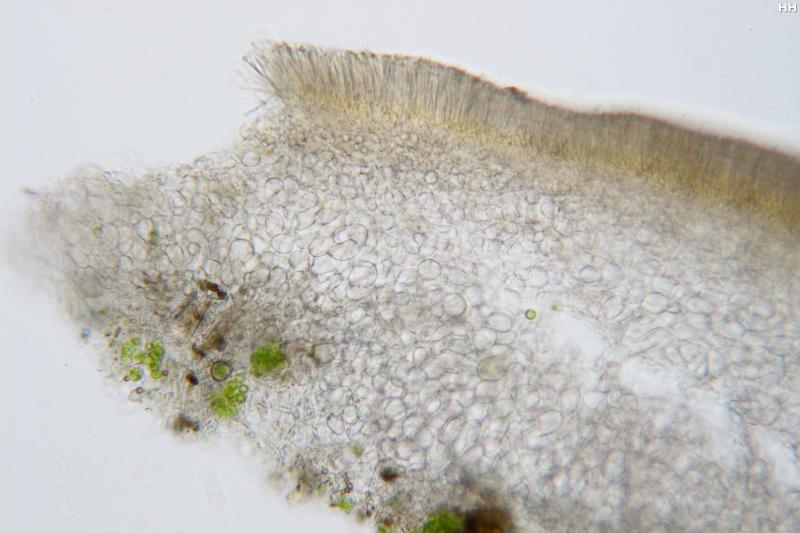
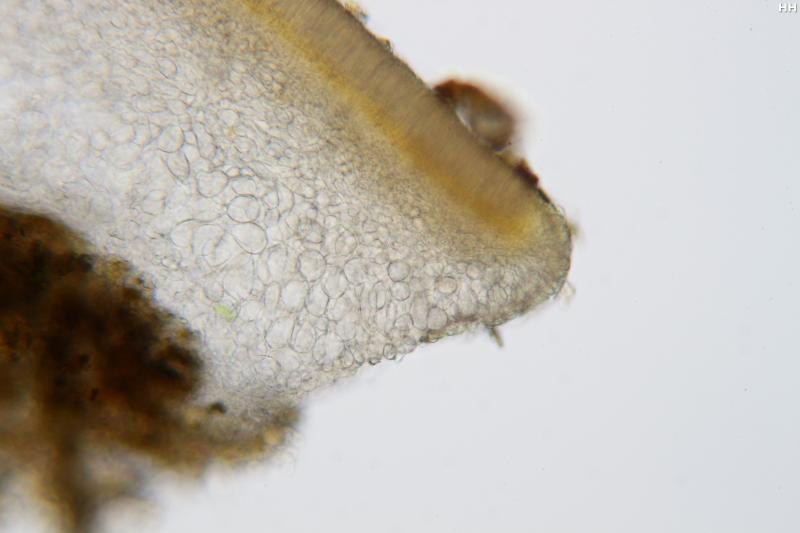
Paraphyses cylindrical, mostly apically capitate; small, yellow-coloured globules visible in the basal area of the uppermost segment of the paraphyses; mostly
two septa in the basal area and there partly simply branched
Asci clavate, 8-spored, apically round or truncate, basally thinly elongated or h-shaped
Spores long-spindled, hyaline with barely recognisable, roundish spore body in the second third of the spores and some very small oil drops
5.9 [7.4 ; 8] 9.5 × 0.9 [1.2 ; 1.4] 1.7 µm
Q = 3.9 [5.6 ; 6.4] 8.1 ; N = 31 ; C = 95%
Me = 7.7 × 1.3 µm ; Qe = 6
In my identification attempt I ended up with Orbilia cotoneastri, but I am not convinced that this is correct.
I would be glad if someone could help me with the correct name of my find.
Best regards
Harald
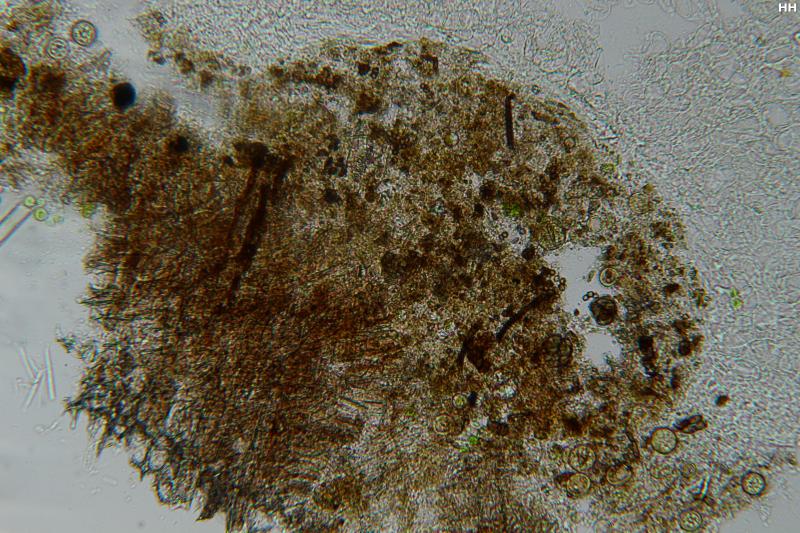
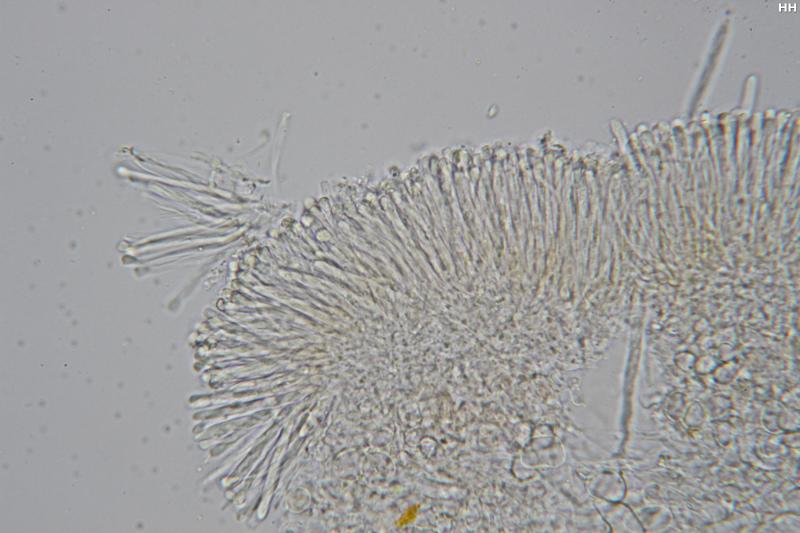
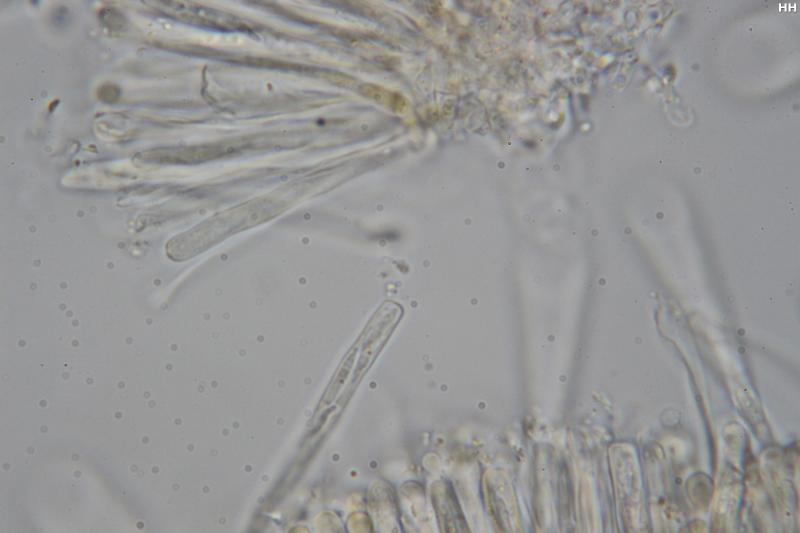
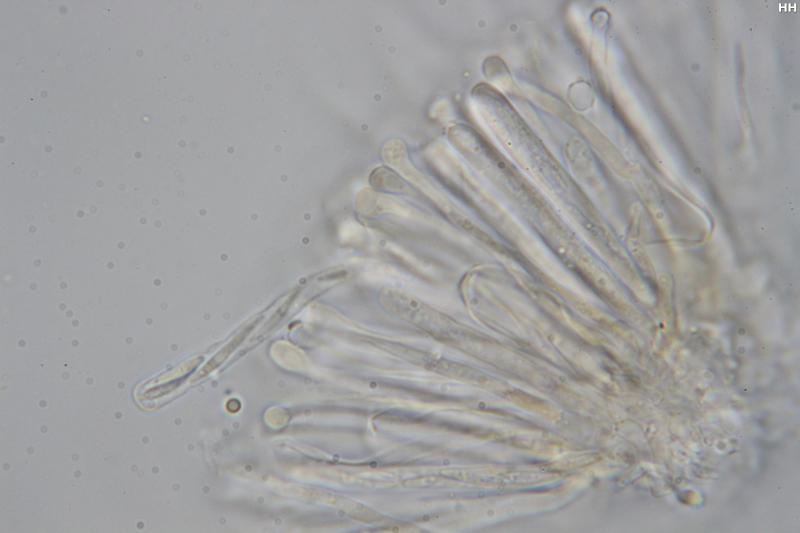
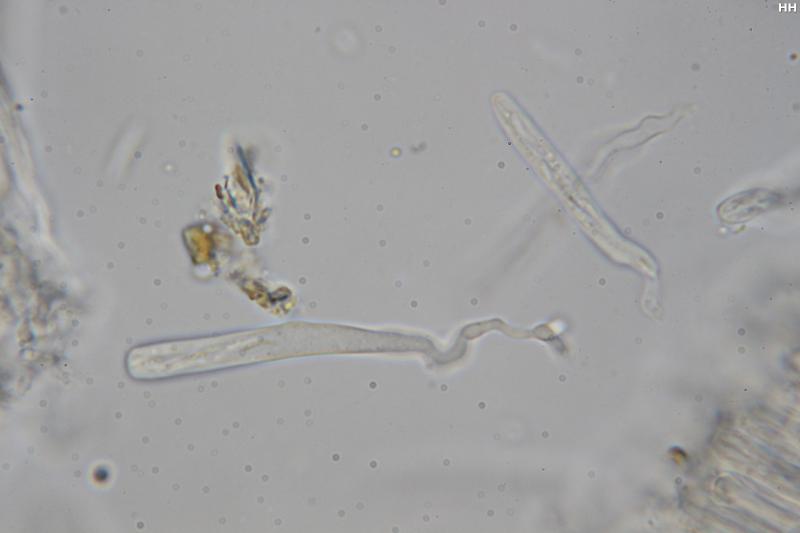

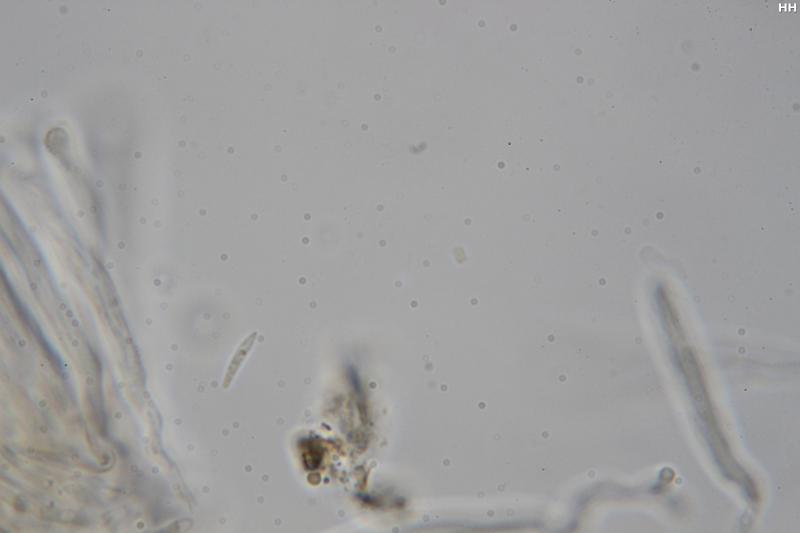

At the moment I don't have the find or the microscope within reach, but I will contact you next week with new images that hopefully will help to clarify.
Thank you for the information and help
Best regards
Harald