
28-07-2011 18:31
 Alex Akulov
Dear FriendsToday I made the pdf file of Velenovsk
11-09-2025 16:57
 Jason Karakehian
Our revision of Marthamycetales (Leotiomycetes) is
12-11-2019 10:32
 Miguel Ángel Ribes
Hi againExactly at the same place than my previous
25-12-2019 17:54
Valencia Lopez Francisco JavierHola a todos/asEstas supuestas pezizas estaban en
12-07-2015 00:05
 Nedim Jukic
This one from the same locality as the previous on


30-05-2026 21:12
Philippe PELLICIERSur branche de mélèze (Larix) près de la neige,
31-05-2026 10:35
Hulda Caroline HolteHello,I collected this species growing on a rather
25-05-2026 16:35
 Bernard CLESSE
Bonjour à toutes et tous,J'ai trouvé récemment,
Updated* Gazania LEAF BLIGHT
Ciara Luna Gomez Escoin,
05-07-2023 10:26
 Hello again,
I deleted the topic because the gazania problem was not caused by any fungus, however, just in case someone had the same problem, I leave it with the updated info.
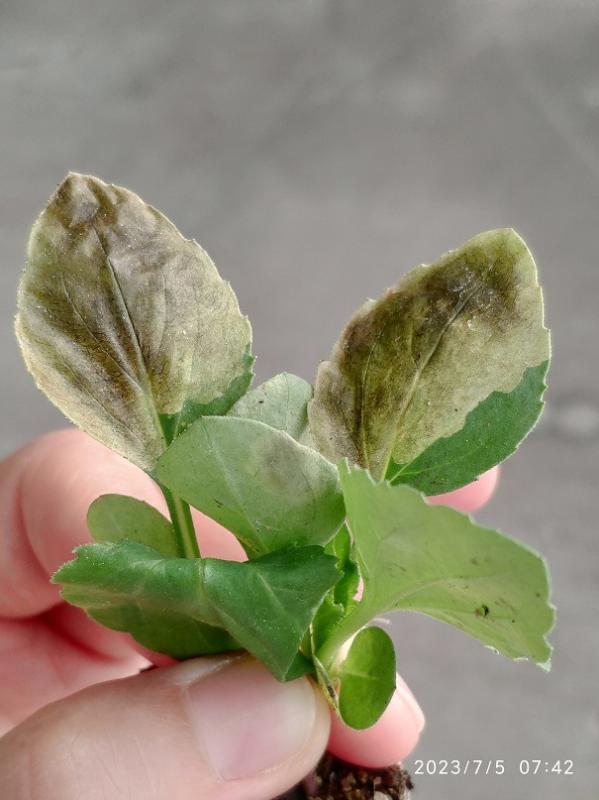
We noticed we had the same stains on Zinnia and Aster, and the leaves also got "splitted" in a transverse plane, but in these cases I saw no hyphae with the microscope. We realized that this is caused by some kind of minator insect (or arachnid).
I'm doubtful about the fungal nature of the filaments I saw in Gazania. Also, the supposed sporangia may not be fungal structures. I'll keep watching.
Hello everyone,
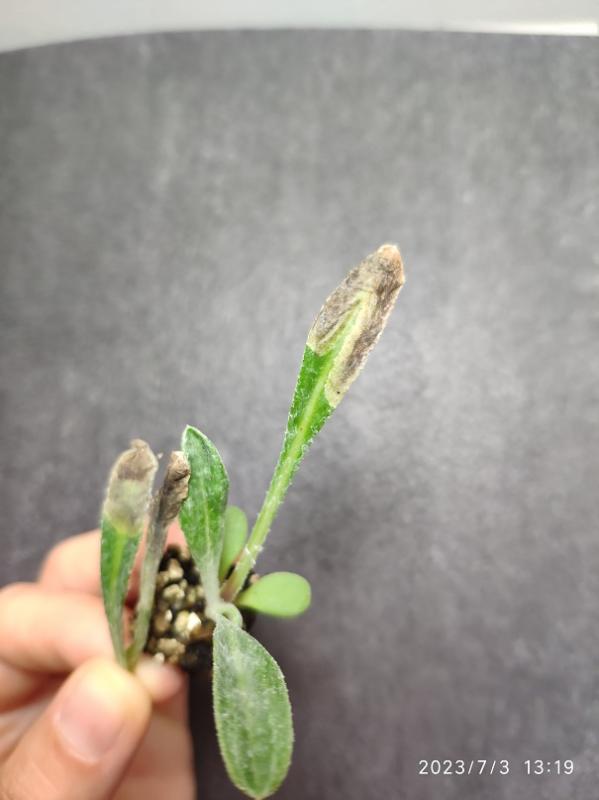
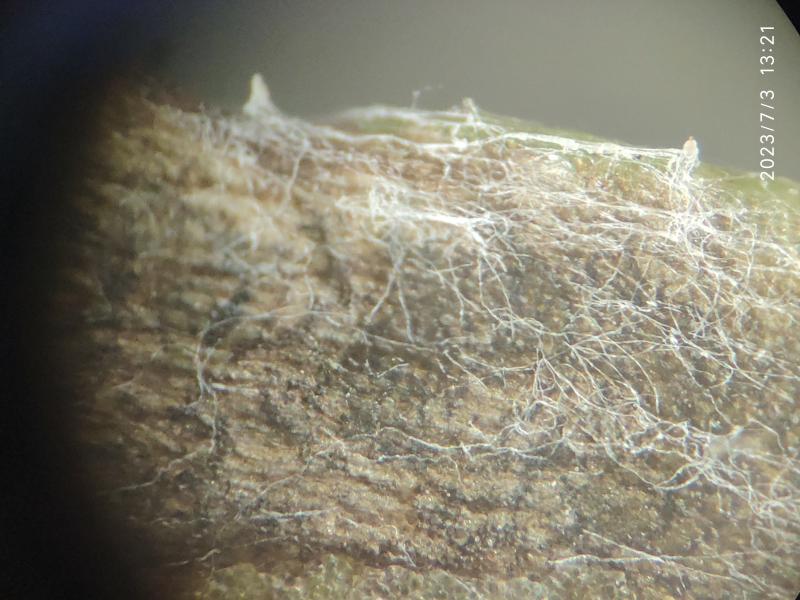
Two weeks ago we detected some Gazania plants (at stage III after germination) which had some kind of blight as you can see in the pictures: the colour is dark grey, at first it involves the tip of the leaf, and then the stain gets bigger and bigger, but there is a clear and straight boundary between healthy and ill tissue. The upper and back sides of the ill parts of the leaves splitted easily. Also, I could see a mycelium over the upper side of the leaf using a manifier.
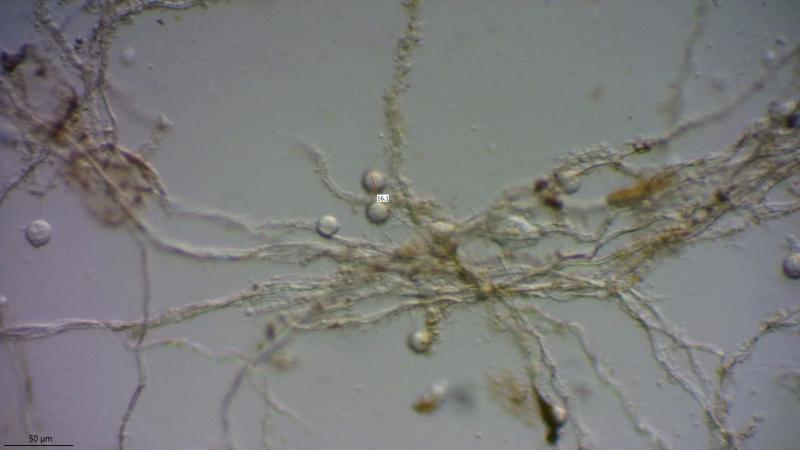
I took some samples and I watched them at the microscope. I saw what I think they are hyphae, but I couldn't see any reproductive structure. I put some damaged leaves in a Petri dish with water and I waited some days (I have a quite rudimentary lab to do these kind of analysis...). Then I prepared new samples to see at the miscroscope and I could see also the same hyphae and what it might be round 16 ?m diameter sporangia, but I'm not able to identify these structures. Could you please help me?
THANK YOU VERY MUCH!!!
Angel Pintos,
05-07-2023 19:26

Re : Updated* Gazania LEAF BLIGHT
Hola Clara,
te has fijado si el micelio tiene septos o no?, los micelios de los Oomycetes no son septados excepto cuando son muy maduros.
Las estructuras de tu imagen parecen esporangios inmaduros, parecen de Pythium.
Un saludo
Angel
te has fijado si el micelio tiene septos o no?, los micelios de los Oomycetes no son septados excepto cuando son muy maduros.
Las estructuras de tu imagen parecen esporangios inmaduros, parecen de Pythium.
Un saludo
Angel
Ciara Luna Gomez Escoin,
06-07-2023 14:55
Re : Updated* Gazania LEAF BLIGHT
Hola Ángel!!
En primer lugar gracias por tu ayuda. Los filamentos no son septados. Aquí en el invernadero he visto casos de Pythium, pero sólo en raíz. Me parece extraño que no haya más estructuras reproductivas. He llegado a pensar que no se trate de un micelio, sino de la telaraña de un ácaro tetraníquido, incluso, pero no he podido ver ninguna otra señal de su presencia.
Muchas gracias!!!
Ciara
En primer lugar gracias por tu ayuda. Los filamentos no son septados. Aquí en el invernadero he visto casos de Pythium, pero sólo en raíz. Me parece extraño que no haya más estructuras reproductivas. He llegado a pensar que no se trate de un micelio, sino de la telaraña de un ácaro tetraníquido, incluso, pero no he podido ver ninguna otra señal de su presencia.
Muchas gracias!!!
Ciara