

22-04-2026 20:54
 Enrique Rubio
Hi to everybody.This Pyrenopeziza grew in moist le
24-04-2026 03:16
 David Chapados
Found while looking at something else from wood in
22-04-2026 01:06
 Richard VALERI
Bonjour à tous.Je vous présente cette Nectria s.
22-04-2026 20:17
 Marian Jagers
Is anyone familiar with the Hyphomycetes genus Pse

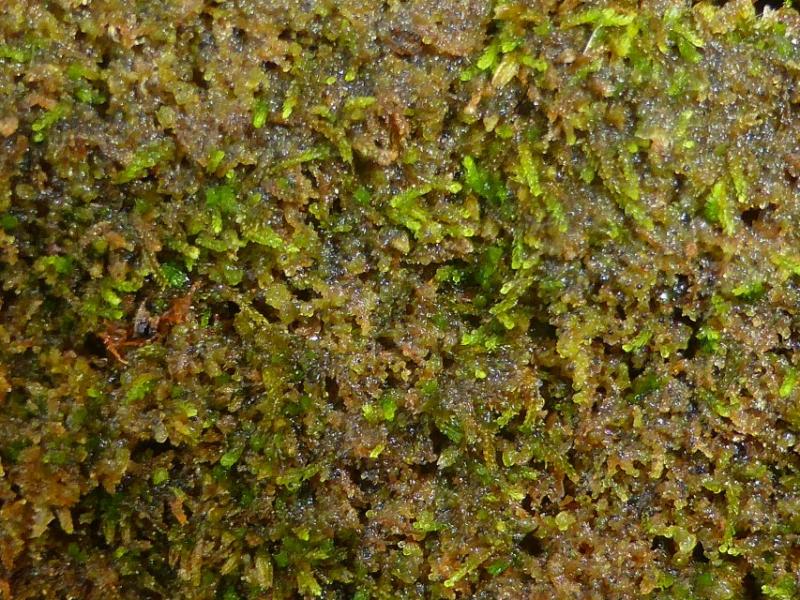
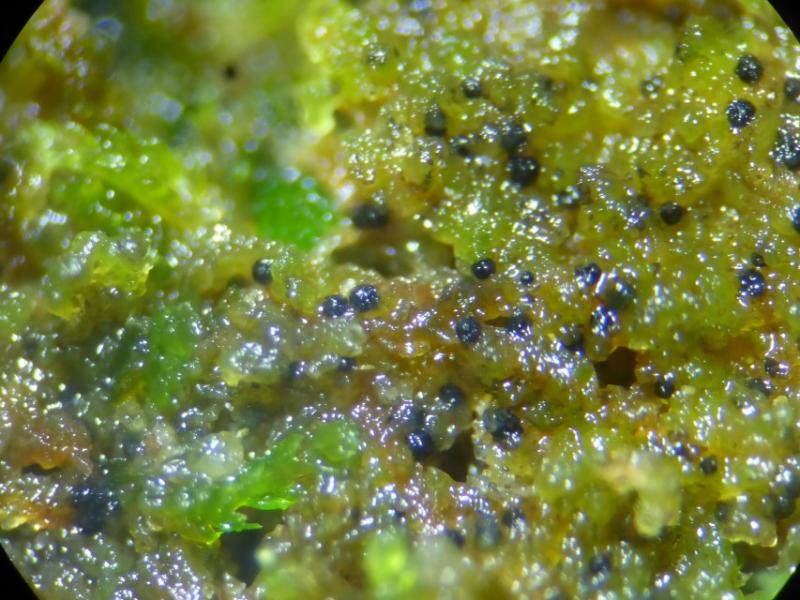
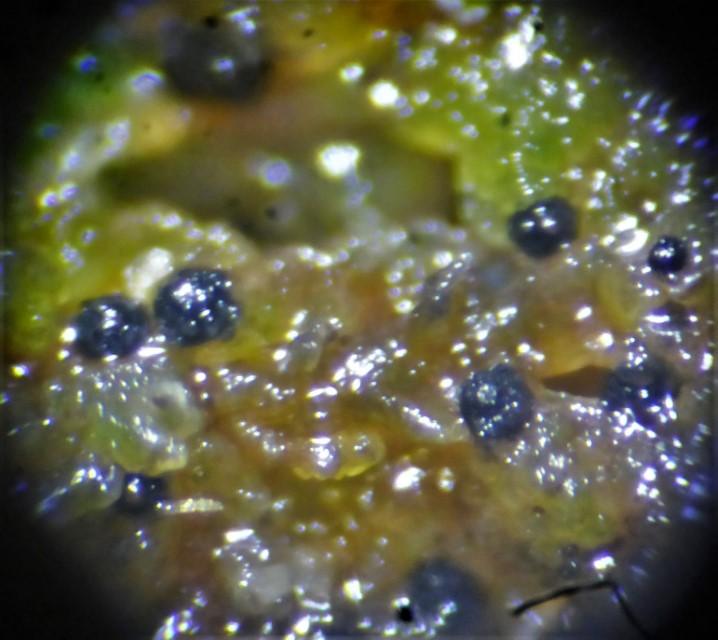
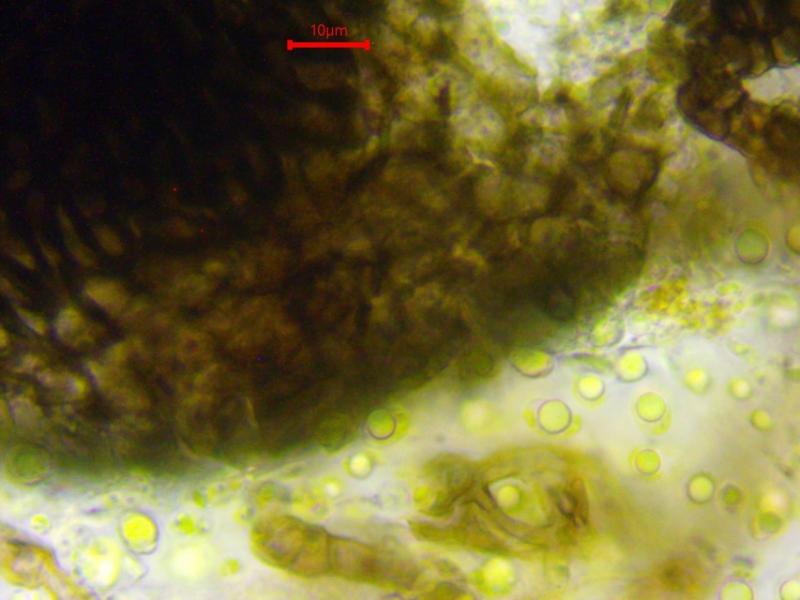
small black asco on moist Hepaticae-lawn from Norway
Lothar Krieglsteiner,
05-08-2022 13:22
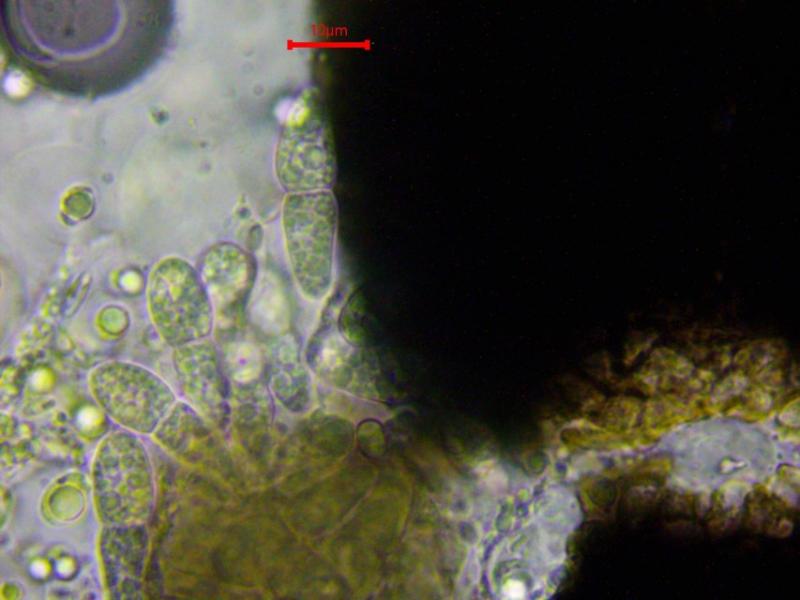
 near Snasa, on mixed lawn with Nowellia curvifolia on old pine trunk, 10.7.22. The spores I measured about 24-30/7-9,5 µm. Quick check in Racovitza or Doebbeler did not lead to a good result. Does somebody have a hint?
Regards, Lothar

Hans-Otto Baral,
05-08-2022 20:51

Re : small black asco on moist Hepaticae-lawn from Norway
Hallo Lothar
Ist das blaue denn Mniaecia jungermanniae?
Zotto
Lothar Krieglsteiner,
05-08-2022 20:55
Re : small black asco on moist Hepaticae-lawn from Norway
no, Zotto - there is nothing blue. Maybe this impresion is from artificial light. All picture are from one fungus, a pyrenomycete.
Yours, Lothar
Yours, Lothar
Georges Greiff,
07-08-2022 13:17
Re : small black asco on moist Hepaticae-lawn from Norway
Interesting one.
Epigloea sp. parasitic on the algae? Some can have large ascospores like that but the structure of the fruitbody seems wrong (textura angularis vs t. intricata). Have you checked the iodine reaction for the orange hymenial gel of Epibryacae? The spores are somewhat in the range of Bryomyces gymnomitrii. Wrong host but that genus has members that grow on multiple hosts. Another genus to consider is Bryorella.
All the best,
George
Lothar Krieglsteiner,
07-08-2022 13:43
Re : small black asco on moist Hepaticae-lawn from Norway
Hello Georges,
thank you very much for your very valuable contribution. I will go back to the specimen later (likely in winter) and try to clarify your questions. Funny: Bryomyces gymnomitrii was one of the few species I came across with, too. But I rejected because there is no Gymnomitrium.
Thanks again and best regards, Lothar
thank you very much for your very valuable contribution. I will go back to the specimen later (likely in winter) and try to clarify your questions. Funny: Bryomyces gymnomitrii was one of the few species I came across with, too. But I rejected because there is no Gymnomitrium.
Thanks again and best regards, Lothar
Lothar Krieglsteiner,
14-01-2023 13:52
Re : small black asco on moist Hepaticae-lawn from Norway
Hello Georges,
in the meantime (already in December) I once again looked at the specimen, and I tried the reaction with Baral and Melzer - no reaction.
When I look for Bryochiton in indexfungorum, it is in family Pseudoperisporiaceae, not Epibryaceae.
So the specimen remains unclear, I fear.
Thanks again for your help and best regards,
Lothar
in the meantime (already in December) I once again looked at the specimen, and I tried the reaction with Baral and Melzer - no reaction.
When I look for Bryochiton in indexfungorum, it is in family Pseudoperisporiaceae, not Epibryaceae.
So the specimen remains unclear, I fear.
Thanks again for your help and best regards,
Lothar
Georges Greiff,
14-01-2023 17:11
Re : small black asco on moist Hepaticae-lawn from Norway
Hi Lothar,
I would say Bryomyces gymnomitrii agg. is the best fit for now. It is likely to be something undescribed. It is certainly not Bryochiton (too large) and the spores are larger than most Epibryon agg. I have seen; not to mention the IKI - reaction you saw.
How big is the collection? If you have any extra I would be happy to take a look and see about sequencing ITS, as it is reasonably fresh.
Usually I find the superficially similar Pleostigma jungermannicola on many different liverworts so it is nice to see something different.
All the best,
George
I would say Bryomyces gymnomitrii agg. is the best fit for now. It is likely to be something undescribed. It is certainly not Bryochiton (too large) and the spores are larger than most Epibryon agg. I have seen; not to mention the IKI - reaction you saw.
How big is the collection? If you have any extra I would be happy to take a look and see about sequencing ITS, as it is reasonably fresh.
Usually I find the superficially similar Pleostigma jungermannicola on many different liverworts so it is nice to see something different.
All the best,
George
Lothar Krieglsteiner,
14-01-2023 17:57
Re : small black asco on moist Hepaticae-lawn from Norway
Hello George,
thank you very much. So, I will keep it under Bryomyces gymnomitrii agg, as you say. If you want to have the material, I can send it (but maybe not now, because I am going to Portugal for about 5 weeks in some days). For this, please send me your postal address (if you want by e-mail: lkrieglsteiner@pilzkunde.de).
Yours, Lothar
thank you very much. So, I will keep it under Bryomyces gymnomitrii agg, as you say. If you want to have the material, I can send it (but maybe not now, because I am going to Portugal for about 5 weeks in some days). For this, please send me your postal address (if you want by e-mail: lkrieglsteiner@pilzkunde.de).
Yours, Lothar