
27-04-2026 20:52
 Lothar Krieglsteiner
Found on hanging tiwg of Olea europaea in dried-ou
27-04-2026 18:48
Tony MoverleyCollected 23rd April 2026, Norfolk, EnglandSwarms
27-04-2026 17:41
Lothar Krieglsteiner
.. Algarve, same leaf than the last post. The con
27-04-2026 18:05
Lothar Krieglsteiner
... still attached at standing tree. The green con
27-04-2026 17:16
Lothar Krieglsteiner
.. Algarve, moist lying.The conidiomata look like
27-04-2026 12:54
Steve ClementsBonjour. Ce petit champignon blanc résupiné et
27-04-2026 09:59
Pauline. PennaBonjour Can anyone advise me on these pycnidia fo

22-04-2026 20:54
 Enrique Rubio
Hi to everybody.This Pyrenopeziza grew in moist le
Two Penicillium spp. isolates, same or different species?
Stephen Martin Mifsud,
25-07-2022 00:37
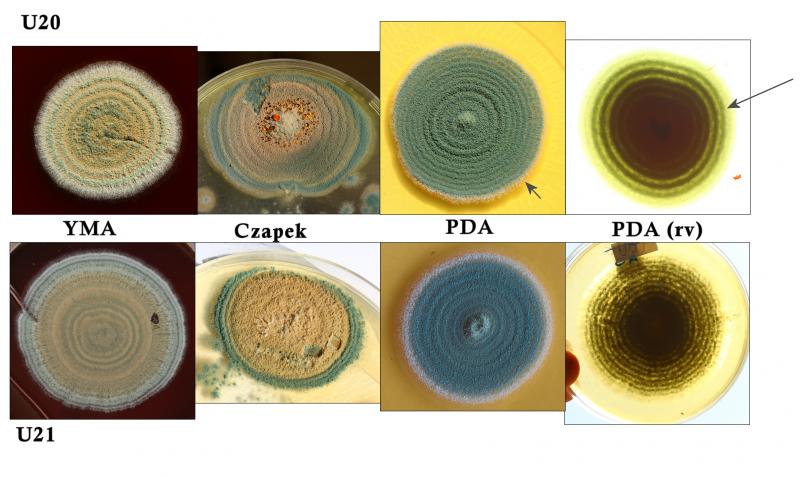
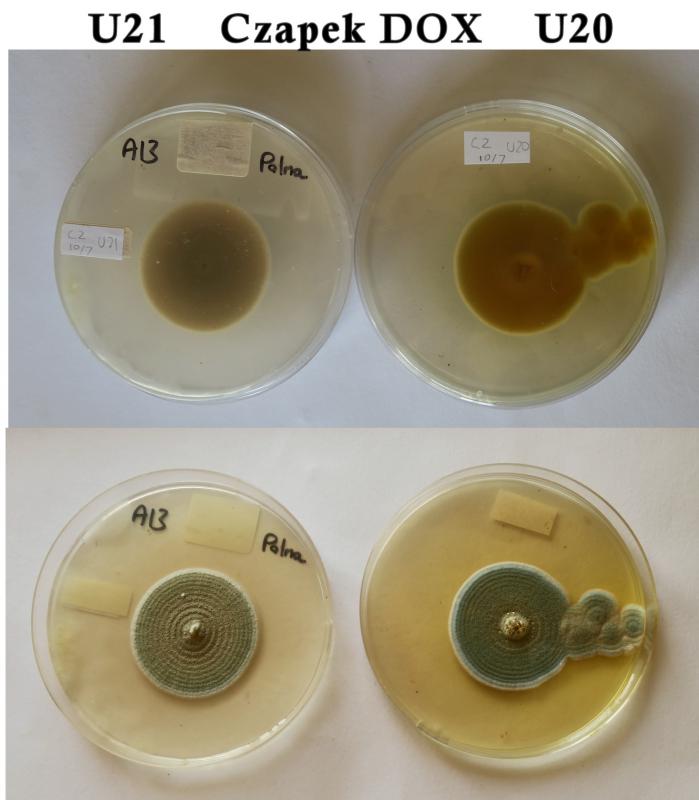
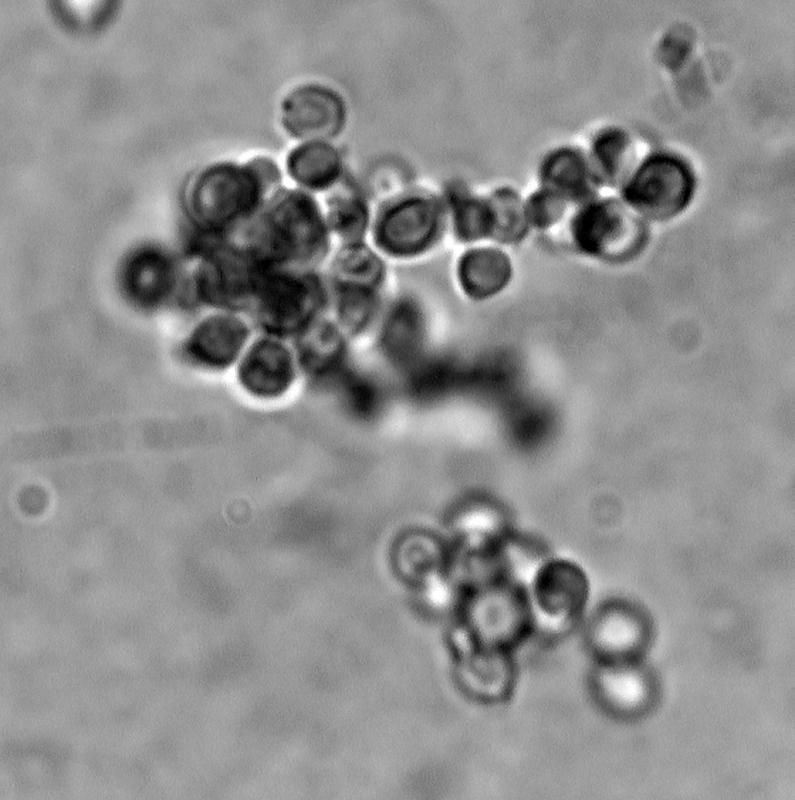
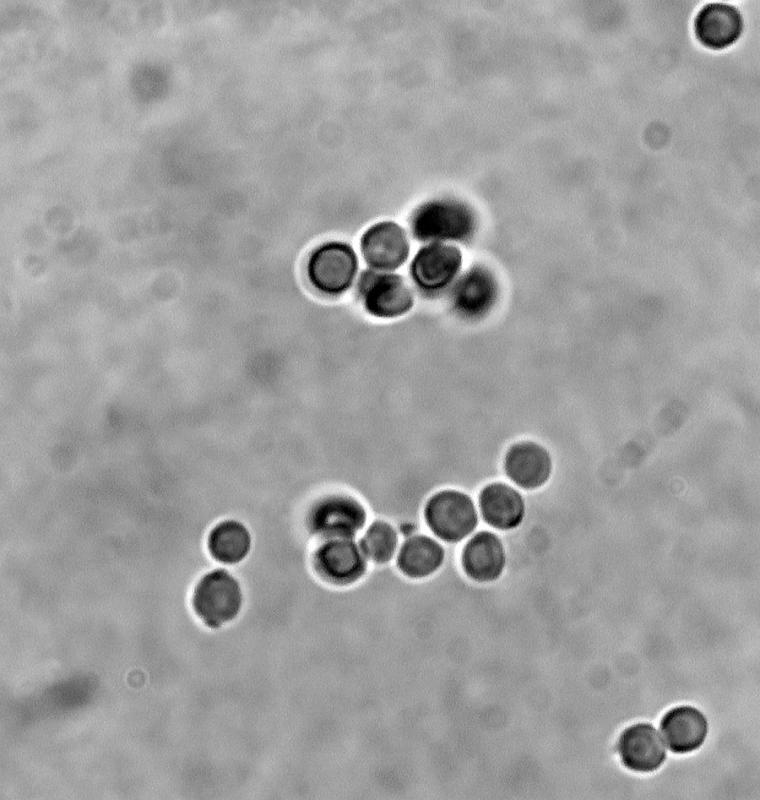
 So I am working on two isolates of Penicillium, which are quite similar to each other, but initially I have decided that they were/are different because one (U20) releases a yellow pigment in PDA while the other (U21) does not or faintly so.
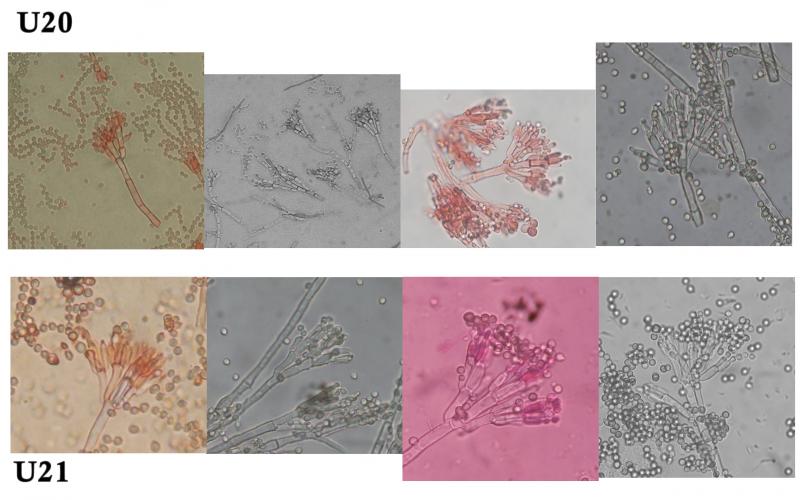
 The colony characteristics between the two are more or less not much different , whereas after today I had time to do the microscopy, I can see that morphologically they are quite similar.
Hence I am writing to ask opinions if it is possible that isolates of the same species would produce different exudate/pigmented products, or else if you think that we are dealing with two closely related species?
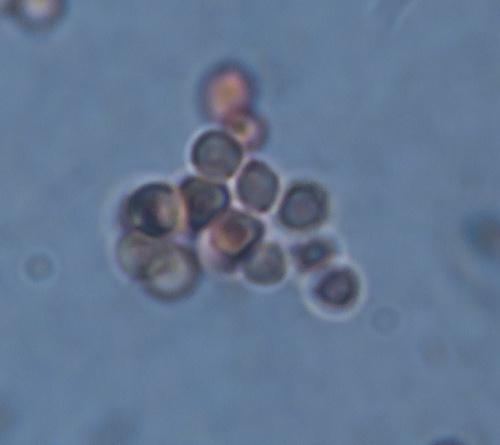
I think they (or it) are quite similar to P. brevicompactum / P. crustosum. The conidiospores (2.5-3.um) have a shaddowing indicating they are not smooth .
David Malloch,
25-07-2022 15:02

Re : Two Penicillium spp. isolates, same or different species?
Your isolates do indeed seem similar. Different strains of Penicillium species may vary in the amount of pigment they produce, so it is possible your two strains do represent the same species. The best way to settle this issue is by sequencing. Do you have access to someone who can do this?
Stephen Martin Mifsud,
25-07-2022 17:34
Re : Two Penicillium spp. isolates, same or different species?
Thank you for this information David, I was not aware about that! Then it is likely the same species but to kill any doubt I will sequence it with ITS and TUB2 markers and report back, maybe you can help with the result then.
David Malloch,
25-07-2022 19:10
Re : Two Penicillium spp. isolates, same or different species?
It will be interesting to see your results. I may not be very good at analyzing the molecular results, but I know some people who can probably help out.
Stephen Martin Mifsud,
10-10-2022 12:34
Re : Two Penicillium spp. isolates, same or different species?
Sorry for the wait David.
I had the results a couple of weeks ago, using ITS and TUB2 markers. They indicate that the two Penicillium spp. are different. I do have the sequences that I can share. The one with a yellow pigmentation (U20) matched best with Penicillium lanosum while the other one is Penicillium crustosum with a small doubt onto P. polonicum. I submitted two strains of U20 (both P. lanosum) and two of U21 and one resulted P. crustosum and the other P.crustosum/P. polonicum. If Tub2 is a stronger marker for Penicillium, then those are more or less the confirmed species.
So David (and others) , if you thinks these results may be interesting to someone to study further, I can pass them on
I had the results a couple of weeks ago, using ITS and TUB2 markers. They indicate that the two Penicillium spp. are different. I do have the sequences that I can share. The one with a yellow pigmentation (U20) matched best with Penicillium lanosum while the other one is Penicillium crustosum with a small doubt onto P. polonicum. I submitted two strains of U20 (both P. lanosum) and two of U21 and one resulted P. crustosum and the other P.crustosum/P. polonicum. If Tub2 is a stronger marker for Penicillium, then those are more or less the confirmed species.
So David (and others) , if you thinks these results may be interesting to someone to study further, I can pass them on
David Malloch,
14-10-2022 15:14
Re : Two Penicillium spp. isolates, same or different species?
Hello Stephen,
I have been away from my computer for three weeks and have just today seen your post. It appears that your results have given you a good separation and identification of your isolates. However, I am not really competent to comment on the TUB2 marker. Looking at the paper of Aspergillus and Penicillium by Houbraken et al. I find no reference to TUB2 in the material and methods. Perhaps you should contact Dr. Houbraken (j.houbraken@wi.knaw.nl) and ask about that. He may well have used that marker but not included it in their paper.
Stephen Martin Mifsud,
24-10-2022 13:03
Re : Two Penicillium spp. isolates, same or different species?
Thank you david for correspondence.
This paper discusses several molecular markers and their pros and cons and where they are best applied to squence various groups of Fungi. On page 204 (19) there is a section on beta-tubulin marker.
https://www.researchgate.net/publication/331930251_Utility_of_various_molecular_markers_in_fungal_identification_and_phylogeny
I will contact Dr. Houbraken to see if he is interested in these sequences.
This paper discusses several molecular markers and their pros and cons and where they are best applied to squence various groups of Fungi. On page 204 (19) there is a section on beta-tubulin marker.
https://www.researchgate.net/publication/331930251_Utility_of_various_molecular_markers_in_fungal_identification_and_phylogeny
I will contact Dr. Houbraken to see if he is interested in these sequences.