
12-11-2019 10:32
 Miguel Ángel Ribes
Hi againExactly at the same place than my previous
25-12-2019 17:54
Valencia Lopez Francisco JavierHola a todos/asEstas supuestas pezizas estaban en
28-07-2011 18:31
 Alex Akulov
Dear FriendsToday I made the pdf file of Velenovsk
12-07-2015 00:05
 Nedim Jukic
This one from the same locality as the previous on


30-05-2026 21:12
Philippe PELLICIERSur branche de mélèze (Larix) près de la neige,
31-05-2026 10:35
Hulda Caroline HolteHello,I collected this species growing on a rather
25-05-2026 16:35
 Bernard CLESSE
Bonjour à toutes et tous,J'ai trouvé récemment,
29-05-2026 15:35
daniel FERREBonjour à tous,Je voudrais votre aide pour cette
Mollisia sp. ?
Mirek Gryc,
22-06-2022 12:42
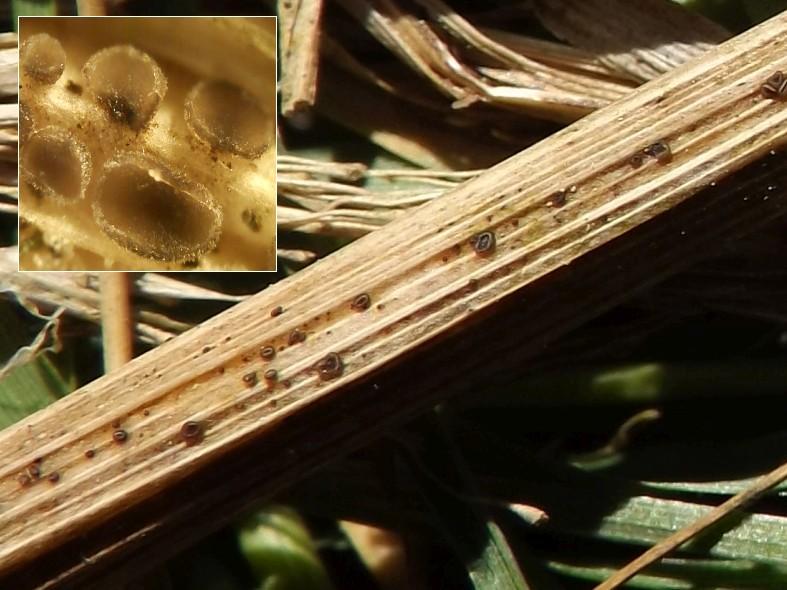
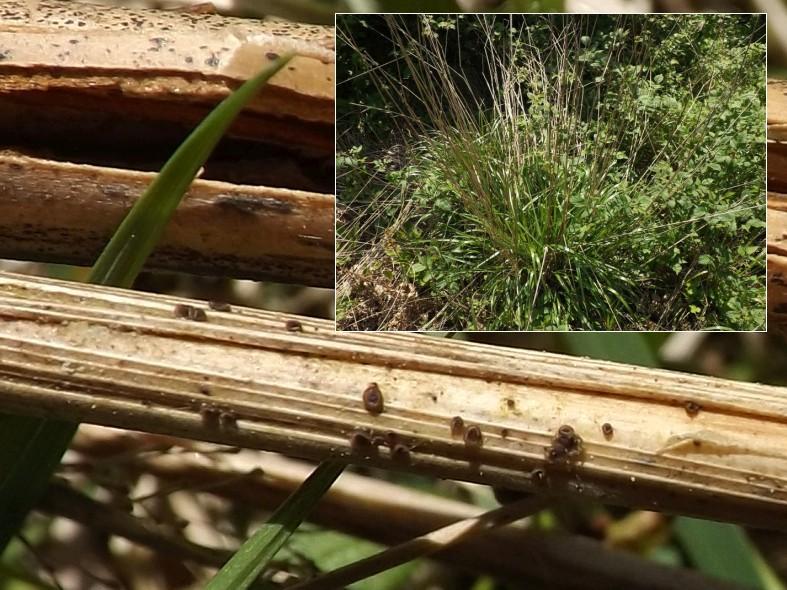
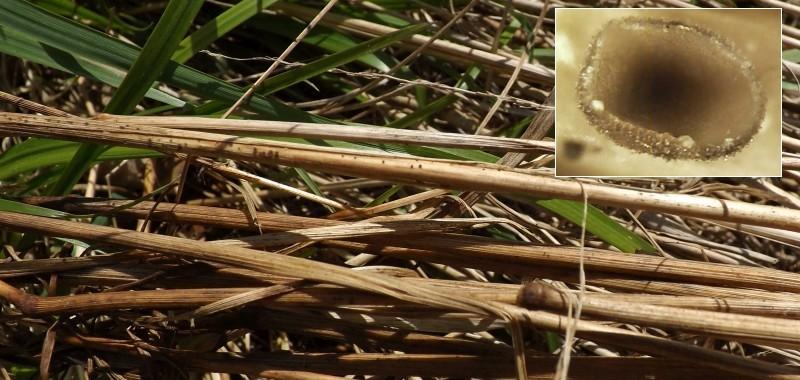
Some time ago I found small mollisia on an unknown grass species.
I have no idea at all.
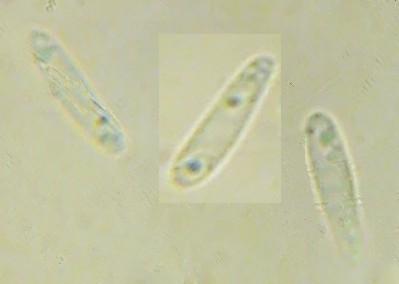
Spores:
(10.9) 11.2 - 12.3 (12.4) × (2.4) 2.45 - 2.8 (2.9) µm
Q = (3.8) 4.3 - 4.6; N = 6
Me = 11.6 × 2.6 µm; Qe = 4.4
10.86 2.86
11.17 2.45
11.66 2.51
11.16 2.43
12.26 2.83
12.37 2.68
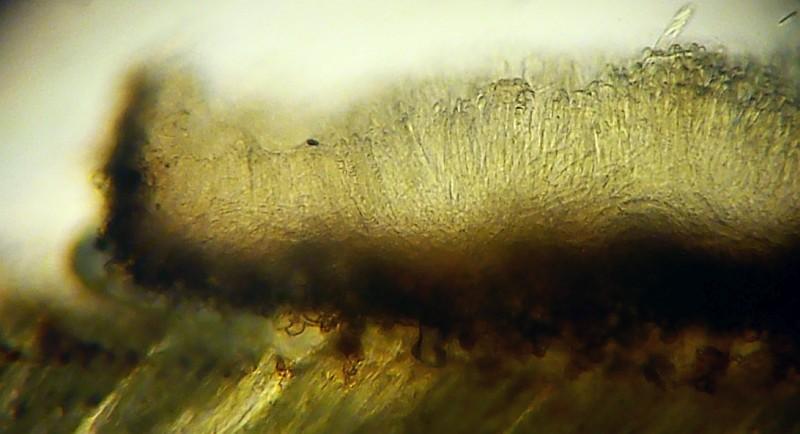
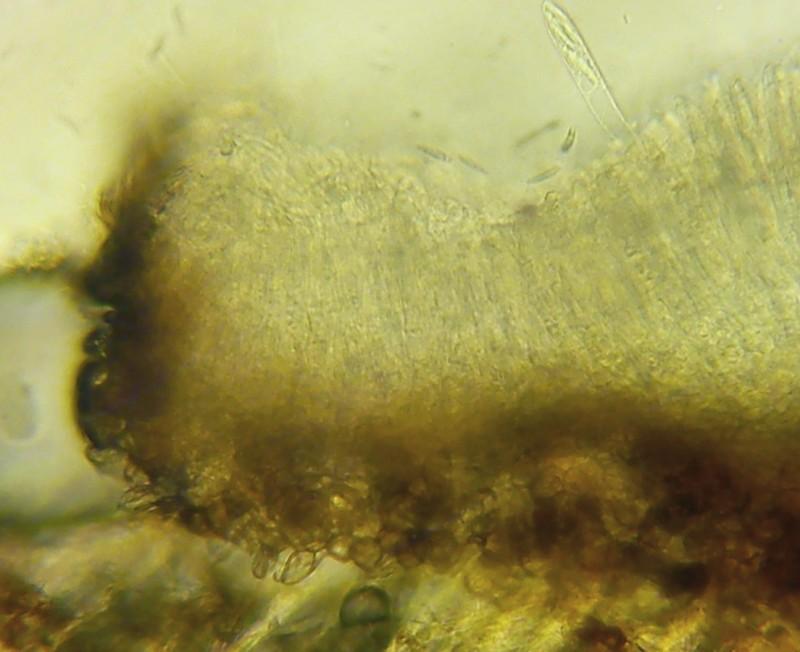
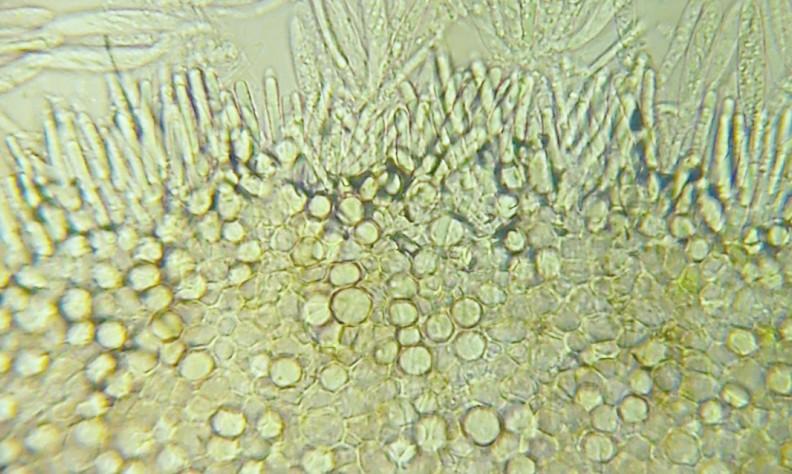
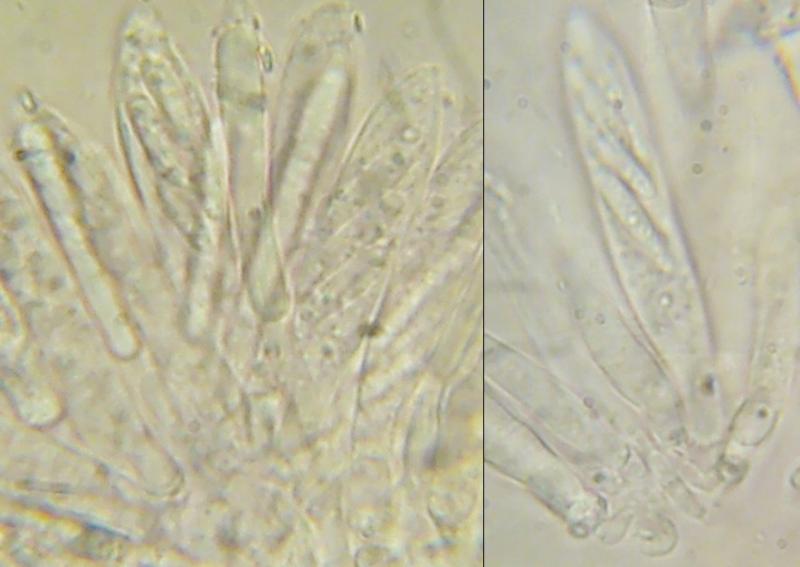
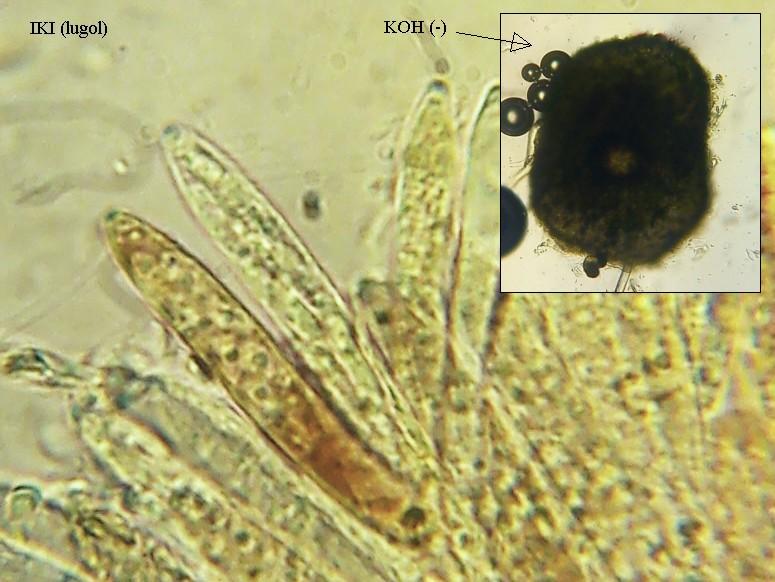
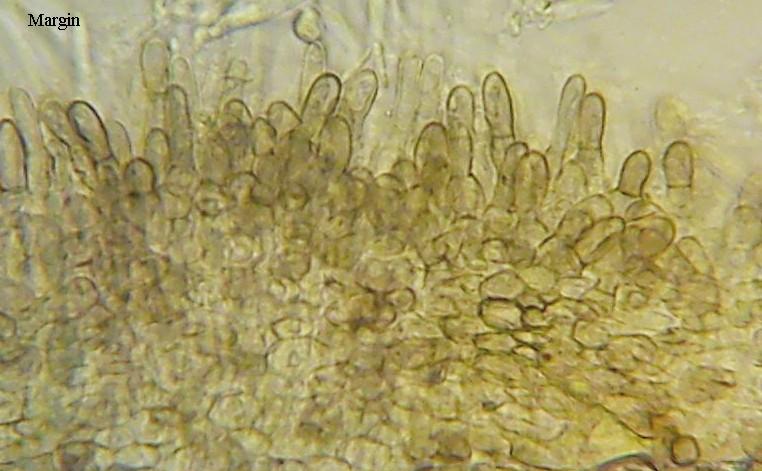
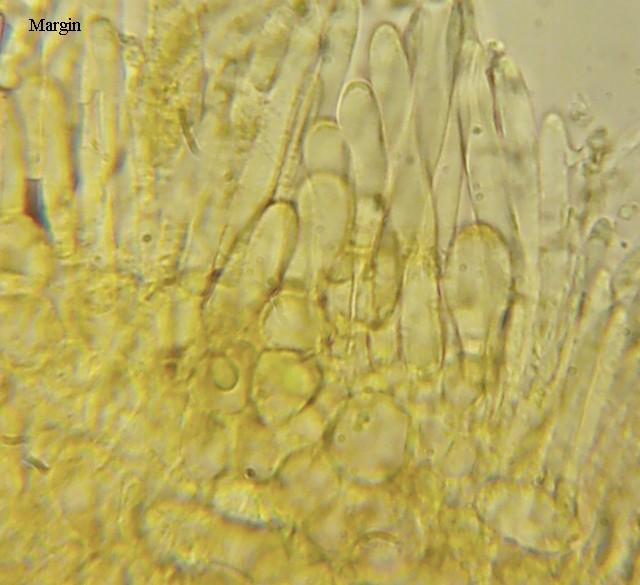
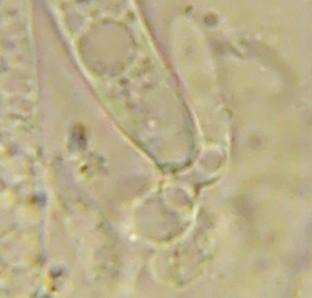
I present the other features in the pictures.
Do you have any ideas?
Regards
Mirek
Hans-Otto Baral,
22-06-2022 14:30

Re : Mollisia sp. ?
Did you test the KOH reaction?
M. juncina and M. palustris are possibilities.
Mirek Gryc,
22-06-2022 14:46
Re : Mollisia sp. ?
Hi Zotto
Yes! Negative KOH (see photo No. 8)
Regards
Mirek
Yes! Negative KOH (see photo No. 8)
Regards
Mirek
Hans-Otto Baral,
22-06-2022 15:05
Re : Mollisia sp. ?
M. juncina was KOH- but in M- palustris we saw both, - and pale or distinctly yellow.
Mirek Gryc,
24-06-2022 20:46
Re : Mollisia sp. ?
Zotto, if you let, I have one more question for you.
Some collections on your disk have abundant subiculum. At my collection I was not able to observe the shreds of the Subikulum similar to the presented on your disk.
Is this feature important and can be taken into account during identification ???
Regards
Mirek
Unfortunately, so far I can't decide what genre it fits better.
Some collections on your disk have abundant subiculum. At my collection I was not able to observe the shreds of the Subikulum similar to the presented on your disk.
Is this feature important and can be taken into account during identification ???
Regards
Mirek
Hans-Otto Baral,
24-06-2022 21:50
Re : Mollisia sp. ?
Do you mean palustris or juncina? In palustris I see some pics with brown anchoring hyphae, but abundant hyphae I cannot see. Such hyphae has every Mollisia. The abundance of them may be a character, but not a very good one, I think there is much variation.
Whether all finds in these folders are correctly identified is far from sure...
Andreas Gminder,
08-07-2022 08:40

Re : Mollisia sp. ?
Hello,
I reserve the name palustris for the quite pale grey species on grasses with small spores, not exceeding 9 µm or may be 10 µm in single exceptional spores. Also the spores are (nearly) free of oil drops, similar to cinerea ss. str., but with another shape: needle-shaped with one end more acute then the other, while cinerea has spores with rounded ends on both sides.
So I would say juncina, which is more brownish in colour, spores are bigger and oil content is higher. But I'm not sure wether this is not a species complex ....
all the best,
Andreas
I reserve the name palustris for the quite pale grey species on grasses with small spores, not exceeding 9 µm or may be 10 µm in single exceptional spores. Also the spores are (nearly) free of oil drops, similar to cinerea ss. str., but with another shape: needle-shaped with one end more acute then the other, while cinerea has spores with rounded ends on both sides.
So I would say juncina, which is more brownish in colour, spores are bigger and oil content is higher. But I'm not sure wether this is not a species complex ....
all the best,
Andreas
Mirek Gryc,
08-07-2022 09:27
Re : Mollisia sp. ?
Hi Andreas
After analyzing literature on them (primarily your descriptions) I got the same impression. In their case, the Internet introduces a lot of confusion. Species with other features are presented under the same name, so that's why I haven't made a decision about the name of the genre. Although my collection is closer to M. juncina, not all features are compatible with this species, at least I have such an impression.
However, since you also think similarly, I will call it Mollisia cf. juncina.
Thank you for the comment and best regards.
Mirek
After analyzing literature on them (primarily your descriptions) I got the same impression. In their case, the Internet introduces a lot of confusion. Species with other features are presented under the same name, so that's why I haven't made a decision about the name of the genre. Although my collection is closer to M. juncina, not all features are compatible with this species, at least I have such an impression.
However, since you also think similarly, I will call it Mollisia cf. juncina.
Thank you for the comment and best regards.
Mirek