
11-09-2025 16:57
 Jason Karakehian
Our revision of Marthamycetales (Leotiomycetes) is
28-07-2011 18:31
 Alex Akulov
Dear FriendsToday I made the pdf file of Velenovsk
12-11-2019 10:32
 Miguel Ángel Ribes
Hi againExactly at the same place than my previous
25-12-2019 17:54
Valencia Lopez Francisco JavierHola a todos/asEstas supuestas pezizas estaban en
12-07-2015 00:05
 Nedim Jukic
This one from the same locality as the previous on


30-05-2026 21:12
Philippe PELLICIERSur branche de mélèze (Larix) près de la neige,
31-05-2026 10:35
Hulda Caroline HolteHello,I collected this species growing on a rather
25-05-2026 16:35
 Bernard CLESSE
Bonjour à toutes et tous,J'ai trouvé récemment,
Small spored Pulvinula?
Tyler Bailey,
20-06-2022 18:50
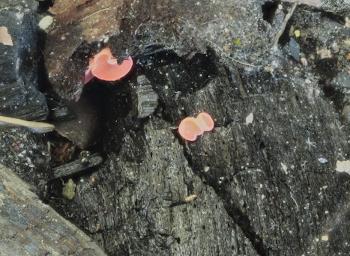
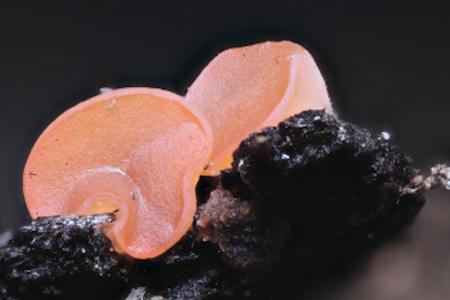
I found this small cup fruiting on charred wood in a firepit that I could use some help with. NE US. Spores seemed small for Pulvinula but it could have been immature I couldn't get many to drop onto a slide.
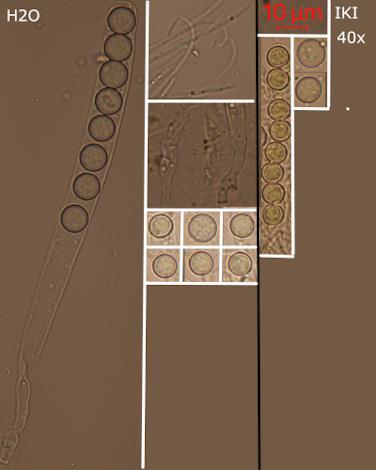
Apothecia 1-3 mm On burnt wood in a campsite fireplace. Paraphysis hooked, mostly unforked very little keratinoid pigmintation, IKI-, Spores single large guttule: (7.1) 7.5-8.6 (9.2) x (6.8) 7.2-8.6 (*9.4)
Asci 147x10.6
Higher resolution pictures:
Enrique Rubio,
20-06-2022 18:58

Re : Small spored Pulvinula?
Hi Tyler
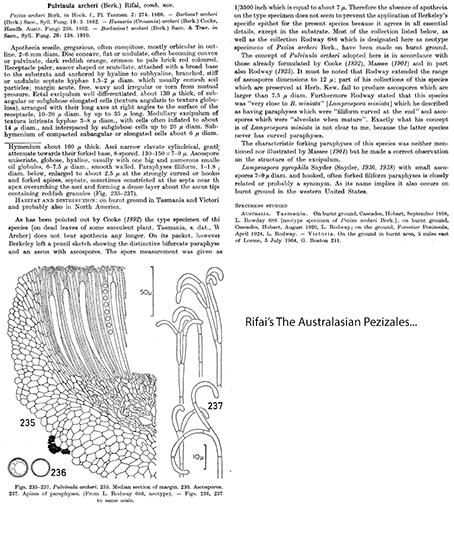
Please, compare with Pulvinula archeri.
Please, compare with Pulvinula archeri.
Tyler Bailey,
20-06-2022 19:23
Re : Small spored Pulvinula?
Wow that was fast! thank you.
Using Pfister's monograph that was one had looked most promising, the only thing that didn't match besides the spore size was the paraphyses since so few were branched and there was almost no pigment in them (but widthwise they matched).
Enrique Rubio,
20-06-2022 19:48
Re : Small spored Pulvinula?
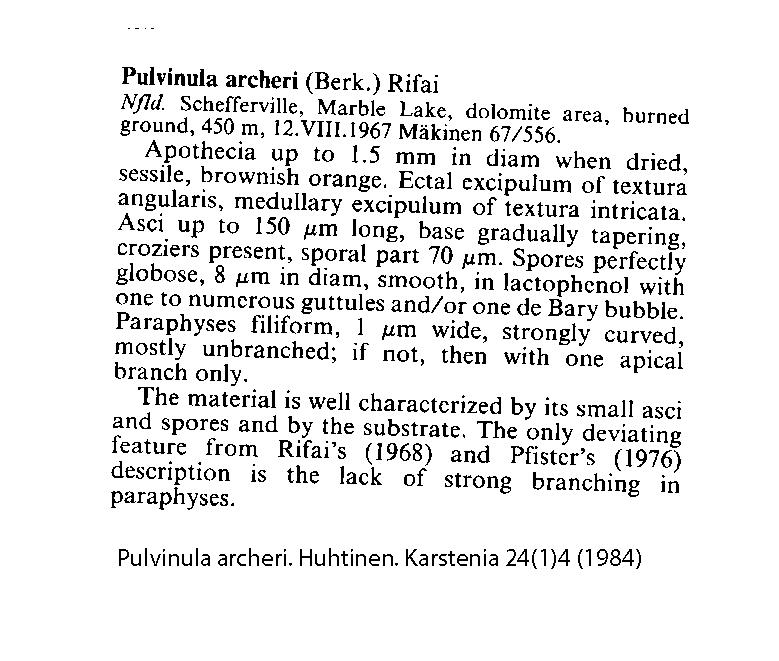
I attach some descriptions by Huhtinen and Rifai. As you will see, the variability of some characters seems to be large.
Tyler Bailey,
21-06-2022 04:12
Re : Small spored Pulvinula?
That answers that pretty thoroughly, thanks for the descriptions as well.
Nicolas VAN VOOREN,
21-06-2022 08:03

Re : Small spored Pulvinula?
I agree with Enrique. P. carbonaria, another carbonicolous species, has larger ascospores.