19-04-2026 21:23
Steve ClementsBonjour, I found this anamorphic fungus on old pl
19-04-2026 20:46
Steve Clements1 mm diameter approx spherical conidiophores on pl
12-04-2026 17:56
 Hardware Tony
Found on dead stems in February earlier this year
17-04-2026 19:16
 Enrique Rubio
Hi to everybodyI would appreciate any assistance r
14-04-2026 05:32
Ethan CrensonHi all, A few weeks back a friend pointed out som
17-04-2026 15:14
 Bruno Coué
Bonjour.Récoltes du 16/04/2026, sur feuilles mort
12-04-2026 15:52
Gernot FriebesHi,I'm looking for help with this anamorph collect
14-04-2026 21:52
Gernot FriebesHi,found on dead leaves of Carex elata. Conidia: 4
16-04-2026 22:09
Buckwheat PeteHello, I'd like to ask about this older specimen:
15-04-2026 19:33
Fátima Durán ManzanequeHi!! I need help, I found this Ascomycete but I d
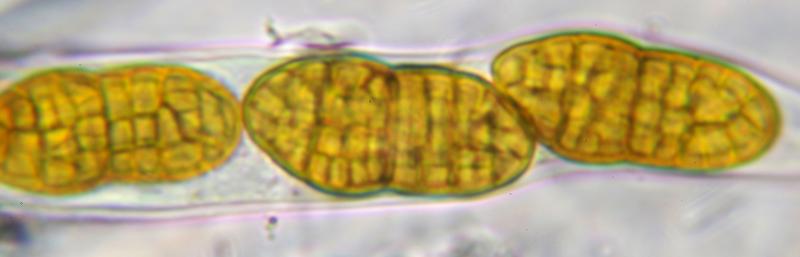
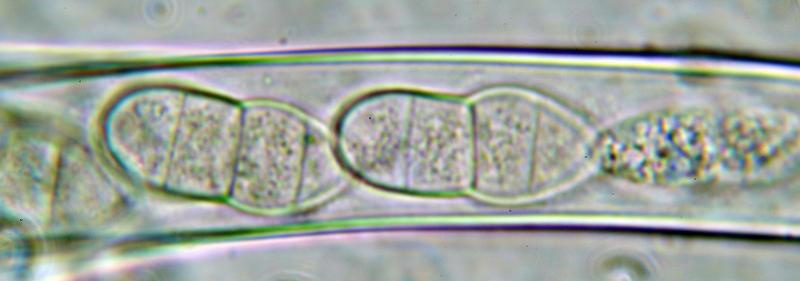
Ascomata developing under the bark (Betula), erumpent, up to 6 together. Ascomata black, globose to ellipsoid with slightly papillate ostioles. Asci about 270 x 18 mu, bitunicate and uniseriate. Ascospores 30-40 x 13-15 um, hyaline turning brownish, firstly one median septum, subsequently 3-septate and becoming golden yellow and muriform. End cells appear to remain paler. Presumed anamorph with hyaline, cylindric conidia with small guttules, about 3 x 1 um.
Little is known about Fenestella betulae described in 1883 by Saccardo. Berlese (1900) treated it as a synonym of F. princeps (= F. fenestrata) but the ascospores of F. betulae appear to much smaller. A modern description does not exist. Jaklitsch & Voglmayr (2020) could not include it in their recent treatment of the genus because of lack of fresh material.
It would be interesting if somebody has more information on this species.
Thanking in advance for help, Eduard