
19-04-2026 21:23
Steve ClementsBonjour, I found this anamorphic fungus on old pl
19-04-2026 20:46
Steve Clements1 mm diameter approx spherical conidiophores on pl
12-04-2026 17:56
 Hardware Tony
Found on dead stems in February earlier this year
17-04-2026 19:16
 Enrique Rubio
Hi to everybodyI would appreciate any assistance r
14-04-2026 05:32
Ethan CrensonHi all, A few weeks back a friend pointed out som
17-04-2026 15:14
 Bruno Coué
Bonjour.Récoltes du 16/04/2026, sur feuilles mort
12-04-2026 15:52
Gernot FriebesHi,I'm looking for help with this anamorph collect
14-04-2026 21:52
Gernot FriebesHi,found on dead leaves of Carex elata. Conidia: 4
16-04-2026 22:09
Buckwheat PeteHello, I'd like to ask about this older specimen:
15-04-2026 19:33
Fátima Durán ManzanequeHi!! I need help, I found this Ascomycete but I d
Large Hymenoscyphus on herb stem
Edvin Johannesen,
28-09-2021 19:01

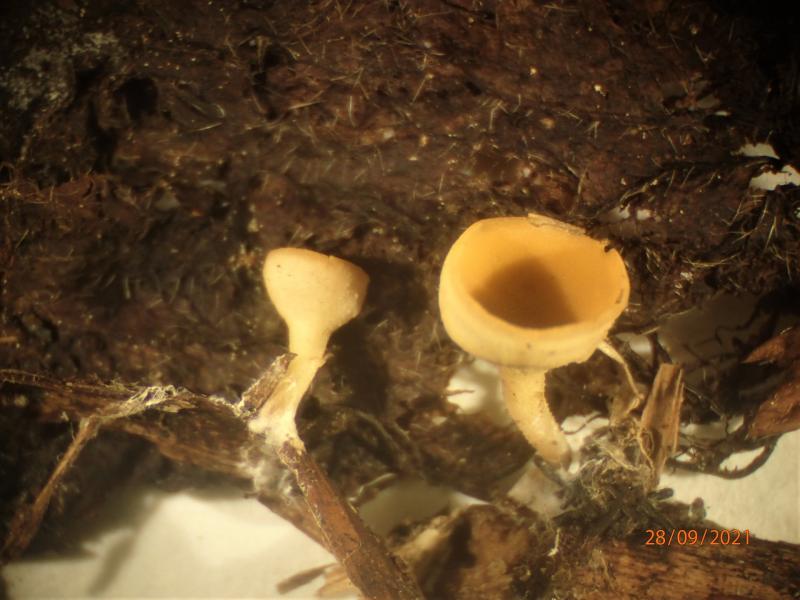
These long-stalked, 3-6 mm broad, rather bright orange-yellow apothecia (paler on the outside) were growing on a herb stem in a tall-herb spruce forest in Northern Norway. Not sure what herb, but the herb stem is marrow-filled.
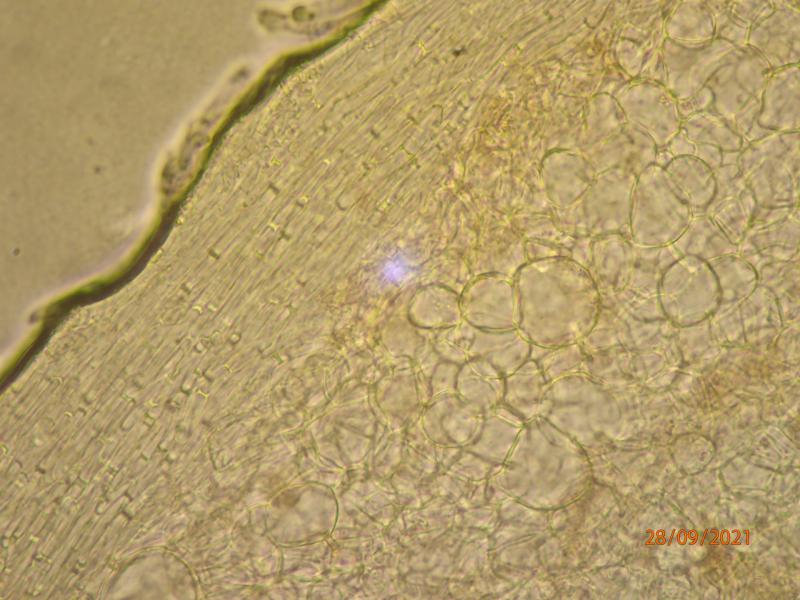
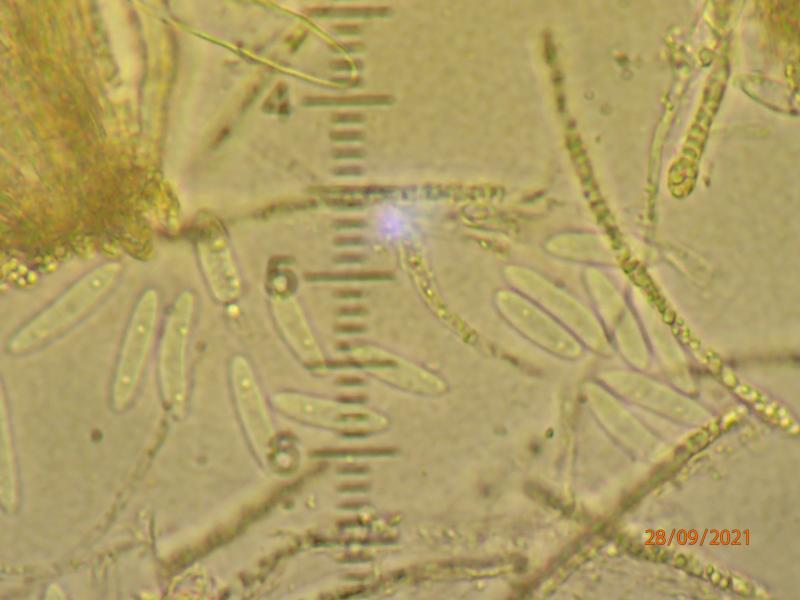
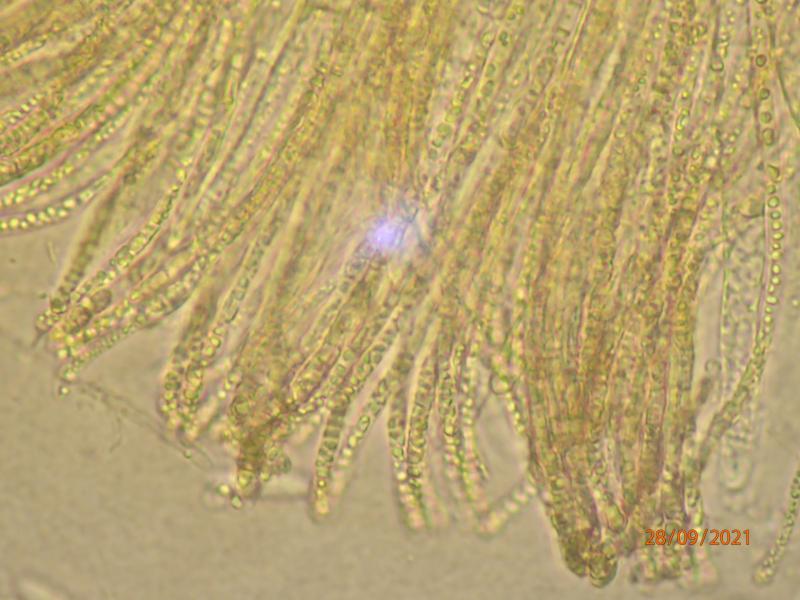
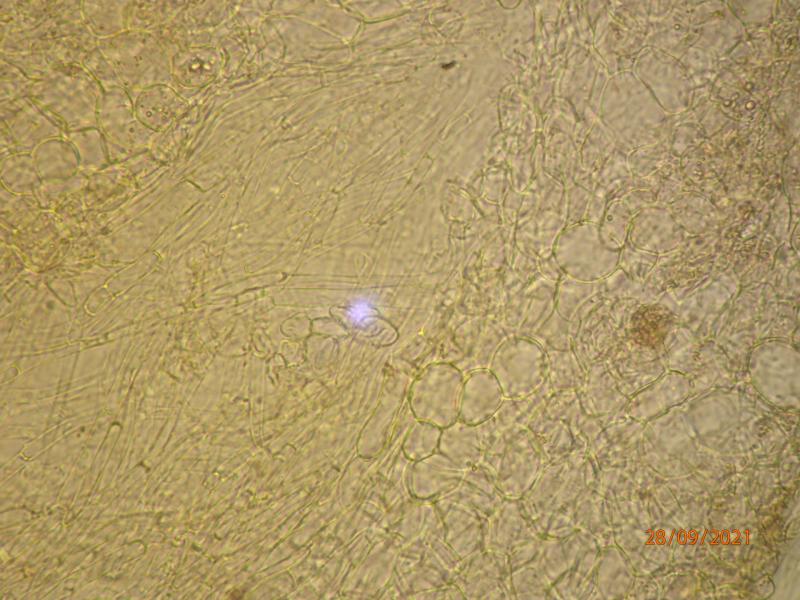
Asci are IKI-. Paraphyses are very numerous and very distinctly multiguttulate. Spores measure typically 17-20 x 4-5 micr., with two tiny oil bodies near each end, becoming 1-septate. Some are germinating. Excipulum two-layered; a thick layer consisting of up to 25 micr. spherical or broadly oblong cells, and a thin layer of parallel rather thin hyphae.
I assume Hymenoscyphus s.l., a genus I am struggling with. But the asci are inamyloid, as far as I can see.
Opinions appreciated.
Thanks.
Hans-Otto Baral,
28-09-2021 20:33

Re : Large Hymenoscyphus on herb stem
H. repandus has such spores but miuch larger. Inamyloidity sometimes occurs in amyloi taxa. Globose cells I wonder because stipitate taxa of Hymenoscyphus do not have that. But Hymenoscyphus is clear based on the paraphyses.
Edvin Johannesen,
28-09-2021 20:44
Re : Large Hymenoscyphus on herb stem
OK, thanks. I guess we cannot conclude, then?
Hans-Otto Baral,
28-09-2021 21:04
Re : Large Hymenoscyphus on herb stem
I am sorry but I would need a better docu.
Hans-Otto Baral,
29-09-2021 15:24
Re : Large Hymenoscyphus on herb stem
I now agreed with Edvin that this should be Phaeohelotium epiphyllum, despite the long stipe.