
08-06-2026 17:00
François BartholomeeusenGood day everyone, On June 5 2026, I collected de
08-06-2026 10:16
 Spooren Marco
I don`t have a clou about this fungus,it is not in
07-06-2026 15:10
 William Slosse
Hello everyone,On 05-06-26, I found following asco
05-06-2026 11:02
Thomas Læssøehttps://svampe.databasen.org/observations/10596691
07-06-2026 12:09
 François Freléchoux
Bonjour, Voici une brève description de ce qui m
07-06-2026 12:43
Steve ClementsBojour. This was a strange find on a stick on my
12-07-2015 00:05
 Nedim Jukic
This one from the same locality as the previous on
06-06-2026 17:44
Steve ClementsBonjour, This disco was on planed wood 3 x 1.5 cm
14-08-2016 23:15
 Alex Akulov
Dear friendsCan you help me to find the descriptio
disco on Phragmites
Chris Yeates,
05-07-2021 15:19

Bonjour tous
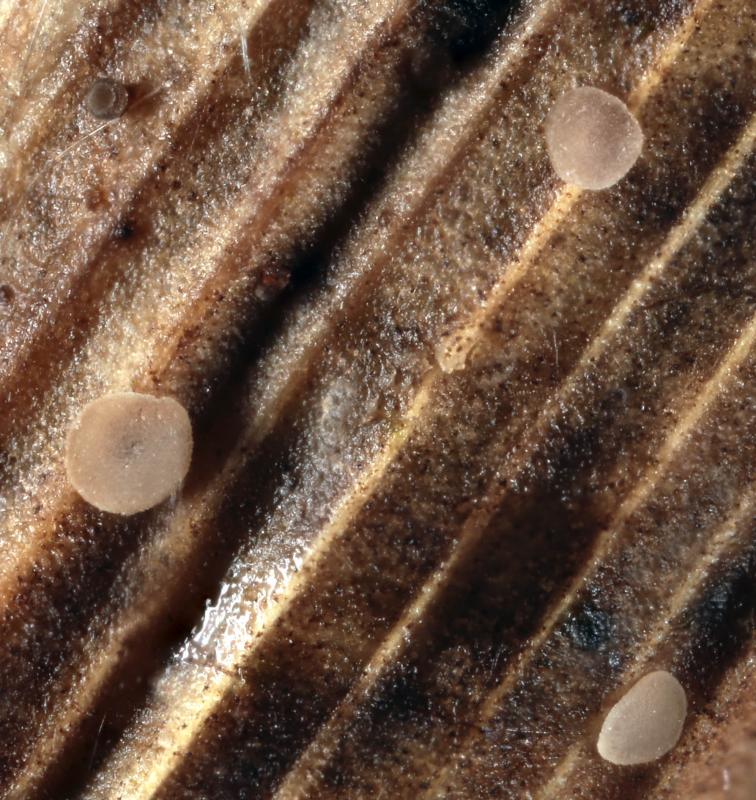
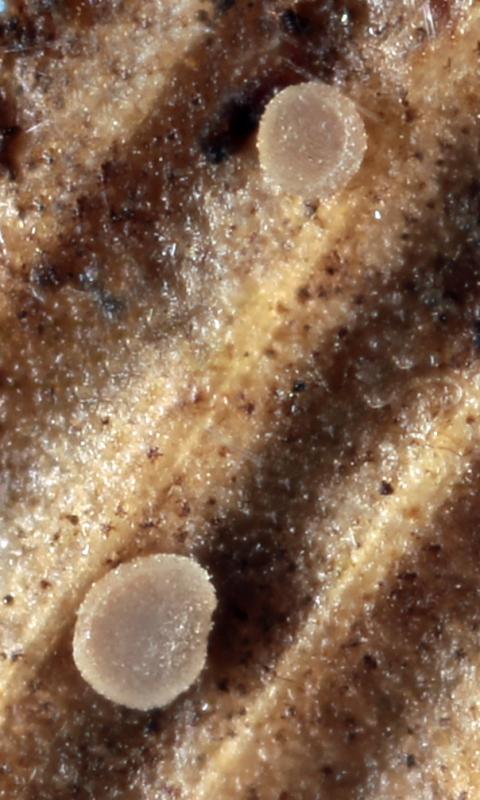
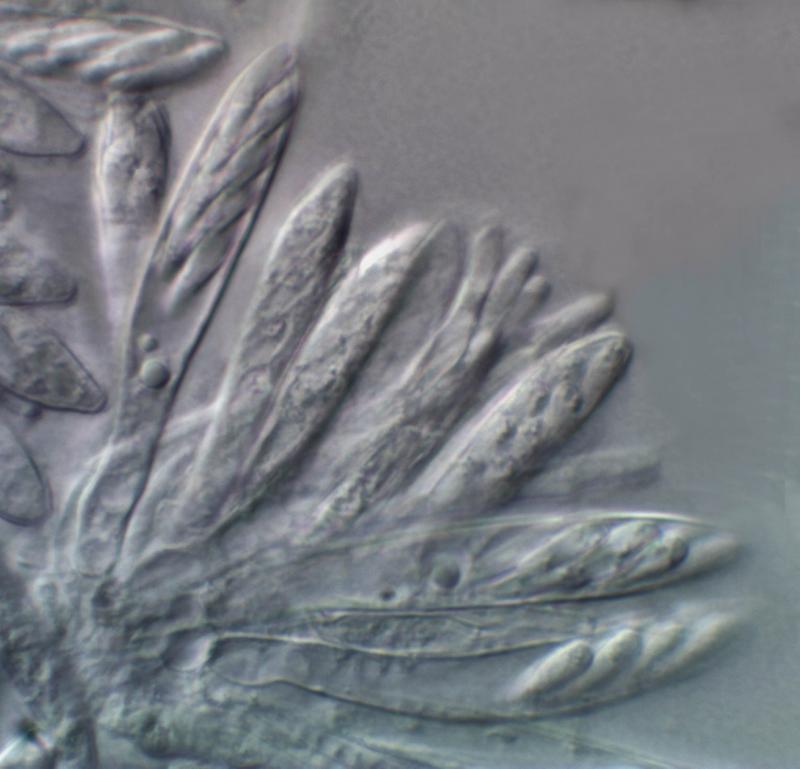
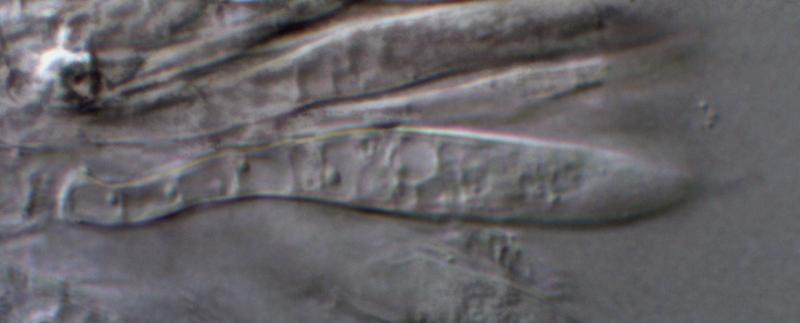
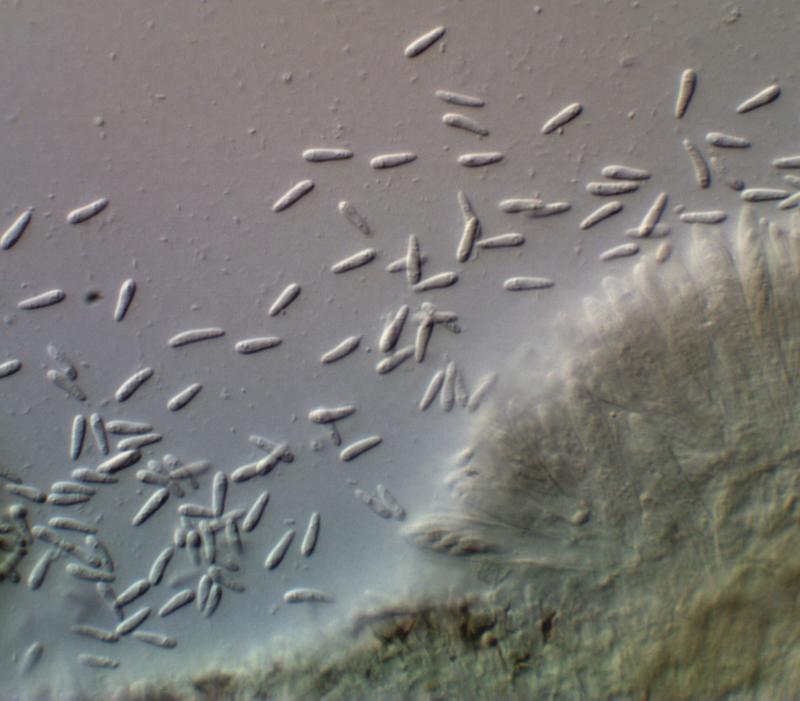
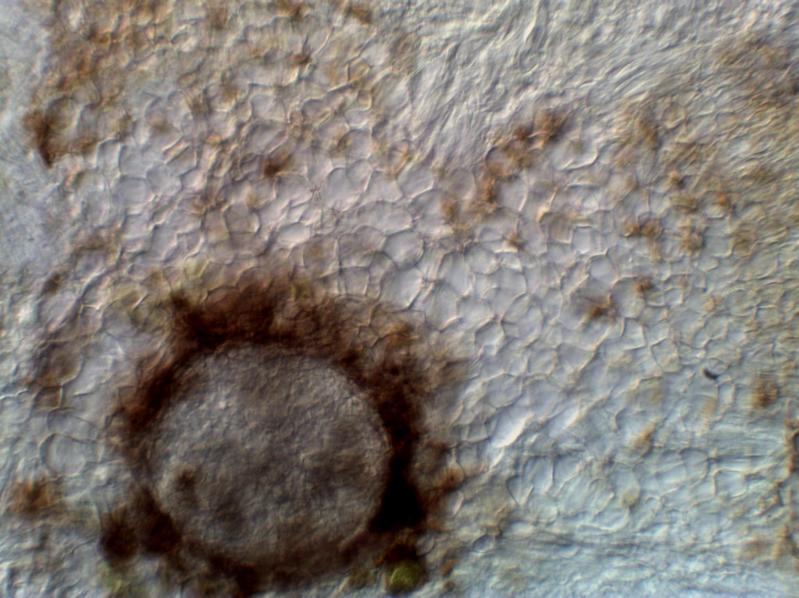
Collected on fallen dead culms of Phragmites australis from the previous year. All images are of living material in water.
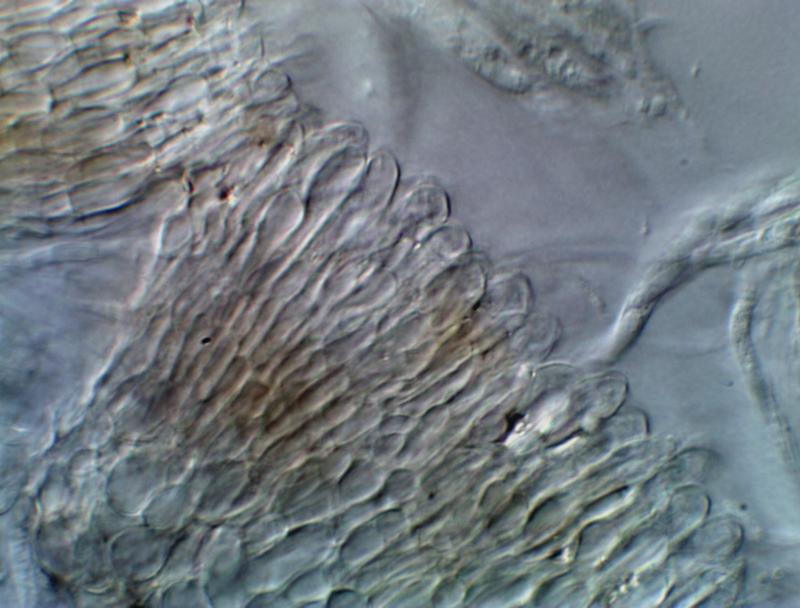
Apothecia colourless or with a faint pinkish tinge, no protruding hairs, up to 0.4mm. They are sessile and leave a brown attachment ring, though this may just be remnants of host tissue. The margin is as seen in the final image - without protruding cells/hairs; the terminal cells c. 5-6µm wide.
Asci 8-spored, apex blue in Baralsche Löhsung, with croziers. Quite a number of the asci (at a particular stage of development) with 1-4 "Psilachnum bodies" their size dependant on how many there are. One particular developing ascus (see image) was divided into a number of vacuoles, each with a single globular body - very active (Brownian motion?).
Ascospores mostly clavate, with small droplets towards (but not at) the apices; 8.8-10.8 x 2.4-2.7µm, Qe = 3.8.
As ever suggestions welcome.
Cordialement, Chris
Juuso Äikäs,
05-07-2021 21:42
Re : disco on Phragmites
Hopefully someone else will comment as well, but could it be a Pyrenopeziza sp.? It reminds me of P. typhicola to some degree, which I earlier posted here. That one has also those "Psilachnum bodies", but obviously that's another species (dark excipulum, shorter spores, different host).
Chris Yeates,
12-07-2021 16:41
Re : disco on Phragmites
Apologies for not responding sooner.Thanksfor the suggestion, but I don't think this is a Pyrenopeziza, or near relative. Perhaps someone else has a suggestion.
Chris
Nick Aplin,
12-07-2021 22:00
Re : disco on Phragmites
Salut Chris,
Any chance it could belong in the Helotium microspis group?
For example in Zottos Google Drive files: Helotiales/Pezizellaceae (with VBs)/Calycellina/microspis VBs-
Amités,
Nick
Any chance it could belong in the Helotium microspis group?
For example in Zottos Google Drive files: Helotiales/Pezizellaceae (with VBs)/Calycellina/microspis VBs-
Amités,
Nick
Chris Yeates,
14-07-2021 19:15
Re : disco on Phragmites
Ave Nicolae
Rem acu tetigisti!
I think that is a splendid suggestion and several characters fit well with Zotto's images.
Many thanks, Chris