
22-05-2026 10:59
 Nicolas VAN VOOREN
Trouvé sur Phragmites, ce que je pense être un L
20-05-2026 17:47
Margot en Geert VullingsWe found this Mollisia on dead Juncus stems mown l
20-05-2026 21:49
Margot en Geert VullingsWe found this Lachnum on Juncus stems mown last ye
21-05-2026 17:01
Pierre RepellinBonjour à toutes et à tous,Je recherche l'articl
20-05-2026 20:08
 Andreas Millinger
Good evening,another quite distinctive find from M
20-05-2026 12:57
 Ingo Ibelshäuser
Hello everybody, on decayed hardwood e.g. Quercus
22-04-2026 20:54
 Enrique Rubio
Hi to everybody.This Pyrenopeziza grew in moist le

Hymenoscyphus "calycinoides" ?
Unai Fernandes,
17-02-2021 23:29
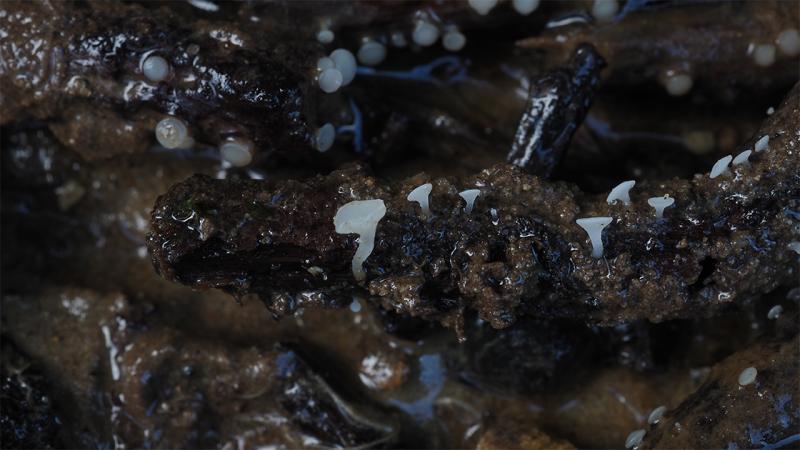
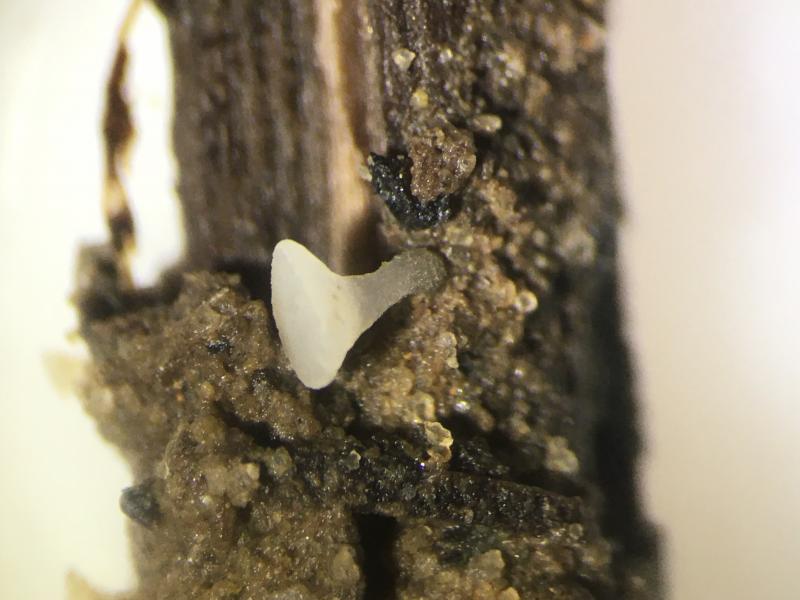
I have collected these specimens on woody drebis-woody sp, stripped of bark, semi-submerged in water. The specimens look like and match well with Hymenoscyphus "calycinoides" if I m not mistaken, Baral has it under study. If I could get some information about it that would be great and welcome. Any help is welcome.
Thanks you very much!
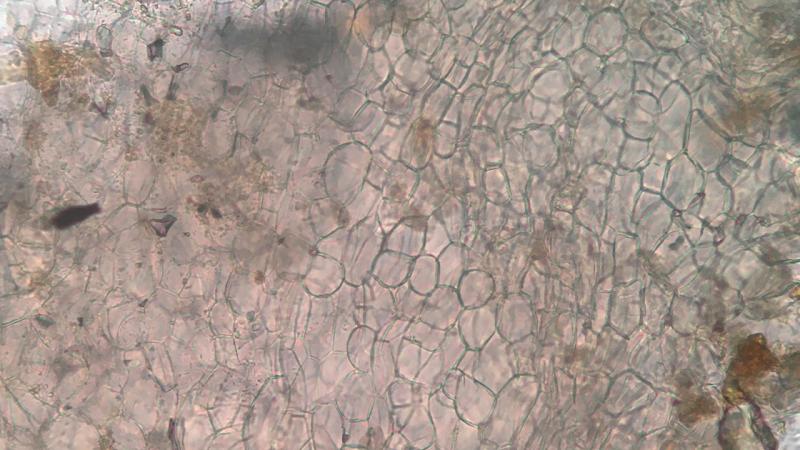
Apothecia: Withe, somewhat traslucent , disc-shape.
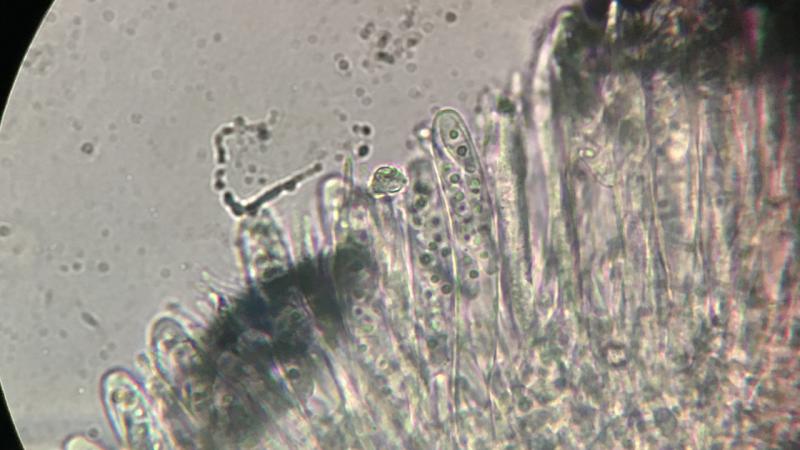
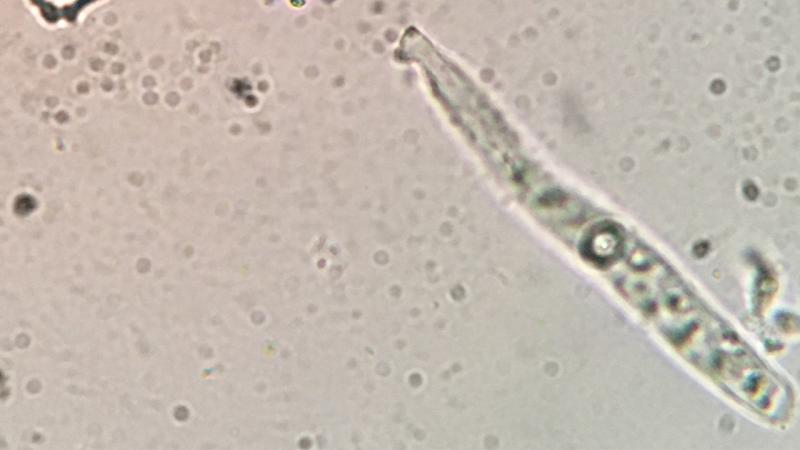
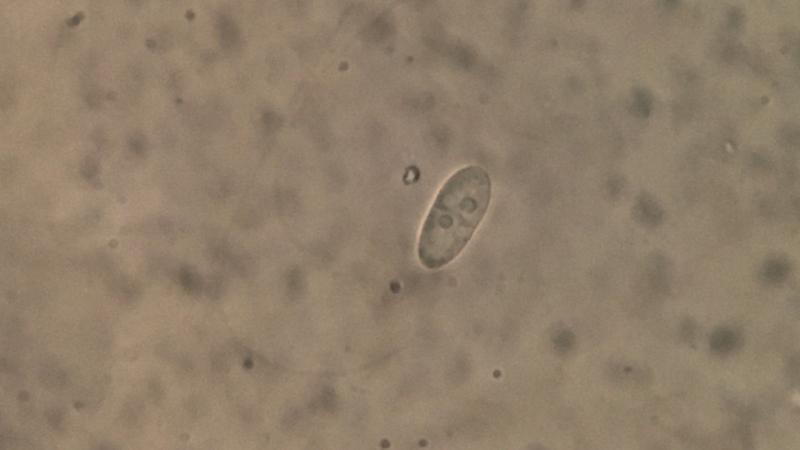
Ascospores: 11-18 X 4-5 µm , with a septum, when inside the asci and outside. Hyaline and almost always with two small guttules. IKI + not very pronounced.
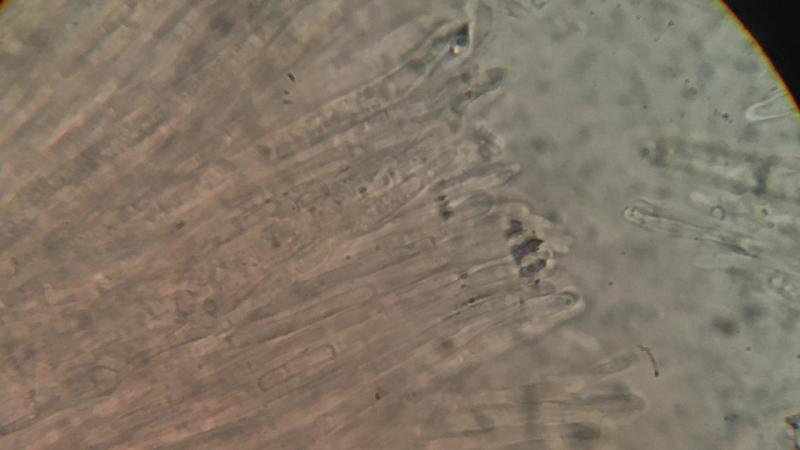
Paraphyses: Cylindrical, hyaline and at the apex with some lipid content. IKI -.
Thanks you!



Hans-Otto Baral,
18-02-2021 07:36

Re : Hymenoscyphus "calycinoides" ?
Yes, I guess this is correct. This species has a valid name: Hymenoscyphus varicosporoides, but it should be more related to Cudoniella. See my folder varicosporoides also for literature.
Do you think it is angiospermic bark?
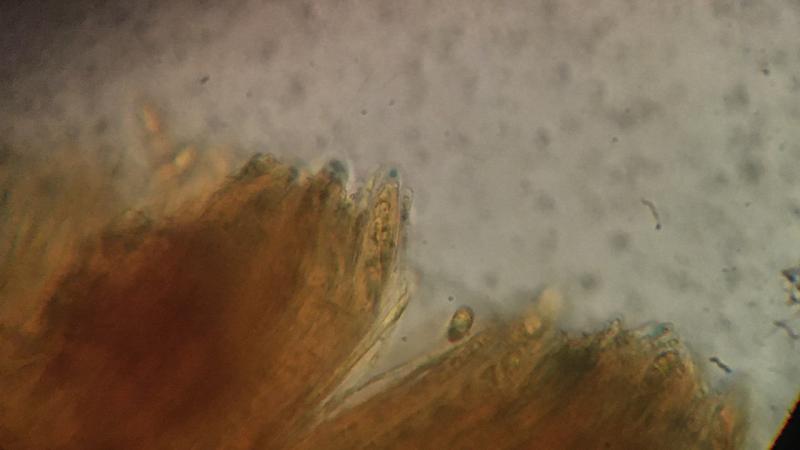
The reaction of the apical ring on your pic is quite strong and of the Hymenoscyphus type.
The spores are septate inside the living (!) asci which is quite unusual in Hymenoscyphus s.l.
Unai Fernandes,
18-02-2021 13:48
Re : Hymenoscyphus "calycinoides" ?
H. varicosporoides I had seen it but I thought it was another species and that it was different from "calycinoides" but now I have clarified it.
The remains of wood were located next to the road in flowing water, and the area was dominated by Pinus nigra but just there was no presence of angiosperms. Being fluid water or somewhat stagnant, maybe they have been able to move. I don't have it very clear I wouldn't dare to determine it.
Thank you very much Zotto!
Good morning!
Unai
The remains of wood were located next to the road in flowing water, and the area was dominated by Pinus nigra but just there was no presence of angiosperms. Being fluid water or somewhat stagnant, maybe they have been able to move. I don't have it very clear I wouldn't dare to determine it.
Thank you very much Zotto!
Good morning!
Unai
Unai Fernandes,
18-02-2021 15:57
Re : Hymenoscyphus "calycinoides" ?
I have looked to better confirm the presence of angiosperms and on the other side of the road there are angiosperms present.
Hans-Otto Baral,
18-02-2021 17:25
Re : Hymenoscyphus "calycinoides" ?
When it is bark it is not so easy as if it is wood - which can easily be determined by a cross section or the genus by a radial section.
Unai Fernandes,
18-02-2021 21:56
Re : Hymenoscyphus "calycinoides" ?
The remains are wood, not bark.
Yeah, great, I'll look into it and try to define it.
Thanks you Zotto!
Yeah, great, I'll look into it and try to define it.
Thanks you Zotto!