
12-06-2026 14:50
 François Freléchoux
Bonjour, Voici la brève description d'une Mollis
10-06-2026 21:16
François Freléchoux
Bonsoir,Le dernier du jour, en attendant votre avi
11-06-2026 19:01
 William Slosse
Hello all,In an attempt to make a culture of a sus
11-06-2026 19:03
 Nicolas VAN VOOREN
Chers membres d'Ascofrance,Le site sera placé en

09-06-2026 18:32
Camille MertensSur morceau de roseau immergé 0,5 - 0,7 mm de dia
10-06-2026 12:54
Steve ClementsBonjour encore, Pouvez-vous m'aider, s'il vous pl
10-06-2026 21:07
François Freléchoux
Toutes les tiges de gentianes jaunes de l'an passÃ
10-06-2026 13:41
François Freléchoux
Bonjour à nouveau, Voici une trouvaille d'hier.
 Dear members of this forum
Could this find be Cheilymenia crassistriata or a form of Ch. granulata?
This find have very small apothecia, a yellow color and does not contain hairs or capitate paraphyses.
Thanks for your advice.
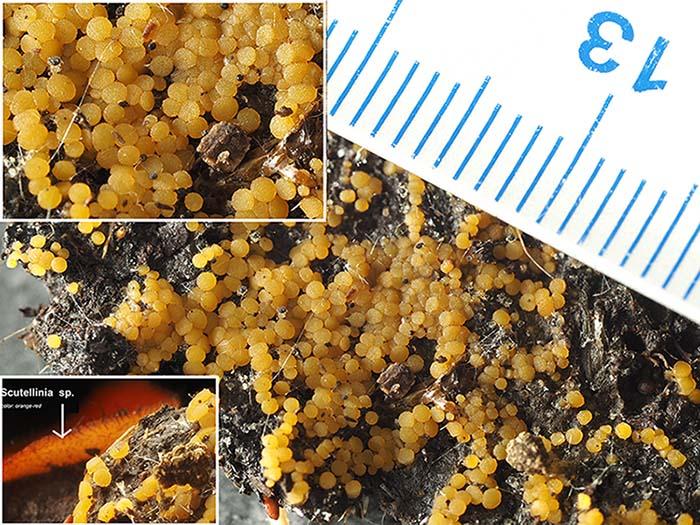
On moist soil (dung?)
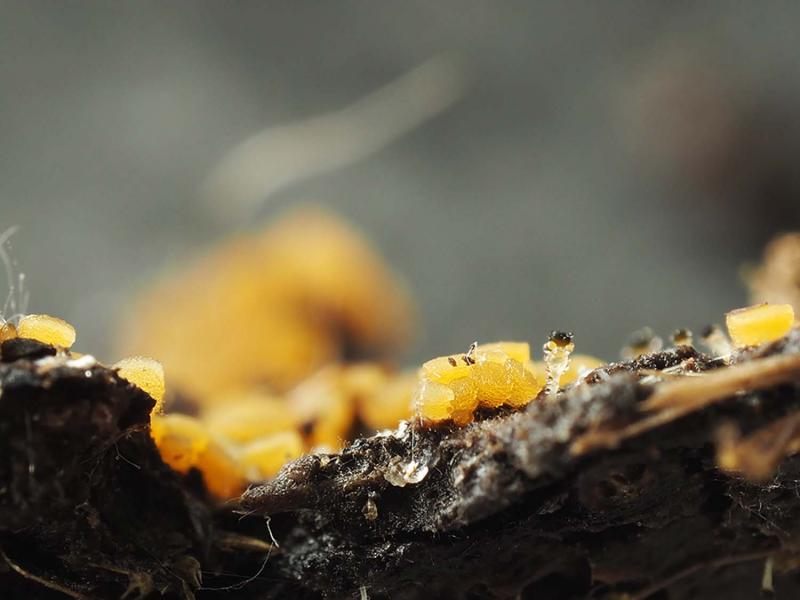
Apothecia: small; 0.3-0.7 (1) mm, subcylindrical; turbinate or barrel-shaped; hymenium yellow to ocher yellow,; hymenium with protruding asci; see also the picture with the difference in color between this find and the orange red color of a Scutellinia sp.
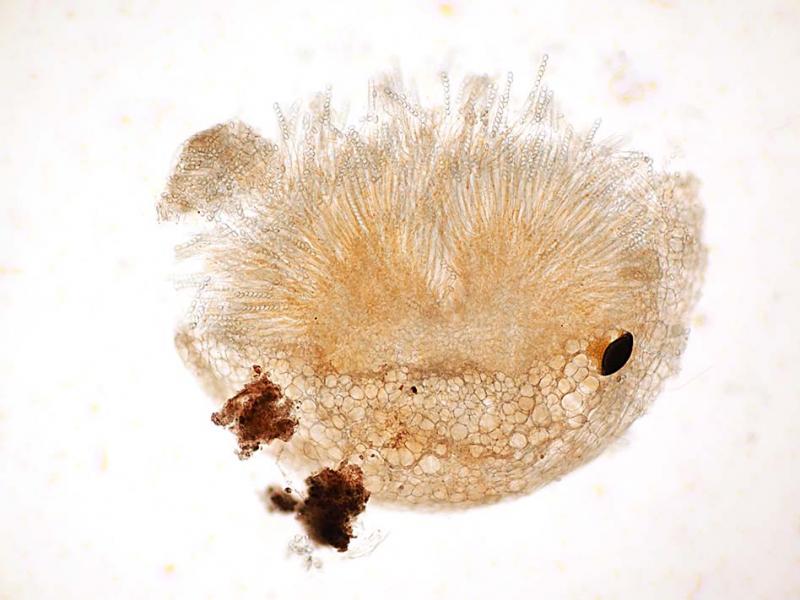
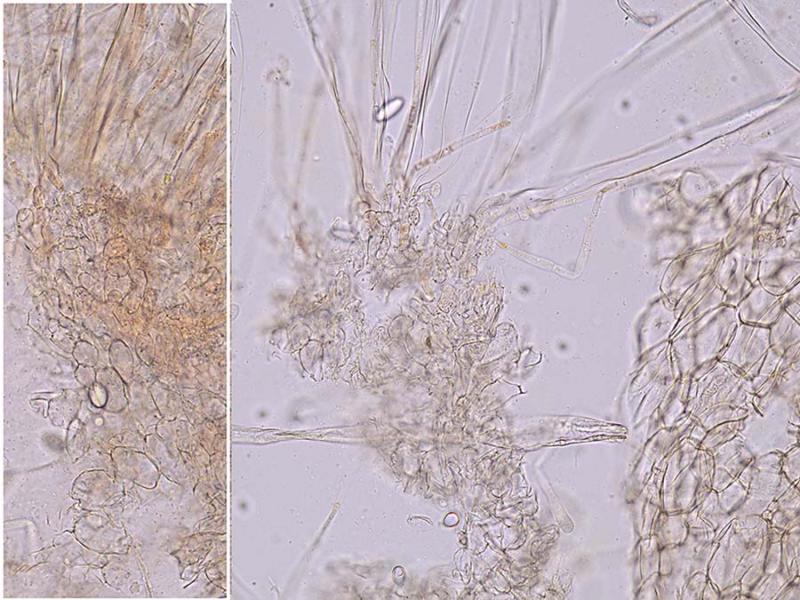
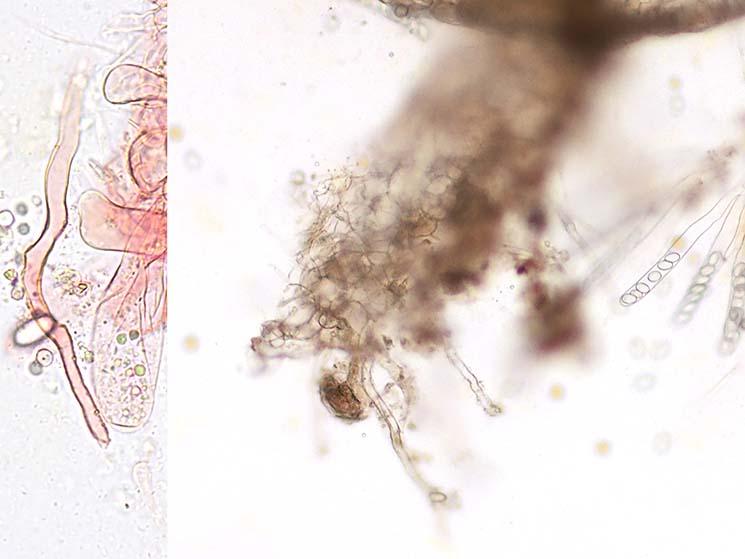
Medullar excipulum: 10-20 diam.; differentiated with smaller cells, textura angularis to textura subintricata/subepidermoidea; none hyphal elements observed, none cyanophilic septa observed.
Ectal excipulum: 24-50 x 20-41 µm textura subglobose to angularis
Marginal hairs: none observed
Lateral hairs: none observed;
Hyphoid hairs: only hyphal outgrowth at the base, : 5-6µm in diam. , thin to slightly thick walled, originating from the outermost excipular cells; eight apothecia has been checked for the presence/absence of hairs.
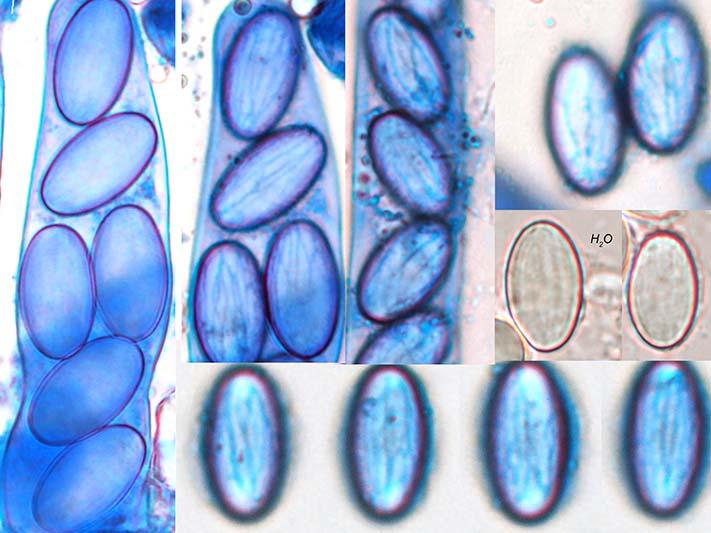
Spores: (14.1) 14.9 - 16.4 (16.7) × (8.3) 8.4 - 9.6 (10.1) µm; Q = (1.5) 1.6 - 1.8 (1.9) ; N = 26; Me = 15.6 × 9.1 µm ; Qe = 1.7, weakly striation was already seen in water; striation in cotton blue distinct, irregular (in space and thickness), ribs 0.25-0.55 (0.7) µm wide; the epispore seems to be very loosely around the spore, one nucleus
Asci 8-sp, with croziers, 175-220 x 10-14 µm
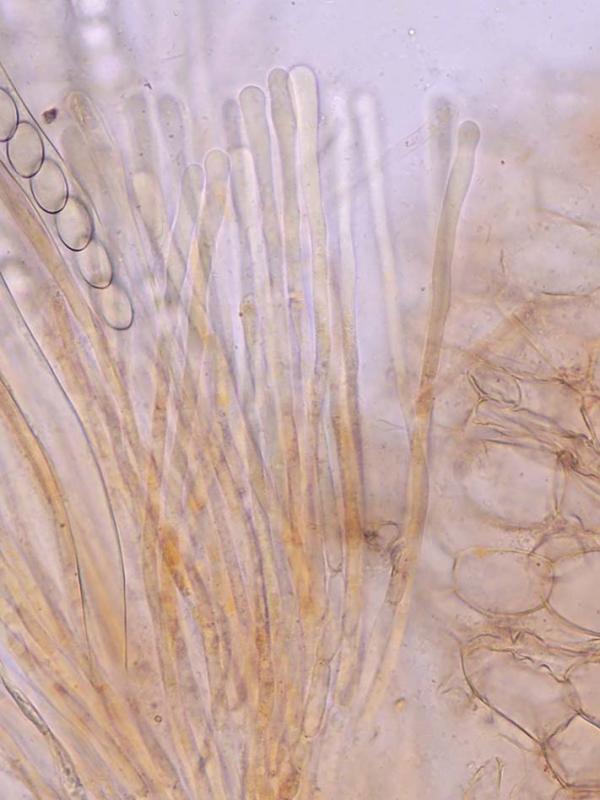
Paraphyses: septate, 3-4.5 µm diam., non-enlarged to gradually slightly enlarged, 7-8 µm; with orange granular pigment ,top cell paler, rarely branched.


Yes, I think your determination is correct; it is a species which I believe is not common.
Michel.