
12-06-2026 14:50
 François Freléchoux
Bonjour, Voici la brève description d'une Mollis
10-06-2026 21:16
François Freléchoux
Bonsoir,Le dernier du jour, en attendant votre avi
11-06-2026 19:01
 William Slosse
Hello all,In an attempt to make a culture of a sus
11-06-2026 19:03
 Nicolas VAN VOOREN
Chers membres d'Ascofrance,Le site sera placé en

09-06-2026 18:32
Camille MertensSur morceau de roseau immergé 0,5 - 0,7 mm de dia
10-06-2026 12:54
Steve ClementsBonjour encore, Pouvez-vous m'aider, s'il vous pl
10-06-2026 21:07
François Freléchoux
Toutes les tiges de gentianes jaunes de l'an passÃ
10-06-2026 13:41
François Freléchoux
Bonjour à nouveau, Voici une trouvaille d'hier.
Tarzetta sp
Luis Ballester,
29-06-2020 20:59
 Hola a todos
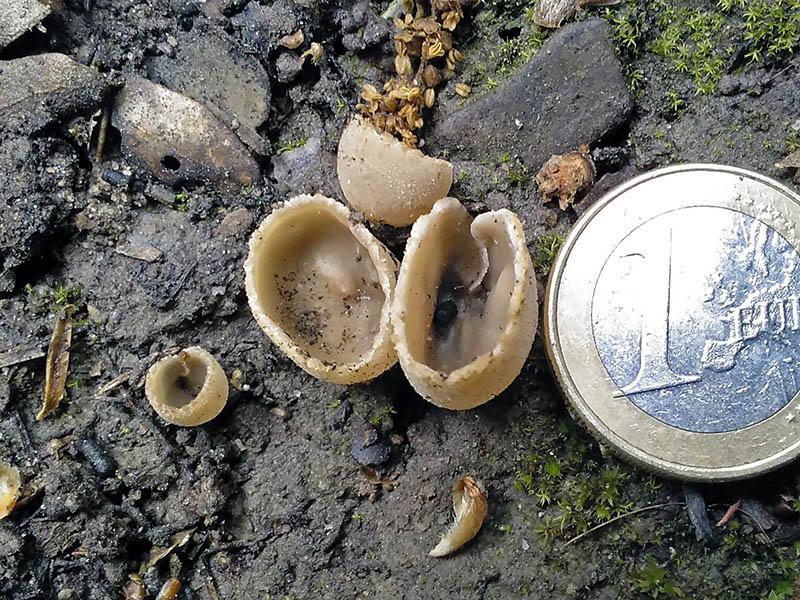
I found this small Tarzetta that seemed strange to me from the beginning, different from the T. catinus I have seen other times.
The size is very small, the largest specimen is 13 mm in diameter, the ascocarp is sessile and the hymenium is more grayish than the excipulum.
Also the habitat is different from the one I usually find T. catinus, this time it is in muddy soil, next to a stream with Quercus ilex, the PH of the soil is acidic.
I have been looking for possibilities and I have found a taxon that I did not know called T. quercus-ilicis. What is your opinion?. If there is any microscopic difference with T. catinus I could look it under a microscope
Antonio Couceiro,
30-06-2020 10:44

Re : Tarzetta sp
Hola Luis, creo que vas a necesitar micro. Desde de mi poco conocimiento, y mi humilde opinión,otra posibilidad en un habitat parecido de Q.ilex y Q.pyrenaica que determino Enrique Rubio hace unos meses, es T.gaillardiana, puedes ver la micro en su pagina de Facebook del C.E.M.AS. Un abrazo
Nicolas VAN VOOREN,
30-06-2020 16:42
Re : Tarzetta sp
Hello Luis.
Indeed T. quercus-ilicis is a sessile species with a greyish hymenium. Without microscopic data, it is hard to say if your collection could fit with this species.
Indeed T. quercus-ilicis is a sessile species with a greyish hymenium. Without microscopic data, it is hard to say if your collection could fit with this species.