
28-04-2026 22:51
 Bernard CLESSE
Bonsoir à toutes et tous,Pourriez-vous m'aider à
29-04-2026 08:01
 Lothar Krieglsteiner
... on twig attached to small tree of Citrus auran
28-04-2026 20:33
Vitus SchäfftleinHello, I found Trochila ilicina on Ilex aquifoliu

28-04-2026 21:50
 Pablo Sandoval
Hola a todos,Espero se encuentren bien. Hace mucho
27-04-2026 18:05
Lothar Krieglsteiner
... still attached at standing tree. The green con
28-04-2026 20:07
Lothar Krieglsteiner
... on twig in the air at standing Ceratonia siliq
27-04-2026 20:52
Lothar Krieglsteiner
Found on hanging tiwg of Olea europaea in dried-ou
27-04-2026 18:48
Tony MoverleyCollected 23rd April 2026, Norfolk, EnglandSwarms
27-04-2026 17:41
Lothar Krieglsteiner
.. Algarve, same leaf than the last post. The con
I have no experience with lichens, let alone with mushrooms on lichens!
On the podetia of Cladonia gracilis (not 100% sure of the determination) I found brown/black ascomata (diameter: 286-317 µm). After making five preparations I didn't succeed in finding free spores and the microscopic pictures are anything but excellent.
No reaction in Melzer, texture and/or paraphyse with brown pigments.
Can someone help me with the identification?
Using a key I found in the publication of Mikhail P. Zhurbenko and Raquel Pino-Bodas (A revision of lichenicolous fungi growing on Cladonia ...) I determine the apothecia as Brackelia lunkei. The podetia are bleached in the places where the ascomata occur. Could this fungi be parasitic?
Am I right or am I completely mistaken? Thank you in advance for all your help.
François Bartholomeeusen


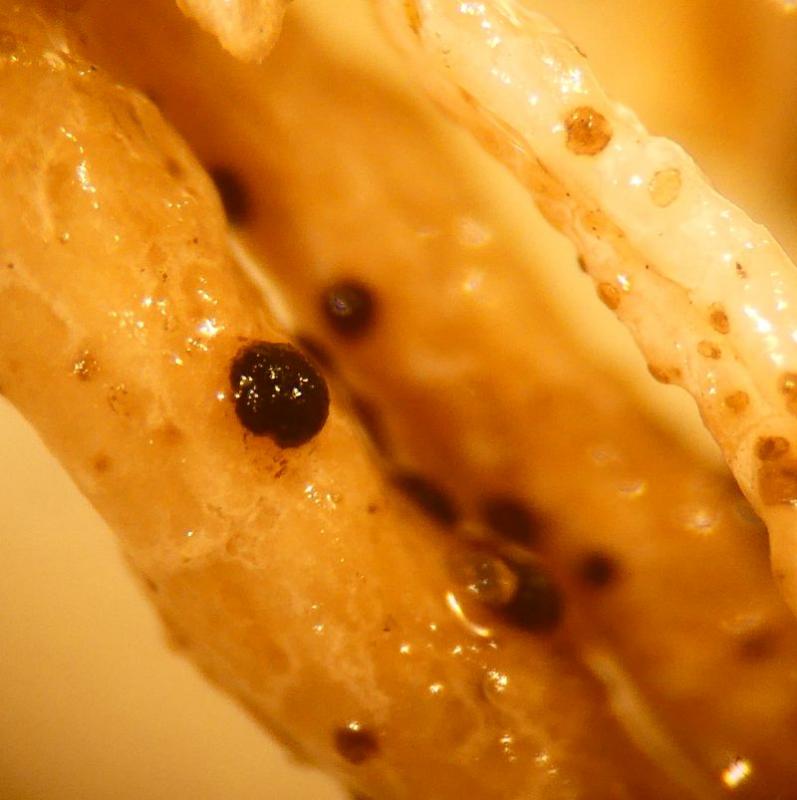
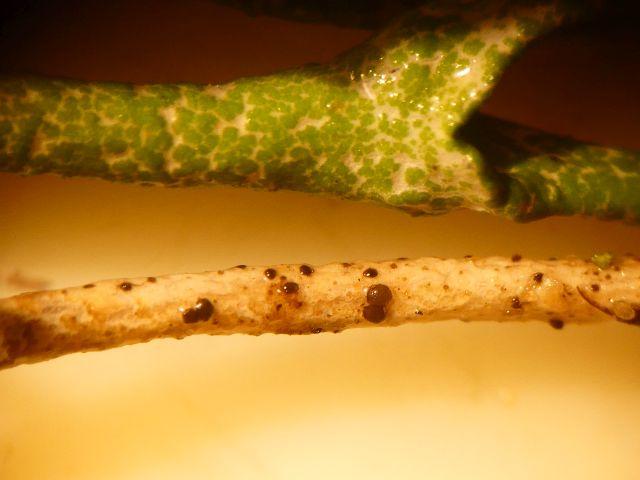
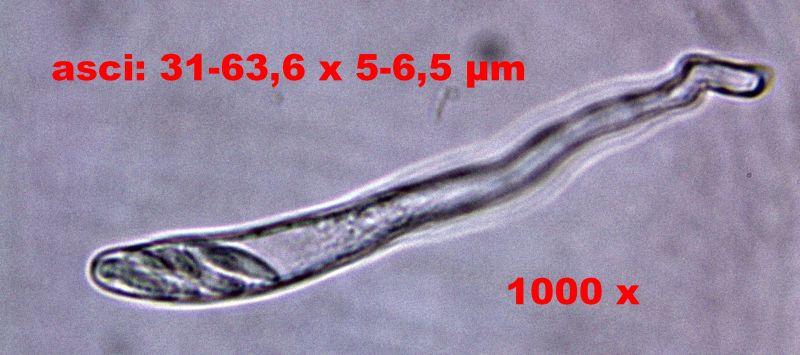

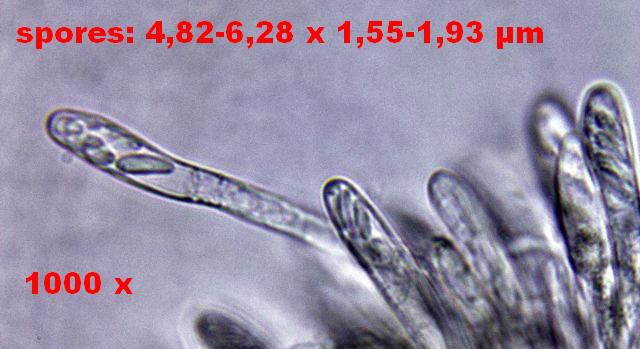
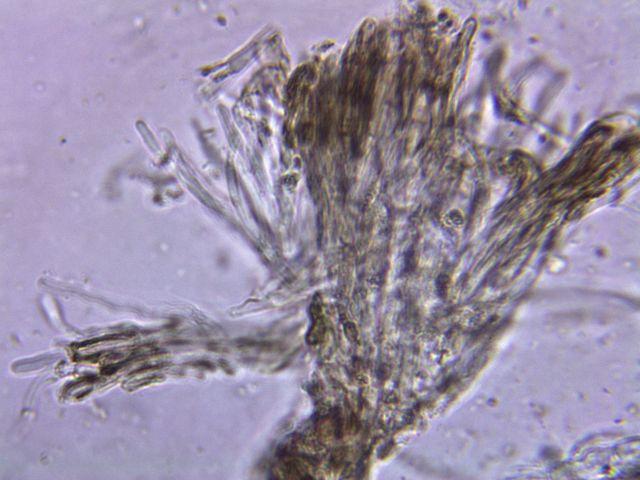

I hear the name Brackelia the first time, and I do not have the paper of 2017. I would be glad you could send me.
Thanls
Zotto
No problem, attached to the article maybe other persons are also interested.
Kind regards,
François
 Zhurbenko-and-Pino-Bodas-2017-Opuscula-Philolichenum-16-pp-88-266-0001.pdf
Your pics lack a scale, while the statement 1000x is useless for me when I want to measure.
I collected the Cladonia gracilis on 27 september 2019 in Belgium, 2460 Kasterlee, in the nature reserve "Grote Heide" which is a part of a "sleeping" land dune "Kempense Heuvelrug".
GPS 51.2080, 4.8826
Lambert 1972 185908 211018
Greetings,
François