
14-04-2026 05:32
Ethan CrensonHi all, A few weeks back a friend pointed out som
27-04-2026 18:48
Tony MoverleyCollected 23rd April 2026, Norfolk, EnglandSwarms
27-04-2026 20:52
 Lothar Krieglsteiner
Found on hanging tiwg of Olea europaea in dried-ou
28-04-2026 22:51
 Bernard CLESSE
Bonsoir à toutes et tous,Pourriez-vous m'aider à
29-04-2026 08:01
Lothar Krieglsteiner
... on twig attached to small tree of Citrus auran
29-04-2026 10:44
Lothar Krieglsteiner
growing at moist, drying-out soil at the side of a
28-04-2026 20:33
Vitus SchäfftleinHello, I found Trochila ilicina on Ilex aquifoliu

28-04-2026 21:50
 Pablo Sandoval
Hola a todos,Espero se encuentren bien. Hace mucho
27-04-2026 18:05
Lothar Krieglsteiner
... still attached at standing tree. The green con
Patellaciaceae
Salvador Tello,
24-04-2019 20:14
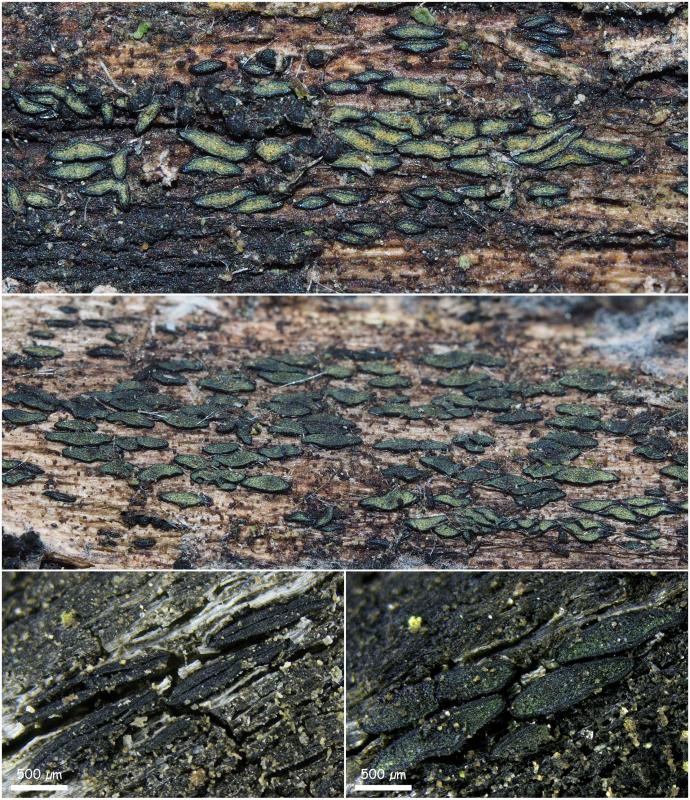
Me gustaría saber si tienen algún nombre para estos hongos que he recogido sobre Retama Sphaerocarpa y Rosa sp.
Los apotecios son histeriformes, que permanecen cerrados cuando están secos y cuando se hidratan se abren para mostrar el himenio, con una pruina amarillo-verdosa cubriéndolos.
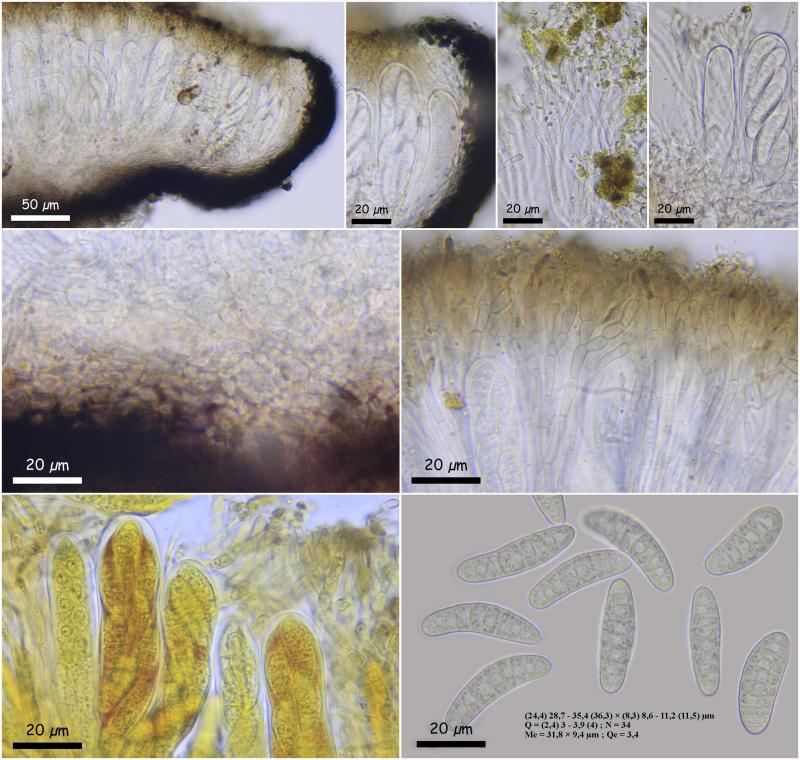
Las ascas son bitunicadas, octospóricas, con las esporas colocadas de manera biseriada, de (80,7) 84 - 90,4 (91,4) × (20,4) 21,6 - 24 (25,1) µm.
Esporas cilíndricas, algo alantoides, de (24,4) 28,7 - 35,4 (36,3) × (8,3) 8,6 - 11,2 (11,5) µm, Q = (2,4) 3 - 3,9 (4) ; N = 34, Me = 31,8 × 9,4 µm ; Qe = 3,4, hialinas, con 7-9 septos transversales.
Paráfisis cilíndricas, más largas que las ascas, septadas, ramificadas sobre todo en la parte superior, donde están envueltas en una masa marrón con una pruina amarillo-verdosa en la parte superior.
En mi opinión es el mismo hongo que aparece en la carpeta (Patellaroides) que tiene Zotto en Drive.
Saludos.
Salvador.
Hans-Otto Baral,
24-04-2019 20:33

Re : Patellaciaceae
Hi Salvador, you are right, in my folder Patellariales IKI+, subfolder patellarioides is a fungus largely that concurs with yours. Although from USA and Australia, it could be the same.
To verify this, you should check the IKI reaction , which should be light blue but disappearing at higher concentration (hemiamyloid. Perhaps after KOH it will be more distinctly and permanently blue.
To verify this, you should check the IKI reaction , which should be light blue but disappearing at higher concentration (hemiamyloid. Perhaps after KOH it will be more distinctly and permanently blue.
Salvador Tello,
24-04-2019 20:53
Re : Patellaciaceae
Gracias Zotto.
A mí me pareció que era IKI-, probaré con KOH primero para ver que pasa.
A mí me pareció que era IKI-, probaré con KOH primero para ver que pasa.
Salvador Tello,
25-04-2019 13:30
Re : Patellaciaceae
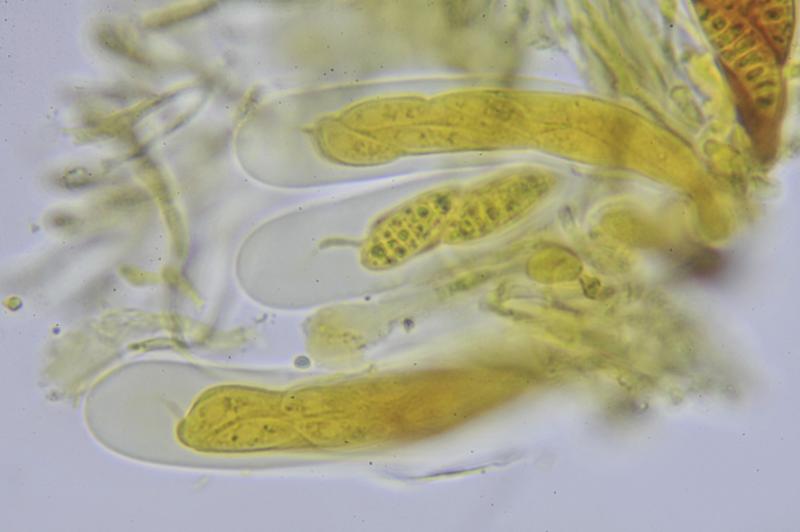
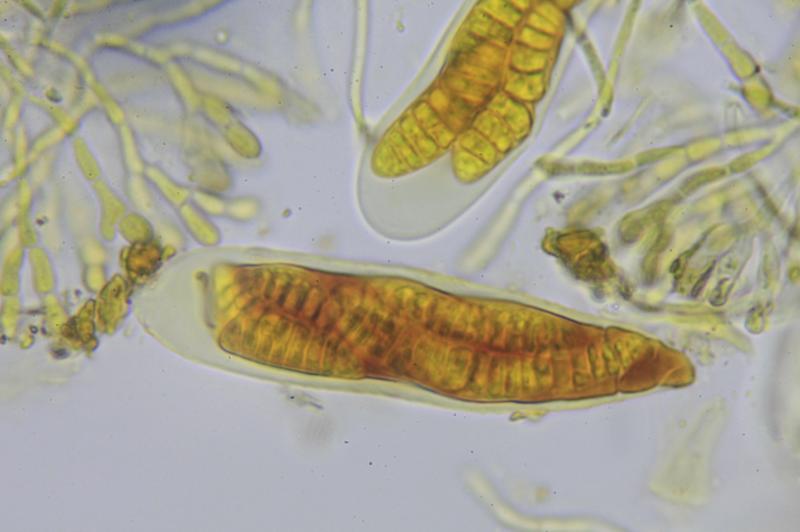
Aquí dejo unas fotos con KOH+IKI.
Me da la impresión de que si es azul muy débil, pero yo tengo algunos problemas con los colores y no lo distingo bien.
Me da la impresión de que si es azul muy débil, pero yo tengo algunos problemas con los colores y no lo distingo bien.
Hans-Otto Baral,
25-04-2019 15:59
Re : Patellaciaceae
Oh, if blue then it should be visible. Strange in any case.
Salvador Tello,
25-04-2019 22:59
Re : Patellaciaceae
Hola Zotto.
Perdona pero no entiendo si el resultado es el esperado, cuando el color azul no es fuerte, no lo percibo bien. Le dejo otras fotos.
Éstas son en IKI.
Perdona pero no entiendo si el resultado es el esperado, cuando el color azul no es fuerte, no lo percibo bien. Le dejo otras fotos.
Éstas son en IKI.
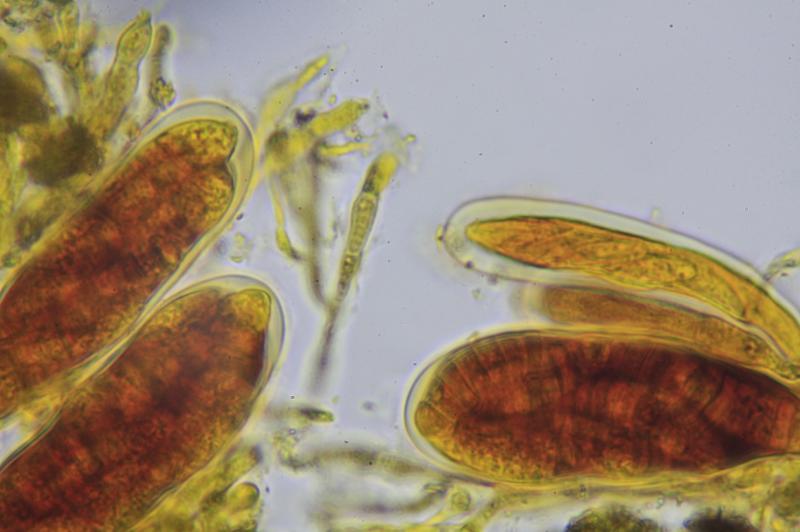
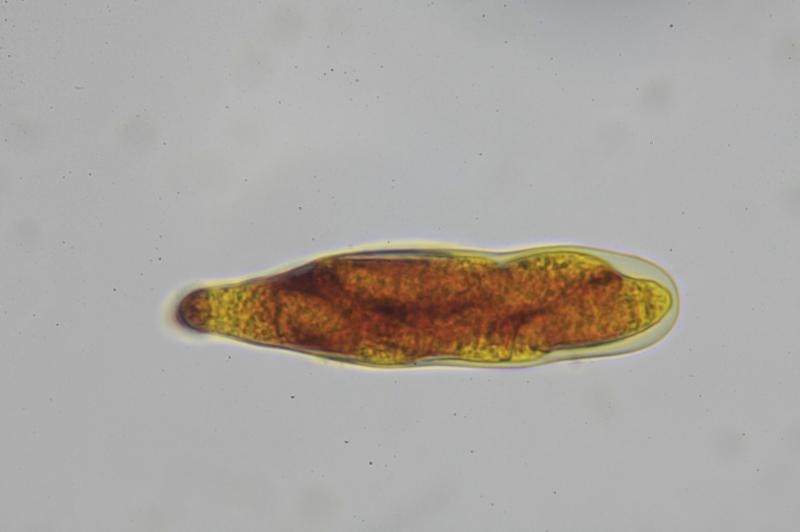
Salvador Tello,
25-04-2019 23:00
Re : Patellaciaceae
Éstas son con KOH + IKI.
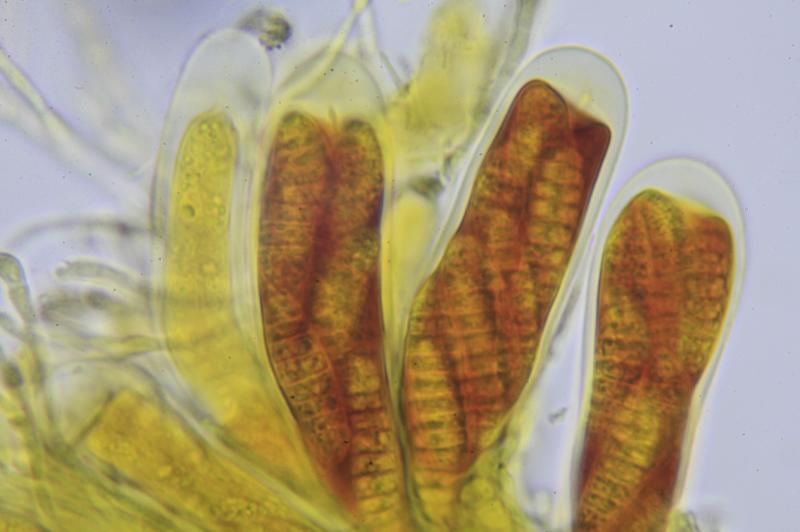
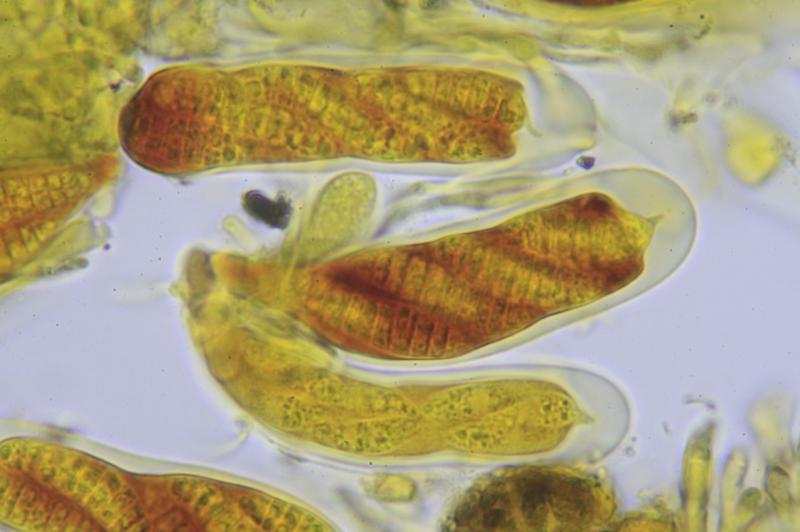
Hans-Otto Baral,
26-04-2019 09:52
Re : Patellaciaceae
Did you see the blue directly in the mic or on the photos? I see no blue. When I look at my notes on HB 6277b, i see the following:
- when I add IKI to a H2O mount of a section, a lght blue zone moves from top to base, afterwards everything is inamyloid. This means, only at a certain low iodine concentration a blue reaction is observed.
- when pretreated with KOH, I got the same result after washing with water and adding IKI.
- when I heated the KOH mount, I got after washing with water and adding IKI a light dirty blue reaction of the subhymenium but no reaction to the asci.
- when I add IKI to a H2O mount of a section, a lght blue zone moves from top to base, afterwards everything is inamyloid. This means, only at a certain low iodine concentration a blue reaction is observed.
- when pretreated with KOH, I got the same result after washing with water and adding IKI.
- when I heated the KOH mount, I got after washing with water and adding IKI a light dirty blue reaction of the subhymenium but no reaction to the asci.
Salvador Tello,
27-04-2019 13:58
Re : Patellaciaceae
No. Zotto, yo no he visto ozul.
Muchas gracias.
Muchas gracias.