
12-06-2026 14:50
 François Freléchoux
Bonjour, Voici la brève description d'une Mollis
10-06-2026 21:16
François Freléchoux
Bonsoir,Le dernier du jour, en attendant votre avi
11-06-2026 19:01
 William Slosse
Hello all,In an attempt to make a culture of a sus
11-06-2026 19:03
 Nicolas VAN VOOREN
Chers membres d'Ascofrance,Le site sera placé en

09-06-2026 18:32
Camille MertensSur morceau de roseau immergé 0,5 - 0,7 mm de dia
10-06-2026 12:54
Steve ClementsBonjour encore, Pouvez-vous m'aider, s'il vous pl
10-06-2026 21:07
François Freléchoux
Toutes les tiges de gentianes jaunes de l'an passÃ
10-06-2026 13:41
François Freléchoux
Bonjour à nouveau, Voici une trouvaille d'hier.
Durella commutata (?)
Ethan Crenson,
17-03-2019 22:26
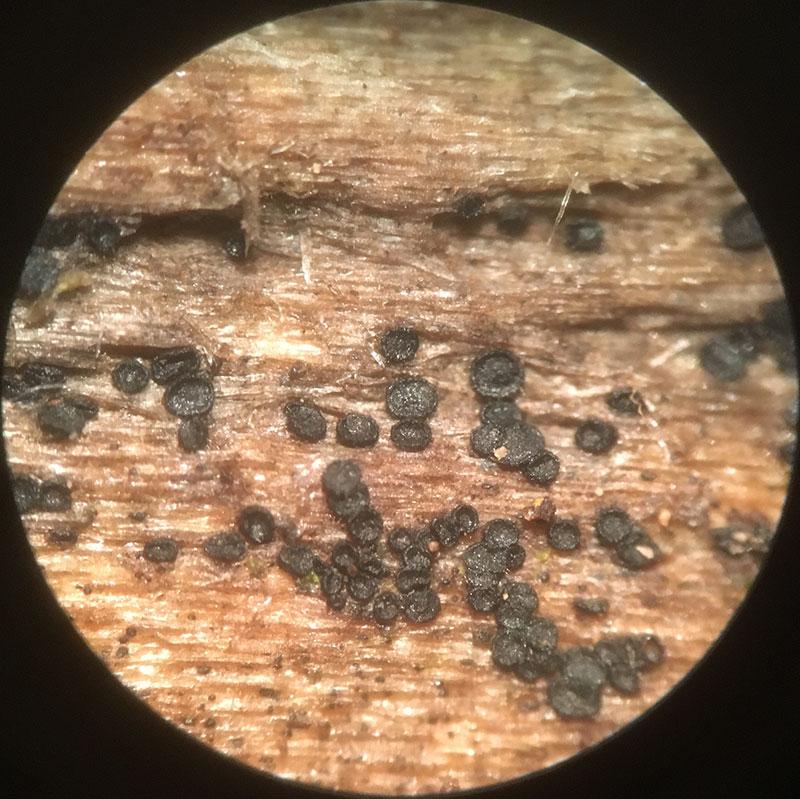
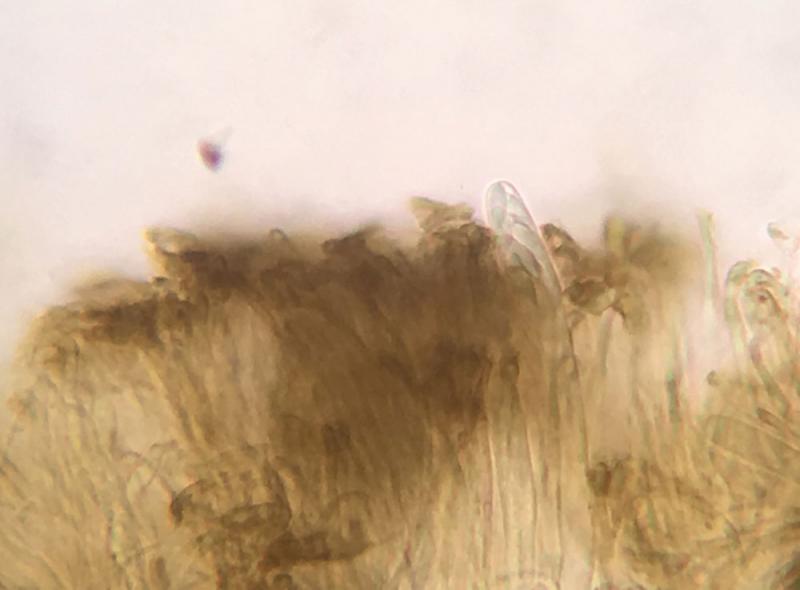
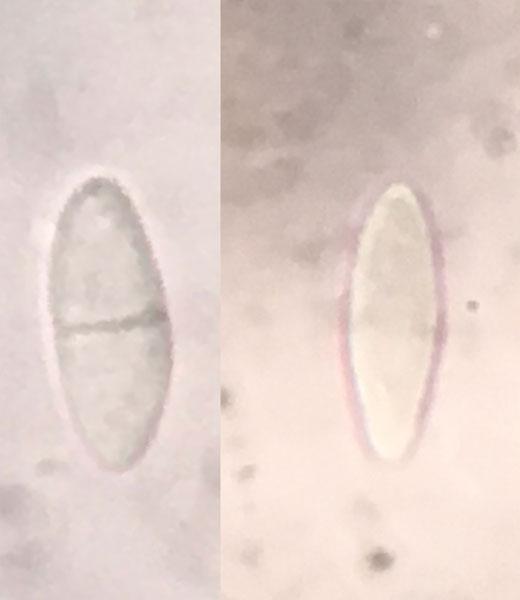
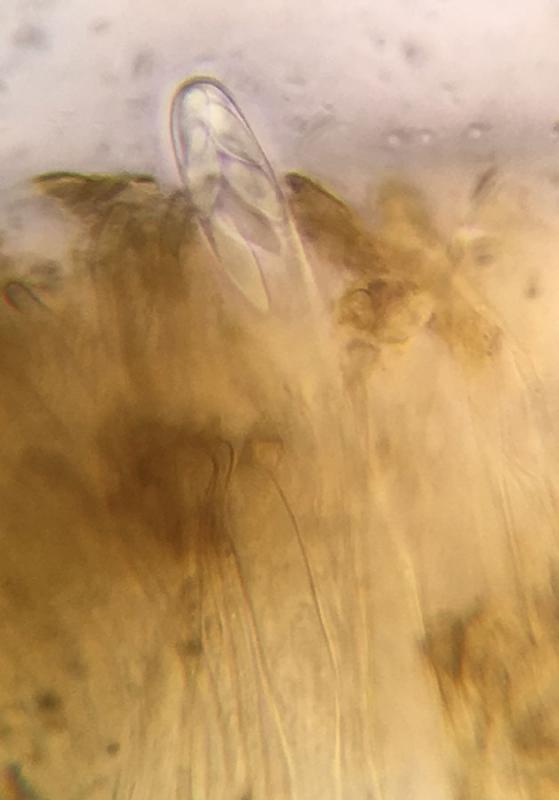
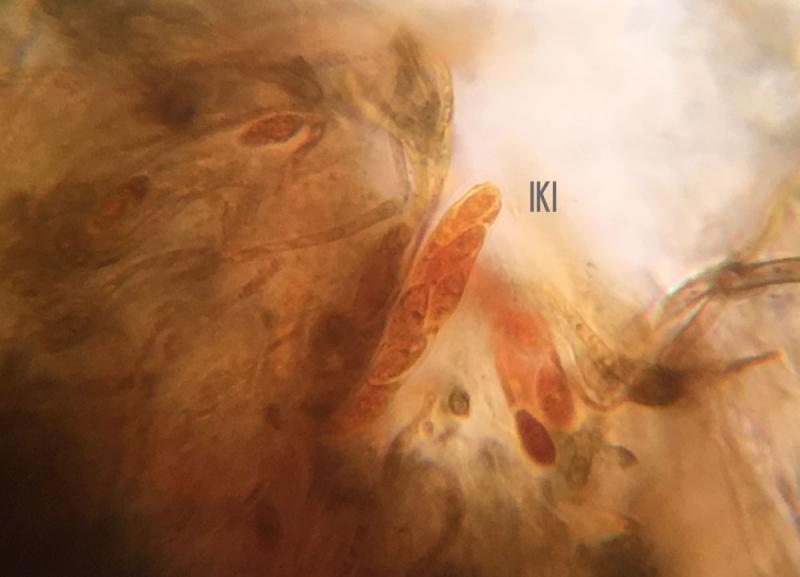
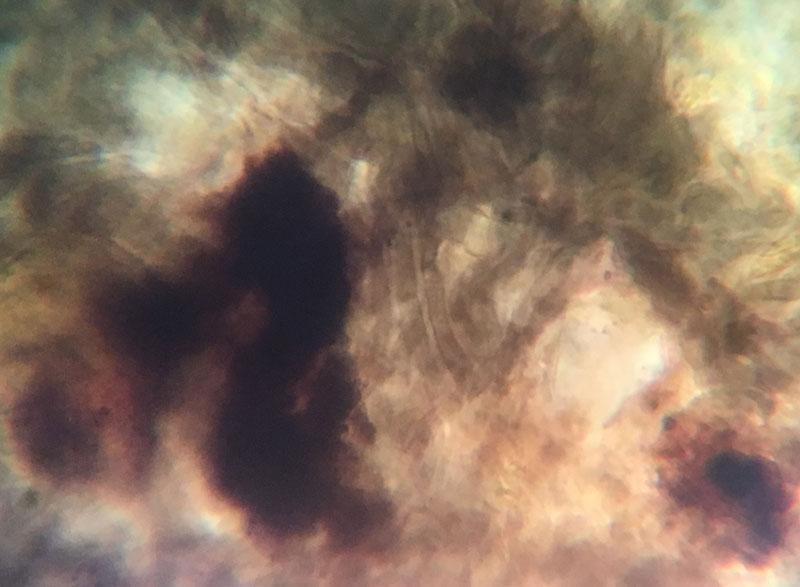
Found yesterday in New York City. Substrate is a large decorticated, fairly-well rotted branch of unknown hardwood. The cups are about .5mm in diameter and black. Asci are IKI- measuring about 75-99 x 7.5-9µm. Spores are hyaline, ellipsoid with tapering ends, mostly non-septate, but I saw one 1-septate spore. They measure (8-) 10-14 x 3.5-4.5µm. Paraphyses are surrounded by brown material, filiform with swollen tips, the tips about 3µm wide. The closest I could find is Durella commutata. But maybe this is not correct.
Thank you in advance!


Hans-Otto Baral,
18-03-2019 08:41

Re : Durella commutata (?)
I don't think it is D. commutata, the spores are too large. You should try to see living paraphyses because D. commutata has very conspicuous VBs. The excipulum is a brown porrecta?
Ethan Crenson,
18-03-2019 19:08
Re : Durella commutata (?)
I went back to try to find living paraphyses, but I encountered a problem. I must have the fruiting bodies of a very similar (macroscopically) species on the same branch. When I prepared a slide I found microscopic features resembling the Skyttea-like asco with the muriform spores from 21-10-2018
I will create a new forum topic for this new collection.