04-05-2026 16:39
 Stephen Martin Mifsud
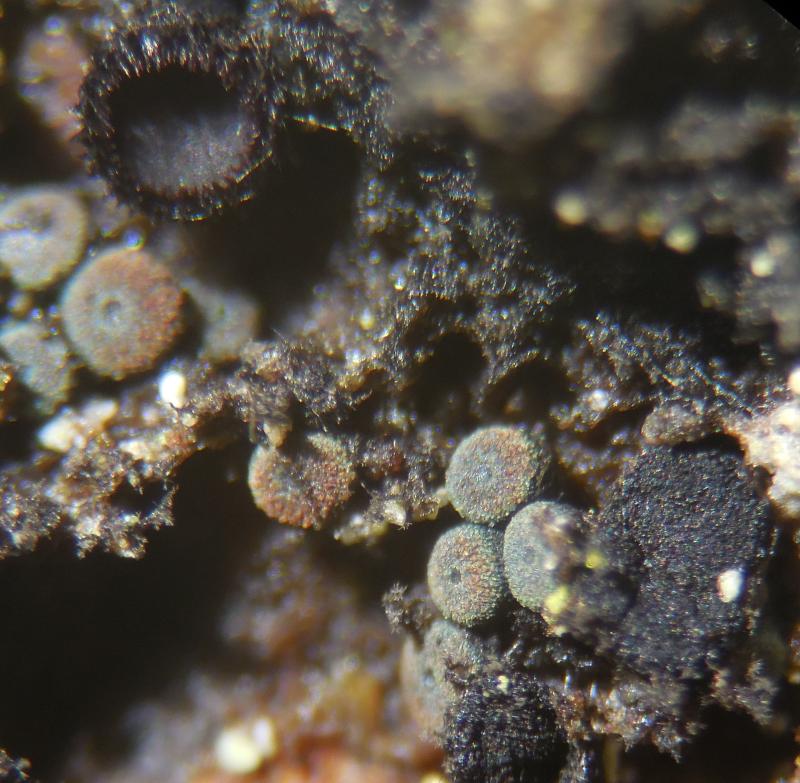
ID request: This specimen was collected in Malta o
04-05-2026 09:50
 Castillo Joseba
Me mandan el material seco de Galicia,(España) re
28-04-2026 20:07
 Lothar Krieglsteiner
... on twig in the air at standing Ceratonia siliq
02-05-2026 12:42
Alain BRISSARDBonjour à tousJeuidi 30 avril dernier on m'a remi
02-05-2026 13:06
Pauline. PennaBonjour Please can someone help me with this id
01-05-2026 22:45
 Thierry Blondelle
Bonjour à tous, Une récolte sur bouse séchée d
14-04-2026 05:32
Ethan CrensonHi all, A few weeks back a friend pointed out som
28-04-2026 20:33
Vitus SchäfftleinHello, I found Trochila ilicina on Ilex aquifoliu
pruinose pseudothecia on resin
Garrido-Benavent Isaac,
16-03-2018 12:26
I found this beautful pseudotheciate ascomycete growing on Pinus halepensis bark with resin exudates in the eastern Iberian Peninsula. Ascomata seem to correspond with pseudothecia, and the apical openning has a greenish pruina (the photos show a whitish pruina, but it is greenish!). See attached macrophotographs.
Microscopically, the most remarkable character is the presence of multispored ascii (tens of spores). Spores are rounded, small and hyaline. In fact, the microscopical characters resemble somewhat those shown by the genus Sarea, which is also resinicolous. Moreover, the unknown species has pseudoparaphyses.
Molecular data are not conclusive. The more conserved LSU marker seems to point to the Lecanoromycetes, in between of genera whose species are lichenized (Umbilicaria, Porpidia, Acarospora, etc.). But the similarity is quite low (93%). However, our unknown species does not establish these symbiotic associations. Information from the ITS is not of much help.
Any further insight from your side on the taxonomical identity of this species will be greatly appreciated.
Best wishes,
Isaac

Per Vetlesen,
16-03-2018 13:36
Re : pruinose pseudothecia on resin
Hei Isaac,
It looks like the fungus I found in Hamar, Norway 14 Sept 2017 on resin on fallen Pinus sylvestris attacked by Cronartium flaccidum or Peridermium pini.
I have no idea of what it is.
Med vennlig hilsen
Per
It looks like the fungus I found in Hamar, Norway 14 Sept 2017 on resin on fallen Pinus sylvestris attacked by Cronartium flaccidum or Peridermium pini.
I have no idea of what it is.
Med vennlig hilsen
Per


Garrido-Benavent Isaac,
16-03-2018 17:57
Re : pruinose pseudothecia on resin
Hi Per,
Yes, I think it is the same thing.
Thanks for your post! :-)
Best wishes,
Isaac
Yes, I think it is the same thing.
Thanks for your post! :-)
Best wishes,
Isaac
Stip Helleman,
19-06-2024 22:32

Re : pruinose pseudothecia on resin
dear Isaac,
another one is found in Switzerland, did your investigations go any further in the meanwhile?
Best wishes,
Stip Helleman