
09-06-2026 18:32
Camille MertensSur morceau de roseau immergé 0,5 - 0,7 mm de dia
08-06-2026 10:16
 Spooren Marco
I don`t have a clou about this fungus,it is not in
08-06-2026 17:00
François BartholomeeusenGood day everyone, On June 5 2026, I collected de
07-06-2026 15:10
 William Slosse
Hello everyone,On 05-06-26, I found following asco
05-06-2026 11:02
Thomas Læssøehttps://svampe.databasen.org/observations/10596691
07-06-2026 12:09
 François Freléchoux
Bonjour, Voici une brève description de ce qui m
07-06-2026 12:43
Steve ClementsBojour. This was a strange find on a stick on my
12-07-2015 00:05
 Nedim Jukic
This one from the same locality as the previous on
06-06-2026 17:44
Steve ClementsBonjour, This disco was on planed wood 3 x 1.5 cm
Sordariomycetes on Rosa
Bernard Declercq,
05-11-2016 14:23
 Hi,
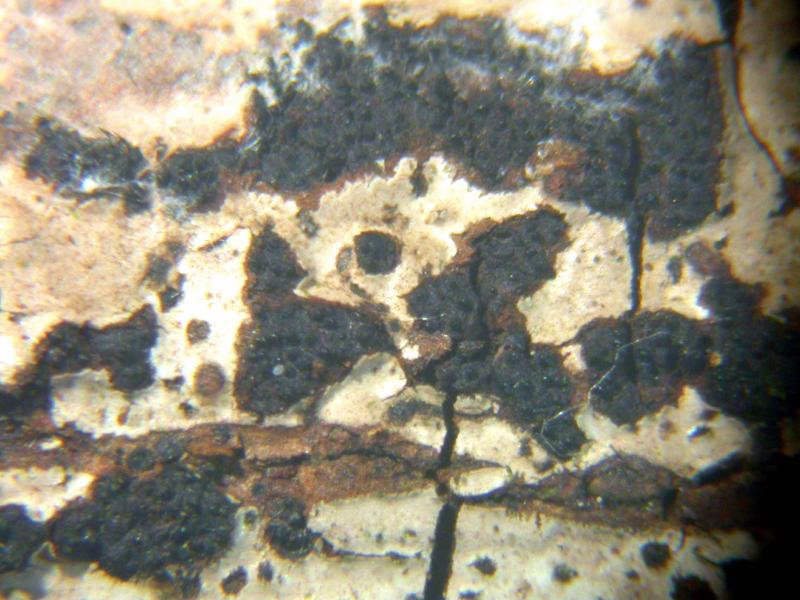
Hi, Following pyrenomycte has been collected on Rosa rubiginosa in Hemiksem, Belgium:
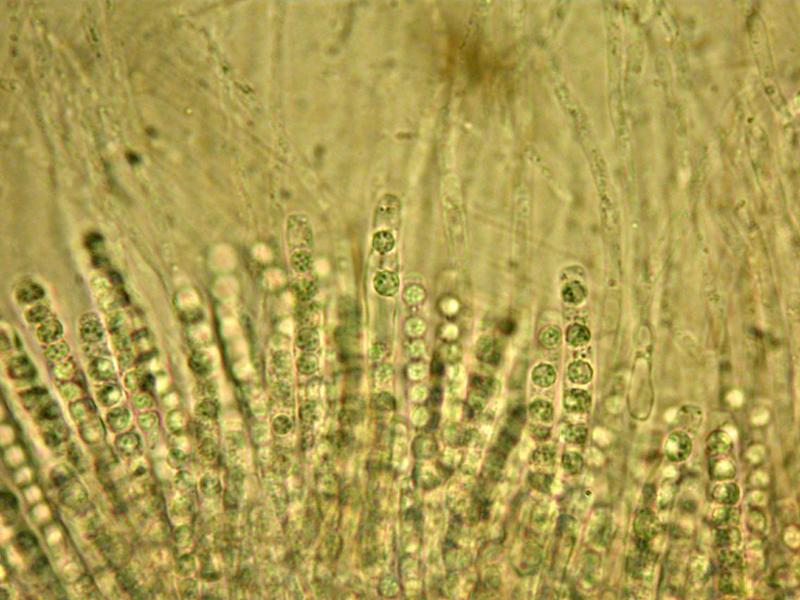
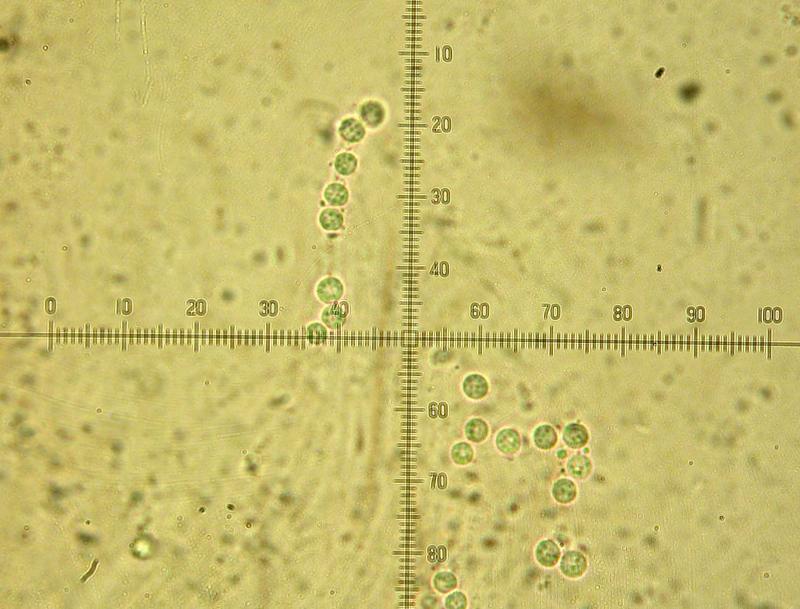
Stromata immersed in the bark, erumpent, irregular shape, up to 5 mm diam., ectostroma black, entostroma brownish, no ventral zone. Perithecia globose, about 200 µm diam., immersed in the stromata, with slightly protruding, black, conical necks 100-150 µm long. Asci cylindrical, with truncate apex and tapering stalk, uniseriately 8-spored, apical ring IKI-, 49-65x4(-4.5) µm, p.sp. 30-35 µm long. Soon free floating. Ascospores globose to subglobose, (3-)3.5-4 µm diam., filled with minute guttules, inconspicuously finely echinulate, hyaline. Paraphyses tapering, base 3-4 µm diam., more than double as long as the asci. Peridium surface composed of dark brown textura globulosa-angularis.
Any help is welcome.
Best regards,
Bernard
Gernot Friebes,
05-11-2016 14:42
Re : Sordariomycetes on Rosa
Hi Bernard,
the micromorphology reminds me of Amplistromataceae – maybe you'll find something when looking in that direction. Good luck!
Best wishes,
Gernot
the micromorphology reminds me of Amplistromataceae – maybe you'll find something when looking in that direction. Good luck!
Best wishes,
Gernot
Bernard Declercq,
05-11-2016 15:06
Re : Sordariomycetes on Rosa
Hi Gernot,
Thank you for this interesting tip. Two genera with sexual morphs and globose spores are available in proposed order: Wallrothiella, who is said to be non-stromatic, and Amplistroma with thick-walled spores. My collection is stromatic and has thin-walled spores ...
Bernard
Thank you for this interesting tip. Two genera with sexual morphs and globose spores are available in proposed order: Wallrothiella, who is said to be non-stromatic, and Amplistroma with thick-walled spores. My collection is stromatic and has thin-walled spores ...
Bernard
Gernot Friebes,
05-11-2016 15:13
Re : Sordariomycetes on Rosa
Hi Bernard,
there's also the monotypic genus Woswasia which shows some similarities... See here: http://www.mycologia.org/content/105/2/476.full.pdf (further genera with globose ascospores that might be worth looking into are also mentioned in this paper).
Best wishes,
Gernot
there's also the monotypic genus Woswasia which shows some similarities... See here: http://www.mycologia.org/content/105/2/476.full.pdf (further genera with globose ascospores that might be worth looking into are also mentioned in this paper).
Best wishes,
Gernot
Bernard Declercq,
05-11-2016 15:43
Re : Sordariomycetes on Rosa
Hi Gernot,
I just came to the same conclusion. But your were faster than me. I apparently collected Woswasia atropurpurea, most probably hypersaprophytic on Diaporthe sp. Indeed, I have observed old pustulate Diaporthe forming ventral zones in the wood.
Anyhow, I appreciate your help. Such suggestions are always very welcome when you have to do with recently described species.
Bernard
I just came to the same conclusion. But your were faster than me. I apparently collected Woswasia atropurpurea, most probably hypersaprophytic on Diaporthe sp. Indeed, I have observed old pustulate Diaporthe forming ventral zones in the wood.
Anyhow, I appreciate your help. Such suggestions are always very welcome when you have to do with recently described species.
Bernard
Gernot Friebes,
05-11-2016 16:03
Re : Sordariomycetes on Rosa
Nice find. Just curious, did you observe any reddish colours of the stromata/perithecia? A few years ago we found what was likely the second collection of W. atropurpurea worldwide and in that material the red colours were only partially present and rather inconspicuous.
Also interesting to note that the type and our collection grew on Robinia pseudoacacia with Diaporthe oncostoma so your collection would be on a new host. Some photos of our collection can be found in this article: http://tinyurl.com/hy2647m
EDIT: I linked the wrong article, sorry about that! It's fixed now.
Best wishes,
Gernot
Also interesting to note that the type and our collection grew on Robinia pseudoacacia with Diaporthe oncostoma so your collection would be on a new host. Some photos of our collection can be found in this article: http://tinyurl.com/hy2647m
EDIT: I linked the wrong article, sorry about that! It's fixed now.
Best wishes,
Gernot