
14-04-2026 21:52
Gernot FriebesHi,found on dead leaves of Carex elata. Conidia: 4
14-04-2026 20:31
Gernot FriebesHi,can this be Psilachnum lateritioalbum on Phragm
14-04-2026 05:32
Ethan CrensonHi all, A few weeks back a friend pointed out som
12-04-2026 17:56
 Hardware Tony
Found on dead stems in February earlier this year
12-04-2026 15:52
Gernot FriebesHi,I'm looking for help with this anamorph collect
12-04-2026 12:22
 William Slosse
In a dune grassland in Oostduinkerke (Belgium), on
11-04-2026 15:45
 Zuzana Sochorová (Egertová)
Please, could anyone send me this paper?Moyne G.,
11-04-2026 13:34
Artem PtukhaHello, I am seeking assistance with the identific

11-04-2026 10:19
 Michel Hairaud
Chers amis d'Ascofrance , voici une très bonne no
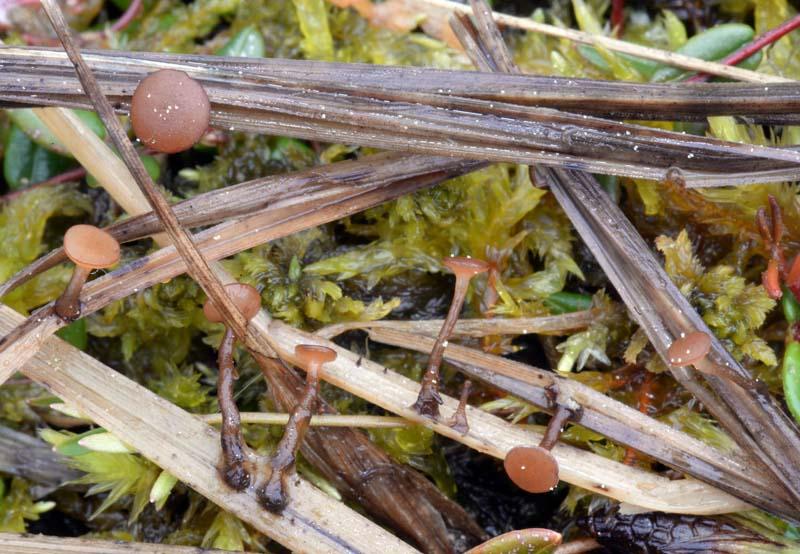
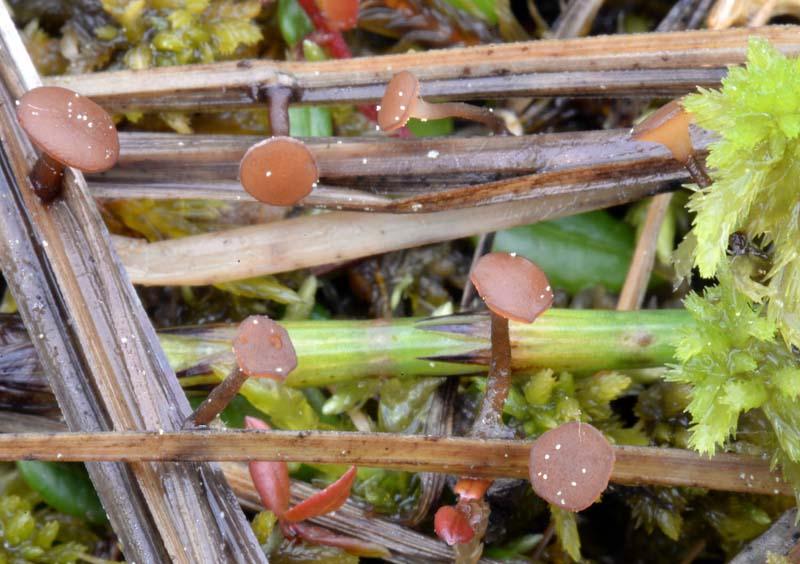
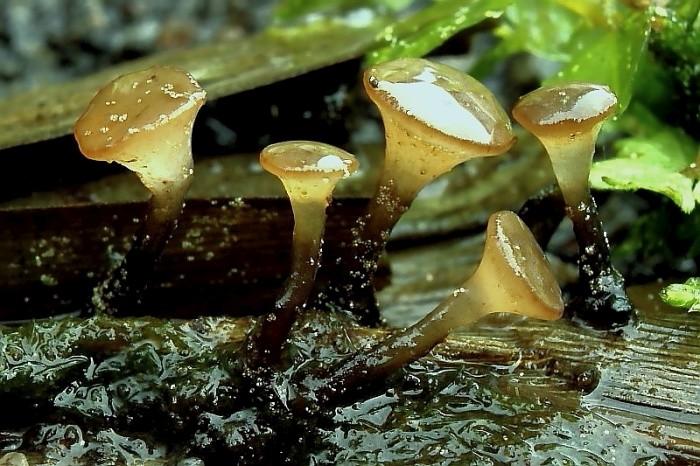
This is an asco I have found in humid place, on a not identified Monocotyledon stem.
Cup near 1 to 3 mm. stalk till 10mm more dark in the base.
No sclerot.
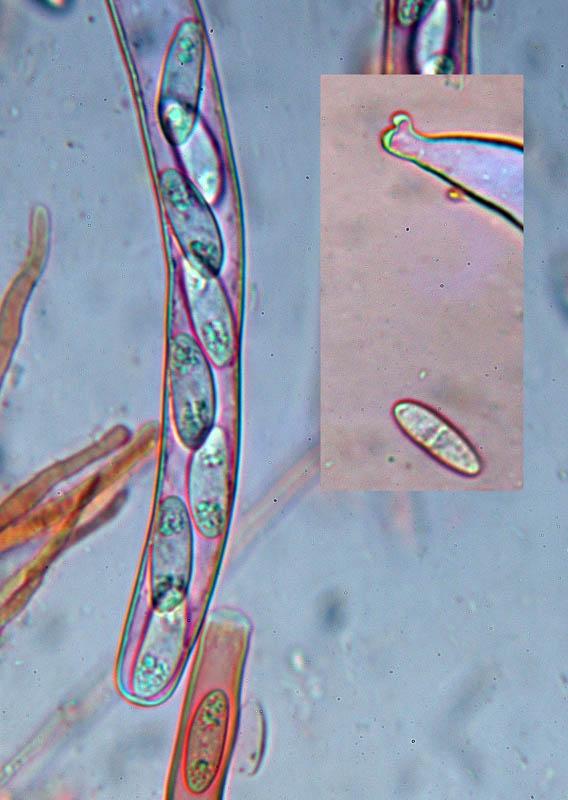
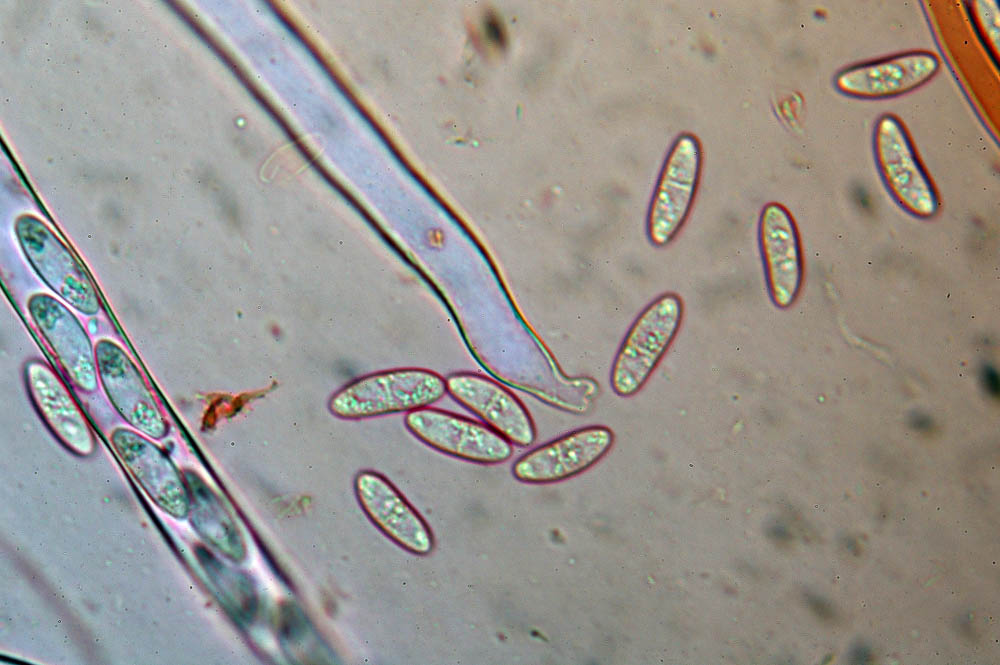
Spores 16-20 x 6 µm, septed when mature,with a lot of small guttules mostly near te extremities.
Parapyses slender (X2 µm) bulging and lightly corved at apex.
I don't arrive to name it...
Thank you for your help

 Rutstroemia-micro-2--0001.jpg
The difference lies in the ascus base: R. paludosa without croziers, calopus with.
Your ascus base looks like croziers but I am quite convinced this is simple-septate, and it is only a basal protuberance. To clarify this requires asci that are connected to their basal cells.

in my opinion is this Rutstroemia paludosa, in our region not uncommon on wet places with Carex, Scirpus...
Greetings Peter.
Bonjour Jean Marc,
A première vue j'aurais dit R. paludosa dont la base était peut être dans l'eau pour que le stipe soit aussi élancé. L'environnement est propice, la taille des spores conviendrait .
Les spores septées me semnlent plutôt overmature et dans celles restées dans les asques, on devrait normalement voir une bi-guttulation , c'est peut être aussi en raison de la maturité avancée que les spores ont cet aspect ?
Je te joins 2 images , macro et spores d une récolte en ttourbière d'Auvergne pour t'expliquer mes hésitations
Amitiés Michel
EN découvrant les réponses arrivées avant la mienne, et notamment celle de Zotto, j'avais bien noté pour cette récolte l'absence decrochets à la base des asques.
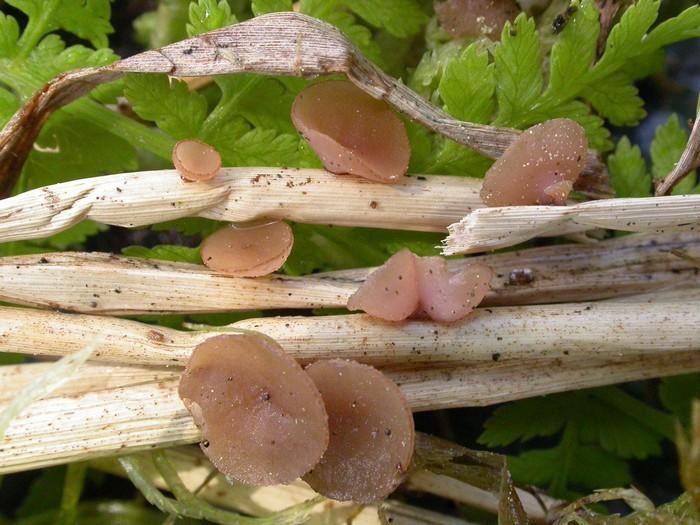
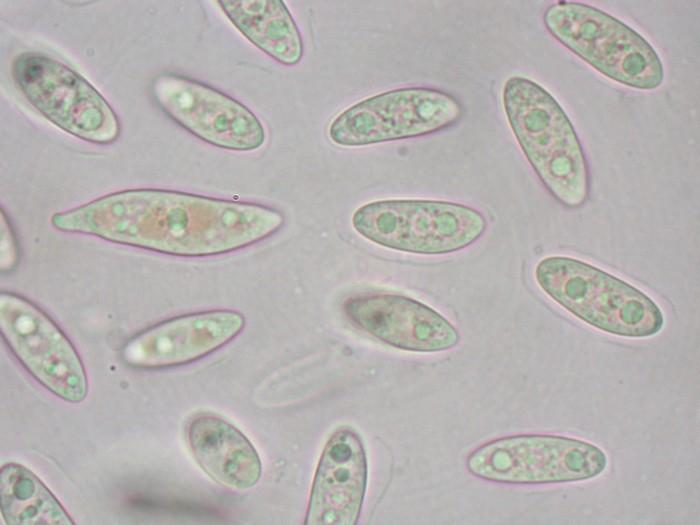
Greetings Peter.
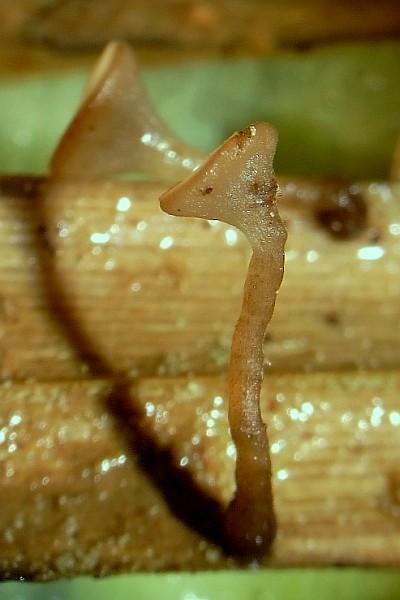
Je vais vérifier l'absence de crochets sur des asques encore fixés.
Effectivement, le niveau de l'eau est haut et on a parfois l'impression que seule la cupule flotte au dessus de l'eau ! Ce qui doit expliquer ce stipe allongé.
Il y a bien des Cyperaceae à cet endroit.
Jean-Marc
Thanks everybody,
I'll verify there are no croziers on the asques.
Of course there were a lot of water (The weather is a bit rainny here....) some cups seems to float on the surface of the water! It's what the stipe is so long.
Effectively there are some Cyperaceae on this place.
Jean-Marc