
27-04-2026 18:48
Tony MoverleyCollected 23rd April 2026, Norfolk, EnglandSwarms
27-04-2026 20:52
 Lothar Krieglsteiner
Found on hanging tiwg of Olea europaea in dried-ou
28-04-2026 22:51
 Bernard CLESSE
Bonsoir à toutes et tous,Pourriez-vous m'aider à
29-04-2026 08:01
Lothar Krieglsteiner
... on twig attached to small tree of Citrus auran
29-04-2026 10:44
Lothar Krieglsteiner
growing at moist, drying-out soil at the side of a
28-04-2026 20:33
Vitus SchäfftleinHello, I found Trochila ilicina on Ilex aquifoliu

28-04-2026 21:50
 Pablo Sandoval
Hola a todos,Espero se encuentren bien. Hace mucho
27-04-2026 18:05
Lothar Krieglsteiner
... still attached at standing tree. The green con
28-04-2026 20:07
Lothar Krieglsteiner
... on twig in the air at standing Ceratonia siliq
I collected this fungus on bark of living Pinus sylvestris – ascospores measure about 25–27 x 10.5–11 µm and become 3-septate when overmature. Most other characters should be shown on the photos but if not I will check the material again, of course. I'd appreciate any ideas!
Best wishes,
Gernot
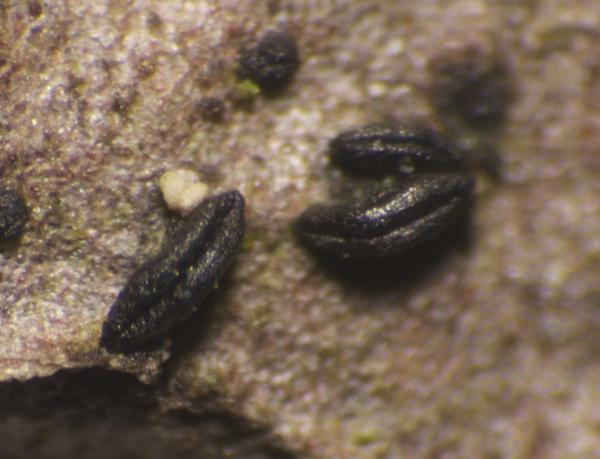

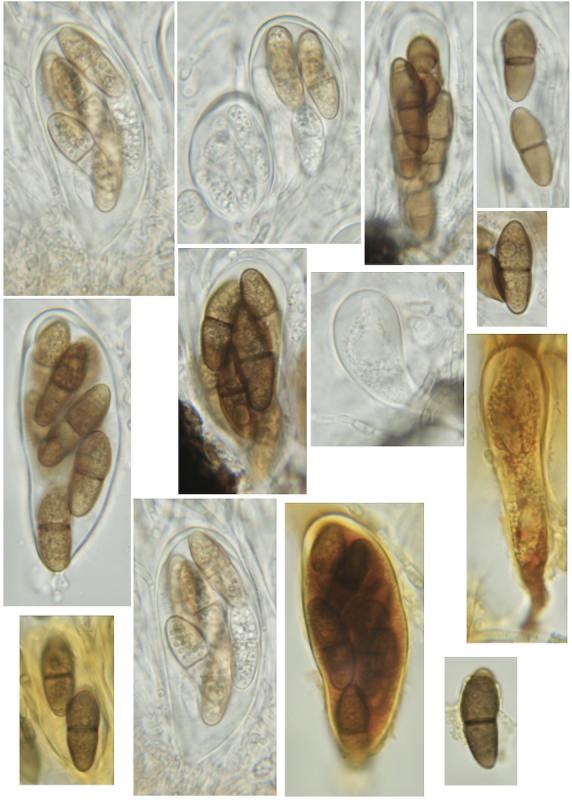
Hysterium could be an option, e.g. H. cf. pulicare (3 septate ascospores).
Ernestas
thanks, but I would exclude H. pulicare due to different morphology of ascospores and asci. Other Hysterium species don't really seem to fit either (checking the website by Eric Boehm).
Best wishes,
Gernot

Hi Gernot,
Of course you have seen that anything fits within Hysteriales. It's a very interesting fungus.
But have you looked towards Hysteropatella ? How are ascomatas when they are moist?
Alain
after rehydrating the ascomata properly they do indeed open similarly to Hysteropatella so I think that's a good direction. Maybe someone knows a Hysteropatella with similar ascospores?
Best wishes,
Gernot
I don't know this genus, but perhaps you will go to the solution with the paper : http://www.mycosphere.org/pdf/Mycosphere_6_3_7.pdf
Alain
Best wishes,
Gernot
I am very interested in this fungus!
3 times I have collected an asco on bark Pines sylvestris which might be the same as this one. So far I have called it cf Poetschia cratincola. It do not fit the original description of Karschia cratincola very well, so even the genus may be wrong?
Ascospores: (25,0) 28,1 – 29,8 (32,5) x (9,1) 9,5 -10,8 (12,4) µm
Asci: (4?) 8-spored, (53) 58.4 - 77.8 (85.4) × (20.6) 22.4 - 31.1 (31.4) µm
Best wishes,
Per
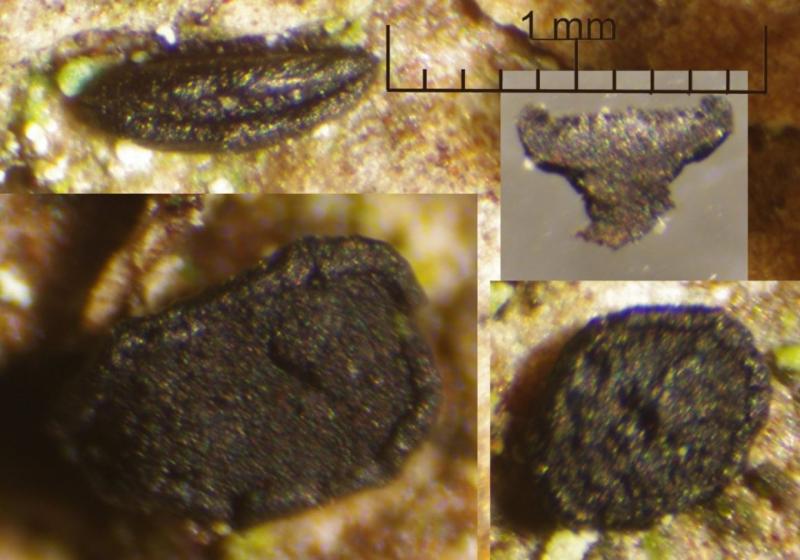
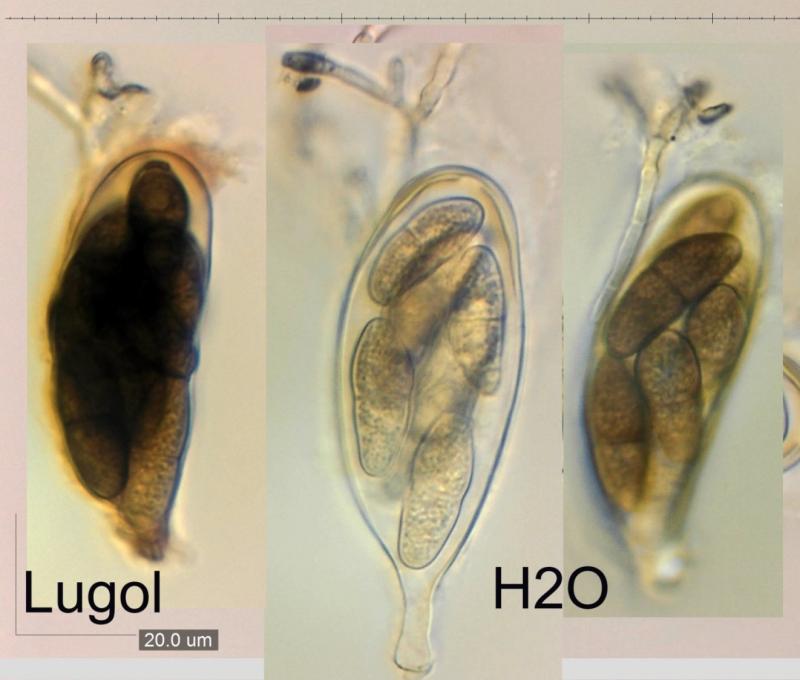
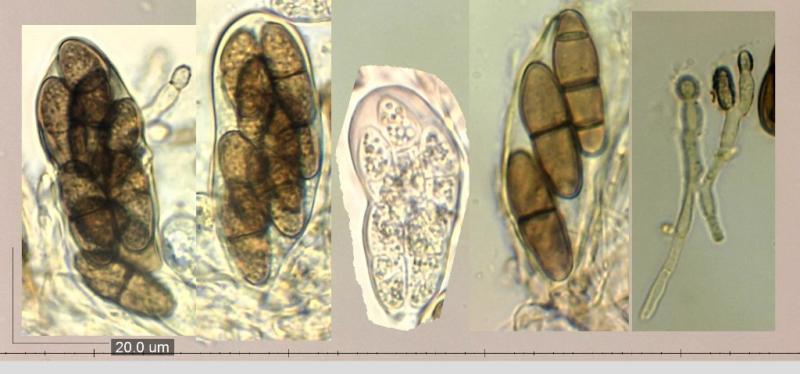
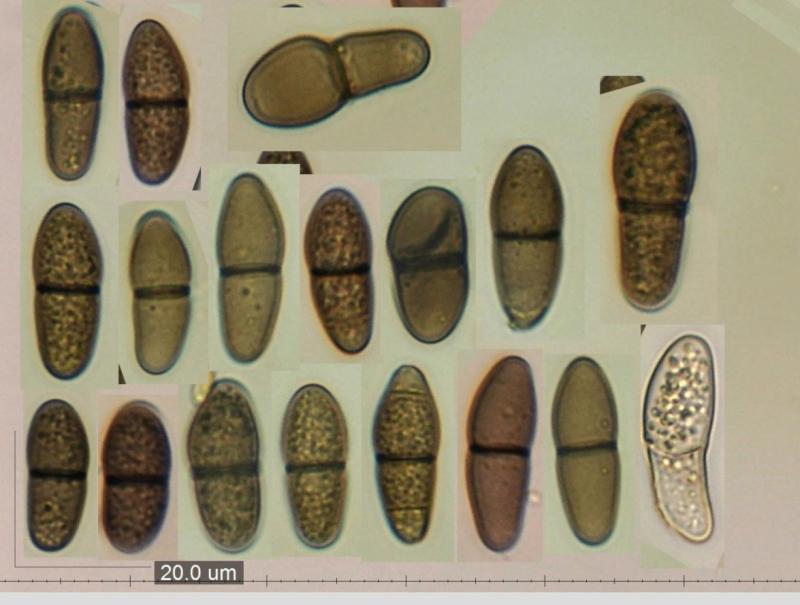
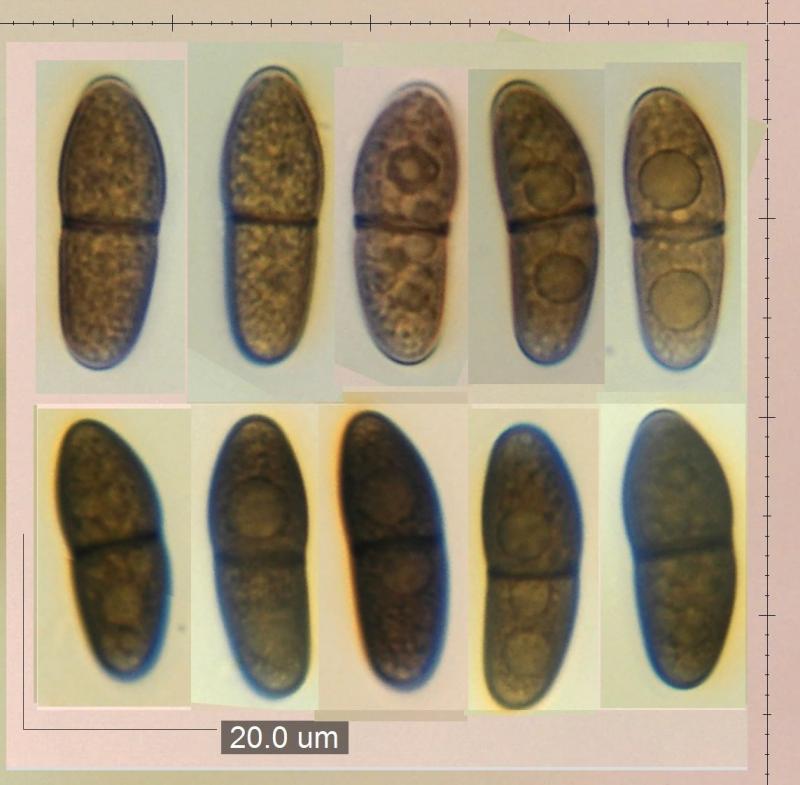

I guess the fungi posted here belong to Poetschia. I have found a similar species on bark of Pinus with globose asci (P. buellioides) and Minutisphaera japonica (freshwater habitat).
Did you read Kutorga & Hawksworth 1997?
regards,
björn


Best wishes,
Gernot
No, I do not have Kutorga & Hawksworth 1997, is it on the internet?
I've read a key on MycokeyDK: Diverse småfamilier (Ascocorticiaceae, Gelatinodiscaceae, Patellariaceae, Odontotremaceae, Ostropaceae, Triblidiaceae and unplaced genera) http://www.mycokey.com/MycokeyDK/DKkeysPDFs/DiverseSkiver.pdf The desription of Poetschia buellioides there fit quite well, but it supposed to grow on broadleaved trees? P. cratincola is fund on broadleaves trees and conifers but have bigger spores.
I think it is very similar to your photos, Björn, of P. buellioides, The shape of the asci may depend on how hard you press the glass on the slide? Here is another picture of an asci.
Is it P. buellioides?
Best wishes,
Per
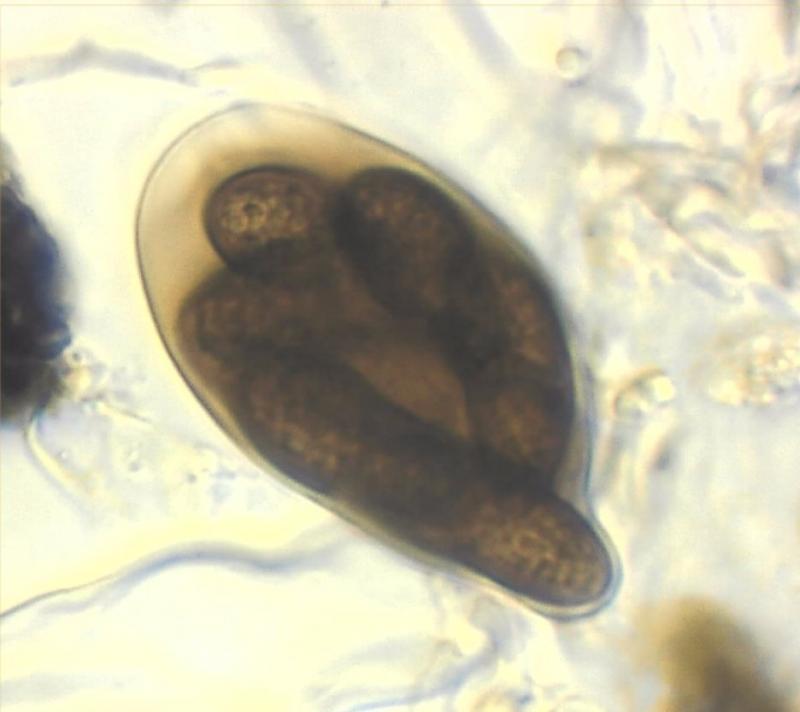
Gernot,
Have you observed young asci in Meltzer's reagent ?
Alain
PS : Minutisphaera is different.
The ascospores of P. buellioides should have germ pores – I would have to check that again in my material. The ends of the ascospores of my collection are a bit lighter but I'm not sure if that's due to germ pores.
Alain, I only used Lugol, do you expect any different reaction in Melzer's?
Best wishes,
Gernot
Hi Gernot,
My question refers to the tholus Melzer + of young asci seen in the paper of Mycosphere.
About the pore, you can use chloral-lactophenol to detect them better.
Best wishes,
Alain
thank you very much so fare for help and links.
There is no blue reaction with either Lugol or Melzers. KOH + Lugol blue reaction is also emphasized by Kutorga & Hawksworth 1997, and then I think we can exclude P. buellioides.
I have not observed any germ pores, but as you write, Gernot, the spores are lighter in the ends. I do not have chloral-lactophenol. Today I observed that some of the spores look like they are germinating.
Best wishes,
Per
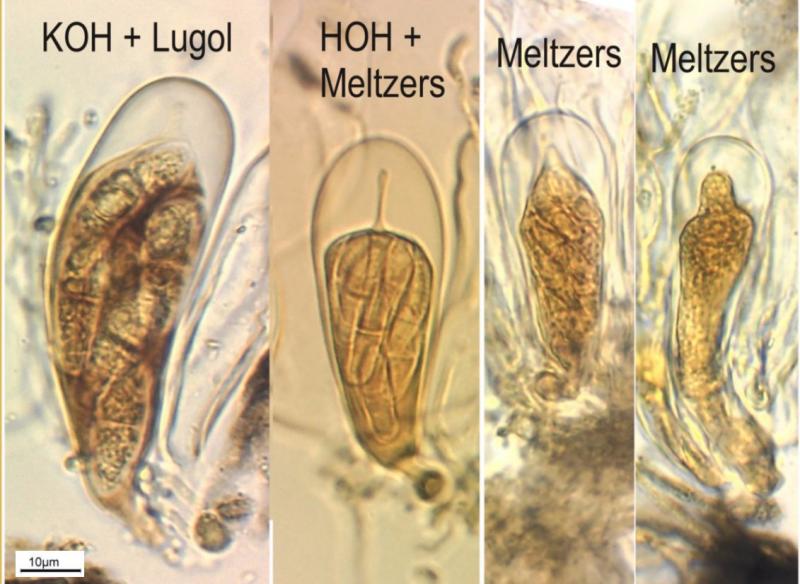


I've made the same observation as Per – no blue reaction in Melzer's reagent...
Best wishes,
Gernot
This fungus must be quite common in my district in Hedmark, Norway. Yesterday I collected some pieces of bark from a Pinus sylvestris near my home and there it was again! I have not studied Pinus-bark in particular, only some few bark pieces from 6 trees and this asco was found on 4 of them!
Best wishes,
Per
I just collected... on Pinus sylvestris, too.
Best wishes,
Alain
Best wishes,
Gernot
Nice fungus definitively.
Voici 3 séquences du petit bijou:
MW045914
MZ206326
MZ411677
Joyeuses fêtes,
Guy