

05-05-2026 22:40
Gernot FriebesHi,I believe this is a Plagiostoma growing on a Sa
06-05-2026 11:25
 Castillo Joseba
Me mandan el material seco de Galicia (España) re
06-05-2026 17:23
Thomas Læssøehttps://svampe.databasen.org/observations/10594257
28-04-2026 20:07
 Lothar Krieglsteiner
... on twig in the air at standing Ceratonia siliq
04-05-2026 18:13
 Stephen Martin Mifsud
ID request for what seems to be a true aquatic fun
04-05-2026 16:39
Stephen Martin Mifsud
ID request: This specimen was collected in Malta o
28-07-2011 18:31
 Alex Akulov
Dear FriendsToday I made the pdf file of Velenovsk
04-05-2026 09:50
Castillo Joseba
Me mandan el material seco de Galicia,(España) re
I found it n a dead log of Corylus avellana in Stange, Norway.
No reaction observed with KOH + Lugol
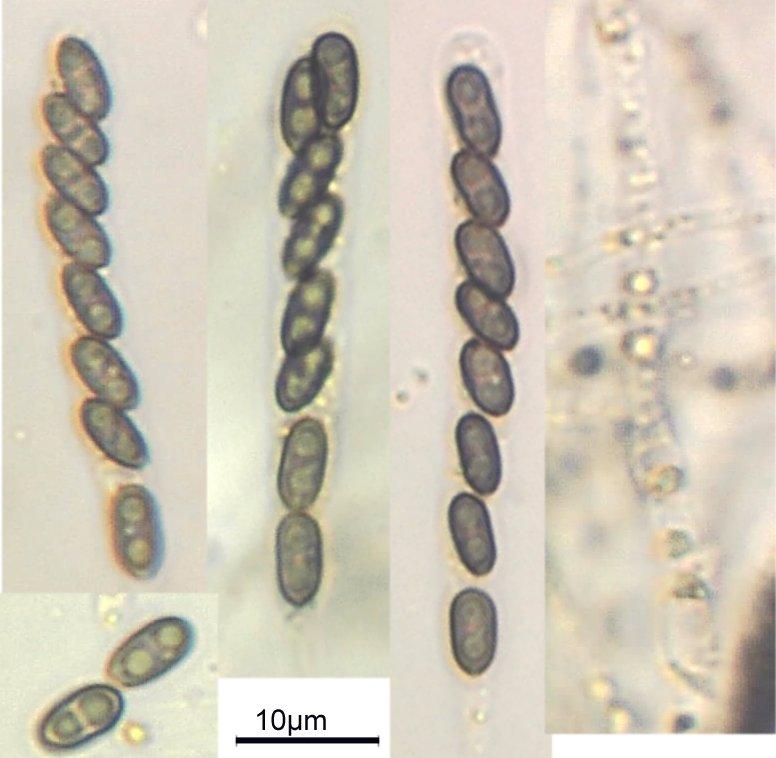
Asci: (40) 40.6 - 45.8 (50.5) x (4.3) 4.6 - 6.1 µm. Q = (6.6) 7.1 - 10.4 (10.5) ; N = 12. Me = 44 x 5.2 µm ; Qe = 8.6
Ascispores: (5.6) 5.7 - 6.9 (8.2) x (2.4) 2.7 - 3.5 (3.6) µm. Q = (1.8) 1.9 - 2.3 (2.6) ; N = 22. Me = 6.3 x 3 µm ; Qe = 2.1
Thanks in advance for any help.
Hilsen
Per
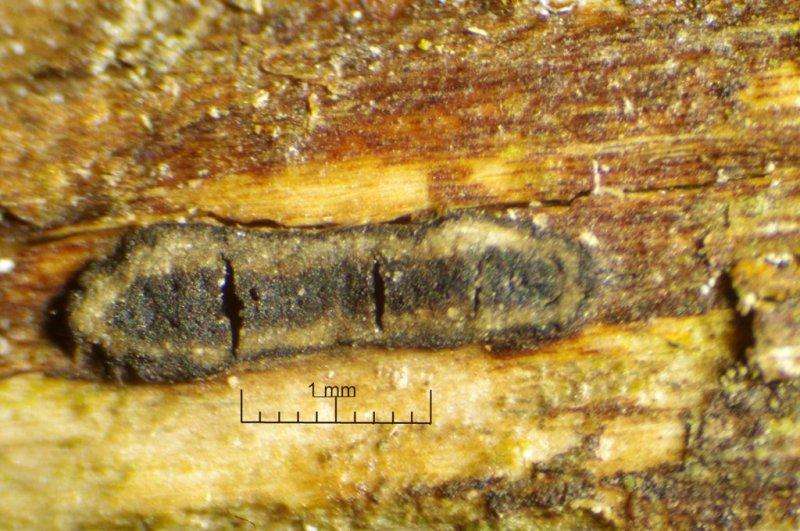
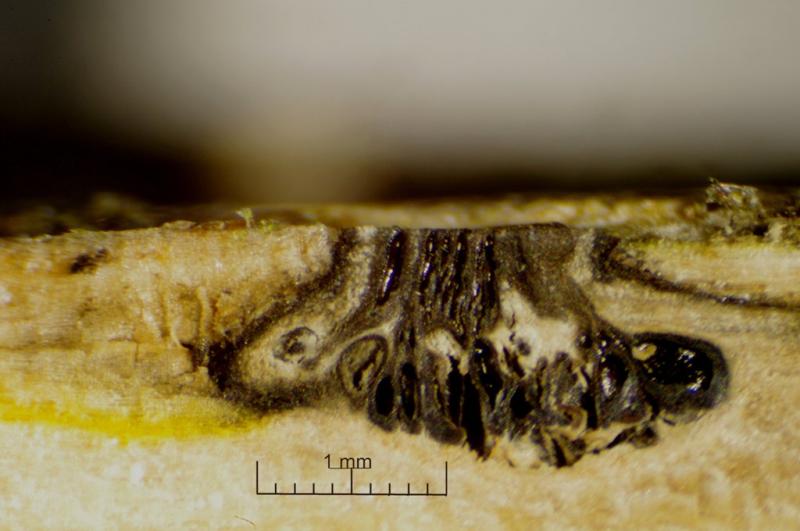
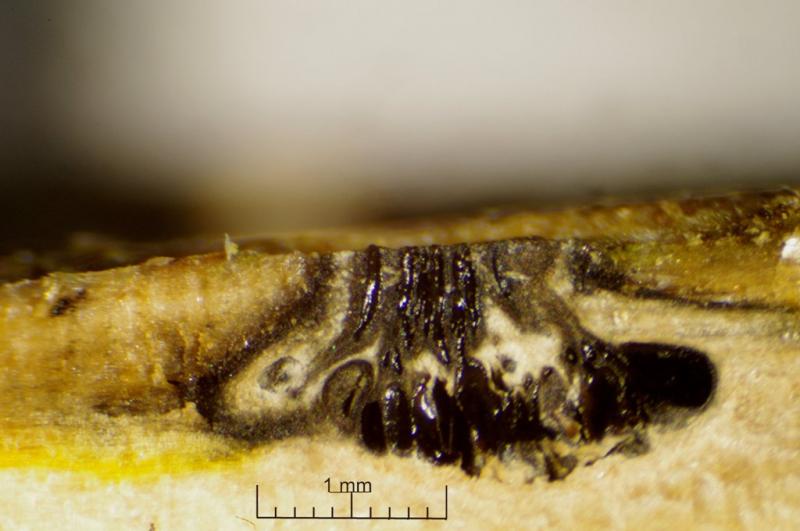

very nice, this is a Boliniaceae. Perhaps it is possible to send this one to me? I could add it to my actual work.
regards
björn

The yellow staining of the substrate is typical for Camaropella lutea.
This species is rather common here in Belgium, always on thick branches (> 5 cm) of all kind of trees, but probably overlooked elsewhere.
Regards,
Bernard
Yes, the stem is about 5 cm I diameter. Camaropella lutea is not registered in the Norwegian database before.
I will be happy to send it to you, Björn . You can send your address on my e-mail.
Regards
Per
cheers
Hi together,
I found it only once by now (but this does not mean too much as I am not a specialist of Pyrenomycetes).
@Björn: it was in Hornberg (Black Forest, Germany), when I was giving seminar there, at an Alnus-log.
Regards from Lothar