
28-04-2026 20:07
 Lothar Krieglsteiner
... on twig in the air at standing Ceratonia siliq
04-05-2026 18:13
 Stephen Martin Mifsud
ID request for what seems to be a true aquatic fun
04-05-2026 16:39
Stephen Martin Mifsud
ID request: This specimen was collected in Malta o
04-05-2026 09:50
 Castillo Joseba
Me mandan el material seco de Galicia,(España) re
02-05-2026 12:42
Alain BRISSARDBonjour à tousJeuidi 30 avril dernier on m'a remi
02-05-2026 13:06
Pauline. PennaBonjour Please can someone help me with this id
01-05-2026 22:45
 Thierry Blondelle
Bonjour à tous, Une récolte sur bouse séchée d
14-04-2026 05:32
Ethan CrensonHi all, A few weeks back a friend pointed out som
28-04-2026 20:33
Vitus SchäfftleinHello, I found Trochila ilicina on Ilex aquifoliu
Hyaloscypha sp?
François Valade,
23-01-2016 19:05
 hello
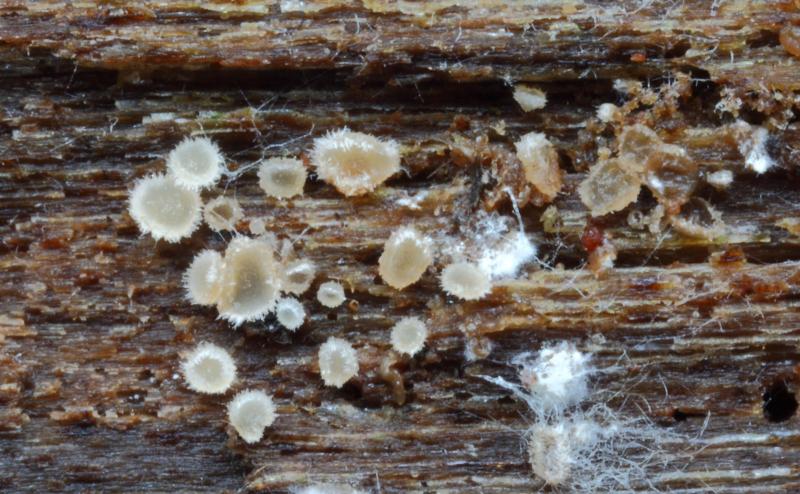
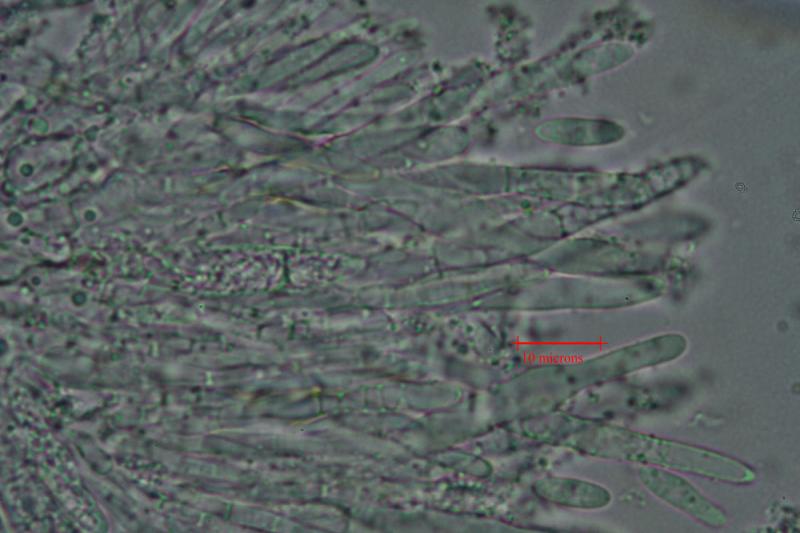
helloThis species have been collected on hardwod by René Chalange. He gave me it for identification but I am not sure about the genus.
Apothecia are small, about 1 mm.
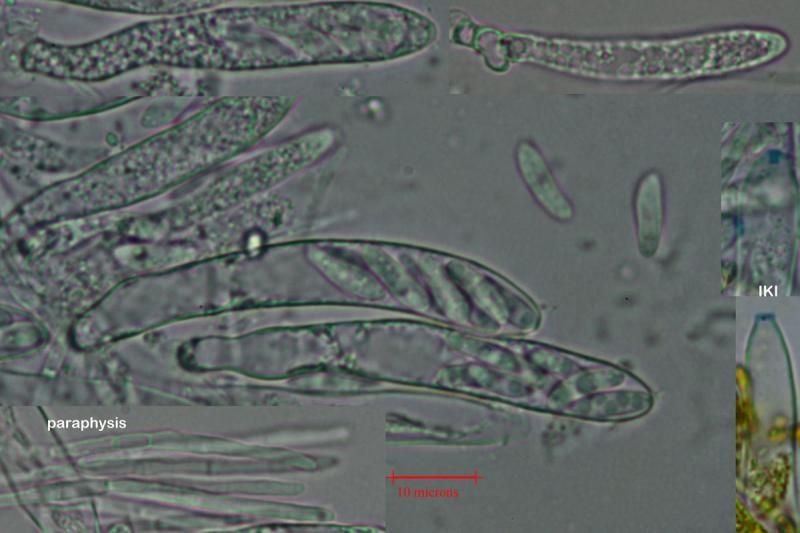
asci with croziers, up to 60x7-8µm, blue in lugol
paraphysis thin and straight
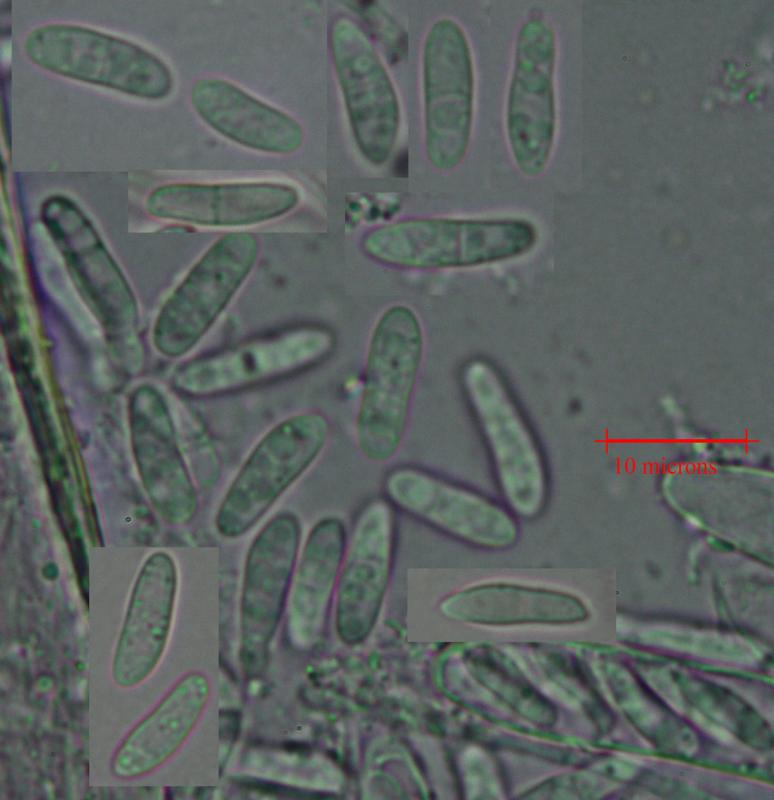
spores with 1 septum, (N=10) (9,68)10,64(12,56) x (3,01)-3,45-(3,69) µm
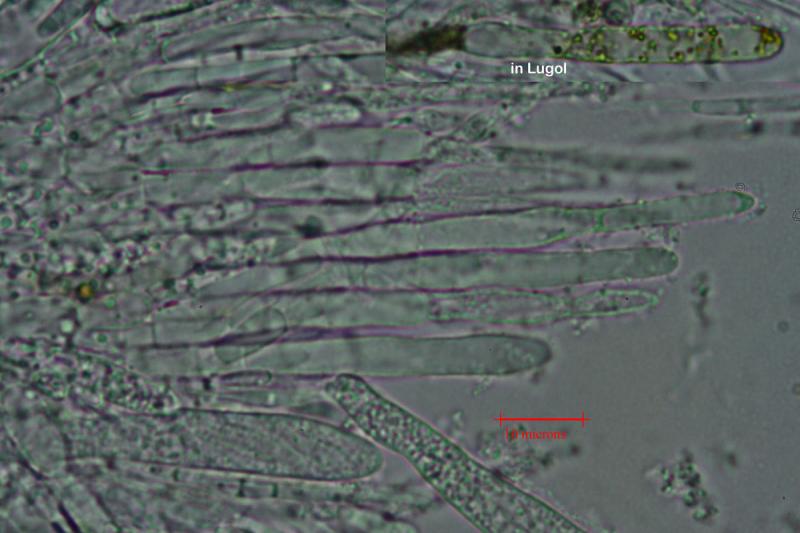
hairs up to 80 µm long, tip rounded, with a faint glassy content, disappearance in KOH is not evident, but I think it does, with a few incrustations
If somebody have an idea, it will be wellcome.
thank you
cheers
François
Hans-Otto Baral,
23-01-2016 20:17

Re : Hyaloscypha sp?
Hi Francois
if you could find hairs with a longer glassy tip (I see one with a short) I would say Protounguicularia (Olla) transiens. Then the asci should have protuberances but not croziers.
But the spores are too large for this species.
if you could find hairs with a longer glassy tip (I see one with a short) I would say Protounguicularia (Olla) transiens. Then the asci should have protuberances but not croziers.
But the spores are too large for this species.
François Valade,
24-01-2016 09:15
Re : Hyaloscypha sp?
Hello Zotto
I was looking for such glassy tips, because the collector thought it could be Arachnopeziza monoseptata (well described by Galan and Raitviir), but I did not.
For the moment I have no idea. I does not matter.
thank you for your answer.
cheers
François
I was looking for such glassy tips, because the collector thought it could be Arachnopeziza monoseptata (well described by Galan and Raitviir), but I did not.
For the moment I have no idea. I does not matter.
thank you for your answer.
cheers
François