
16-03-2011 14:31
roman vargas albertoHi. I would like some opinion about this Peziza
14-05-2026 05:36
Ethan CrensonHi all, I haven't paid much attention to Lachnu
10-05-2026 23:17
 Andreas Gminder
Hello,today we found in a moist steep decidous for
11-05-2026 12:32
 Bernard CLESSE
Pourriez-vous m'aider à identifier cette héloti
13-05-2026 15:26
 François Freléchoux
Bonjour,Voici une récolte faite il y a quelques j
12-05-2026 15:41
 Nicolas VAN VOOREN
Dear Ascolovers, especially interested in Pezizale
13-05-2026 12:05
 Thierry Blondelle
Bonjour à tous,J'aimerais avoir confirmation de c
28-04-2026 20:07
 Lothar Krieglsteiner
... on twig in the air at standing Ceratonia siliq
27-04-2026 20:52
Lothar Krieglsteiner
Found on hanging tiwg of Olea europaea in dried-ou
11-05-2026 20:22
Lothar Krieglsteiner
on attached twig of standing Ficus caricaquite uns
Eutypella question
Chris Yeates,
23-12-2014 20:05
 Bonsoir tous
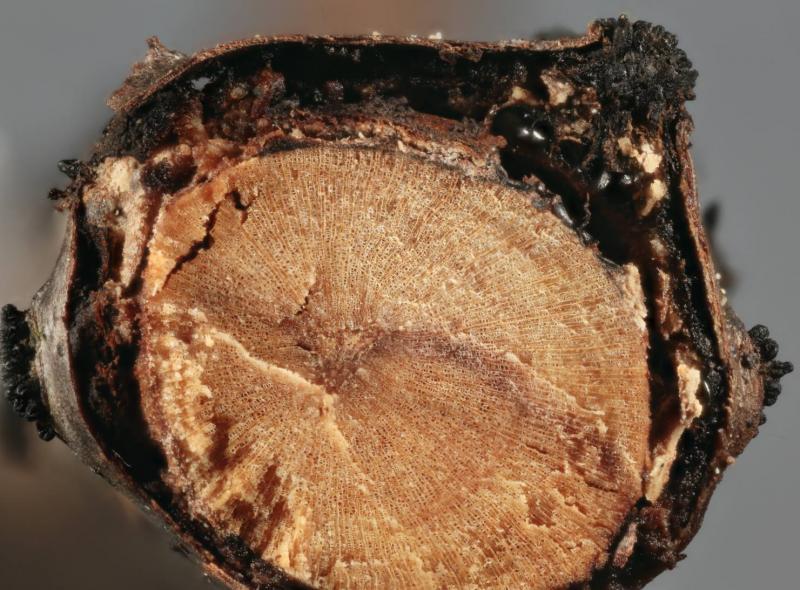
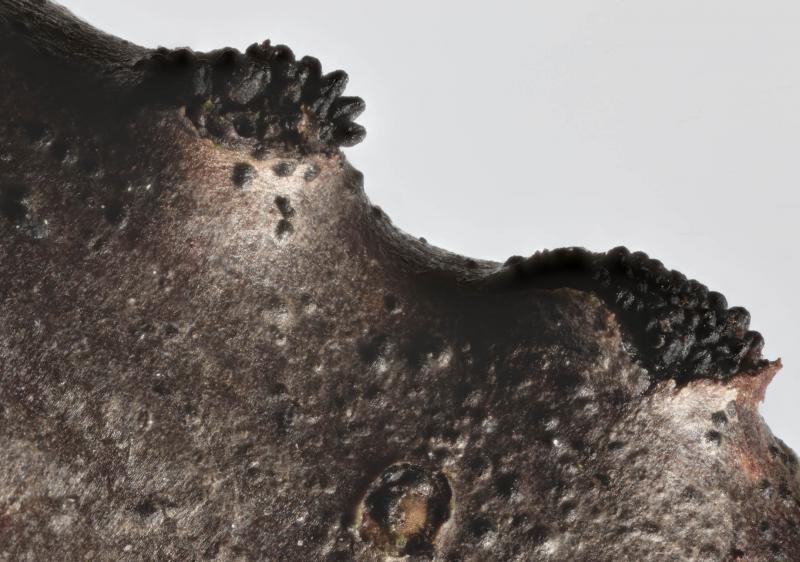
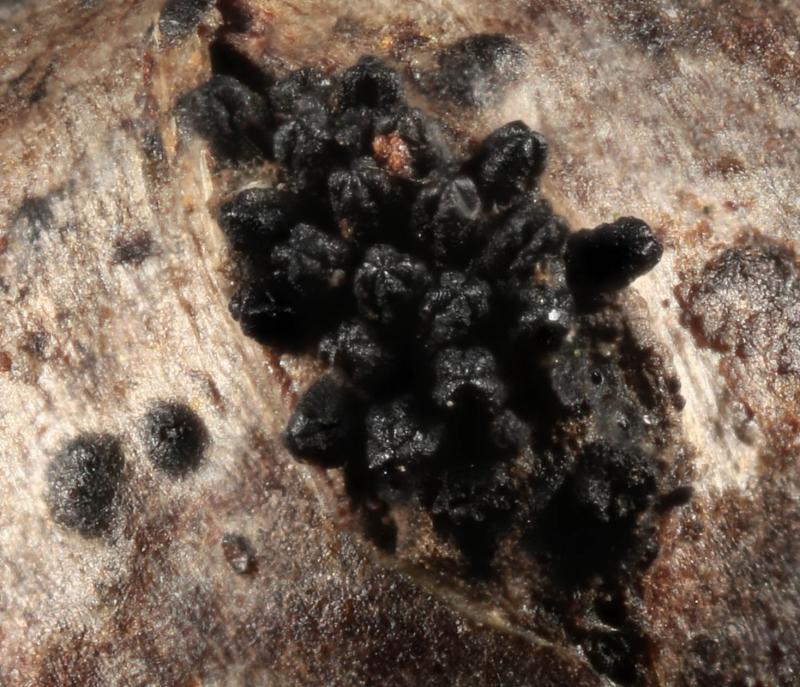
firstly may I apologise for moving Zotto from the top of the Forum (where he certainly belongs ;-) ). Secondly I am fairly sure that I have the genus correct with this fungus - with its clustered perithecia, "Phillips screwdriver" ostioles and spore characters. I then spent a long time with Rappaz, brushing up my schoolboy French, and have come to Eutypella scoparia. My reservations were that this doesn't look to me like what I previously have understood as "Peroneutypa heteracantha", but I take on board Alain's comments here: http://www.ascofrance.com/search_recolte/2041 also Rappaz's comments about the variability of this taxon.
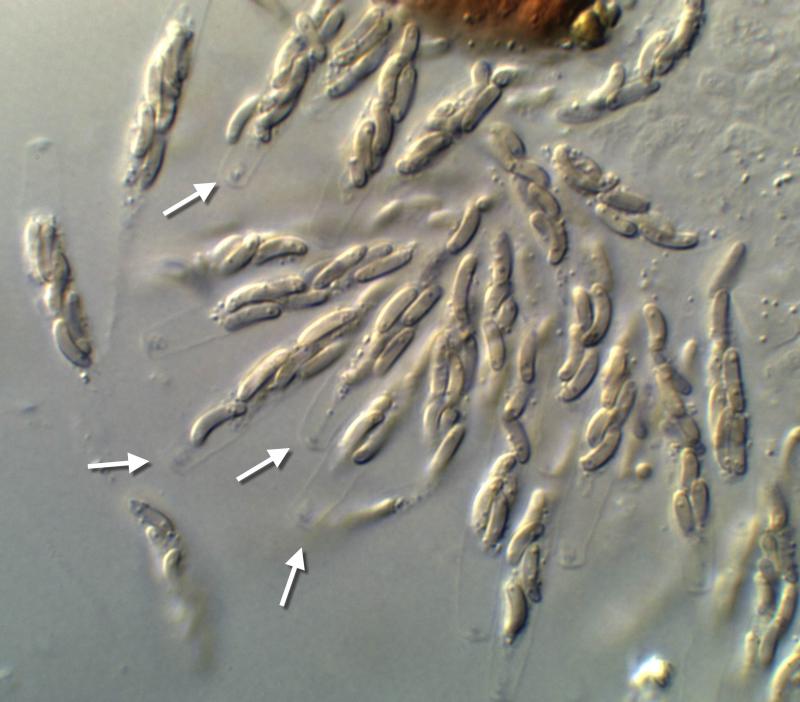
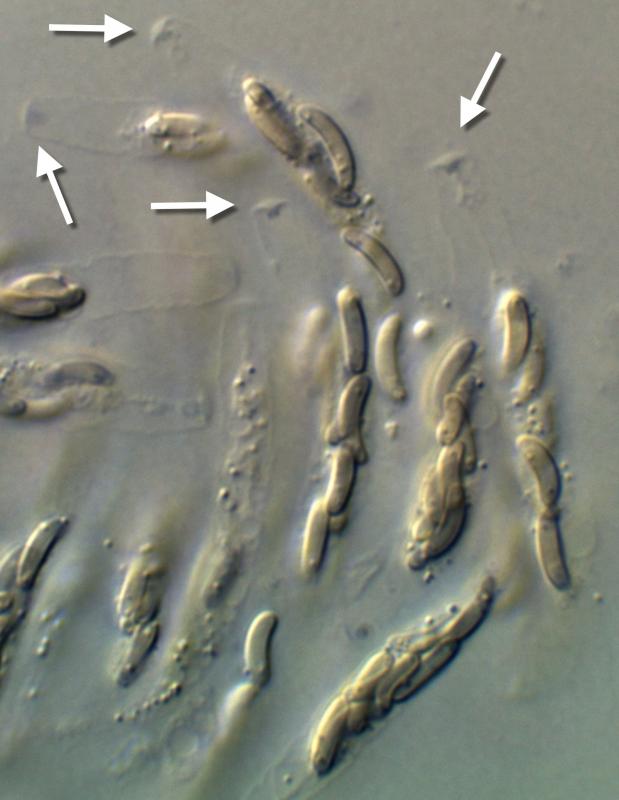
This collection is on a fallen Betula twig. Exidia nucleata and Stomiopeltis betulae - the latter of which can be seen in some of these images - were also present. As can be seen the apical apparatus is IKI+ (arrowed); ascospores measure 5.2-6.3 x 1.3-1.6µm.
Comments as ever would be very welcome.
Cordialement
Chris
Jacques Fournier,
24-12-2014 08:37

Re : Eutypella question
Hi Chris,
the current concpt of E. scoparia is very wide and your collection most likely fits in it. To put your mind at ease, the world of Diatrypaceae is something very difficult to enter, even for people who read French.
Greetings,
Jacques
the current concpt of E. scoparia is very wide and your collection most likely fits in it. To put your mind at ease, the world of Diatrypaceae is something very difficult to enter, even for people who read French.
Greetings,
Jacques