
14-04-2026 05:32
Ethan CrensonHi all, A few weeks back a friend pointed out som
27-04-2026 18:48
Tony MoverleyCollected 23rd April 2026, Norfolk, EnglandSwarms
27-04-2026 20:52
 Lothar Krieglsteiner
Found on hanging tiwg of Olea europaea in dried-ou
28-04-2026 22:51
 Bernard CLESSE
Bonsoir à toutes et tous,Pourriez-vous m'aider à
29-04-2026 08:01
Lothar Krieglsteiner
... on twig attached to small tree of Citrus auran
29-04-2026 10:44
Lothar Krieglsteiner
growing at moist, drying-out soil at the side of a
28-04-2026 20:33
Vitus SchäfftleinHello, I found Trochila ilicina on Ilex aquifoliu

28-04-2026 21:50
 Pablo Sandoval
Hola a todos,Espero se encuentren bien. Hace mucho
27-04-2026 18:05
Lothar Krieglsteiner
... still attached at standing tree. The green con
 Bonsoir,
 Je ne sais pas trop si c'est opportun sur ce forum dédié aux ascos de vous demander votre avis à propos de ce que je crois être un hyphomycète (le cas échéant n'hésiter pas à me le dire).
Sur branchette sèche de tilia tombée, des périthèces (corrigez le terme si ce n'est pas cela) de 0.5 à 1.3 mm de diamètre, noirs à la coupe me donnant des conidies de 2 tailles : petites et grandes (jusqu'à 80µ). Je l'appellerais bien Corynespora olivacea. Votre avis ?
Alain
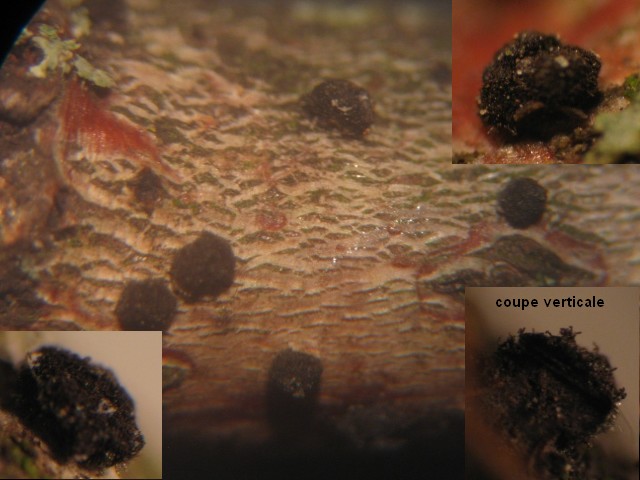
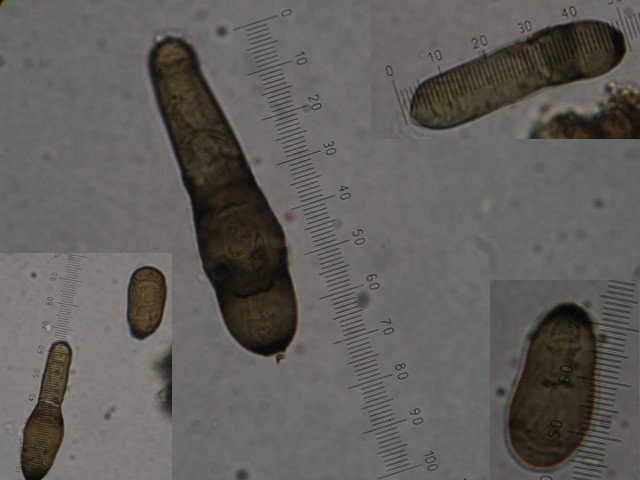
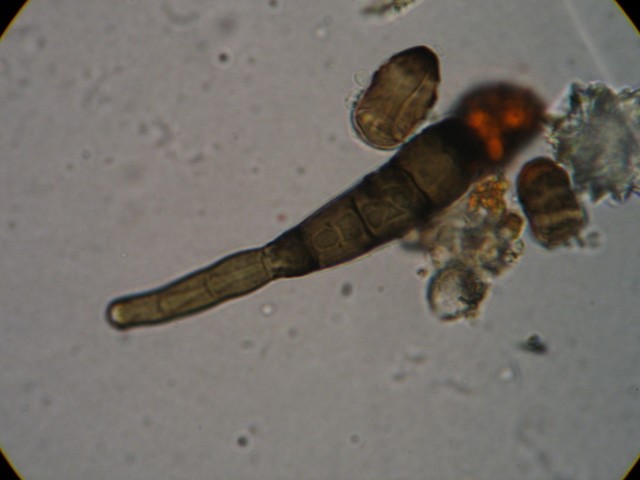

Alain
amitiés, :)
I think this paper will help you: https://www.ncbi.nlm.nih.gov/pmc/articles/PMC5473648/
Best wishes,
Gernot
Hi !
You resurrected an old message from 2007. I was taking my first steps in mycology, nostalgia...
Since then I have found it and the authors of this masterful paper have precisely sequenced and determined this Helminthosporium (ex. Corynespora). : http://www.ascofrance.com/search_harvest/4545
You can compare but be careful several species exist and determine them without more information than a morphological observation is risky.
All the best,
Alain
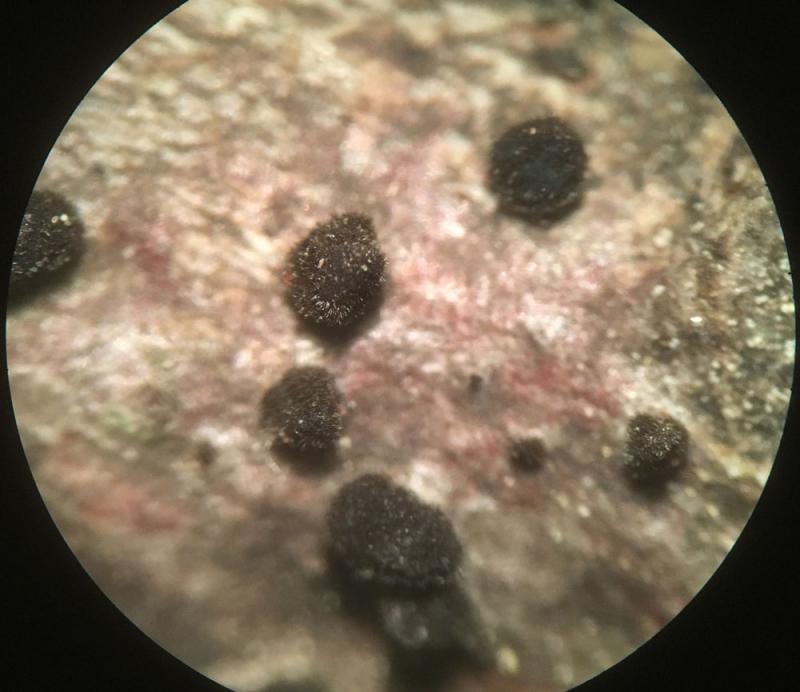
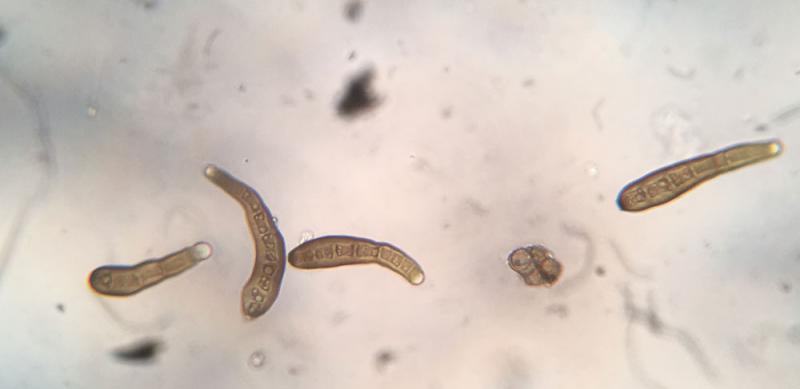
Yes, I resurrected your old message and it turned out to be quite helpful! I am not really 100% certain, but I think my collection is H. oligosporum. The substrate is Tilia, which is consistent with both H. oligosporum and H. tiliae. But comparing the two species, as described in Voglmayr and Jaklitsch, the differences that I am able to observe are the somewhat smaller conidiospores with fewer septa, and the stated range (widespread in Europe and North America for H. oligosporum, Europe only for H. tiliae). But as you mention there is a risk of an overconfident identification.
My data in case you are interested:
Conidia: (52-)59-105(-114) x 14-18µm; tapering at the distal end to 6-11µm; scar at the base of the conidia 4-8µm; (2-)4-12 septa.
Regards,
Ethan