

05-05-2026 22:40
Gernot FriebesHi,I believe this is a Plagiostoma growing on a Sa
06-05-2026 11:25
 Castillo Joseba
Me mandan el material seco de Galicia (España) re
06-05-2026 17:23
Thomas Læssøehttps://svampe.databasen.org/observations/10594257
28-04-2026 20:07
 Lothar Krieglsteiner
... on twig in the air at standing Ceratonia siliq
04-05-2026 18:13
 Stephen Martin Mifsud
ID request for what seems to be a true aquatic fun
04-05-2026 16:39
Stephen Martin Mifsud
ID request: This specimen was collected in Malta o
28-07-2011 18:31
 Alex Akulov
Dear FriendsToday I made the pdf file of Velenovsk
04-05-2026 09:50
Castillo Joseba
Me mandan el material seco de Galicia,(España) re
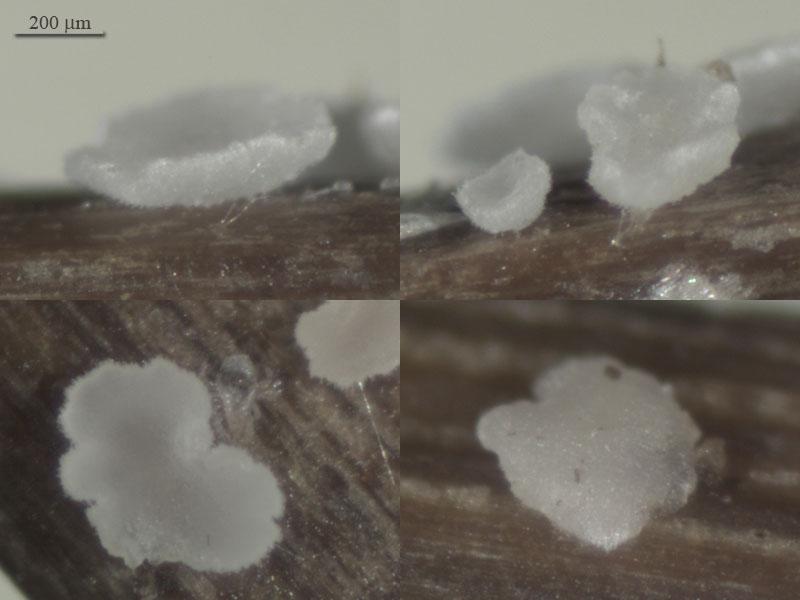
Apothecia discoid, sessile, 200-600 mk, whitish, circular to irregular with wavy edge when old, hymenium convex to concave when old, outer surface and edge covered by small hairs (pubescent).
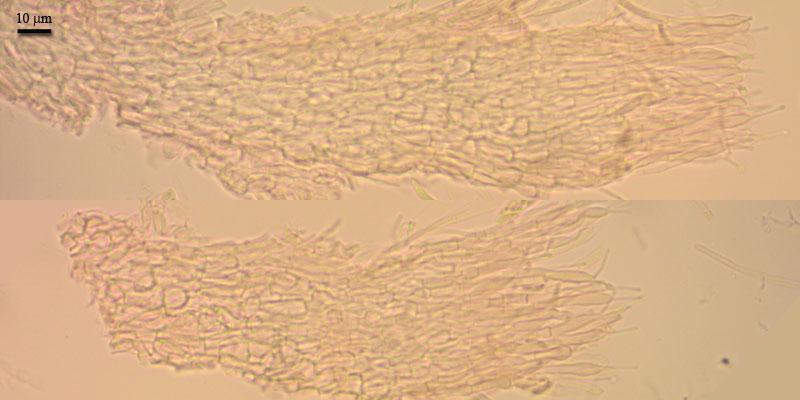
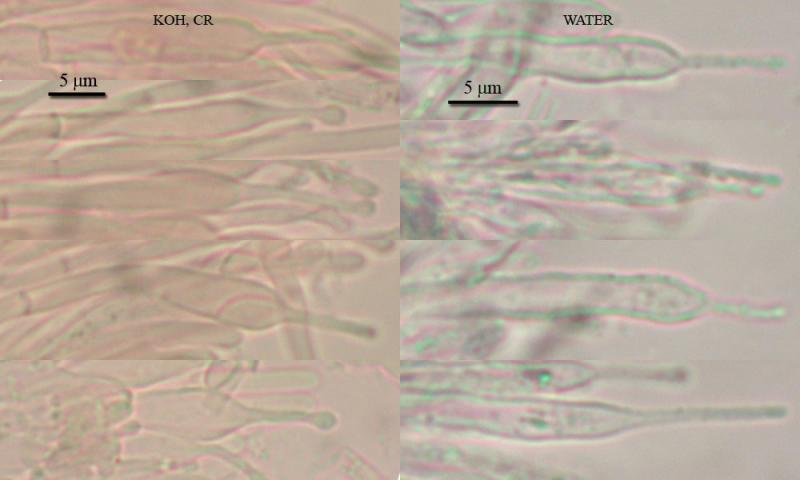
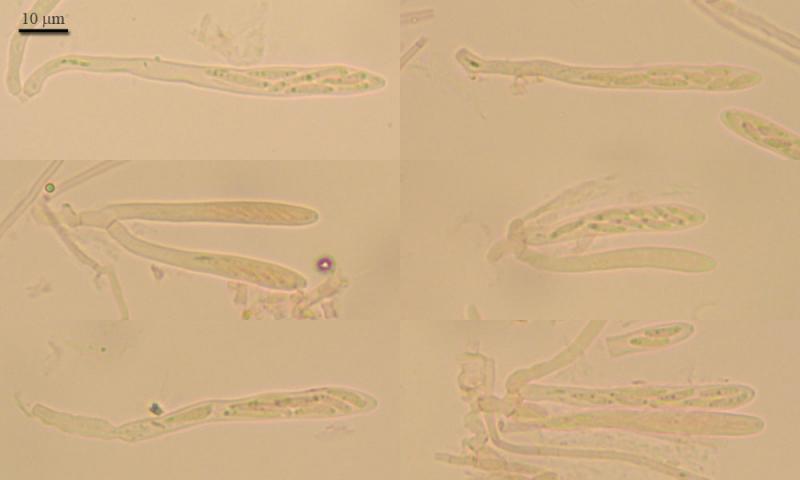
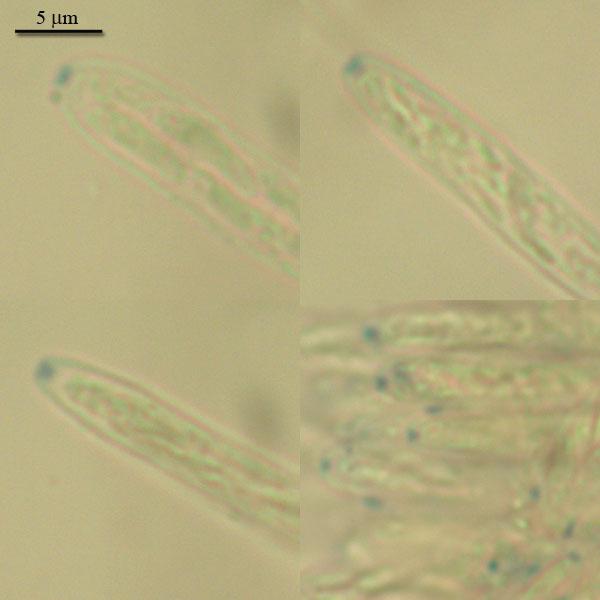
Excipulum from textura prismatica, cells quite thick-walled, about 10 x 5 mk in the middle of receptacle, shorter to the edge; hairs lageniform, with cylindrical base narrowing abtuptly to filiform upper part, tips in some slightly tibiiform, 19-28 (lenght) x 3-5 (base) x 0,7-1,1 (top), with slight incrustation (in water), hairs densely cover the edge and scarsly at outer surface below; asci cylindrical, some enlarged to obtuse-conical tip, clampless, pore euamyloid, 54,5 (38-74) x 5,8 (5,3-6,6); paraphyses cylindrical, branched at base, 2-3 segmented in base part, 2 mk broad; spores narrow-elliptic, rarely 1-septate, 7,9 (7,2-8,7) x 1,8 (1,6-2,1) (Q=4,3; N=16).
N61,065408° E69,455652° (04.08.2012)
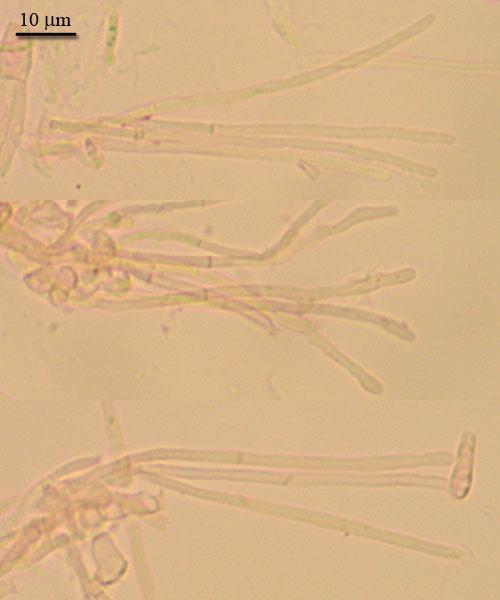
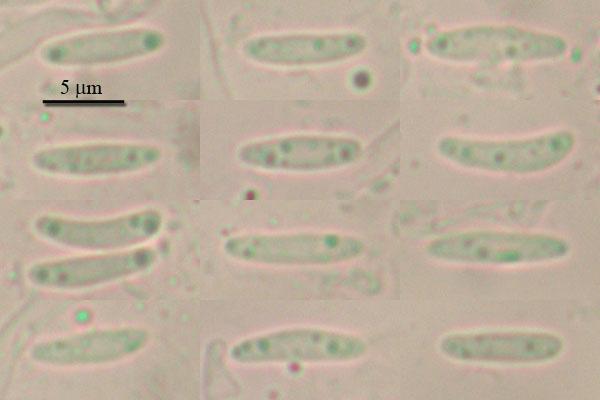

although I do not know this species, I fully agree. I know H. secalina var. secalina on Eriophorum: here are the asci with croziers, but the narrow spores and strongly lageniform hairs are the same.
Zotto