
23-05-2026 11:44
 Charles Grapinet
Hello, I am having trouble identifying this copro
25-05-2026 16:44
François BartholomeeusenHi forum members,During an excursion organised by
25-05-2026 16:35
 Bernard CLESSE
Bonjour à toutes et tous,J'ai trouvé récemment,
22-05-2026 13:29
Gernot FriebesHi,I am curious to hear your opinion on this mater
23-05-2026 18:57
Sylvie Le GoffBonjour à tousRécolté sur une branchette de Sal
22-05-2026 14:44
 Lothar Krieglsteiner
in unripe condition citrine yellow, then soon fadi
22-05-2026 21:35
Steve ClementsBonjour, I expected this find on old wood on our
22-05-2026 18:12
Lothar Krieglsteiner
... in moist chamber from Portugal.As the fungus s
22-05-2026 20:08
Ethan CrensonHello all, Yesterday in NYC I was visiting an e
 Bonsoir tous
found on an attached Quercus twig, growing on old Colpoma quercinum; I am pretty sure that I have collected this before (lower image, with more abundant apothecia); the confused nomenclature does not help - am I correct in thinking that this is what would be now called Orbilia eucalypti? The spore dimensions - 3.8-4.5 x 2.1-2.6µm match O. coccinella here: http://www.librifungorum.org/Image.asp?ItemID=36&ImageFileName=SyllogeFungorum8-628.jpg further down the page the spore dimensions for O. eucalypti seem to be larger . . . .
any help welcome
amitiés
Chris
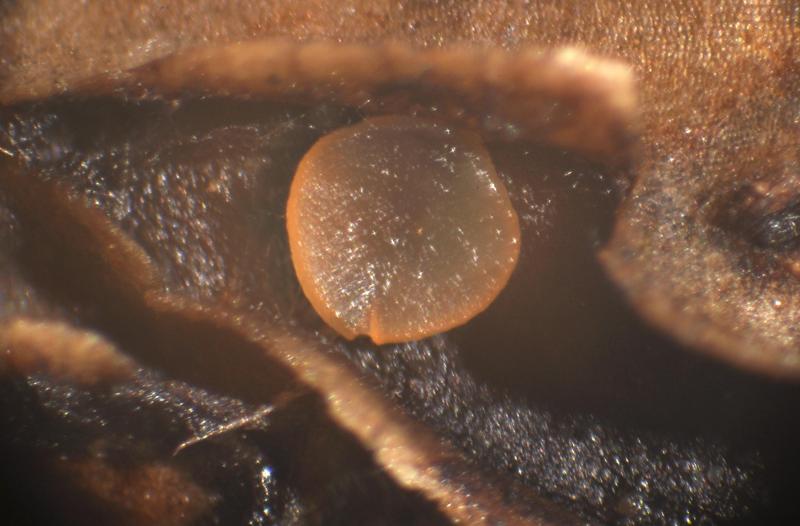
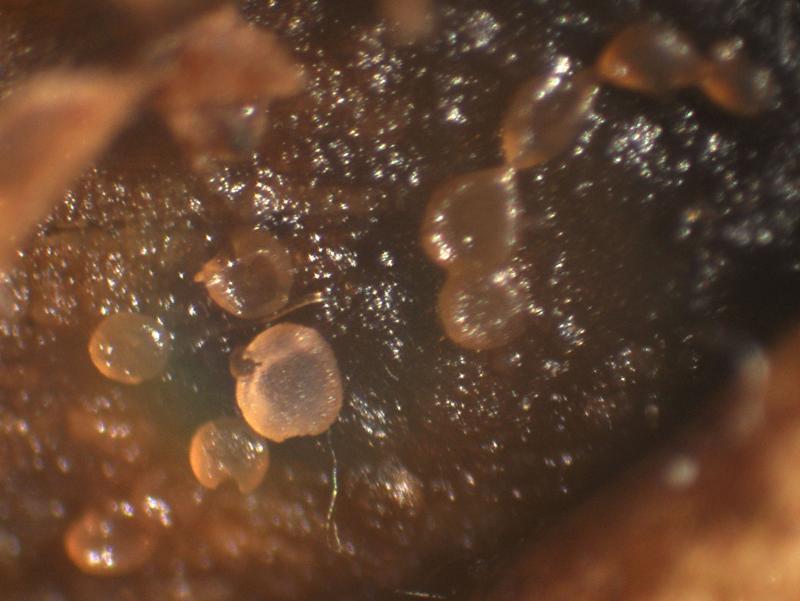
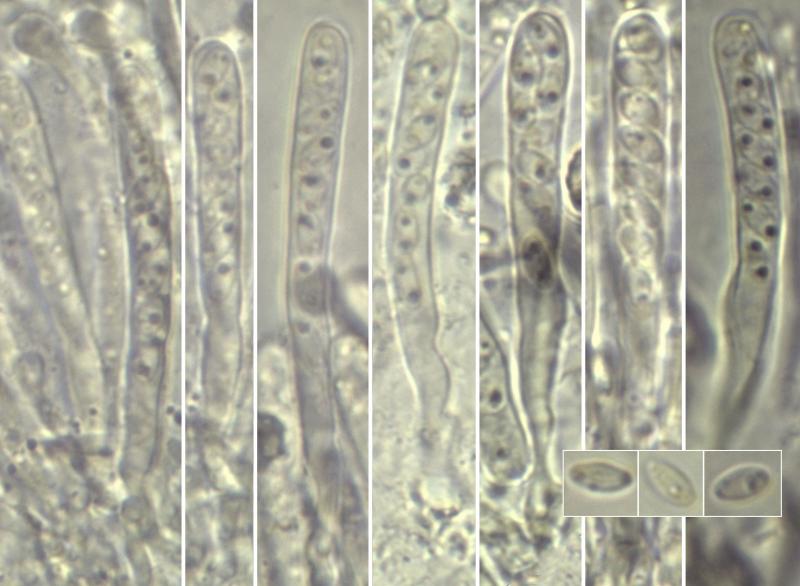
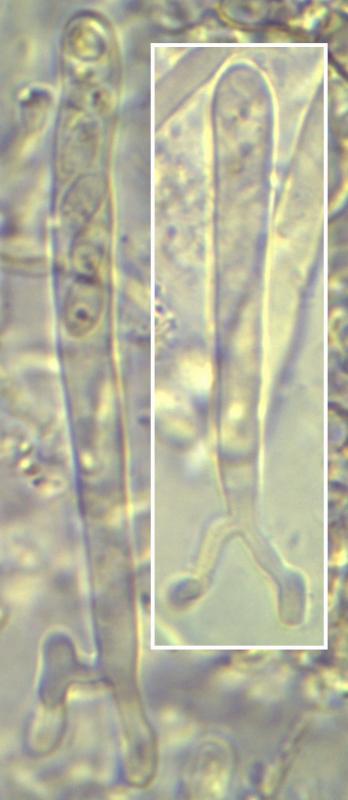
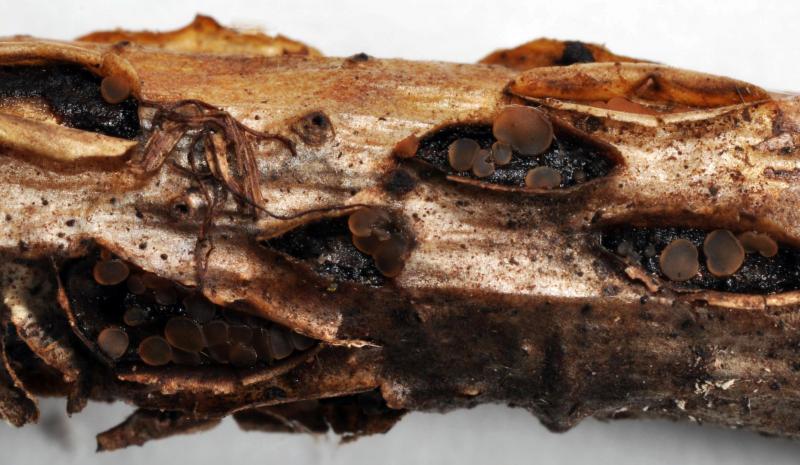

yes, it is quite typical O. eucalypti. The type of O. coccinella has reniform (C-shaped) spores, and eucalypti is the oldest available name. The species is actually frequent also in SW-Australia.
Brian Spooner sent me mayn years ago just such collection on Coploma quercinum. But this seems accidental rather than a constant connection. O. eucalypti is plurivorous.
If you tell me the place I will take up the nicely documented collection.
Zotto
yes, it is quite typical O. eucalypti. The type of O. coccinella has reniform (C-shaped) spores, and eucalypti is the oldest available name. The species is actually frequent also in SW-Australia.
Brian Spooner sent me mayn years ago just such collection on Coploma quercinum. But this seems accidental rather than a constant connection. O. eucalypti is plurivorous.
If you tell me the place I will take up the nicely documented collection.
Zotto
small woodland area, Edgerton, Huddersfield, West Yorkshire
53°39'23.59"N
1°48'25.58"W
145 metres O.D.
05 January 2013
specimen - Herb. CSVY/F/2272
this is very close to where I recorded Hymenoscyphus aesculi: http://www.ascofrance.com/search_forum/19553 - the KMZ file on that thread takes you to the site in Google Earth
vielen Dank und die besten Wünsche
Chris
I overlooked your remark on the type of eucalypti. here a short excerpt of my discussion:
(1) spores 7 × 3.5 µm (an error for 7 × 2.5 µm, according to the sketch in the type convolute in K). .... the asci are with †60–70 µm extraordinarily long, .... and the spores 5.2-7 x 2.1-2.4 µm.
(2) In a rather small apothecium of the holotype the asci and spores were found much smaller than in the large ones (asci †30–38 × 3–3.2 µm, spores †4 × 1.8 µm)
It remains unclear if the type is a mixtum of too very closely related taxa or only one variable species. But O. eucalypti as we apply the name is in fact very variable in spore and ascus size.
Zotto