
23-05-2026 11:44
 Charles Grapinet
Hello, I am having trouble identifying this copro
25-05-2026 16:44
François BartholomeeusenHi forum members,During an excursion organised by
25-05-2026 16:35
 Bernard CLESSE
Bonjour à toutes et tous,J'ai trouvé récemment,
22-05-2026 13:29
Gernot FriebesHi,I am curious to hear your opinion on this mater
23-05-2026 18:57
Sylvie Le GoffBonjour à tousRécolté sur une branchette de Sal
22-05-2026 14:44
 Lothar Krieglsteiner
in unripe condition citrine yellow, then soon fadi
22-05-2026 21:35
Steve ClementsBonjour, I expected this find on old wood on our
22-05-2026 18:12
Lothar Krieglsteiner
... in moist chamber from Portugal.As the fungus s
22-05-2026 20:08
Ethan CrensonHello all, Yesterday in NYC I was visiting an e
Cap up to 2 cm, irregularly lobed; inrolled; free from stipe, upper surface brown, undersurface cream to pale brown, pubescent,
Stipe up to 5 cm long, up to 1 cm wide, white to cream.
Spores 19-22 x 11.5-14.5, elliptical, smooth; with one large oil droplet.
Paraphyses with subclavate to clavate apices
?
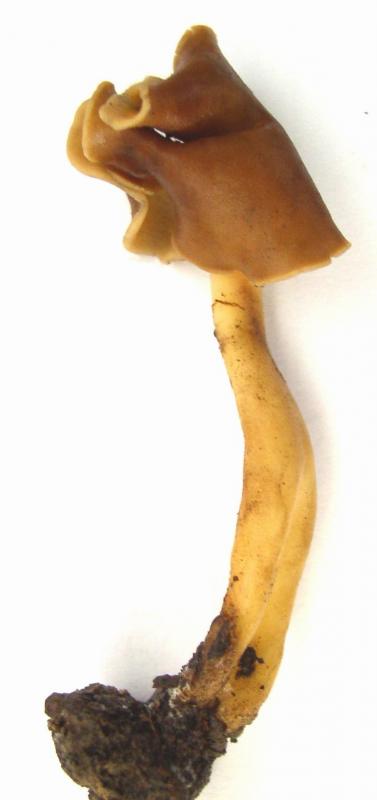
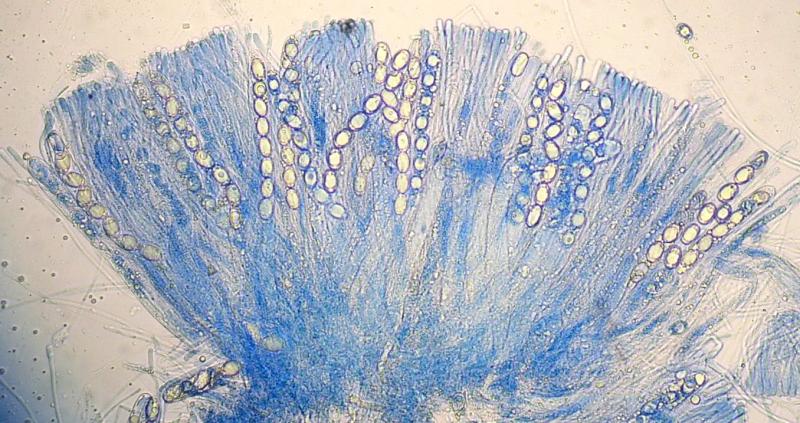

Difficult to say something with only one specimen... Three species could be investigated: Helvella latispora, H. albella and H. elastica (although the latter is less obvious).
More data about the cells on the outer surface will be useful, and also on the ecology.
Is there a brown pigment into the paraphyses?
Best,
Fidel
If we believe in the spore size given by Boudier when describing H. latispora, your collection should be H. stevensii, as far as we consider separated these last two.
Regards
Mario