
27-04-2026 18:05
 Lothar Krieglsteiner
... still attached at standing tree. The green con
28-04-2026 20:33
Vitus SchäfftleinHello, I found Trochila ilicina on Ilex aquifoliu
28-04-2026 20:07
Lothar Krieglsteiner
... on twig in the air at standing Ceratonia siliq
27-04-2026 20:52
Lothar Krieglsteiner
Found on hanging tiwg of Olea europaea in dried-ou
27-04-2026 18:48
Tony MoverleyCollected 23rd April 2026, Norfolk, EnglandSwarms
27-04-2026 17:41
Lothar Krieglsteiner
.. Algarve, same leaf than the last post. The con
27-04-2026 17:16
Lothar Krieglsteiner
.. Algarve, moist lying.The conidiomata look like
27-04-2026 12:54
Steve ClementsBonjour. Ce petit champignon blanc résupiné et
27-04-2026 09:59
Pauline. PennaBonjour Can anyone advise me on these pycnidia fo

I am looking for the part of the following article that deals with Nectriopsis lecanodes:
Sérusiaux, E.; Diederich, P.; Brand, A.M.; Boom, P. 1999 - New or interesting lichens and lichenicolous fungi from Belgium and Luxembourg. VIII. Lejeunia 162: 1-95.
It'd be great if somebody could send me these pages.
Best wishes,
Gernot

y

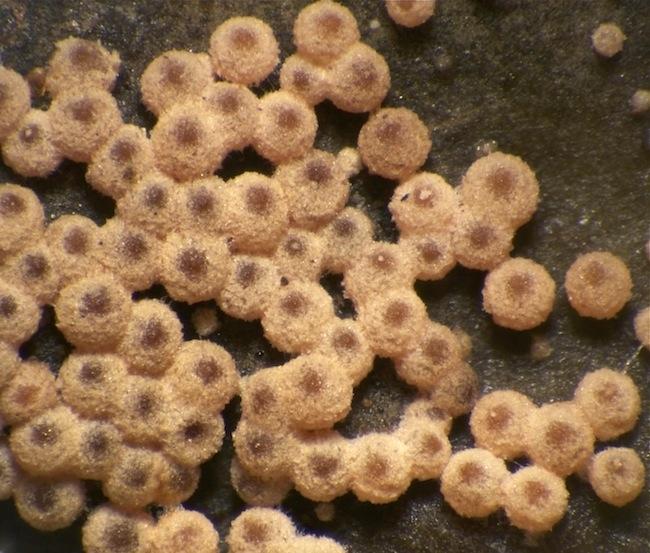
I haven't those pages but I know this species quite well (Christian too). If you want confirmation, please give your observations.
Alain
Yannick
Alain
thanks but I'm not actually looking for confirmation but for a recent description with synonyms and maybe further literatur given for this species. Also I'm not sure if the correct basionym is Sphaeria lecanodes Ces. 1857 or Nectria lecanodes Ces. 1863...
Best wishes,
Gernot

here is the basionyme of N. lecanodes:
Nectriopsis lecanodes (Ces.) Diederich & Schroers
Basionym: Nectria lecanodes Ces., in Rabenhorst, Herb. mycol. ed. 2: 525, 1863.
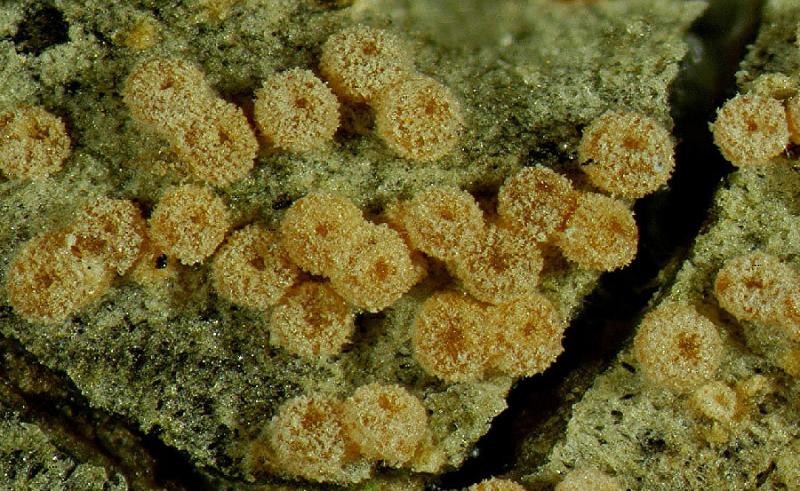
However, ?I think that it is not the genus Nectriopsis but the genus Lasionectria, I'm working to a new combination. In section, ascomatal wall >40 µm thick composed of two regions fits better to the genus Lasionectria
Best wishes
Christian

Hi Gernot.
I can get these pages, but only on the next Monday.
@Christian: Thanks for this information! I thought there already was a combination to the genus Lasionectria? (http://www.cybertruffle.org.uk/cyberliber/59351/0021/003/0267.htm)
@Nicolas: That would be great, thank you!
Best wishes,
Gernot
 p56-0001.pdf
Best wishes,
Gernot
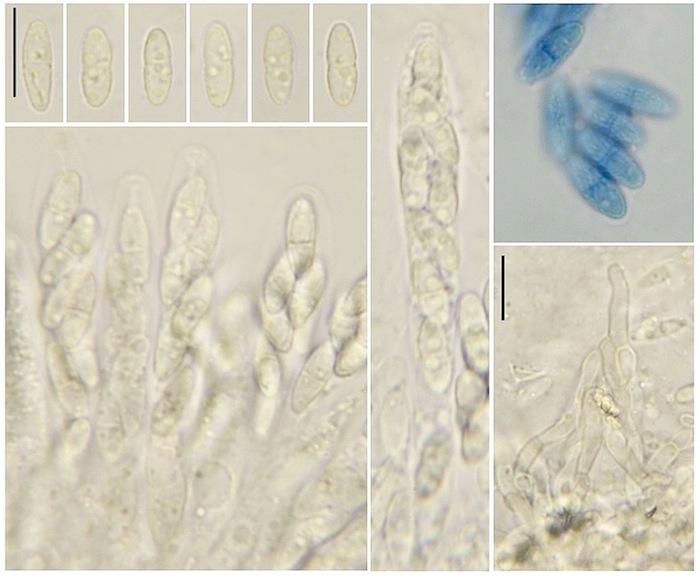
But, it's obviously 'Nectriopsis' lecanodes.
Alain
thanks for sharing your experience! Maybe the different descriptions result from different maturities of the material examined in literature.
Best wishes,
Gernot