14-05-2026 05:36
Ethan CrensonHi all, I haven't paid much attention to Lachnu
16-03-2011 14:31
roman vargas albertoHi. I would like some opinion about this Peziza
11-05-2026 12:32
 Bernard CLESSE
Pourriez-vous m'aider à identifier cette héloti
13-05-2026 15:26
 François Freléchoux
Bonjour,Voici une récolte faite il y a quelques j
12-05-2026 15:41
 Nicolas VAN VOOREN
Dear Ascolovers, especially interested in Pezizale
13-05-2026 12:05
 Thierry Blondelle
Bonjour à tous,J'aimerais avoir confirmation de c
10-05-2026 23:17
 Andreas Gminder
Hello,today we found in a moist steep decidous for
28-04-2026 20:07
 Lothar Krieglsteiner
... on twig in the air at standing Ceratonia siliq
27-04-2026 20:52
Lothar Krieglsteiner
Found on hanging tiwg of Olea europaea in dried-ou
11-05-2026 20:22
Lothar Krieglsteiner
on attached twig of standing Ficus caricaquite uns
?Amphisphaeria
Hans-Otto Baral,
29-08-2010 11:50
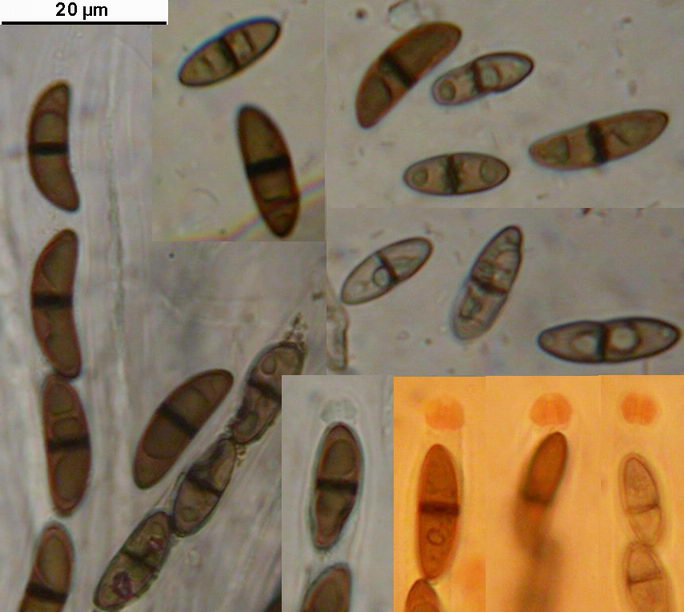
 After Ascitendus which I saw is quite frequent in the US here something similar with 1-septate dark brown spores, from Massachusetts. It also grew together with Orbilia luteorubella, so in a similar wet habitat, on unidentified deciduous wood.
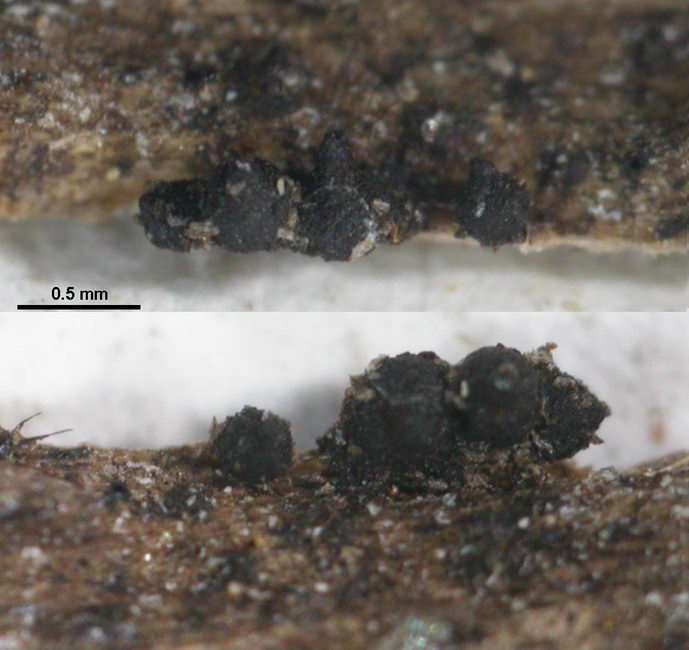
Don Pfister, the collector, named it "?Amphisphaeria". The photos I made today, therefore nothing is alive anymore (collection date Oct. 1994).
The perithecia have a distinct neck
Hans-Otto Baral,
29-08-2010 11:52
Re:?Amphisphaeria
Ascus apical ring slightly refr., 3.3 x 4.3 µm, IKI-, CR+. Sp. *14-17 x 5-5.3 µm, KOH+CR 15-19.5 x 5-5.5(-6) µm, no germ slit, with thick-walled septum.