
19-04-2026 21:23
Steve ClementsBonjour, I found this anamorphic fungus on old pl
19-04-2026 20:46
Steve Clements1 mm diameter approx spherical conidiophores on pl
12-04-2026 17:56
 Hardware Tony
Found on dead stems in February earlier this year
17-04-2026 19:16
 Enrique Rubio
Hi to everybodyI would appreciate any assistance r
14-04-2026 05:32
Ethan CrensonHi all, A few weeks back a friend pointed out som
17-04-2026 15:14
 Bruno Coué
Bonjour.Récoltes du 16/04/2026, sur feuilles mort
12-04-2026 15:52
Gernot FriebesHi,I'm looking for help with this anamorph collect
14-04-2026 21:52
Gernot FriebesHi,found on dead leaves of Carex elata. Conidia: 4
16-04-2026 22:09
Buckwheat PeteHello, I'd like to ask about this older specimen:
15-04-2026 19:33
Fátima Durán ManzanequeHi!! I need help, I found this Ascomycete but I d
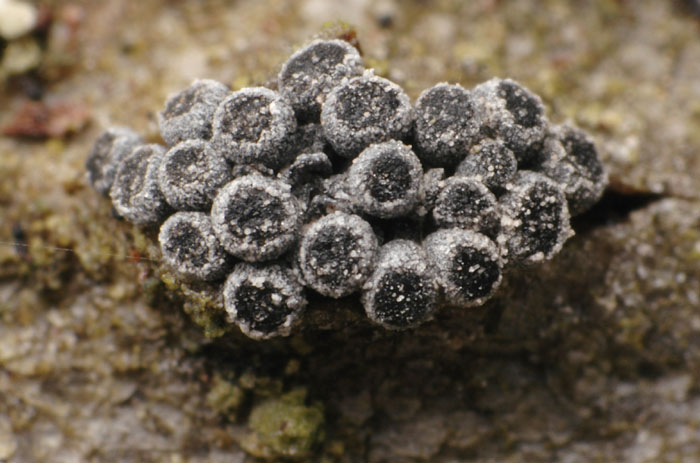
Clusters of small fungi on bark of Alnus
Dmitry Gavryushin,
21-12-2006 18:36
Dmitry Gavryushin,
21-12-2006 18:37
Re:Clusters of small fungi on bark of Alnus
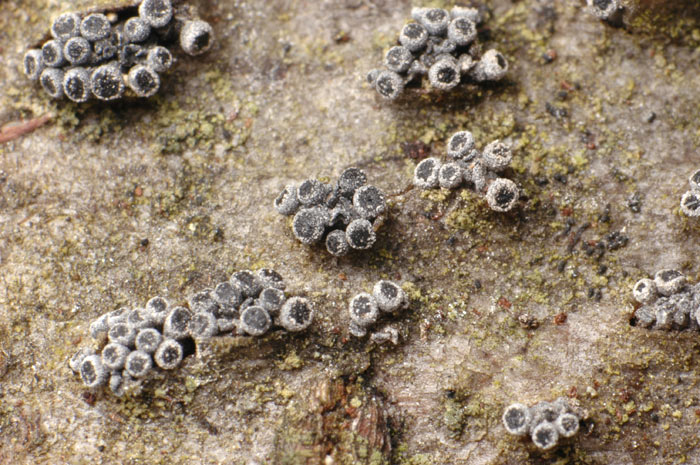
A more general view.
Dmitry Gavryushin,
21-12-2006 18:38
Re:Clusters of small fungi on bark of Alnus
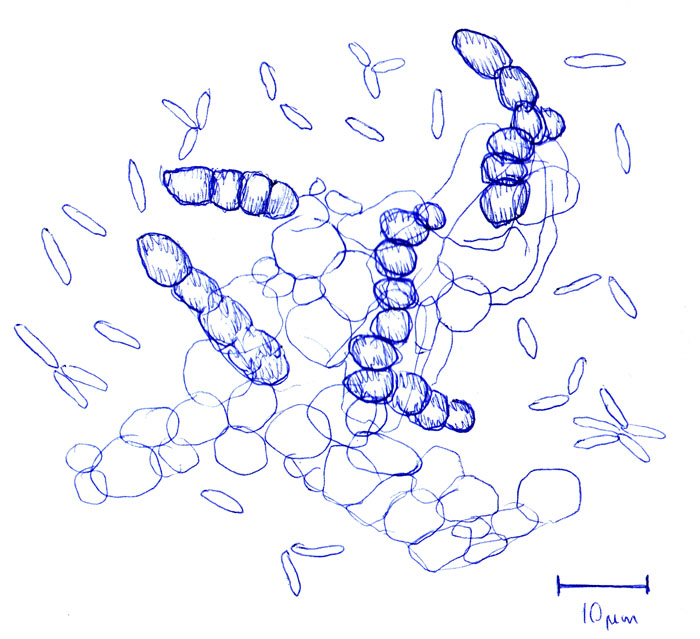
What I saw in the microscope (1).
Dmitry Gavryushin,
21-12-2006 18:38
Re:Clusters of small fungi on bark of Alnus
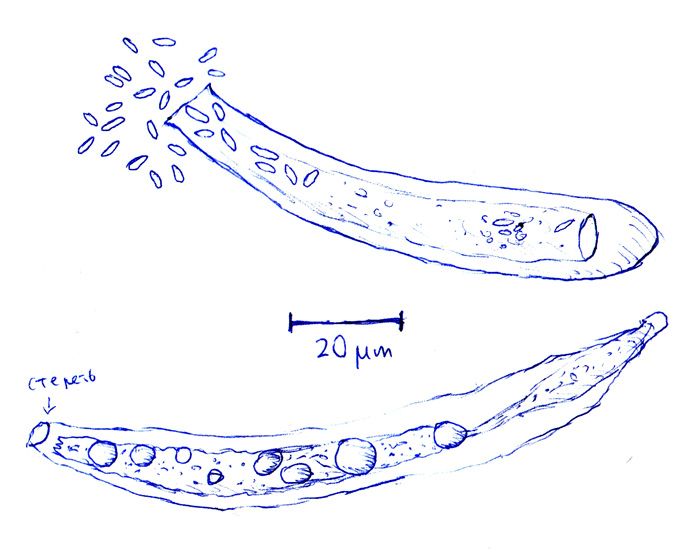
What I saw in the microscope (2).
Jacques Trimbach,
21-12-2006 21:15
Re:Clusters of small fungi on bark of Alnus
cf. Tympanis alnea
Dmitry Gavryushin,
21-12-2006 21:33
Re:Clusters of small fungi on bark of Alnus
Many thanks Jacques, I think you are quite right. I have also found out that it occurs on Duschekia fruticosa (Betulaceae) in Taimyr Peninsula (Checklist of fungi and lichenicolous fungi of the Russian Arctic, http://www.binran.ru/infsys/ra_fun/ ).
Hans-Otto Baral,
21-12-2006 22:42

Re:Clusters of small fungi on bark of Alnus
Yes that´s a Tympanis. In the case you find living asci (in a section) then you see that the conidia are aggregated in 8 roundish balls in the upper half of the ascus, and so they are ejected. But when you kill the asci then this peculiar arrangement is completely distorted and the conidia fill the whole ascus.
Zotto
Zotto
Dmitry Gavryushin,
22-12-2006 08:40
Re:Clusters of small fungi on bark of Alnus
Thanks a lot for your comment Zotto. It's said in Nordic Macromycetes that there's another sp. on Alnus, T. hysterioides, but I think it would be difficult to say whether it's T. alnea or T. hysterioides.
Hans-Otto Baral,
22-12-2006 22:18
Re:Clusters of small fungi on bark of Alnus
Tympanis is a very difficult genus. The best paper I know is that from Ouelette & Pirozynski. To identify species it is necessary to study the ascospores from which the conidia emerge (septation, germ tubes), which are rather difficult to see within the premature asci - when asci are dead then only by staining.